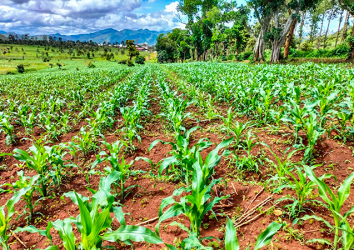
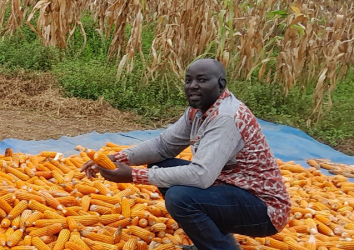
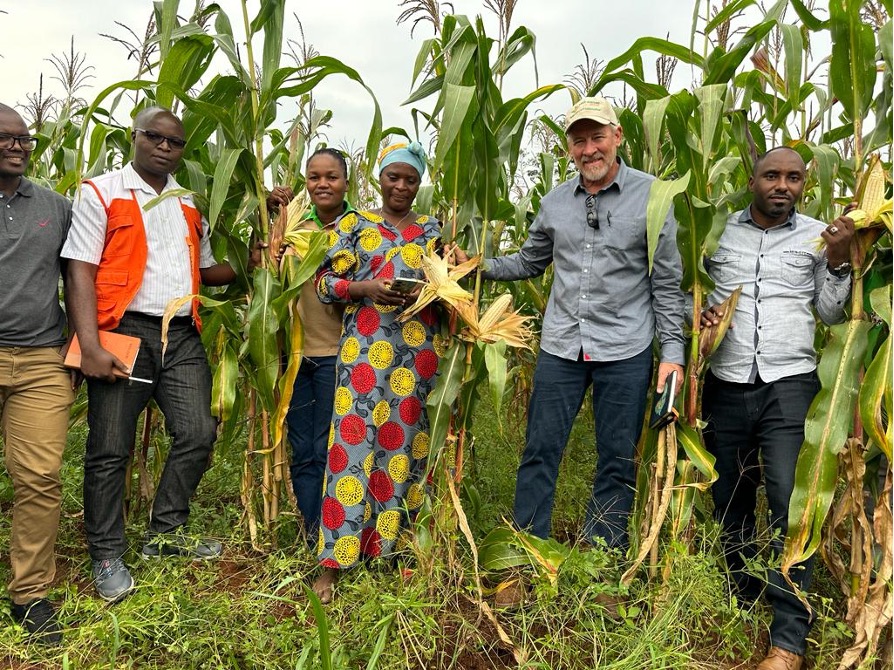
Maize(Zea mays) Maize or corn is a cereal crop that is grown widely throughout the world in a range of agroecological environments. More maize is produced annually than any other grain. About 50 species exist and consist of different colors, textures and grain shapes and sizes. White, yellow and red are the most common types. The white and yellow varieties are preferred by most people depending on the region. Maize was introduced into Africa in the 1500s and has since become one of Africa's dominant food crops. Like many other regions, it is consumed as a vegetable although it is a grain crop. The grains are rich in vitamins A, C and E, carbohydrates, and essential minerals, and contain 9% protein. They are also rich in dietary fiber and calories which are a good source of energy.
Most maize production in Africa is rain fed. Irregular rainfall can trigger famines during occasional droughts.
Ninety percent of white maize consumption is in Africa and Central America. It fetches premium prices in Southern Africa where it represents the main staple food. Yellow maize is preferred in most parts of South America and the Caribbean. It is also the preferred animal feed in many regions as it gives a yellow color to poultry, egg yolks and animal fat. Maize is processed and prepared in various forms depending on the country. Ground maize is prepared into porridge in Eastern and Southern Africa, while maize flour is prepared into porridge in West Africa. Ground maize is also fried or baked in many countries. In all parts of Africa, green (fresh) maize is boiled or roasted on its cob and served as a snack. Popcorn is also a popular snack.
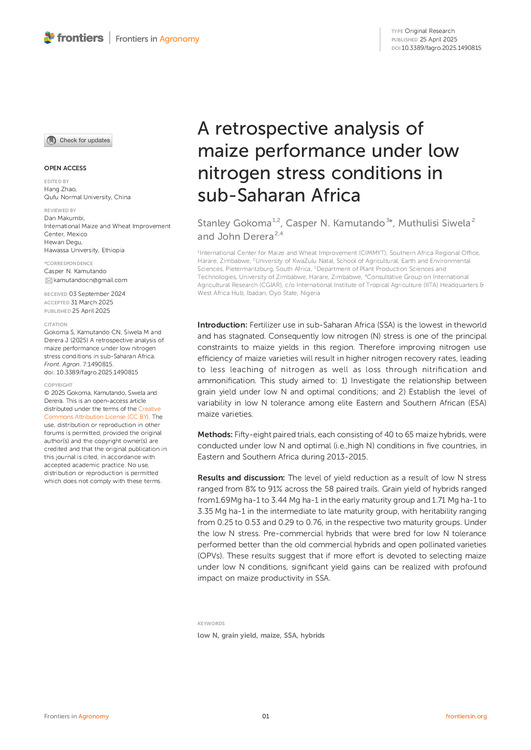
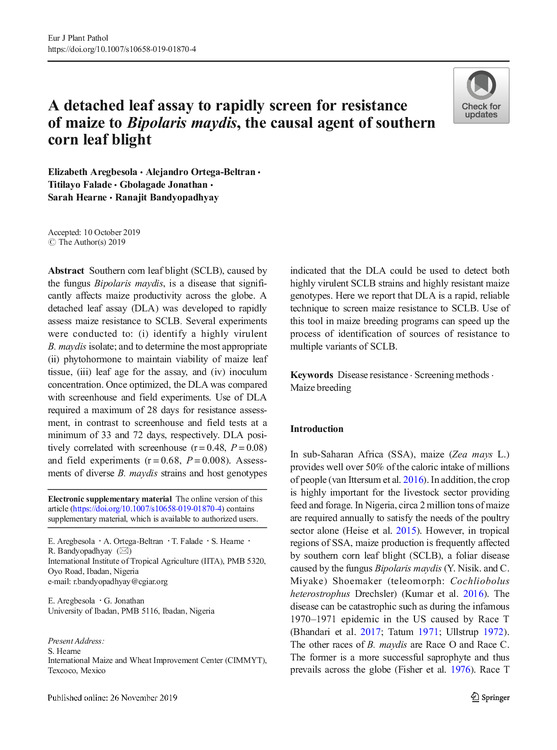
Maize diseases in SSA include downy mildew, rust, leaf blight, stalk and ear rots, leaf spot, and maize streak virus (MSV). Maize does not tolerate drought well and the grain can rot during storage in tropical climates. A lack of sunshine and nitrogen can reduce the production potential of the crop.
Remarkable success was also achieved with the development of Striga-resistant varieties that suppress the weed, and other pest-resistant varieties that were released into endemic areas of Nigeria and Cameroon. Early, intermediate, and late maturing varieties were developed with yields up to twice as much as traditional varieties. Early maturing varieties enabled maize production to expand into new areas, especially to the Sudan savannas where the short rainy season had adversely affected maize cultivation in the past. IITA's postharvest researchers developed effective and simple machines and tools that reduce processing time and labor as well as production losses. Recently, IITA engaged in research to enhance the nutrient content of maize to combat malnutrition and diseases caused by micro-nutrient deficiency. They are also developing mycotoxin-resistant varieties in collaboration with advanced laboratories to minimize the health hazards of these toxins. In West and Central Africa, IITA has contributed significantly to the capacity building of the national maize research systems. Related websites aflasafe.com - Aflatoxin management website | Early maturing maize lines at IITA hold drought tolerance that could save farmers in Africa
15 April 2013 Researchers have identified maize parental lines and hybrids with high levels of drought tolerance among the early and the extra-early maturing maize genotypes developed and conserved by IITA. Twenty African countries to benefit from maize, cassava, wheat and rice intervention
02 April 2013 Nigeria and 19 other African countries will directly benefit from the African Development Bank-funded initiative known as the Support for Agricultural Research for Development of Strategic Crops (SARD-SC), but the multiplier effect of the project is expected to affect other regional member countries in the continent. Nigerian Tribune: Nigeria, Benin, Mali, Ghana develop plans for dissemination of drought-tolerant maize23 April 2013 Researchers, policy makers and other stakeholders working under the Drought Tolerant Maize for Africa (DTMA) project from Mali, Benin, Ghana, and Nigeria have converged on the campus of the International Institute of Tropical Agriculture (IITA) in Ibadan to develop work plans towards rapid dissemination and adoption of drought-tolerant maize. Read more. |
Aflatoxin management in maize