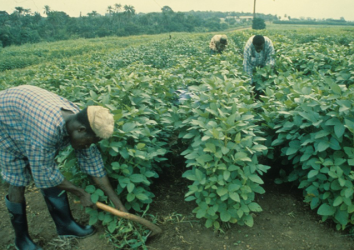

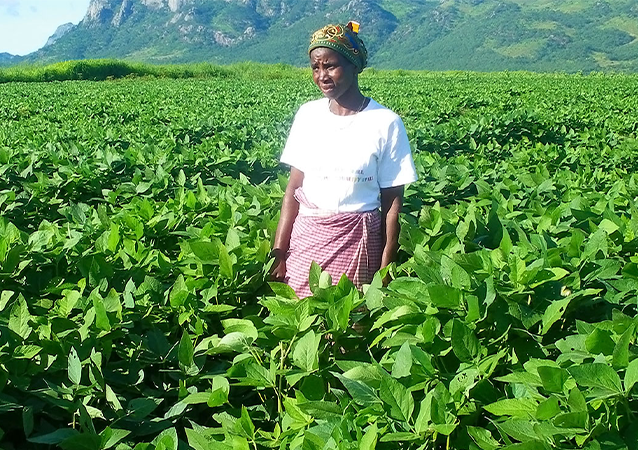
Soybean(Glycine max) Soybean is a leguminous vegetable of the pea family that grows in tropical, subtropical, and temperate climates. Soybean was domesticated in the 11th century BC around northeast of China. It is believed that it might have been introduced to Africa in the 19th century by Chinese traders along the east cost of Africa.
Malnutrition, particularly protein deficiency, is prevalent in many parts of Africa as animal protein is too expensive for most populations. Many leguminous crops provide some protein, but soybean is the only available crop that provides an inexpensive and high quality source of protein comparable to meat, poultry and eggs. A by-product from the oil production (soybean cake) is used as a high-protein animal feed in many countries. Soybean also improves soil fertility by adding nitrogen from the atmosphere. This is a major benefit in African farming systems, where soils have become exhausted by the need to produce more food for increasing populations, and where fertilizers are hardly available and are expensive for farmers.
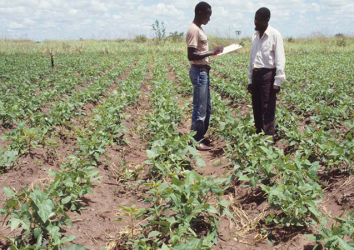
Nigeria is the largest producer of soybean in sub-Saharan Africa (SSA), followed by South Africa. Low yields (<1 t/ha in tropical Africa) and a shortage of fertilizer constrain the ability of some countries to increase production. In Nigeria the haulms and post-processed pulp (soybean meal) serve as important sources of animal feed. A 30% annual growth in the poultry industry from 2003 to 2008 fuelled such a demand for soybean meal that an increase in imports was required. Commercial soybean production on large farms takes place in Zambia, Zimbabwe and South Africa. However, it is mostly cultivated by small-scale farmers in other parts of Africa where it is planted as a minor food crop among sorghum, maize, or cassava.
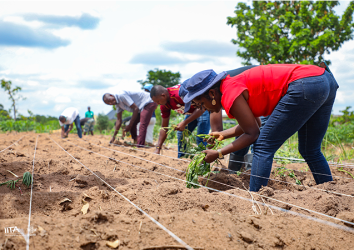
Depending on the variety, soybeans can be harvested between 100 and 150 days after planting. Labor requirements in Africa are high since most cultivation and harvesting are done manually.
In Africa dry soybeans are used to produce milk substitutes and flour. The bean curd is fried and eaten as a snack or breakfast food. Mature beans are not easily digested and contain toxic compounds, which require soaking and prolonged cooking.
Soybean rust, caused by the Phakopsora pachyrhizi fungus, attacks and destroys the leaves of the plant and can cause up to 60% yield loss. It is widespread throughout many parts of the world and is considered the most destructive of soybean foliar diseases. Other problems include pod shattering that reduces seed longevity, and production and distribution difficulties. Dual-purpose improved varieties of soybean have not reached many soybean growers to increase production. In many countries only a small market exists for soybean so many farmers are not willing to grow it, and not many people know how to process it or prepare meals with it.
IITA launched a project to combat malnutrition in Nigeria by encouraging soybean production and to increase its dietary consumption. They also researched and adapted farming techniques to reduce labor and various soybean processing machines for use in SSA. These activities resulted in an increase in consumption and in the number of farmers growing the crop. IITA food technologists developed a wide range of soybean food products and up to 98% of households in some Nigerian communities started eating soybean foods. Some products are now produced and distributed on a large scale, providing income for the manufacturers. | Better soybean varieties offer African farmers new opportunities
21 January 2011 Two African nations—Malawi and Nigeria—have released three improved soybean varieties that can enhance the productivity of the crop and offer farmers better opportunities. The three varieties are code-named TGx1740-2F, TGx1987-10F, and TGx1987-62F. New resistant soybean offers respite from Asian rust disease
26 June 2009 Soybean growers in Nigeria could look forward to better times ahead with the release of a new variety that is resistant to the deadly Asian soybean rust - a fungal disease that could wipe out as much as 80% of infested crops. The Nigerian Observer: IITA Pledges To Tackle Food Scarcity In Tropical Countries17 November 2011 The International Institute of Tropical Agriculture (IITA), says its next agenda is to confront the challenges to food security and livelihood in tropical countries. Read more. Farmers’ Guide to Soybean Production in Northern Nigeria Soybean is among the major industrial and food crops grown in every continent. The crop can be successfully grown in many states in Nigeria using low agricultural input. |
Farmers’ Guide to Soybean Production in Northern Nigeria