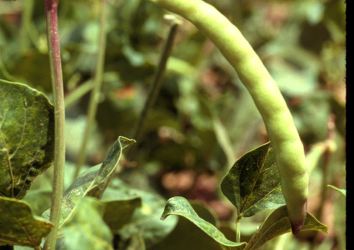
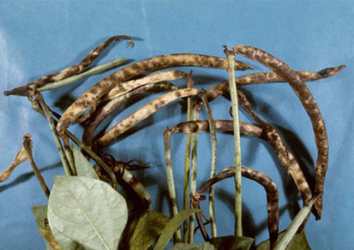
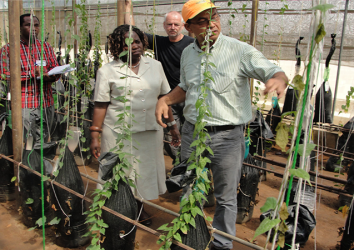
Cowpea(Vigna unguiculata) Cowpea is a food and animal feed crop grown in the semi-arid tropics covering Africa, Asia, Europe, United States and Central and South America. It originated and was domesticated in Southern Africa and was later moved to East and West Africa and Asia. The grains contain 25% protein, and several vitamins and minerals. The plant tolerates drought, performs well in a wide variety of soils, and being a legume replenishes low fertility soils when the roots are left to decay. It is grown mainly by small-scale farmers in developing regions where it is often cultivated with other crops as it tolerates shade. It also grows and covers the ground quickly, preventing erosion. The name "cowpea" probably derives from when it was an important livestock feed for cows in the United States.
Regional preferences occur for the different seed size, color texture of seed coat. For example, Ghanaians are willing to pay a premium for black-eyed peas, while Cameroonians would lower their prices for them. More than 4 million tons of peas of all sorts are consumed worldwide, with 387,000 tons consumed in Africa.
Most cowpea crops are rain fed and although it is drought tolerant, cowpea farmers in the dry savanna areas of sub-Saharan Africa obtain low yields, estimated at about 350 kg per hectare.
Improved varieties have been released to 68 countries in all of the world's regions. Additionally, IITA's Farmer Field School (FFS) projects, in collaboration with partners, have trained farmers in improved pest management practices of cowpea crops. The IITA genebank holds the world's largest and most diverse collection of cowpeas, with 15,122 unique samples from 88 countries, representing 70% of African cultivars and nearly half of the global diversity. | Farmers in Burkina Faso get IITA improved cowpea varieties
25 January 2013 Burkina Faso has released two improved cowpea varieties to help advance better nutrition for women and children, and boost the incomes of farmers. IITA améliore des variétés de niébé pour les producteurs du Burkina Faso
25 Janvier 2013 Le Burkina Faso a mis a disposition deux variétés de niébé pour une meilleure nutrition des femmes et des enfants et pour augmenter le revenu des paysans. The NonProfit Press: Farmers in Burkina Faso get IITA improved cowpea varieties16 January 2013 Burkina Faso has released two improved cowpea varieties to help advance better nutrition for women and children, and boost the incomes of farmers. Read more Adoption and impact of dry-season dual-purpose cowpea in the semiarid zone of Nigeria Cowpea is of vital importance to the livelihood of millions of people in West and Central Africa. From its production, rural families derive food, animal feed, and cash income. |
Adoption and impact of dry-season dual-purpose cowpea in the semiarid zone of Nigeria