
For the past year, the IITA–CGIAR Gender Science Network (GSN) has been leading a groundbreaking initiative. Through the Gender (research) Learnings and Exchanges for New inSights (GLENS) webinar series, they have successfully spearheaded an enriching platform to augment gender research, its dissemination, and its impact. The series has executed eight enlightening sessions from March 2022 to October 2023, with the adept guidance of Senior Scientist and Gender Specialist Steven Cole and Senior Research Associate Olamide Nwanze
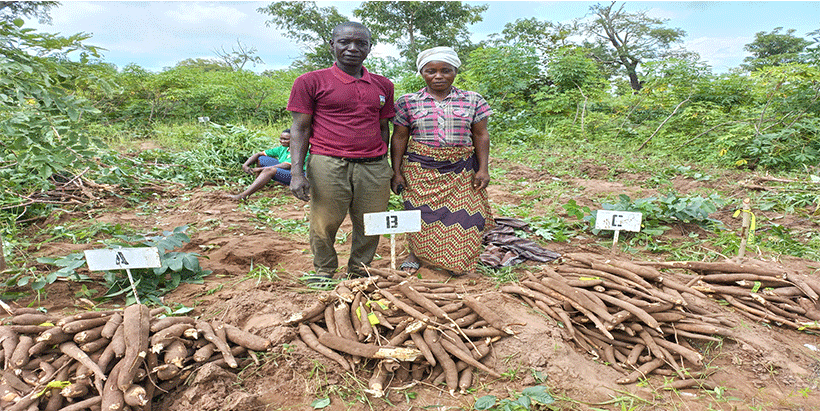
Associate Social and Gender Scientist Béla Teeken presented the inaugural webinar titled “Structurally integrating gender into cassava breeding: The Triadic comparison of technologies (Tricot) and prospects.” He highlighted the innovative Tricot approach, with valuable contributions from Senior Research Supervisor Bello Abolore and Nwanze. They emphasized how this method facilitates the integration of value chain actors and consumer preferences into the breeding and trait prioritization decision process, aligning it with sustainable development goals. This strategic application of the Tricot approach for on-farm and food product evaluations holds promising prospects for inclusive and economically impactful cassava breeding initiatives.
In the subsequent session, Social Scientist and Gender Expert Gundula Fischer led a discussion on “Piloting a gender transformative approach for equitable decision-making on agricultural innovations.” Fischer showcased the outcomes of workshops conducted in Malawi and Tanzania, demonstrating the effective use of gender-transformative decision-support tools to assess and address gender-related challenges in agricultural innovation.
The third webinar, “What does she know about aflatoxins?” presented by Associate Scientist Titilayo Falade, provided a comprehensive overview of the critical issue of aflatoxin awareness among women in Nigeria. The session emphasized the need for heightened awareness and suggested leveraging social groups to effectively disseminate information.
Senior Research Associate Devis Mwakanyamale‘s presentation on “A mixed-methods research tool for improving measurements and understanding of intra-household decision making” delved into the development of a versatile research tool to analyze intra-household decision-making dynamics. This comprehensive tool promises to contribute to a better understanding of households’ decision-making processes.
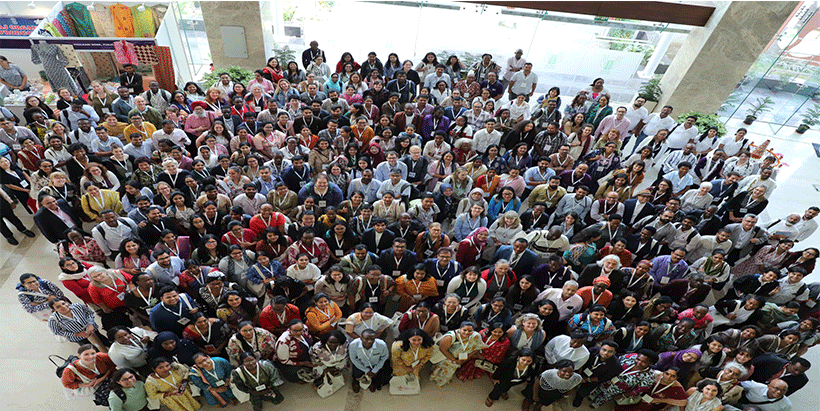
The series also explored the development and implementation of a Gender Research Key Performance Indicator (KPI) tool, as highlighted in the session led by the Head of the IITA Monitoring and Evaluation Unit, Hope Webber. This tool plays a crucial role in evaluating the integration of gender considerations within various research projects, fostering greater gender equality and participation.
IITA Capacity Development Office Head Zainatou Sore highlighted the impactful initiatives undertaken by the French Ministry of Europe and Foreign Affairs (MEAE) in Nigeria, focusing on supporting female entrepreneurship in the agri-food sector. The discussion underscored the significance of skill development and network building for women entrepreneurs, amplifying their voices in local and international market networks.
The series further delved into dynamic concepts such as gender sensitivity and gender transformation in climate-smart agriculture, as elucidated by Gender and Social Inclusion Lead of the Accelerating Impacts of CGIAR Climate Research for Africa (AICCRA) Project, Faustina Obeng Adomaa. The session provided key insights from the AICCRA project in Ghana and emphasized the importance of gender-responsive strategies in fostering inclusive climate-smart agriculture innovations and climate information services.
A compelling session led by Agricultural Economist Shiferaw Feleke delved into the intricate dynamics of gender differences in cassava trait preferences in Tanzania. Feleke highlighted the importance of understanding and addressing the various cultural and social factors influencing these preferences, implying the need for genetic and mechanical food science technologies and policy interventions.
The series has garnered resounding commendation with increasing attendance and more presenters participating. The IITA gender team takes pride in this commendable accomplishment, as Cole emphasizes their unique position as the sole research team organizing such a comprehensive series within IITA. The GLENS webinar series stands as a testament to the unwavering commitment and dedication of the GSN team in advancing gender-inclusive research and fostering meaningful impact within the agricultural sphere.
Contributed by Ochuwa Favour Daramola
Contributed by
Recent stories