
Delegates from Côte d’Ivoire’s Council of Coffee and Cocoa (CCC) and the Centre National de Recherche Agronomique (CNRA) visited IITA-CGIAR headquarters in Ibadan from 7 to 11 April. The familiarization visit marked the first in a series of engagements to build strategic partnerships, explore research models, and adopt modern technologies to strengthen Côte d’Ivoire’s agricultural development—starting with its key commodities: coffee and cocoa.
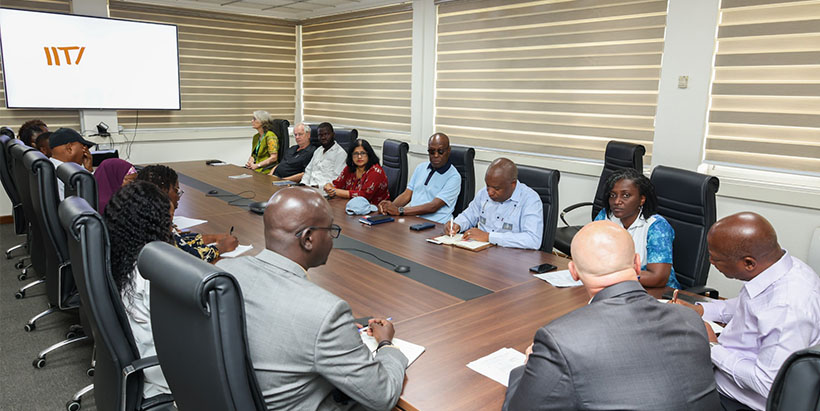
Côte d’Ivoire is prominent in global agriculture, accounting for 45% of the world’s cocoa and 24% of cashew production, and it ranks as the second-largest oil palm producer in Africa. Recognizing the importance of research in sustaining this status, POKOU Désiré, Scientific Coordinator at CNRA, emphasized, “Our government and decision-makers have decided to upgrade research in coffee and cocoa, with the mission to research and implement best practices to optimize production.”
Welcoming the delegates, IITA’s Deputy Director General, Partnerships for Delivery, Kenton Dashiell, highlighted the alignment of goals between IITA and CNRA. “We share similar needs in infrastructure development, funding, and delivering on food security. IITA is fully committed to collaborating with you to achieve your mission,” he said.
During the weeklong visit, the delegation toured key IITA facilities, including the Genebank, Bioscience Center, Virology Unit, Breeding Unit, Research Farms, Facilities Management Services (FMS), and I-house, among others. They engaged in thorough discussions with scientists and professionals on genomic selection, pest and disease identification, best agronomic practices, and mechanization technologies relevant to their crops of interest.
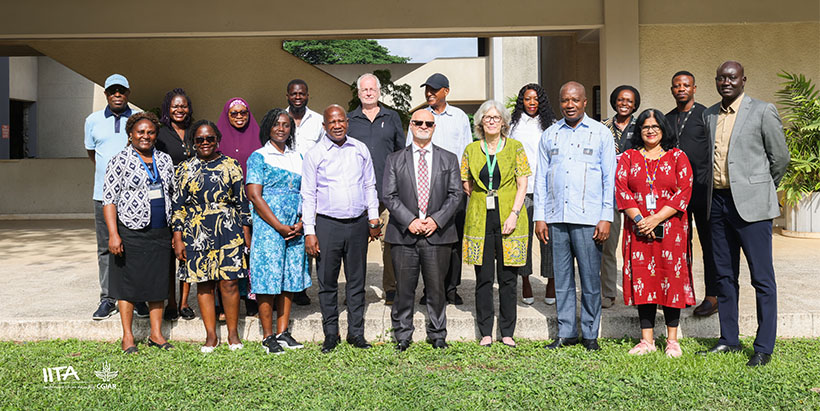
TAHI Mathias, Director of Research at CCC, applauded IITA’s robust infrastructure and professional environment. “IITA has shown us that we can achieve food security with the right systems in place. We do not need to reinvent the wheel. This collaboration will fill critical gaps in our agricultural research structures,” he said. He also commended the professionalism and social cohesion he observed among IITA personnel—from drivers to laboratory technicians—and the inclusive leadership demonstrated by senior management.
The delegates expressed particular interest in IITA-CGIAR’s advanced work in mechanization, noting its potential to revolutionize Côte d’Ivoire’s agriculture. They also explored shared challenges, such as aflatoxin contamination in cocoa and coffee, and the potential for drought-tolerant crop research in the face of climate change.
Dashiell, reflecting on IITA-CGIAR’s broader mission, stated, “Our vision of ‘Transforming African Agriculture’—developed over a decade ago in Mozambique—still holds true. Even beyond IITA-CGIAR’s mandate crops, we aim to support agricultural systems across the continent.”
The visit ended on a high note, with both parties reaffirming their commitment to long-term collaboration—aligning knowledge with technology and building on shared values to deliver practical solutions for African farmers.
Contributed by Folake Oduntan
Contributed by
Recent stories