
IITA NEWS

Malawi registers Aflasafe®—The cost-effective technology for aflatoxin management
April 17, 2020

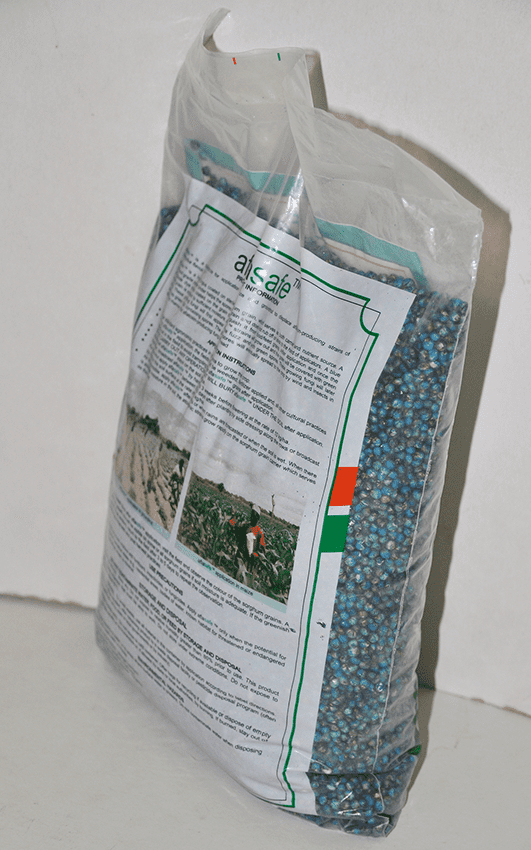
Malawi registers Aflasafe®—The cost-effective technology for aflatoxin managementThe long wait for registration of Aflasafe products in Malawi has finally ended as the Pesticides Control Board (PCB) has now given the approval. Earlier, the technology was given the green light by the Agricultural Technical Clearing Committee, a unit under the Department of Agricultural Research Services (DARS). This registration paves the way for the local manufacture and commercialization of this natural, safe, and effective technology that reduces aflatoxin contamination in foods and feeds by over 80%.

Aflatoxin is associated with several health problems in humans and livestock. High concentrations of aflatoxin in food also have a negative impact on trade and incomes of smallholder farmers. In Malawi, aflatoxin contamination is widespread, especially in groundnut and maize, which are main staples. This naturally occurring poison compromises public health, causes liver cancer, and is associated with child stunting and weakened immunity resulting in more illness. Livestock fed with contaminated feed also suffer reduced growth and productivity. Economically, Malawi’s lucrative groundnut export market has been compromised by high levels of aflatoxin in crops.

“This registration and future local manufacture, the technology will be available for adoption by large groups of farmers in the country,” said Joseph Atehnkeng, Aflasafe lead scientist in IITA-Malawi. CGIAR-IITA, DARS, and the United States Department of Agriculture – Agricultural Research Service (USDA-ARS), developed two Aflasafe products with support from USAID-Malawi. Each product contains atoxigenic strains of the fungus Aspergillus flavus as active ingredient, which competitively displaces aflatoxin producers.

The two registered products—Aflasafe MWMZ01 (regional) and Aflasafe MW02 (country-specific) underwent extensive testing in farmers’ fields for three years, mainly in the maize and groundnut-growing areas in Southern Central and Northern Malawi in (11 Districts and 22 Expansion Planning Areas (EPAs). These trials demonstrated that Aflasafe successfully and safely reduced aflatoxin levels in maize and groundnut by more than 80%, for both groundnut and maize, compared to untreated fields.
Malawi registers Aflasafe®—The cost-effective technology for aflatoxin management
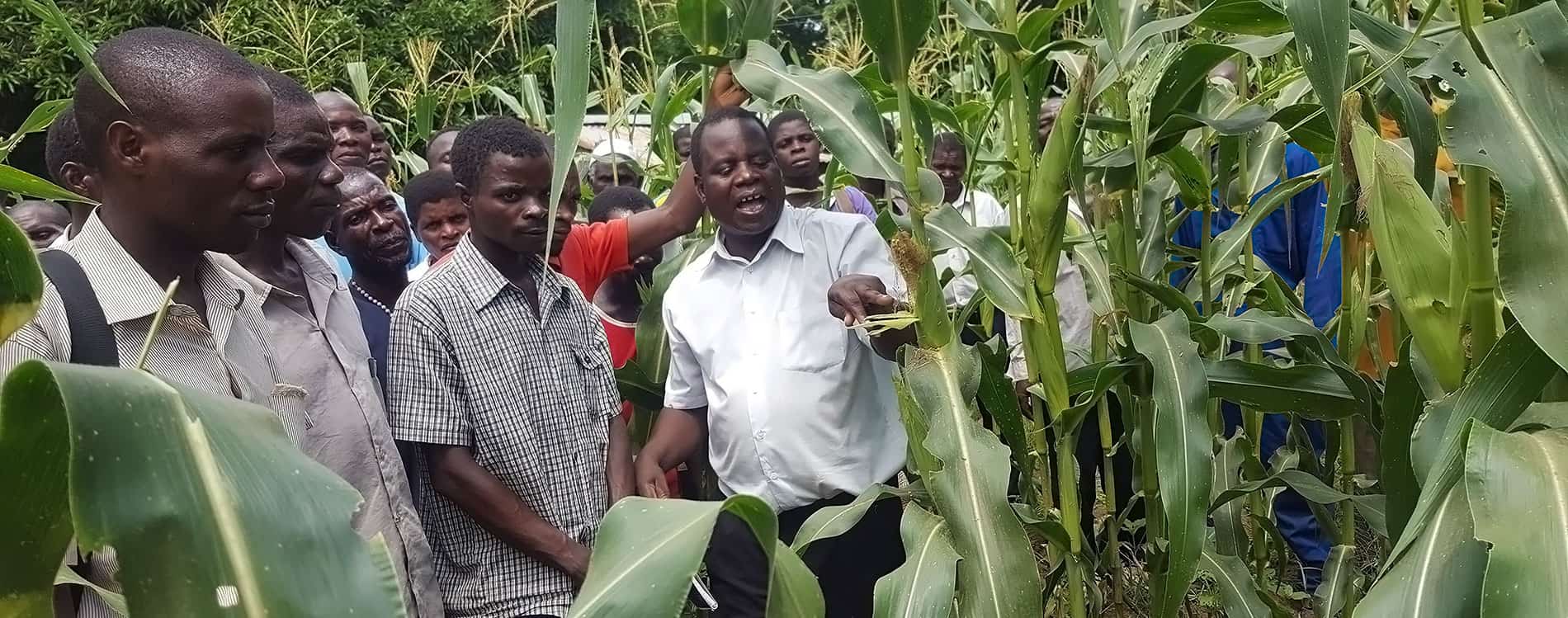
AEDO explains how contamination occurs

The good strains contained in Aflasafe are native to the Malawi environment and, after field application, become dominant in the environment, thereby out-competing the bad strains from colonizing the crop. Each product is composed of four native-to-Malawi, non-poisonous types of the fungus Aspergillus flavus. Aflasafe controls the aflatoxins by outnumbering toxigenic strains . The products are applied 2 to 3 weeks before flowering.

Ranajit Bandyopadhyay, Principal Scientist (Plant Pathology) and Leader of the Africa-wide Aflasafe Initiative at IITA, said, “With this, 14 Aflasafe products have been registered for scale-up in Africa: one product each in Senegal/The Gambia, Burkina Faso, Nigeria, and Kenya; and two products each in Ghana, Tanzania, Mozambique, Zambia, and Malawi.”

The next steps are to finalize a commercialization strategy, currently being reviewed by GIZ, and involve the private sector in the production and distribution of the products. After a competitive selection process, IITA will license the products to a private sector manufacturer and distributor to make the products available for farmers’ use. IITA will also provide technical assistance to aid in the start-up manufacturing process for Aflasafe products. The Aflatoxin Laboratory at the Chitedze Research Station will continue testing future groundnut and maize crops to assist the key players in bringing Aflasafe to market in Malawi.

With all of this in place, Malawi will be ready to begin producing maize and groundnut crops that will both keep its people healthy and open up new and lucrative markets for Malawi’s producers.

This milestone was achieved with the support of the Aflasafe team, especially Lawrence Kaptoge, for helping set up the Aflatoxin Research and Training Laboratory; Alejandro Ortega-Beltran, for reviewing the application dossier; and Arega Alene and David Chikoye for their administrative support.


Contributed by

Related news

No items found

Leave a Reply

Your email address will not be published. Required fields are marked *

Scroll to Top
Olaosebikan, Olamide

Olamide Deborah Nwanze is a Senior Research Associate specializing in gender mainstreaming research to inform participatory and inclusive breeding, variety development, and seed systems policies regarding root, tuber, and banana (RTB) crops in the International Institute of Tropical Agriculture Headquarters, Ibadan, Nigeria. She is a PhD candidate at the University of Ibadan and holds an MSc and B. Agric in Agricultural Extension and Rural Development. Olamide is a fellow of the African Women in Agricultural Research and Development – Gender Responsive Agricultural Systems Policy (AWARD-GRASP) and the Gender Responsive Researchers Equipped for Agricultural Transformation (GREAT). She seeks to apply her gender-mainstreaming learnings, gender-responsive research, and policy development, and review expertise to facilitate women, youth, children, and vulnerable social group’s access to and adoption of agricultural Innovations that guarantee food, nutrition, income, and livelihood security in Africa. Her current roles include mentoring research fellows, development of guides and training manuals, implementation and adaptation of gender frameworks and tools, value chain actors’ engagement as citizen science partners, policy review and redesign, data management, and analysis. Her current research explores mixed methods and participatory and interdisciplinary approaches to capture and highlight gender dynamics, needs, preferences, and challenges stakeholders face within the agricultural livelihood value chain to prioritize gender-inclusive strategies in breeding programs, policy design, and implementation.

At IITA, she contributes to the implementation of the CGIAR Accelerated Breeding Initiative and Genetic Innovation Programs; participatory and gender research within the NextGen CassavaHarvestPlusRTBFoods, and Tricot-ClimMob 1000Farms Projects; and gender knowledge communication via the G-LENS webinar series, video documentary, policy briefspublications, and blogs.


Recent publications

de Sousa, K., van Etten, J., Manners, R. Bello, A., Teeken, B., Olaosebikan, O., et al. 2024. The tricot approach: an agile framework for decentralized on-farm testing supported by citizen science. A retrospective. Agron. Sustain. Dev. 44, 8. https://doi.org/10.1007/s13593-023-00937-1

Madu, T., Onwuka, S., Nwafor, S., Onyemauwa, N., Ejechi, M., Ofoeze, M., Ukeje, B., Eluagu, C., Olaosebikan, O., Okoye, B., 2024. Gender-Inclusive Consumer Studies Improve Cassava Breeding in Nigeria in: Frontiers in Sociology, volume 9, number: 1224504, doi: 10.3389/fsoc.2024.1224504

Olaosebikan, O.; Bello, A.; Utoblo, O.; Okoye, B.; Olutegbe, N.; Garner, E.; Teeken, B.; Bryan, E.; Forsythe, L.; Cole, S.; Madu, T. 2023.  Stressors and Resilience within the Cassava Value Chain in Nigeria: Preferred Cassava Variety Traits and Response Strategies of Men and Women to Inform Breeding. Sustainability 15, 7837. https://doi.org/10.3390/su15107837

Okoye, B., Ofoeze, M., Ejechi, M., Onwuka, S., Nwafor, S., Onyemauwa, N., Ukeje, B., Eluagu, C., Obidiegwu, J.*, Olaosebikan, O., Madu, T.* 2023. Prioritizing preferred traits in the yam value chain in Nigeria: a gender situation analysis in: Frontiers in Sociology, volume 8, number: 1232626, pages 1 – 9, ISSN 2297-7775, 2023. https://www.frontiersin.org/articles/10.3389/fsoc.2023.1232626/full

Olaosebikan, O., Bello, A. A., de Sousa, K., Ndjouenkeu, R., Adesokan, M., Alamu, E. O., Agbona, A., van Etten, J., Kegah, F. N.*, Dufour, D., Bouniol, A., Teeken, B. 2023. Consumer acceptability of cassava gari-eba food products across cultural and environmental settings using the triadic comparison of technologies approach (tricot) in: Journal of the Science of Food and Agriculture,

Teeken, B., Olaosebikan, O., Bello, A. A., Madu, T.*, Cole, S. M. 2023. Qualitative assessment on the positionality and preferences of dyads in relation to cassava-related activities: working with tricot trial citizen scientists https://hdl.handle.net/10568/138326 Type: Manual

Bouniol, A., Ceballos, H., Bello, A. A., Teeken, B., Olaosebikan, O., Owoade, D., Agbona, A., Fotso Kuate, A., Madu, T.*, Okoye, B.*, Ofoeze, M.*, Nwafor, S.*, Onyemauwa, N.*, Adinsi, L.*, Forsythe, L., Dufour, D. 2023. Varietal impact on women’s labour, workload and related drudgery in processing root, tuber and banana crops: focus on cassava in sub-Saharan Africa in: Journal of the Science of Food and Agriculture, pages 1 – 25, ISSN 0022-5142,

Bello, A. A., Agbona, A., Olaosebikan, O., Edughaen, G., Dufour, D., Bouniol, A., Iluebbey, P., Ndjouenkeu, R.*, Rabbi, I. Y., Teeken, B. 2023. Genetic and environmental effects on processing productivity and food product yield: drudgery of women’s work in: Journal of the Science of Food and Agriculture, pages 1 – 32, ISSN 0022-5142, 5

Cavicchioli, M., Zimbiti, T., Teeken, B., Nwanze, D.O., Liani, M., Parkes, E. & Bello, A. 2023. IITA-Gender Responsive Breeding Training Report. Genetic Resources Center, IITA-HQ, Ibadan, 21-23 September, 2022. Ibadan, Nigeria: IITA, (34 p.).https://hdl.handle.net/10568/131368

Agbona, A. Peteti P., Teeken B., Olaosebikan O. Bello, A. A., Parkes, E., Rabbi, I. Y., Mueller, L., Egesi, C., Kulakow, P. 2022. Data Management in Multi-disciplinary African RTB Crop Breeding Programs. In: Williamson, H.F., Leonelli, S. (eds) Towards Responsible Plant Data Linkage: Data Challenges for Agricultural Research and Development. Springer, Cham. https://doi.org/10.1007/978-3-031-13276-6_5

Lora Forsythe, Pricilla Marimo, Sarah Mayanja, Olamide D. Olaosebikan, Esme Stuart, Bela Teeken, Benjamin Okoye, Tessy Madu, (2021). Cross-product Gender Analysis of RTBfoods Step 2 Gendered Food Mapping on RTB Products. Understanding the Drivers of Trait Preferences and the Development of Multi-user RTB Product Profiles, WP1. London, UK: RTBfoods Field Scientific Report, 30 p.

Teeken, B., Garner, E., Agbona, A., Balogun, I., Olaosebikan, O., Bello, A., Madu, T., Okoye, B., Egesi, C., Kulakow, P. and Tufan, H.A. 2021. Beyond “Women’s Traits”: Exploring How Gender, Social Difference, and Household Characteristics Influence Trait Preferences. Frontiers Sustainable Food Systems 5:740926. https://doi.org/10.3389/fsufs.2021.740926

Teeken, B., Agbona, A., Bello, A., Olaosebikan, O., Alamu, E., Adesokan, M., Awoyale, W., Madu, T., Okoye, B., Chijioke, U., Owoade, D., Okoro, M., Bouniol, A., Dufour, D., Hershey, C., Rabbi, I., Maziya‐Dixon, B., Egesi, C., Tufan, H. and Kulakow, P. (020. Understanding cassava varietal preferences through pairwise ranking of gari‐eba and fufu prepared by local farmer–processors. Int J Food Sci Technol. https://doi.org/10.1111/ijfs.14862

Bela Teeken, Olamide Olaosebikan, Ireti Balogun, Benjamin Okoye, Tessy Madu, Steven Cole, Abolore Bello, Elizabeth Parkes. (2020). Piloting the G+ customer and product profile tools for gender-responsive cassava breeding in Nigeria. Nigeria: International Institute of Tropical Agriculture (IITA). https://hdl.handle.net/20.500.11766/13000