
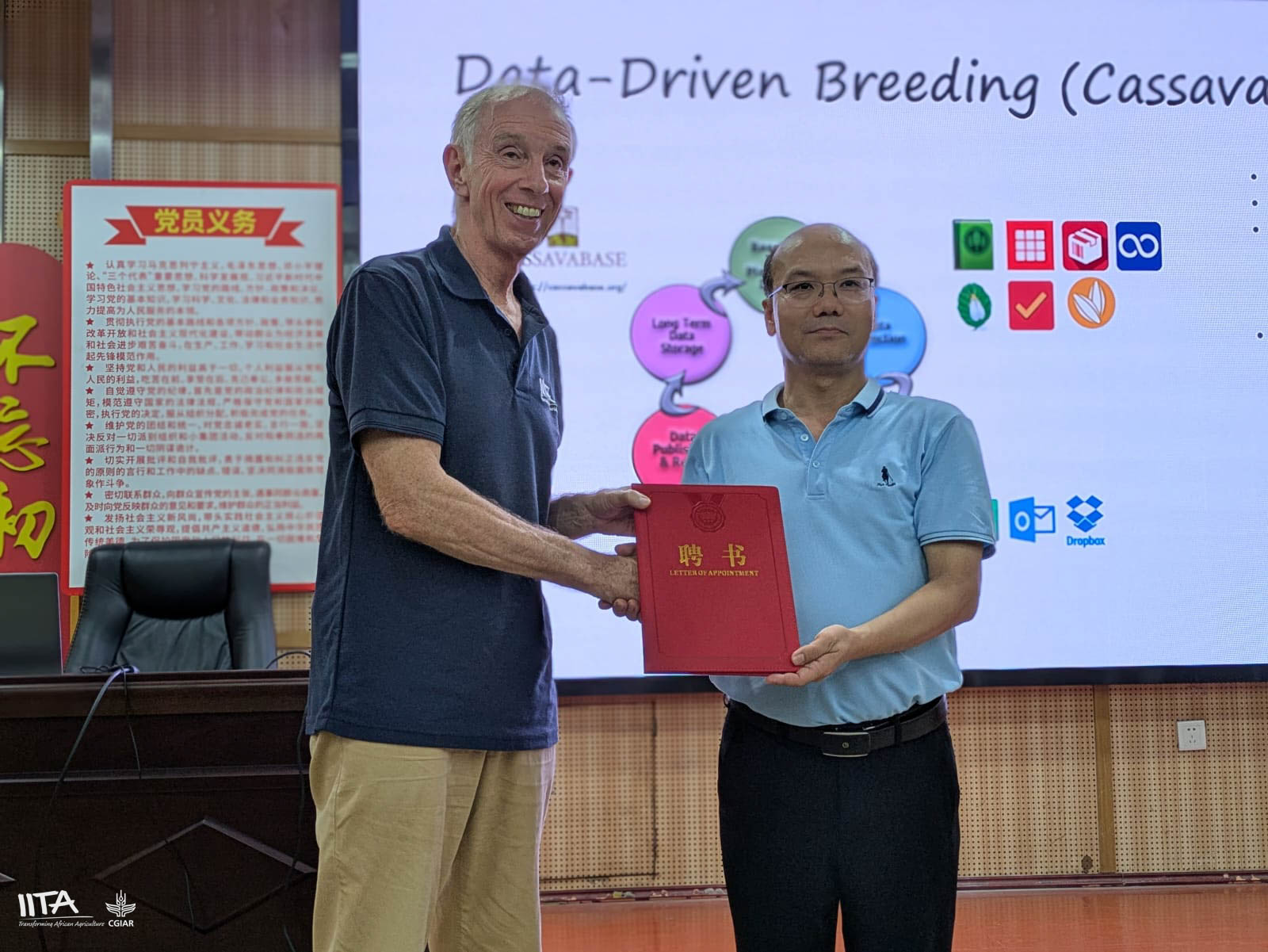
In a prestigious recognition of his expertise in banana, Professor Rony Swennen, a scientist at the International Institute of Tropical Agriculture (IITA)/CGIAR, has been appointed as a visiting professor at the Guangxi Academy of Agricultural Sciences in China.

During a brief stay in the South Kivu province of the Democratic Republic of the Congo (DRC), which hosts IITA-CGIAR, Dr Simeon Ehui, Director General of IITA and CGIAR Regional Director for Continental Africa, met with Provincial Governor Jean-Jacques Mpurusi Sadiki.

Agri-food value chains (AVCs) have experienced tremendous growth and transformation in the last two decades in developing regions.

To assess its impact on knowledge dissemination in the agricultural landscape, Radio IITA, 88.5FM, recently embarked on a three-day comprehensive survey outreach targeting farmers and listeners within its broadcast coverage.

Lusaka, April 4 – The International Institute of Tropical Agriculture (IITA) announced today that it has gained full diplomatic status as an international organization working in Zambia, according to the Zambian government.
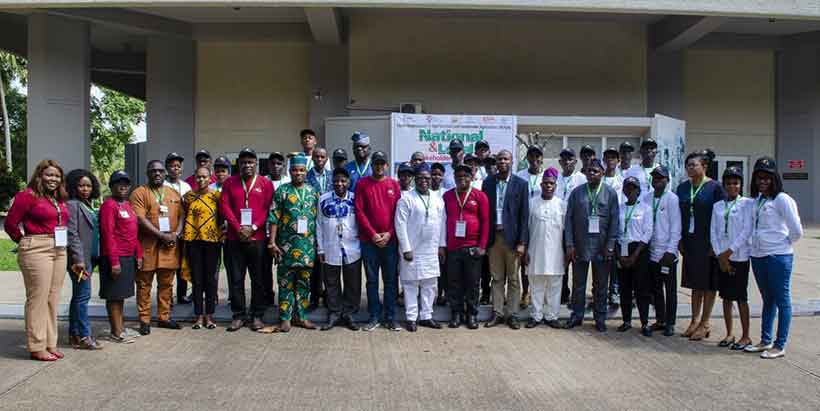
As part of efforts to create profitable partnerships and support beneficiaries of the YEASA project in Nigeria, the YEASA project consortium, Afe Babalola University (ABUAD), IITA, and Africa Rice, organized a workshop for national and local stakeholders on the roadmap for public and private youth investment in the agricultural sector.

The agricultural sector occupies an important place in the economy of Togo, significantly contributing to the gross domestic product. The cassava subsector has been identified to have high growth potential for contributing to job creation

International cassava improvement research at IITA was initiated in the early 1970s with a focus on developing high-yielding varieties with resistance to major pests and diseases.

Insects are part of the diet for humans and domesticated animals in many African cultures. Insect farming has great potential to contribute to food security by increasing the essential nutrients–protein and micronutrients–in human and livestock diets.
Go to page:
