
35 learn about gene editing and its communication
23 April 2022
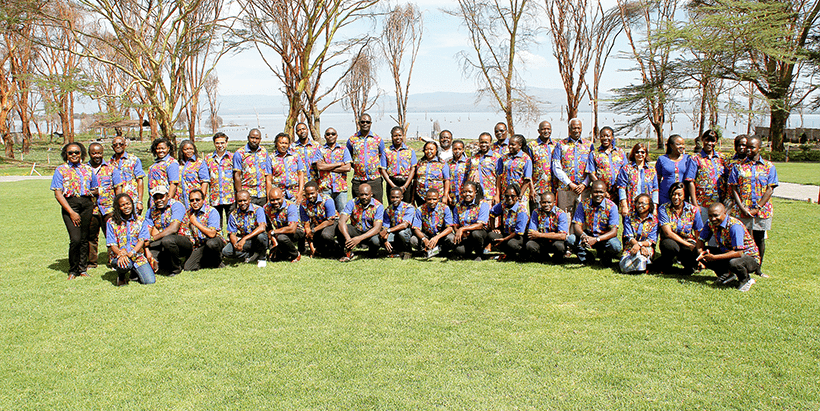
Scientists and communication specialists from various Kenyan organizations participated in a four-day training workshop to improve gene editing communication. Thirty-five participants graduated from the workshop and received certificates.
Participants, all of whom are from Kenya, included scientists conducting gene editing research, science writers, representatives from academia, MSc and PhD students in biotechnology and breeding, and a representative of a farmers’ consortium.
The Alliance for Science Director for Africa, Patricia Nanteza, congratulated the graduates on this milestone. She charged them to radiate the lessons learned in their work to foster greater public appreciation of gene editing and its benefits. Nanteza added that each participant had acquired the designation of Science Ally with the graduation, commissioning them as science ambassadors to the world.
IITA Eastern Africa Hub Director Leena Tripathi also called upon the participants to continue working together with the networks formed during the training.
“It was an excellent and informative training. As a student, I have learned a lot about gene editing applications in agriculture. Gene editing will go a long way to help farmers increase production and protect the environment through reduced pesticide applications,” said Dominic Mogere, a Molecular Biology & Bioinformatics MSc student at the Jomo Kenyatta University of Agriculture and Technology (JKUAT).
This was the second in a series of workshops tailored to forge closer ties between scientists and various stakeholders, held under the Alliance for Science, IITA, and the Open Forum on Agricultural Biotechnology in Africa (OFAB) collaboration. The inaugural workshop was held in August 2021.
The sessions helped participants understand gene editing better while equipping them with the skills to disseminate the concept to the broader public, including policymakers, farmers, and lay audiences. The training also focused on gene editing legislation, coming in the wake of Kenya’s recent release of guidelines for determining the regulatory process of genome editing in the country.
Gene editing, also known as genome editing, is a tool that scientists use to make targeted and precise changes in the genetic makeup of an organism to improve desired traits in the organism. Several African countries have paved the way for gene editing research to improve resilience and productivity in select crops and livestock against the background of a ballooning population and an increasingly erratic climate. Kenya is leading gene editing research for improved agricultural production among several African countries.
Former director-general of the National Environmental Management Authority in Kenya, Professor Ratemo Michieka, the founding Vice-Chancellor of JKUAT, was the keynote speaker and called for integrity among the participants urging them to network to get the public to respect and listen to their message.
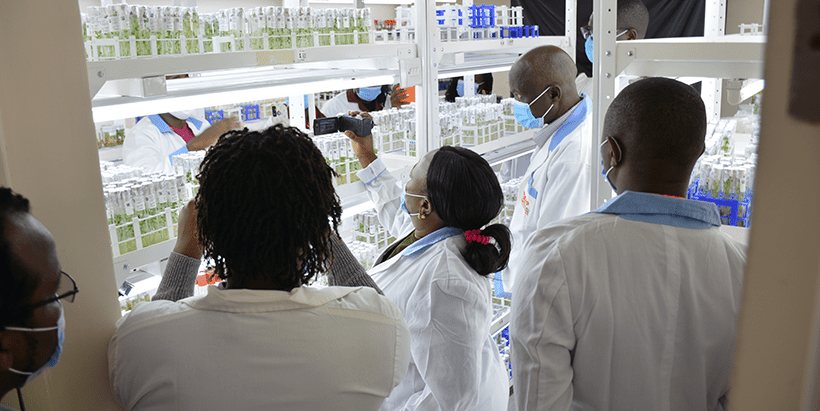
The seminar concluded with a visit to the BecA labs at the ILRI campus in Nairobi where IITA scientists research banana, cassava, and yam. Participants were shown some of the high-tech equipment used to execute various biotechnology projects at the facility.
Contributed by Joseph Maina
