Shaping the future of cassava and yam breeding in Africa
3 June 2026
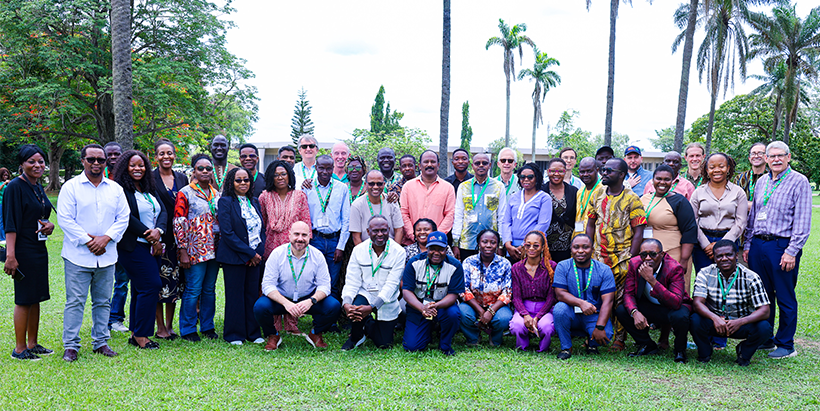
Over 50 scientists, breeders, national program leaders, and development partners gathered at IITA headquarters in Ibadan from 18 to 20 May to discuss the future of cassava and yam breeding in Africa and strengthen pathways for delivering improved varieties to farmers at scale.
Central to the discussions was the concept of “Breakthrough products,” improved varieties designed not only for scientific advancement, but for measurable impact and widespread farmer adoption.
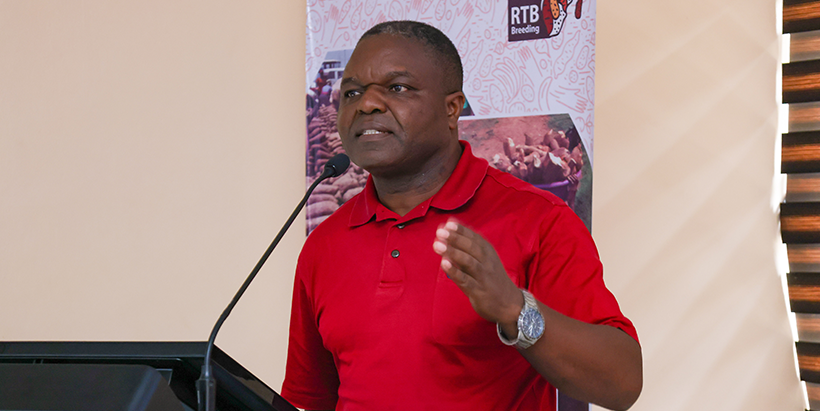
In his opening remarks, Dr Hapson Mushoriwa, the head of the Breeding Programs in IITA, reflected on the progress made by RTB breeding programs, including the release of 279 improved varieties across cassava, yam, and banana. He noted, however, that the next phase will require stronger prioritization, targeted investments, and more effective delivery systems to achieve greater impact. He emphasized that “The bigger picture is to deliver the second Green Revolution in RTB crops.”
Jim Lorenzen of the Gates Foundation emphasized the importance of sustainable seed systems and market-driven approaches to ensure improved varieties reach farming communities. Discussions also highlighted the need for long-term planning, clear success metrics, and breeding approaches that reflect farmers’ needs from development to adoption. “The vision is long, and the Gates Foundation is looking beyond the present to the future generation,” he added.
Representing Breeding for Tomorrow, Makram Geha, brought structural rigor to the vision, stressing that breakthrough product development is not a moment; it is an architecture that involves multi-year work plans, defined success metrics, and end-to-end thinking that embeds farmers’ perspectives throughout, not just at the point of release.
Hugo Campos from the International Potato Center (CIP) stated that the meeting was not just a review of the past but a design session for a shared future, one oriented toward increased genetic gains, the industrialization of cassava and yam production, and expanded economic value for smallholder farmers.
David Meyer, an independent consultant with a private-sector background, shared insights on the interface between research centers and private companies. According to him, a successful handover from improved variety to farmer adoption does not happen by default; it requires a deliberate, well-coordinated approach.
The meeting, which unfolded across three days and six thematic blocks, had the participants reviewing breeding progress and work plans, exploring modernized breeding tools, and visiting cassava breeding plots and yam multiplication sites. The Sessions also focused on future breeding pathways beyond 2027, including strategies to accelerate genetic gains and increase the economic value of cassava and yam production.
The meeting concluded with aligned priorities, clearer accountability structures, and a shared commitment to strengthening the delivery of farmer-focused breeding innovations across Africa.
Contributed by Anu Oyeleye and Tolulope Akinola
