DR Congo to advance research, innovation, and food security in partnership with IITA
5 June 2026
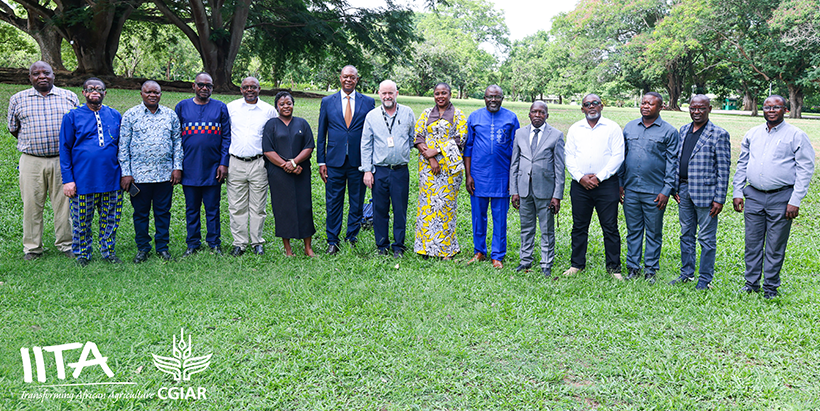
A delegation from the Programme National de Développement Agricole (PNDA), (translated National Agricultural Development Programme) of the Democratic Republic of Congo (DRC) visited IITA–CGIAR on 7-8 May to strengthen collaboration and deepen partnerships aimed at transforming agriculture and improving livelihoods across the region.
Welcoming the delegation on behalf of IITA Director General Dr Simeon Ehui, Prof. Michael Abberton, the IITA West Africa Hub Director, provided an overview of IITA’s work, structure, and contributions to agricultural development across Africa. He highlighted the institute’s commitment to research, innovation, and strategic partnerships that drive sustainable food systems and economic growth.
The Director General of the National Institute for Agricultural Study and Research (INERA), Dominique Kankonde, appreciated IITA for hosting the delegation and described the visit as an important step in strengthening the long-standing relationship between the two institutions.
Kankonde emphasized the significant impact of IITA’s support to INERA, especially plans to establish a gene bank in the DRC. “I’m happy with the good news that the gene bank will be brought to the DRC,” he said, adding that the importance of the initiative became even clearer through visits facilitated by IITA to other CGIAR centers. He also revealed that technical staff from INERA would soon visit IITA for practical training across the institute’s various units.
According to him, IITA’s partnership approach extends beyond research by actively engaging the private sector to ensure that research outputs reach farmers and other end users effectively.
IITA Researcher, Paul Dontsop, also shared insights into PNDA, describing it as an ambitious agricultural development initiative focused on strengthening value chains, infrastructure, production, and marketing systems, while building research and institutional capacity in the DRC.
A Lualaba Province Inspector from the delegation, Tshinyeta Kasongo Valentin, commended IITA’s work and highlighted the growing importance of agriculture in Lualaba Province. While acknowledging the province’s strong mining sector, he noted that agriculture is increasingly being recognized as a key driver of sustainable development. “I’m happy to hear the mandate crops of IITA because that is exactly what we are growing,” he stated.
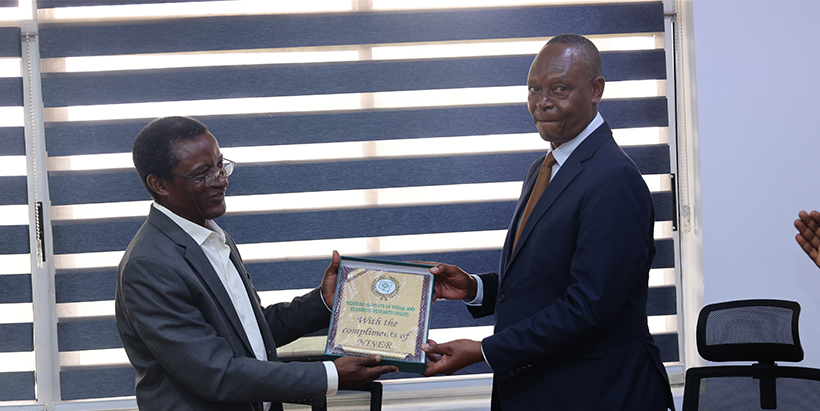
As part of the exchange visit, the delegation also visited the Nigerian Institute of Social and Economic Research (NISER), where discussions focused on collaboration in knowledge exchange, capacity building, and research development. Representing the Director General of NISER, the Head of Research Management Department, John Adeoti, welcomed the partnership opportunity and proposed formalizing the collaboration through a Memorandum of Understanding (MoU) to support future joint initiatives.
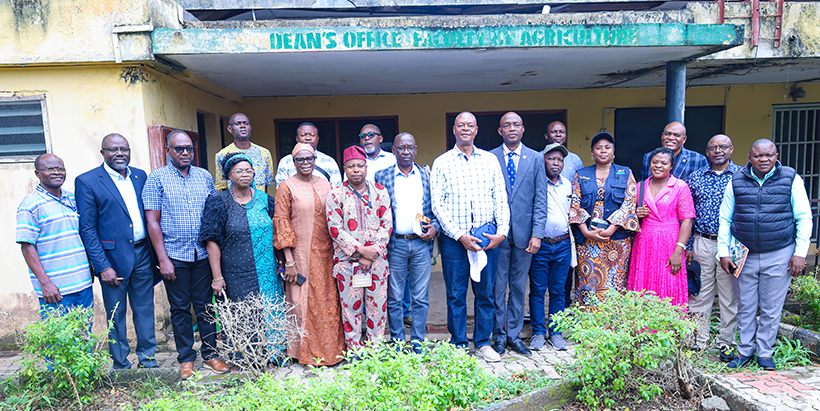
The delegation further visited the University of Ibadan to explore opportunities for collaboration in agricultural research and postgraduate training. The team was warmly received by the Dean of the Faculty of Agriculture, Prof. Tolulope Ososanya, alongside the former Director of Academic Planning, Prof. Victor Okoruwa. Discussions centered on strengthening MSc and PhD training programs, with recommendations to expand future collaborations into forestry, fisheries, horticulture, and animal husbandry.
As the visit concluded, discussions on future partnerships highlighted the Fertilizer Hub, cassava breeding and production, capacity building, and the gene bank as priority areas for collaboration.
The Head of the DRC Cooperative, Lydiane Nabami Nyembo, also acknowledged the professionalism and quality of IITA staff, while noting the transformative potential of the cassava value chain to create jobs and empower young people. Reflecting on the visit, she remarked, “The level of women’s engagement across every stage of IITA’s work is truly impressive. I will encourage women in my cooperative to visit IITA and learn. This visit has genuinely brought about a change in mindset.”
Contributed by Alice Omoteji and Ochuwa Favour Daramola
