Cassava Agribusiness Seed System (CASS)
Enabling agribusiness development for scaling quality cassava seed systems for control of major viral diseases in Rwanda and Burundi.
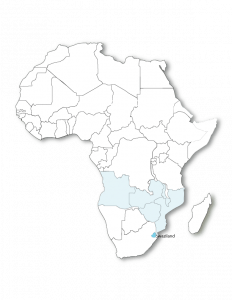
The Cassava Agribusiness Seeds System (CASS) project is a three-year initiative that aims to enable agribusiness development for scaling quality cassava seed systems for control of major viral diseases in cassava, namely Cassava Brown Streak Disease (CBSD) and Cassava Mosaic Disease (CMD) in Rwanda and Burundi.
The project’s overall objective is to select a diversity of cassava clones resistant to CBSD and CMD, but responding to farmers’ demand, to make this material quality certified and available through different agribusiness models and to upscale these models in Rwanda and Burundi.
Through CASS project, IITA and her partners are working together as a consortium to produce and distribute improved cassava varieties with strong resistance to CBSD and CMD, evaluated for diverse end user-preferences. One of the key outcomes of CASS project is to understand and respond to constraints and opportunities at farmer and institutional levels for upscaling CASS models in collaboration with different cassava value-chain actors.

Dr. Silver Tumwegamire
Project Lead
s.tumwegamire@cgiar.org
Project Duration
April 2019 – March 2022
Status
Active
To increase cassava productivity in Burundi and Rwanda through development and deployment of CBSD /CMD resistant varieties, as well as a system that will produce high quality virus-tested seed and facilitate its dissemination to farmers.
- To understand and address constraints and opportunities at farmer and institutional levels for upscaling formal or informal cassava seed system agribusiness models in collaboration with different seed value chain actors
- To diversify the availability of cassava varieties with strong resistance/tolerance to CBSD and CMD that meet farmer and commercial end-user preferences.
- To develop, test and tailor different types of cassava seed system agribusiness models with and for different groups of farmers;
- At the end of the project, 5 cassava clones resistant to CBSD and CMD will be available to farmers through validated, innovative, and financially sustainable CASS models. This will increase production and income gains for farmers, as well as the profitability of industrial processing.
- Enabling environment for formal seed systems improved and national partners better collaborate and align their investments.
- The validated CASS models, multi-stakeholder collaboration, and strong institutional embedding will attract investment to upscale the CASS models and their outcomes beyond the initial scope of the project.
- National seed certification authorities in Rwanda and Burundi are routinely implementing quality assurance checks on cassava seed agribusinesses in the two countries and seed system service delivery businesses are established by young entrepreneurs
DONOR(S)
The Netherlands Government through the Netherlands Organization for Scientific Research (NOW)
PARTNERS
- SPARK
- Institut des Sciences Agronomique du Burundi (ISABU)
- Rwanda Agriculture and Animal Resources Development Board (RAB)
- Wageningen University and Research (WUR)
Project progress in Year 1
CASS project was initiated and is being implemented by a consortium of five partners (IITA, RAB, ISABU, SPARK, and WUR). They are currently in the implementation phase of planned activities as per their respective workplans. Key project activities planned under Year-One can be classified under two main categories: Project administration and implementation of assessments and studies. Under project administration, the partners were expected to put in place resources and tools needed for a smooth implementation of the project.
Featured STORIES
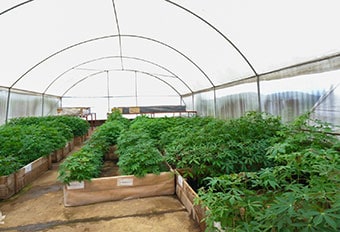
IITA partners with Rwanda to develop cassava clean seed standards.
Featured PUBLICATIONS
CONTACT US
Dr Silver Tumwegamire
Cassava Breeder
Email: s.tumwegamire@cgiar.org
Samuel Mugambi
Research and Project associate
Email: s.mugambi@cgiar.org
