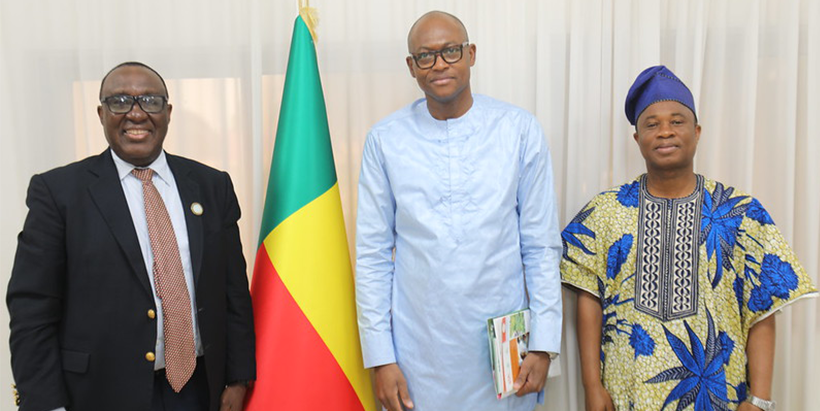
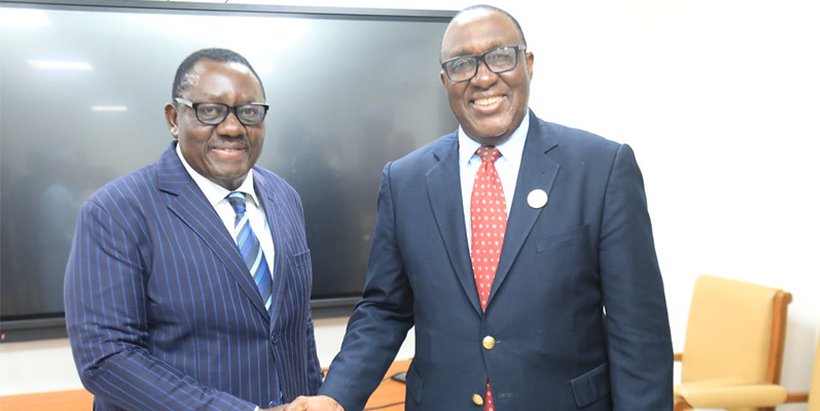
Dr Simeon Ehui with President Patrice Guillaume Talon.
President of the Republic of Benin, His Excellency Patrice Guillaume Talon, has articulated a clear national vision to accelerate agricultural transformation by placing young people at the center, linking education, skills development, and agribusiness opportunities to prepare the next generation for productive careers in agriculture.
This priority formed the basis of a high-level engagement between President Talon and the IITA Director General and CGIAR Regional Director for Continental Africa, Dr Simeon Ehui, as both parties explored new frontiers for strengthening the long-standing strategic partnership between IITA-CGIAR and the Government of Benin.
The discussions focused on aligning IITA’s research and development agenda with Benin’s national agricultural transformation priorities, with particular emphasis on youth engagement, agricultural education, capacity development, and agribusiness development.
As part of the Government’s broader strategy to prepare young people for careers in agriculture and agribusiness, both parties discussed opportunities to integrate agricultural education into the high school curriculum. President Talon highlighted the importance of introducing students to agriculture early, equipping them with practical skills, and nurturing an entrepreneurial mindset as a pathway to job creation and economic growth.
Dr Simeon Ehui with Republic of Benin, Minister of Agriculture, Livestock, and Fisheries, Gaston Dossouhoui.
Existing Government–IITA collaborations in Benin such as the ENABLE-Youth initiative under the Technologies for African Agricultural Transformation (TAAT) program has been recognized a strong foundation on which to build a more comprehensive national system for youth-centered agricultural education and agribusiness development.
Dr Ehui reaffirmed IITA’s commitment to supporting the Government of Benin’s vision through technical backstopping, curriculum development, teacher and trainer capacity building, and the provision of research-based innovations and learning tools.
“Equipping young people with the right foundation to see agriculture as a viable and profitable business is essential for transforming food systems and creating jobs in Africa,” he said. “IITA is ready to work with the Government of Benin to design and implement a robust agricultural education framework that prepares the next generation of agripreneurs.”
The meeting also reviewed broader areas of collaboration, including research alignment with national priorities, innovation scaling, capacity development, and strengthening national agricultural systems to support productivity, resilience, and inclusive growth.
In a related engagement during the mission to Benin, Dr Ehui also met with the Minister of Agriculture, Livestock, and Fisheries, Gaston Dossouhoui, alongside a delegation from IITA headquarters in Ibadan and the IITA Resident Representative in Benin, Dr Manu Tamo. The meeting, held in a spirit of open dialogue, trust, and strong institutional partnership, underscored the depth of collaboration between both parties. This reaffirmed shared commitment geared towards strengthening the long-standing cooperation in support of agricultural research, scientific education, youth development, and sustainable agriculture, with IITA reiterating its readiness to continue supporting Benin’s national priorities in line with existing agreements.
IITA-CGIAR has partnered with the Government of Benin for nearly 40 years, contributing to agricultural research, technology dissemination, capacity building, and policy support. This renewed engagement signals a shift toward a more integrated, systems-level partnership, linking research, education, youth development, and agribusiness to accelerate Benin’s agricultural transformation.
The deepened collaboration reflects a shared commitment to empowering young people, strengthening institutions, and ensuring sustainable agricultural development for Benin and the wider region.
Contributed by ’Timilehin Osunde
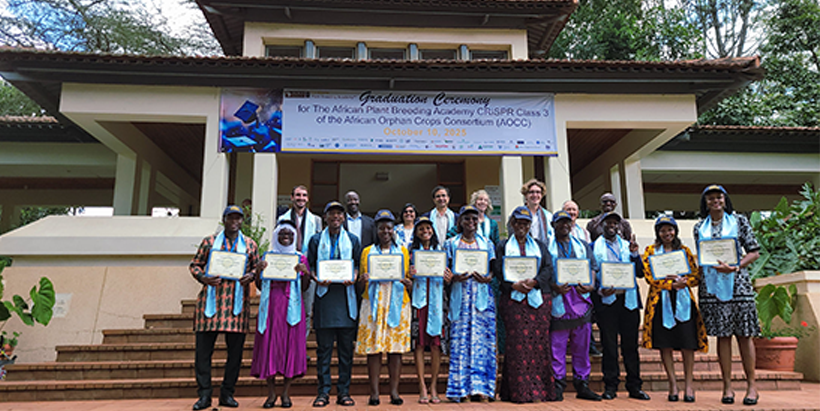
CRISPR Course fellows and facilitators during the graduation ceremony
The third cohort of the Africa Plant Breeding Academy (AfPBA) CRISPR Course has officially graduated, marking another milestone in strengthening Africa’s capacity for advanced crop improvement technologies. This cohort hosted eleven scientists from five African countries, including Benin, Burkina Faso, Ghana, Kenya, and Nigeria.
The training, hosted at the IITA–CGIAR Biotechnology Platform in Nairobi, on the ILRI campus and at CIFOR-ICRAF, is part of a multi-partner initiative of the African Orphan Crops Consortium (AOCC), in collaboration with IITA, the University of California, Davis, and the Innovative Genomics Institute at UC Berkeley. The course provides African researchers with both theoretical and practical knowledge in the use of CRISPR-Cas systems for precise and efficient genome editing in plants.
Over the intensive 6-week training period, fellows learned to design and execute genome editing, from guide RNA design to plant transformation, molecular analysis, and phenotyping, gaining hands-on experience that bridges the gap between science and application. The course also included sessions on biosafety, regulatory considerations, and communication, reinforcing a holistic understanding of responsible research and innovation.
“This program is building a network of African scientists who can lead the application of genome editing to solve agricultural challenges on the continent,” said Dr Leena Tripathi, Director of Genetic Innovations Science Area and leader of the Biotechnology Program. “We are proud of this new cohort of fellows, and confident that they will make meaningful contributions to their home institutions and national programs.”
Speaking on behalf of the graduating fellows, one participant reflected, “This training has transformed how we view biotechnology. We now have the confidence and the technical skills to apply CRISPR in our work and contribute to Africa’s food security.”
Fellows during a training session in the IITA Biotechnology laboratory
Following the course, each fellow will receive one year of post-course mentorship from experts to support the establishment of genome editing programs for crop improvement at their respective home institutions. IITA remains committed to providing ongoing technical advice and guidance to these fellows as they apply their new skills and develop practical research outputs.
With this third cohort, the CRISPR Course has now trained 32 scientists from 10 African countries, equipping them to advance crop research focused on disease resistance, drought tolerance, improved nutrition, and yield. The program aims to establish a critical mass of African genome editing experts capable of driving innovation in plant science.
The graduation ceremony was marked by enthusiasm and reflection as fellows received their certificates, symbols of both achievement and commitment to advancing modern biotechnology for Africa’s agriculture.
“Our goal,” added Dr Tripathi, “is to ensure that African scientists are not just consumers of technology but active innovators shaping solutions for the continent.”
Contributed by Rose-Harriet Okech
Christelle and Veronique proudly showcasing their freshly harvested cucumbers
Véronique Tevodrje and Christelle Dekadjevi are two young Beninese women bound by a strong friendship and a shared passion for modern agriculture. These two young women were part of the fifth cohort of the ENABLE-TAAT incubation program being implemented by the IITAYouth in Agribusiness program, where they received comprehensive training in sustainable agricultural techniques, agribusiness management, and innovation across the vegetable value chain. Thanks to this structured support, they successfully turned their ambition into a concrete, viable, and promising enterprise.
Upon completing their training, they established their own vegetable production unit within the University of Abomey-Calavi. On a well-organized plot, they grow various fresh vegetables, including lettuce, tomatoes, eggplant, basil, and chili peppers, using modern and environment friendly methods.
Group photo with Christelle and Veronique, celebrating their success in agribusiness
Although still at the early stage of their entrepreneurial journey, Véronique and Christelle already show a strong spirit of sharing. They are fully open to supporting interested students who wish to follow in their footsteps and take control of their future through sustainable and modern agriculture.
Their story proves that, with proper guidance, determination, and passion, agriculture can become a powerful driver of economic empowerment, professional integration, and lasting social impact.
Contributed by Rodrigue Obognon
Rose-Marie Mingninou, a determined agricultural sciences’ graduate, was never destined for a traditional career. She had a passion for agribusiness and a clear vision: to innovate, create, and make tangible impact in her community.
Her journey began with humble ambitions, selling imported goods to save money for her dream business. The pivotal moment came when she joined the ENABLE-TAAT program at IITA-Benin. This transformative experience provided her with more than just training; it gave her the practical incubation, technical guidance, and vital resources needed to turn her vision into reality.
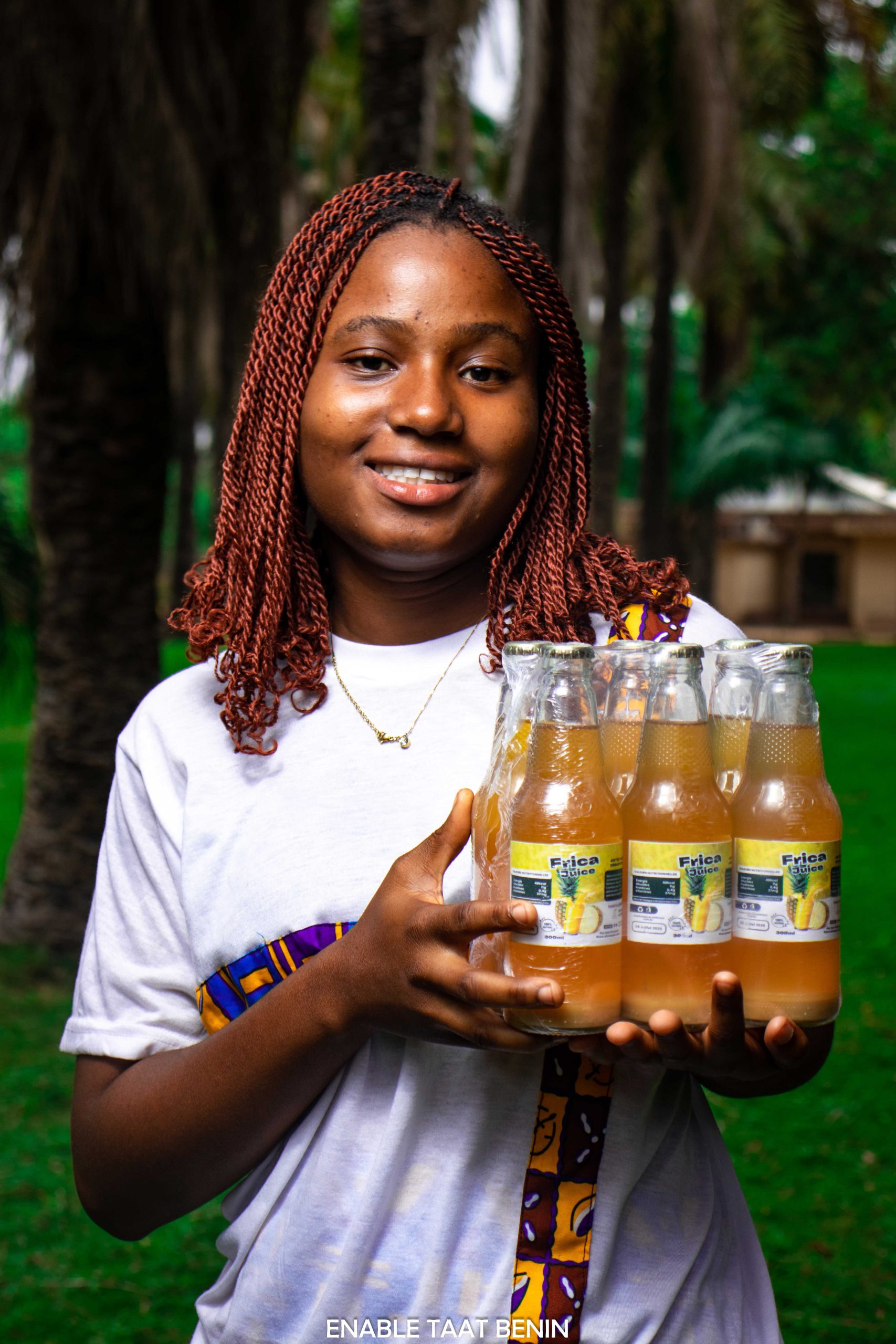
With this support, Rose-Marie founded Orchie’s Business, a company that transforms local fruits into fresh, natural juices. Her innovative recipes, which feature locally sourced baobab and pineapple, not only create healthy and refreshing beverages but also celebrate Benin’s rich agricultural heritage.
The path to success was not without its hurdles. Her first production run resulted in significant losses, a setback that could have easily derailed her ambitions. However, Rose-Marie’s resilience shone through. She refined her business strategy, improved her processes, and pressed on with renewed determination.
Today, Rose-Marie is steadily working to establish a thriving agro-processing industry. Her goal is to become a key player in the import and export of value-added agricultural products from Benin to the global market, showcasing the quality and innovation of African agripreneurs.
Rose-Marie’s story is a testament to the power of the ENABLE-TAAT program and its mission to train, support, and empower a new generation of African youth to lead agricultural transformation across the continent. Her success highlights the immense potential of young agripreneurs to build robust and resilient food systems.
Contributed by Welissa Mulei
Dr Simeon Ehui with Orou Hermann Takou, Director of Cabinet of the Minister of Economy and Finance, and Aguemon Dossa, Director of Cabinet of the Minister of Agriculture, Livestock and Fisheries (Photo credit: Atayi Opaluwah).
As part of continued efforts to foster greater synergy with national partners in Africa, IITA Director General and CGIAR Regional Director for Continental Africa, Dr Simeon Ehui, held high-level meetings with key stakeholders in the Republic of Benin to strengthen partnerships and align agricultural innovations with national development priorities.
Accompanied by a delegation, Dr Ehui met with the Minister of Agriculture, Livestock, and Fisheries, Gaston Cossi Dossouhoui; Director of Cabinet, Ministry of Economy and Finance, Orou Hermann Takou, and State Minister for Development and Coordination of Government Action, Abdoulaye Bio Tchané.
Dr Ehui also met with a World Bank Country Office team in Benin, led by Nestor Coffi, the Country Manager, and Nazaire Idrissou Houssou, a Senior Economist.
As part of efforts to explore areas of interest in research and capacity development, Dr Ehui met with Prof. Agossou Bruno Djossa, Vice-Chancellor of the National University of Agriculture, during which discussions focused on youth engagement and academic exchange opportunities.
Dr Simeon Ehui with Gaston Cossi Dossouhoui, Honorable Minister of Agriculture, Livestock and Fisheries (Photo credit: Atayi Opaluwah).
These engagements gave insights into how IITA’s research efforts can better align with Benin’s agricultural transformation agenda. Discussions covered critical areas such as capacity building for national systems, integrating IITA technologies into national programs, youth engagement, and expanding the reach of climate-smart innovations.
During his meeting with the Minister of Agriculture, Livestock, and Fisheries, Dr Ehui emphasized IITA’s commitment to co-develop agricultural innovations with national partners. “Our mission is to support Benin’s agricultural agenda by aligning our research innovations and expertise with the country’s needs through improved varieties, youth empowerment, capacity development, or climate-smart farming practices,” he said.
These strategic meetings highlight IITA’s dedication to strengthening ties with government institutions, academic partners, and development agencies to accelerate agricultural development, improve food security, and scale technologies across the country.
Contributed by ‘Timilehin Osunde
by Simeon Ehui, Director General, IITA and Regional Director, Africa, CGIAR and Bernard Vanlauwe, Deputy Director General, Research for Development, IITA and Lead, Excellence in Agronomy, CGIAR
West Africa and the Sahel are grappling with a severe soil health crisis that threatens food security. Two-thirds of the region’s land is degraded, and fertilizer application rates remain far behind global averages. This has led to low crop yields and reduced agricultural productivity, particularly for smallholder farmers. Unsustainable farming practices and limited access to essential agricultural inputs have worsened this situation, putting regional food systems under severe strain.
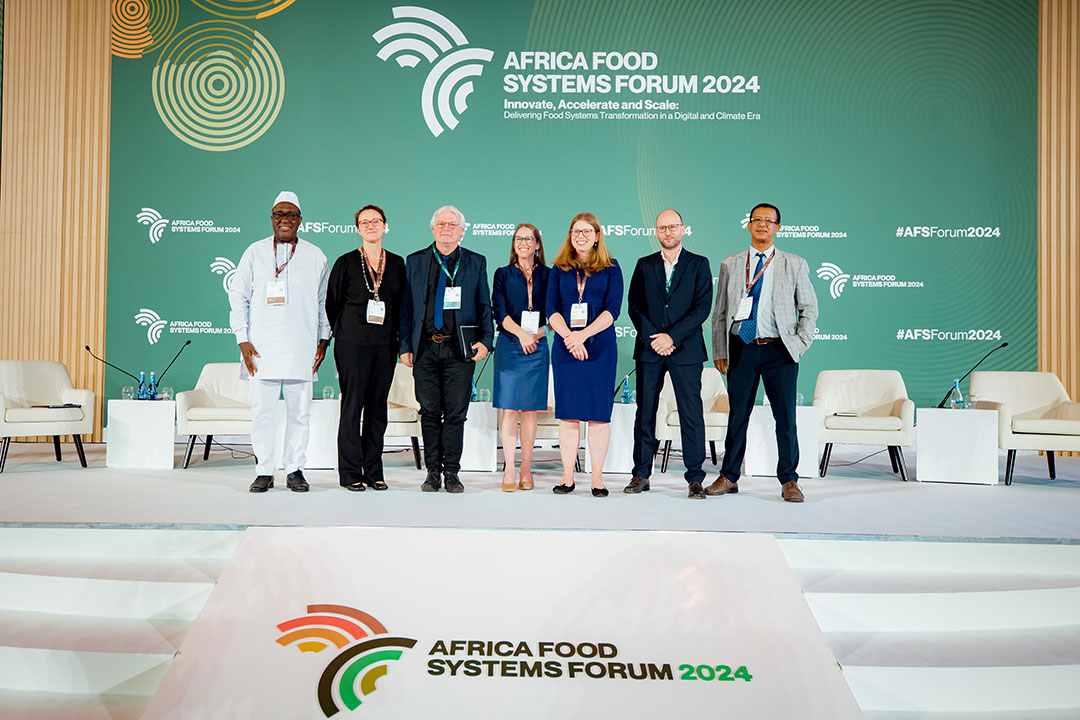
The Africa Food Systems Forum (AFSF) 2024, held in Kigali, Rwanda, highlighted this urgency again, bringing together key stakeholders to confront the region’s soil health challenges head-on. The discussions at AFSF underscored the need for swift, decisive action in tackling soil degradation, emphasizing the imperative for establishing a transformative initiative that would elevate the region’s agricultural future.
Simeon Ehui and Benard Vanlauwe with delegates who were part of the investing soil health panel at the Africa Food Systems Forum in Kigali.
A Unique Initiative for Transforming Agriculture
In response to this urgent crisis, a coalition of partners had earlier come together and set up the Regional Hub for Fertilizer and Soil Health for West Africa and the Sahel. The hub, based at the International Institute of Tropical Agriculture (IITA) in Ibadan, Nigeria, was launched in June 2024, amid high hopes and optimism. The Hub is already making significant strides toward improving soil fertility and agricultural productivity and will provide the much-needed technical assistance, focusing on developing and implementing investment plans to improve soil health and fertility through best agronomic practices and soil management strategies.
The Regional Hub was established to address the specific needs of individual countries across the region, emphasizing integrated soil fertility management to optimize resource use and build resilience against climate change. Its strategy is firmly rooted in the priorities outlined in the Fertilizer and Soil Health Roadmap 2023 and the Nairobi Declaration from the Africa Fertilizer and Soil Health Summit 2024, two important documents that emphasize the value of this regional initiative.
With significant financial backing from the World Bank and OCP Africa, the Hub is proactively revitalizing West African agriculture. By prioritizing integrated soil fertility management and soil health restoration, the Hub is working towards a more resilient and food-secure region.
IITA leads Hub implementation
IITA, the leading agricultural research partner with a proven track record in advancing crop production in Africa, was selected to host the Hub. Since 1967, IITA has pioneered innovations in soil science in Africa, making it the ideal institution to spearhead this initiative.
By hosting this Regional Hub, IITA is taking a pivotal role in transforming agriculture in West Africa. Our extensive experience and innovative approach will drive this initiative forward, providing a platform for collaboration and progress that will empower farmers and improve soil health across the region.
The impact of the Hub is magnified by the collaboration of key partners, each contributing its unique strength. OCP Africa provides tailored, sustainable fertilizer solutions to meet the specific needs of local soils and crops essential for improving soil fertility and agricultural sustainability. The African Plant Nutrition Institute (APNI) advances plant nutrition research and develops training programs, helping farmers build knowledge and implement best practices in soil health management. The International Fertilizer Development Center (IFDC) supports the Hub with its expertise in developing and disseminating effective fertilizer technologies and fostering public-private partnerships to ensure that innovative solutions reach farmers.
Accelerating the Impact of CGIAR Climate Research for Africa (AICCRA) serves as a key knowledge partner, offering soil information, knowledge management, agronomy recommendations, capacity development, policy support, and advocacy. Mohammed VI Polytechnic University (UM6P) drives scientific and technical advancements through soil mapping, remote sensing, and precision agriculture tools. The Economic Community of West African States (ECOWAS) plays a crucial role in aligning the Hub’s activities with regional policies and promoting best practices across member states.
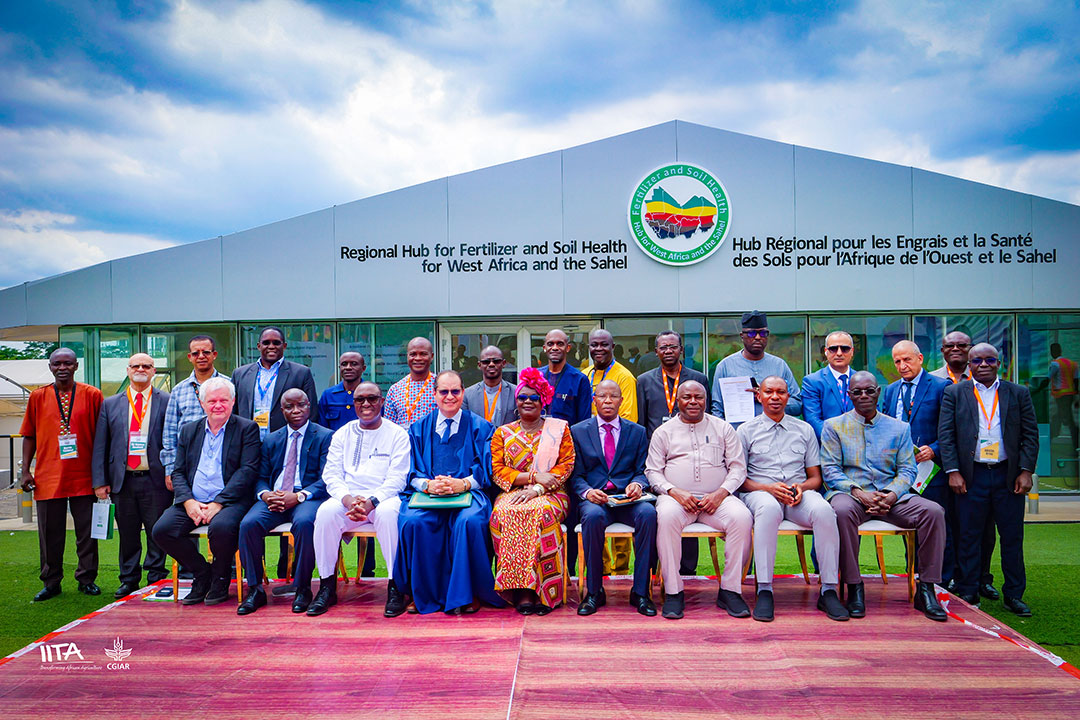
Delegates at the opening of the Regional Hub for Fertilizer and Soil Health for West Africa and the Sahel.
What’s next for the Hub?
Moving forward, our focus has shifted to implementation. Following the Hub’s launch, a Technical Launching Workshop was held in June 2024, bringing together representatives from Benin, Burkina Faso, Liberia, Mali, Niger, Nigeria, Senegal, and Togo, along with ECOWAS and key regional and international partners.
The next steps include gathering critical information and refining action plans tailored to each country’s specific needs. Bilateral meetings in each country will help define initial focus areas and actions for 2024.
The action-oriented momentum of AFSF 2024 continues to inspire the Hub’s forward-looking agenda. Stakeholders at the Forum were eager to translate the discussions into tangible interventions, emphasizing the need for urgent, on-the-ground impact. By 2033, the Hub aims to increase yields and income for three million farmers, enhance soil health across 1.5 million hectares, and help 1.5 million farmers adapt to climate change.
The Regional Hub for Fertilizer and Soil Health for West Africa and the Sahel represents a significant milestone in promoting sustainable agriculture. By addressing soil degradation and implementing scalable solutions, the Hub is set to make a lasting impact on West Africa’s agricultural landscape. The focus on improving soil health, building resilience, and enhancing food security promises a future where soil health is revitalized, crop yields are increased, and the agricultural sector is robust to withstand climate change challenges.
As the Regional Hub advances its mission, we do not just address today’s challenges but lay the groundwork for a resilient agricultural future in the region. With continued commitment, dedicated effort, and collaboration, we will achieve our vision of fertile, productive, and resilient soils in West Africa, paving the way for a brighter agricultural future.
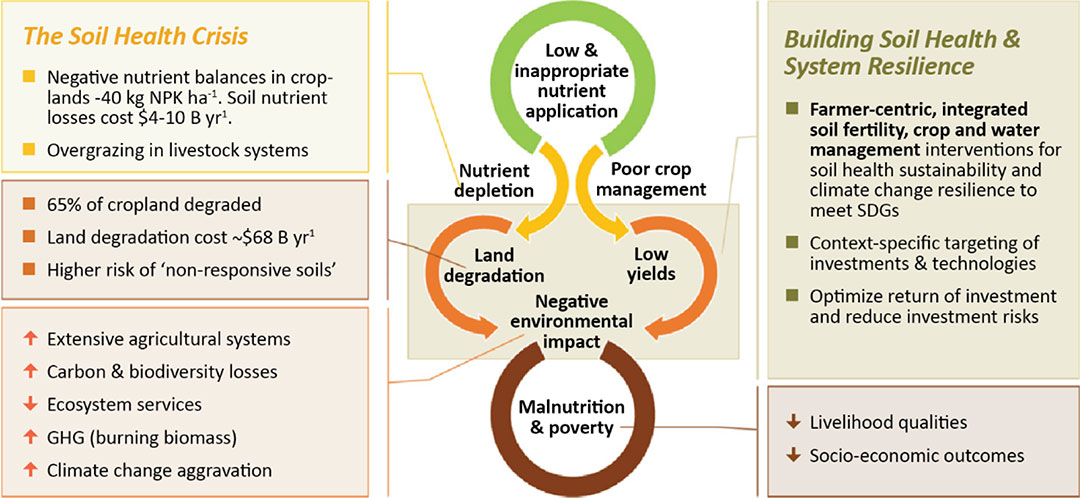
The vicious cycle of soil health decline, land degradation, poor crop yields, and ecosystem service loss underpinning the high incidence of malnutrition and poverty triggered by poor management of fertilizers and organic nutrient resources. Locally adapted integrated soil fertility and water management practices are critical for reversing the negative spiral and building soil health and resilience of crop production systems in Africa. Source: Zingore, 2022.
Conclusion: A path toward a resilient future
The establishment of the Regional Hub for Fertilizer and Soil Health for West Africa and the Sahel marks a significant milestone in addressing the region’s soil degradation crisis. By leveraging the collective strength of research institutions, governments, and private sector partners, the Hub is set to transform soil health, boost agricultural productivity, and enhance resilience to climate change.
As we look ahead, the Hub not only addresses today’s challenges but also promotes cross-learning and regional synergy by fostering knowledge sharing and collaboration through regional hubs. This reinforces the importance of a continent-wide approach to improving soil health, ensuring that best practices and innovations are shared across borders for greater impact.
AFSF 2024 highlighted the urgency and enthusiasm of stakeholders who are ready to take action. The discussions at AFSF 2024 signaled the shift in how we are addressing the soil health crisis, moving from rhetoric to concrete action. With renewed energy and commitment, we are poised to tackle soil health challenges head-on, ensuring a resilient and food-secure future for West Africa. Through collaboration, innovation, and an unwavering commitment to sustainable agriculture, we are turning the tide on soil health in the region—one field at a time.
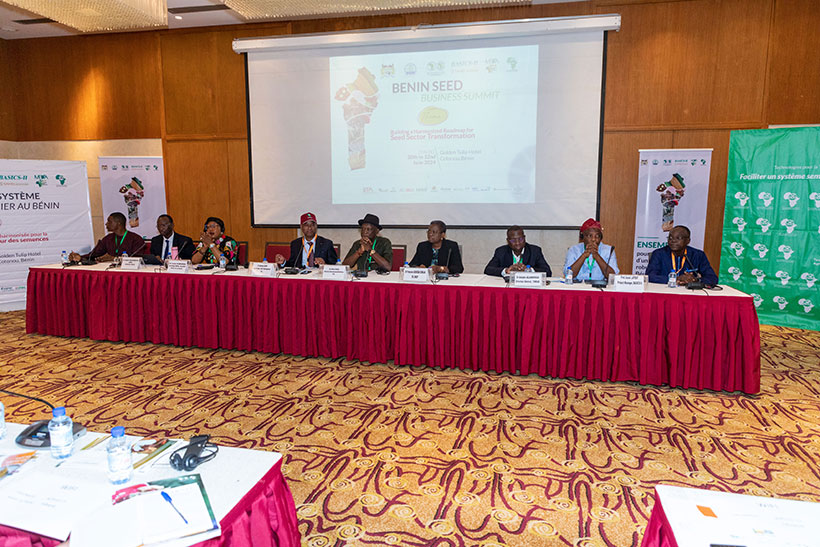
Cross section of the key note speakers during the seed summit.
Stakeholders from the Republic of Benin and across Africa are organizing a summit to draw a seed roadmap for the West African countries.
The consortium includes the Government of Benin, the African Development Bank (AfDB) funded Technologies for African Agricultural Transformation (TAAT), the IITA Building an Economically Sustainable Integrated Cassava Seed System, Phase 2 (BASICS-II) project, the Sasakawa Africa Association (SAA) in Nigeria, the Sahel Consulting and Mennonite Economic Development Associates (MEDA).
The three-day Seed Business Summit, with the theme “Building a harmonized roadmap for seed sector transformation,” is being organized in collaboration with the Beninese Ministry of Agriculture, Livestock and Fisheries (MAEP), the Beninese National Institute for Agricultural Research (INRAB), and other stakeholders.
The summit will be held from 20 to 22 June in Cotonou, the Beninese capital. The forum aims to catalyze an agricultural revolution in Benin by establishing an economically sustainable seed system for priority crops like rice, cassava, maize, soybean, livestock, fish, sorghum, and millet.
According to the Head of TAAT Clearinghouse, Solomon Gizaw, “This summit is a direct response to the need to hold a more comprehensive audience consultation to identify major challenges, develop solutions, and advocate for more investments in Benin’s agriculture.”
“This seed summit will bring together policymakers, international financial institutions and policymakers, scientists, the private sector, and farmer organizations to a roundtable discussion to broker investments for Beninese agricultural transformation with quality inputs, particularly seed as a primary entry point,” Gizaw added.
The BASICS-II Project Manager, Lateef Sanni, explained, “The seed summit will produce outcomes that will form the basis of future investment in Benin’s seed system. It will produce recommendations to help forge a roadmap to feed into the country’s agricultural policies and plans.”
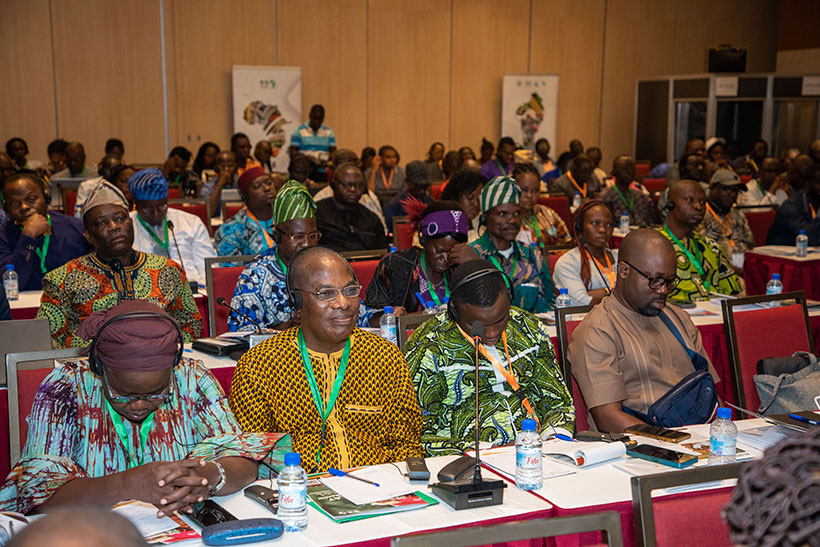
Stakeholders and participants during the seed summit in Benin.
“The summit will address factors limiting growth in Benin’s agricultural sector, including the underdeveloped seed sector characterized by poor quality seeds, a weak seed regulatory framework, a struggling research system for variety maintenance, and a feeble private sector participation in the seed system,” said Godwin Atser, the Country Director of SAA-Nigeria.
“A solid seed system will surely change the country’s agricultural landscape. In this summit, SAA, BASICS-II, TAAT, and other partners will share the models currently strengthening the seed system in Nigeria, Tanzania, DR Congo, Sierra Leone, and Liberia,” Atser added.
The Beninese Minister of Agriculture Livestock and Fisheries, Hon. Gaston Cossi Dossouhoui, will chair the summit’s opening ceremony with the support of other dignitaries and development partners.
Alongside the conveners, several national stakeholders, including farmers, seed producers, and International Development Partners (IDPs), will also participate in the summit.
These partners include the African Development Bank (AfDB), the Bill and Melinda Gates Foundation, the Food and Agriculture Organization (FAO), the World Bank, the European Union, the World Food Programme (WFP), the United States Agency for International Development (USAID), GIZ, and JICA.
AfricaRice, the African Agricultural Technology Foundation (AATF), the International Crops Research Institute for Semi-Arid Tropics (ICRISAT), the World Vegetable Center (WorldVeg), the International Livestock Research Institute (ILRI), and the WorldFish Center are other partners for this summit.