IITA in partnership with the University of Buea, Cameroon; Institut de Recherches Agronomiques et Forestieres (IRAF), Gabon; and the National Horticultural Research Institute (NIHORT), Nigeria have launched a new project that aims to enhance the nutritive quality of plantain in the three countries. The launch ceremony of the project, which is funded by the African Union Research Division, took place at the IITA Headquarters in Ibadan, Nigeria on 8–9 April.

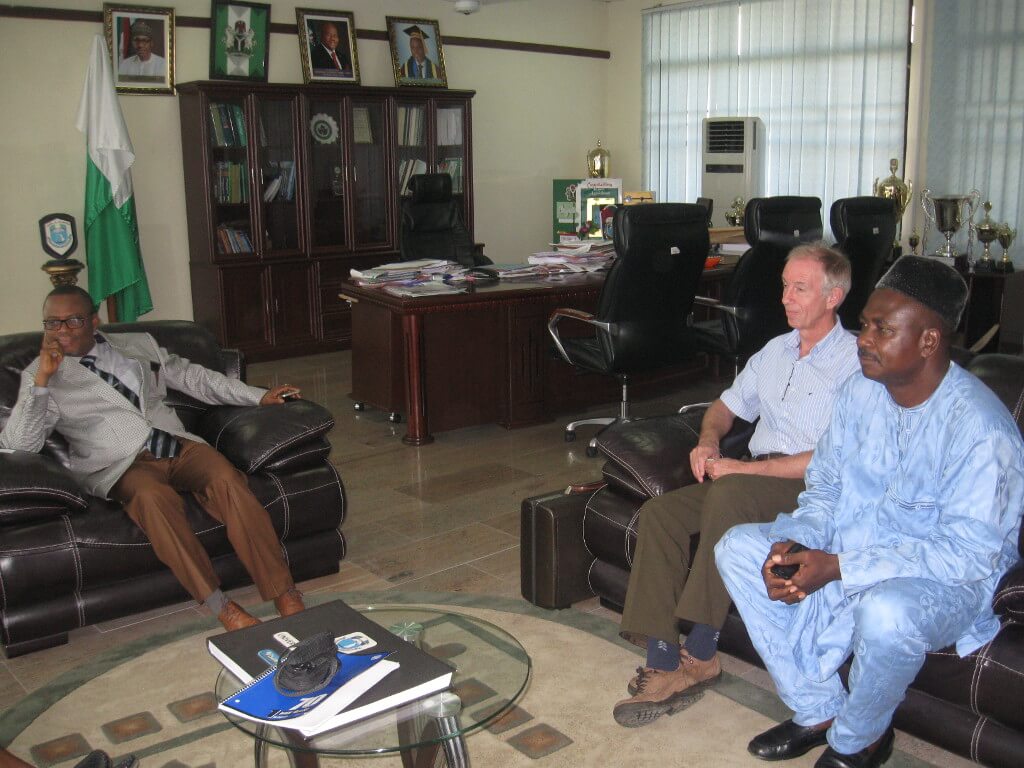
IITA staff with partners from Cameroon, Gabon, and Nigeria.
Over the next three years, the four institutions will implement the new project, which is titled, “Enhancing nutritional quality of plantain food products through improved access to endophyte primed and high pro-vitamin A (PVA) plantain cultivars under integrated soil fertility management practices in Nigeria, Cameroon, and Gabon.” The goal is to address the challenge of malnutrition amongst the approximately 190 million pre-school children and women of child bearing age who consume plantain as one of their key staple foods.
Speaking during the launch, IITA West Africa Hub Deputy Director, Michael Abberton, noted that the new project is well aligned with IITA’s vision of success across sub-Saharan Africa of reducing the number of malnourished children by 30% and revitalizing over 7.5 million hectares of degraded farmlands in sub-Saharan Africa.
The project has five objectives:
- To determine the diversity and bioactivity of beneficial microbial endophytes associated with plantains in smallholder farms in Cameroon, Gabon, and Nigeria.
- To prime high PVA content plantains with endophyte formulations and validate them against banana pests and diseases.
- To assess the efficacy of endophyte formulations under variable fertilization regimes using organic manure and complex mineral fertilizer formulations.
- To produce innovative high PVA plantain-based products and assess consumer acceptance.
- To participatorily disseminate effective combinations of endophyte, manure, and fertilizer formulations, and create awareness on plantain products that could alleviate vitamin A deficiency (VAD).
“The project is designed to run through the whole plantain value chain within the three countries including: plant multiplication, crop management, processing, and training of women and youth on existing business opportunities,” explained Dr Amos Alkonya, the Project Leader.
“The vision we have for this project is very big and noble. Improving pro-vitamin A in plantain will help greatly in cutting down the current annual mortality rate of 6% amongst children under the age of 5 in sub-Saharan Africa arising from pro-vitamin A deficiency,” he added.
During the two-day event, partners also took time to develop detailed workplans and budgets for the next 12 months. The event also entailed sessions on requirements for financial and technical reporting, auditing, and AU expectations, as well as partners’ roles and capacities for implementation of project activities.