African Development Bank approves Phase III of TAAT program
19 February 2026
 The African Development Bank (AfDB) has approved the commencement of Phase III of the Technologies for African Agricultural Transformation (TAAT) program. The Bank Group’s Board of Directors on 14 January 2026 approved the release of an additional US$16 million to implement the third phase of the program.
This approval, which comes as an added boost to the program, underscores the Bank’s core commitment to addressing the critical challenges hindering African agriculture, notably low productivity stemming from limited access to modern technologies, inadequate infrastructure, and insufficient investment in climate-resilient practices. The Bank further contends that the urgency driving this approval is amplified by the ongoing Russia-Ukraine conflict, which has disrupted global supply chains and driven up the prices of essential inputs, such as seeds and fertilizers.
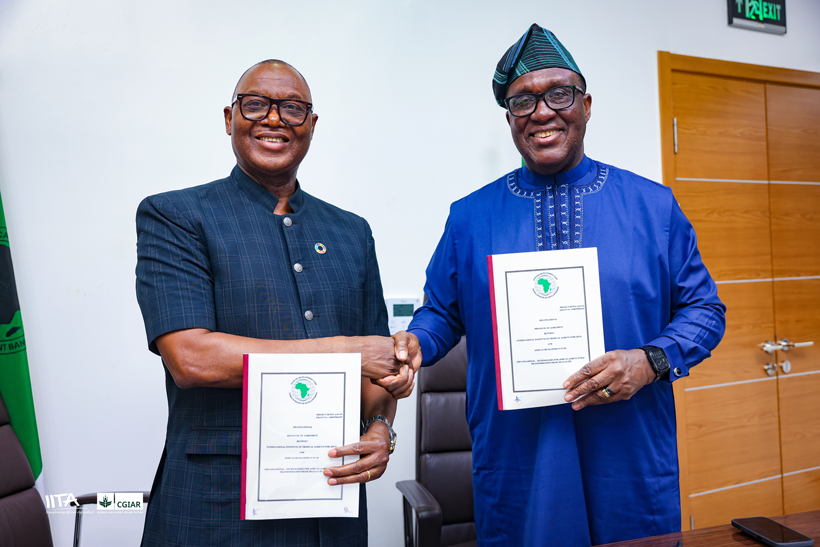 At the 18 February 2026 signing of the protocol of agreement between the Bank and the International Institute of Tropical Agriculture (IITA)—the executing agency for TAAT, the Bank lauded the giant strides recorded under the first and second phases of TAAT which have galvanized engagements that influenced a total of US$3.18 billion in agricultural investments—US$857.5 million through the African Emergency Food Production Facility (AEFPF) large-scale operations and US$2.31 billion through non-AEFPF projects.
Speaking at the ceremony, the Bank’s Director for Nigeria, Dr. Abdul Kamara, said:
“TAAT III reflects the Bank’s commitment to ensuring that proven, climate‑resilient technologies reach farmers faster and at scale. This new phase strengthens the systems that deliver innovation, helping countries boost productivity, enhance resilience, and align agricultural transformation efforts with the Bank’s Four Cardinal Points.”
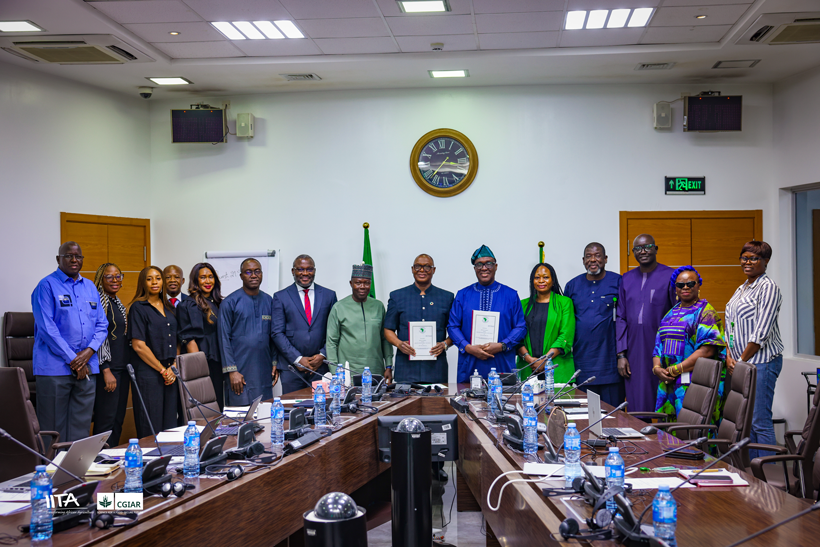 Dr Martin Fregene, the Officer in Charge of the Bank’s Vice Presidency for Agriculture, Human and Social Development, affirmed that TAAT I and TAAT II have laid the foundational groundwork to address the challenges facing African agriculture by vetting technologies, accelerating the adoption and scaling of proven agricultural technologies, promoting climate-resilient agricultural practices, building capacities within the farming’ and seed ecosystem, and developing e-platforms to facilitate access to technologies, primarily for smallholder farmers.
“Through technical assistance and collaboration with Regional Member Countries (RMCs) of the Bank and development partners, TAAT has supported the integration of 238 technology use cases into 46 countries and regional investment projects spanning 31 countries,” Dr Fregene said.
“The Bank is well positioned to harness the power of science, knowledge, and innovation needed to catalyze Africa’s agricultural transformation through this investment. The Bank already has extensive experience in agricultural development assistance in Africa, and this additional funding will help us to consolidate the achievements of TAATs I and II,” Dr Abdul Kamara, the Bank’s Director General for Nigeria, added.
The IITA Director General and CGIAR’s Regional Director for Continental Africa, Dr Simeon Ehui, in his remarks at the signing ceremony, commended the Bank’s commitment to transforming African agriculture through its Feed Africa strategy as well as the trust placed in the CGIAR-driven consortium of agricultural research institutions led by IITA to implement the goal of transforming African agriculture and ensuring food and nutritional security.
Dr Ehui assured the Bank of TAAT’s unwavering commitment to deepening its pathway of providing technical assistance, strengthening seed systems, disseminating climate-smart and high-yielding crop varieties, promoting post-harvest and mechanisation innovations, providing knowledge and ensuring learning and uptake of innovations, and supporting policy and digital solutions to enhance agricultural productivity and resilience across Africa.
“These efforts,” according to Dr Ehui, “have led to productivity increases of up to 69% across targeted crops, reaching over 25 million farmers. Additionally, under the implementation of the AEFPF, TAAT has provided technical assistance to RMCs, including technical specifications for the supply and quality assurance of certified seeds. This assistance has enabled the distribution of 476,747.96 metric tons of improved, climate-resilient seeds to 14.437 million smallholder farmers.”
“This third phase of the program will achieve sustainability through the institutionalization of the TAAT model within CGIAR and fostering regional cooperation among Regional Economic Communities (RECs) and private sector actors, supporting the Dakar 2 vision of achieving food sovereignty, increased productivity, and resilient food systems across Africa and contributing directly to the Sustainable Development Goals 1, 2, 13, & 15 (No Poverty; Zero Hunger; Climate Action; and Life on Land), and the African Union’s Agenda 2063 vision for a prosperous Africa based on inclusive growth and sustainable development,” Dr Ehui added.
The Bank affirms that TAAT III’s objective is to consolidate and scale TAAT I and II achievements, while strengthening their operational and financial sustainability. TAAT III will strengthen the regional technology delivery infrastructure by supporting National Agricultural Research Systems (NARS) and private seed companies to sustainably increase the production and availability of early-generation (EGS) and certified high-yielding, climate-resilient seeds, respectively.
The third phase of the program will equally promote the digitalization of TAAT-vetted technologies and the development of information and communication technology (ICT) platforms and other digital solutions to facilitate the deployment and accessibility of appropriate agricultural technologies, E-extension, and advisory services. To further scale TAAT technology deployment, TAAT III will support the development of the Regional Technology Market, enhancing technology deployment and accessibility across borders.
TAAT, in this third phase, will deploy its extensive partnership ecosystem to drive capacity-building initiatives for agricultural extensionists (Training of Trainers, ToT) and farmers, enhancing smallholder farmers’ awareness, access, and adoption of agricultural technologies and e-advisory services. To catalyze the financial sustainability of the TAAT technology delivery ecosystem, TAAT III will provide technical assistance to RMCs to attract private-sector investment and mainstream TAAT-vetted technologies into national and large-scale agricultural investment projects.
To enhance farmer resilience, TAAT III will build the capacities of meteorological institutions and frontline extension workers to collect, analyze, and disseminate climate data to improve weather forecasts and early warning systems, and expand the integration of weather forecasts into the planning of agricultural activities at the smallholder farmer level.
With the signing of the TAAT Phase III grant agreement, the African Development Bank envisions a continent accelerating agricultural transformation for food systems resilience through strengthened regional technology delivery infrastructure; increased productivity through scaling up climate-resilient and nutrition-sensitive technologies and reinforced, efficient production and distribution systems for improved seeds and fertilizers; enhanced farmers’ capacity and learning, and resilience to climate change; and advanced adoption of innovative digital solutions and enhanced market integration and regional trade competitiveness through strategic private sector participation.
About the African Development Bank Group
The African Development Bank Group (AfDB) is Africa’s premier development finance institution. It comprises three distinct entities: the African Development Bank (AfDB), the African Development Fund (ADF) and the Nigeria Trust Fund (NTF). On the ground in 44 African countries with an external office in Japan, the AfDB contributes to the economic development and the social progress of its 54 regional member states.
About IITA
The International Institute of Tropical Agriculture (IITA) is a non-profit research-for-development organization that works across Africa to improve food security, increase agricultural productivity, create employment and wealth, and enhance the resilience of natural resources. Founded in 1967 and headquartered in Ibadan, Nigeria, IITA is a member of CGIAR, the global research partnership for a food-secure future. Through research, partnerships, and innovations, IITA addresses the challenges of hunger, malnutrition, poverty, and natural resource degradation, contributing to achieving the United Nations Sustainable Development Goals (SDGs).
About TAAT
Established in 2018 as a key flagship program of the Bank’s Feed Africa strategy, TAAT is a continent-wide initiative designed to boost agricultural productivity by rapidly delivering proven technologies to millions of farmers. Implemented by IITA and a host of other CGIAR centers and Technical Institutions, TAAT facilitates food systems transformation in Africa by providing access to path-breaking agricultural innovations, policy harmonization, and robust seed systems. TAAT seeks to double crop, livestock, and fish productivity by expanding access to productivity-increasing technologies to more than 40 million smallholder farmers across Africa and generate an additional 120 million metric tons.
Contacts:
AfDB: Nkiruka-Henrietta Ugoh
n.ugoh@afdb.org
TAAT: Atayi Opaluwah
A.Opaluwah@cgiar.org
IITA: Katherine Lopez
K.Lopez@cgiar.org
