
Building capacity for efficient cassava post-harvest management in DRC
13 June 2025
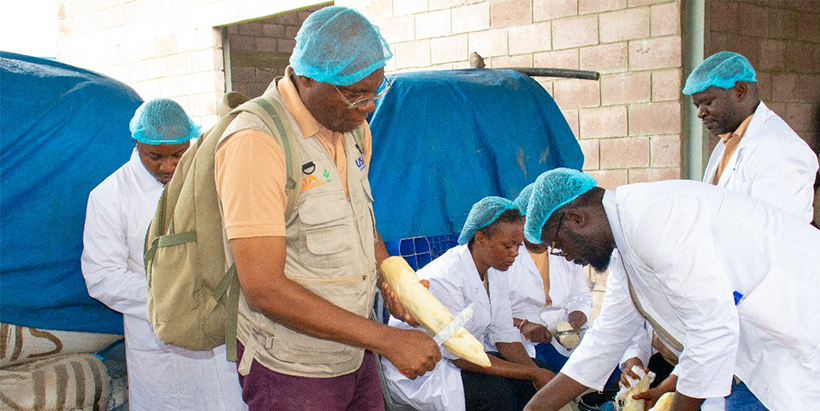
Post-harvest technology plays a vital role in preserving crop quality, reducing losses, and enhancing the efficiency of agricultural value chains. For cassava, a key staple in tropical regions, effective post-harvest management is essential to transform the perishable root into safe, market-ready products. This reduces spoilage and improves food safety, farmer incomes, and sustainable development.
To strengthen coordination and efficiency within the cassava value chain, the IITA Cassava Value Chain Development Project, recently organized a workshop themed “Post-Harvest Management and Cassava Processing” in Kinshasa, Democratic Republic of Congo.
The two-week workshop included twenty-one participants; processing assistants, small- and medium-scale processors, and subject-matter experts. It focused on building technical capacity in cassava varietal selection, processing methods, hygiene and safety protocols, quality assurance, and value-addition techniques.
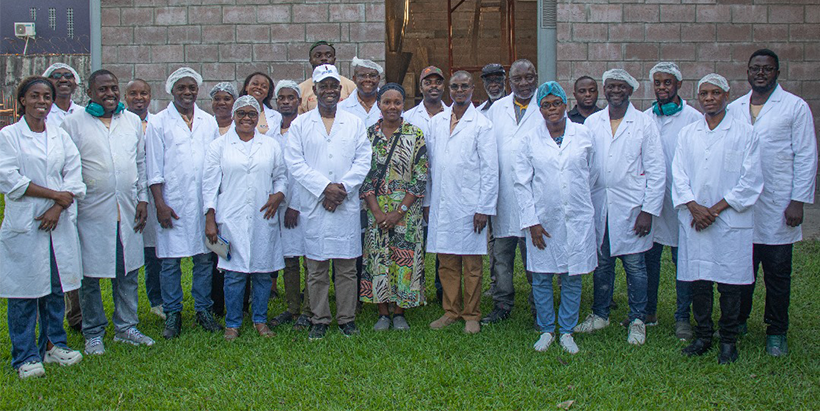
Participants engaged in interactive sessions, hands-on demonstrations, and field visits to functional cassava processing facilities – Nutripo, Limete Industrielle, and 10ème Rue. These practical experiences helped reinforce operational knowledge and workflow best practices.
The key outcomes of the workshop included:
- Improved knowledge of cassava processing and safety standards.
- Enhanced collaboration among value chain actors.
- Identification of challenges and development of practical solutions.
- Commitment to adopting best practices for improved product quality and market access.
The participants also called for stronger partnerships with research institutions, cooperative networks to support bulk processing and marketing, and continued training opportunities.
Gregory Nwaoliwe, a Research Associate at the IITA Nutrition and Health unit, said, “By empowering processing assistants with technical skills and insights, the workshop contributed to improving productivity, quality, and livelihoods in the cassava sector.”
As demand for cassava products grow, such initiatives are essential to empower local processors and ensure a resilient, competitive value chain.
Contributed by Anita Akinyomade
