
IITA engages ENABEL to advance sustainable agriculture in Eastern DR Congo
24 March 2026
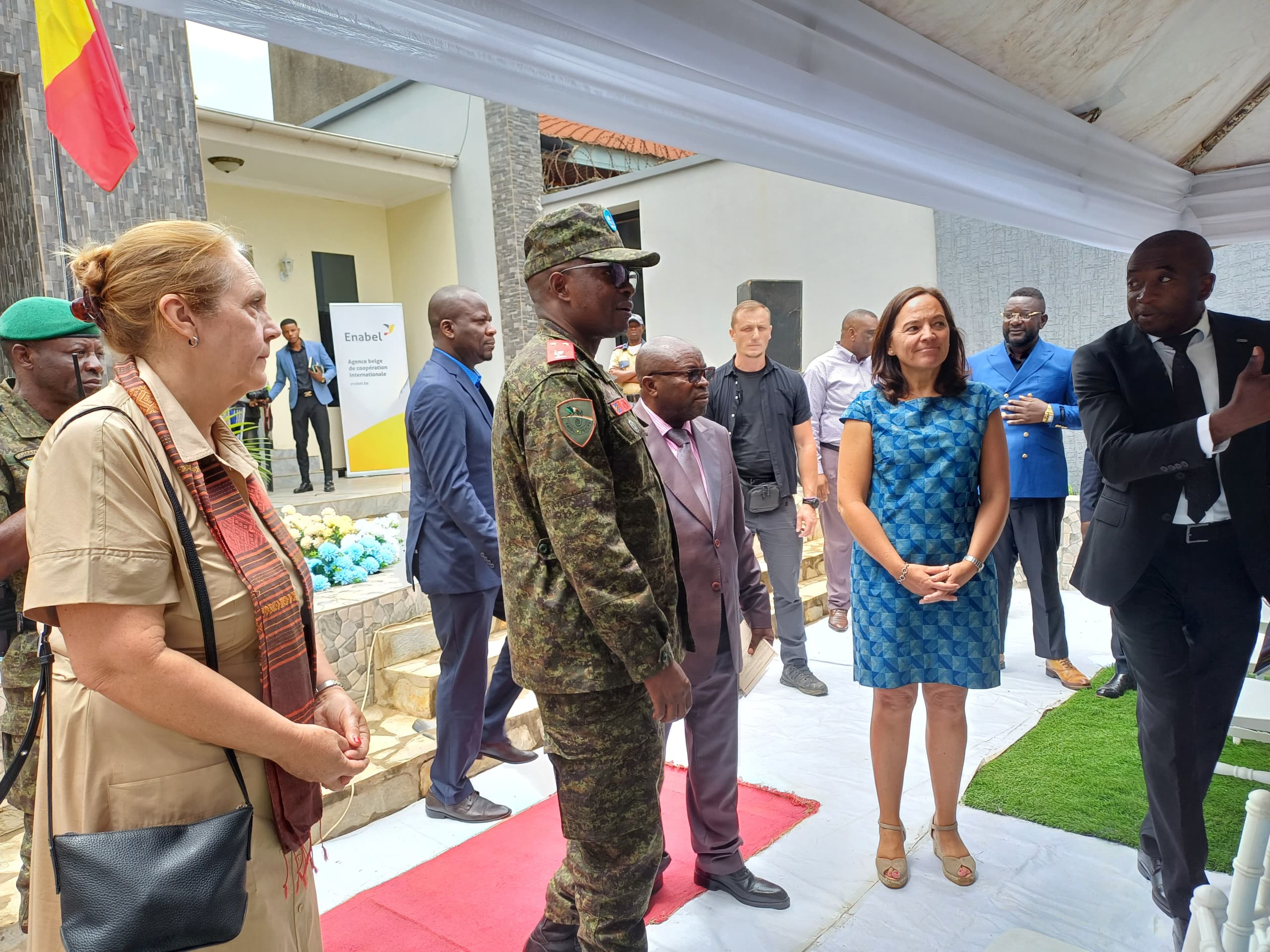 IITA–CGIAR has reaffirmed commitment to strengthening agricultural development in eastern Democratic Republic of Congo (DR Congo) during the inauguration of the new Enabel office in Beni. The office will coordinate activities under the ambitious Green Corridor program, a regional initiative designed to foster sustainable economic development, environmental conservation, and resilient food systems across North Kivu.
The ceremony brought together government representatives, development partners, and civil society organizations and served as a platform for strategic exchanges among potential implementing partners. IITA participated in the event following an invitation from Roxane de Bilderling, Ambassador of Belgium to the Democratic Republic of Congo, who attended the ceremony as a guest of honor.

In her remarks during the inauguration, the Ambassador emphasized Belgium’s commitment to strengthening its development cooperation in eastern DR Congo.
“When the Minister of Foreign Affairs and Cooperation, Maxime Prévot, visited the Democratic Republic of Congo last April, he highlighted Belgium’s intention to increase investments in North Kivu. Today, we are reinforcing that commitment by opening this office in Beni to be closer to the people through the Green Corridor project. This initiative is starting here but will expand to other parts of the country, aiming to strengthen both the livelihoods and food security of the population while respecting environmental sustainability. We are pleased to implement this through Enabel.”
Representing IITA at the ceremony, an IITA delegation highlighted the organization’s experience in agricultural research for development and its ongoing programs in the region. The exchanges focused on two main areas: the key interventions currently undertaken by IITA and the Institute’s long-standing engagement in the far north of North Kivu.
During the discussions, IITA presented its ongoing work to improve agricultural productivity, strengthen value chains, and support smallholder farmers across eastern DR Congo. Partners acknowledged the Institute’s technical expertise and track record in delivering practical, science-based solutions for farmers in challenging environments.
Enabel’s strategic team expressed a strong interest in IITA’s proposal to contribute to the Green Corridor initiative. It indicated its intention to accelerate the engagement process so that a partnership agreement can be finalized promptly, and implementation activities can begin on the ground as soon as possible.
The discussions also brought together several organizations already engaged in the program, including Rikolto and Virunga Foundation. Some of these partners are already advancing in the implementation phase, demonstrating the growing momentum behind the Green Corridor initiative.
IITA’s participation in strategic exchanges was strengthened by its ongoing work in the region, particularly in Lubero, where the Institute collaborates with local partners to improve wheat production systems.
The field results from the first agricultural season showed yields increasing from 0.7 to 2.5 tons per hectare, illustrating the potential of improved agronomic practices and farmer training to transform local food systems. These achievements were highlighted during the discussions as promising evidence of IITA’s capacity to scale sustainable agricultural innovations in the region.
As discussions advanced, Enabel also emphasized the importance of operational efficiency for successful program delivery. The project team suggested that, once engagement processes are finalized, IITA could consider establishing a presence in Butembo.
Such a location would place the Institute strategically between Lubero, where wheat interventions are underway, and Beni, where cassava-related activities are expected to expand. This positioning would facilitate coordination, enable closer engagement with farming communities, and strengthen program implementation across the territories targeted by the Green Corridor initiative.
The Green Corridor program seeks to create sustainable economic opportunities while preserving the rich natural resources of eastern DR Congo. Achieving these ambitious goals will require strong collaboration among research institutions, development organizations, government actors, and local communities.
For IITA, the discussions marked an important step toward deepening collaboration with Enabel, and other partners engaged in the initiative. The Institute’s long-standing presence in agricultural research and development, combined with its practical field experience in North Kivu, positions it well to contribute to the success of the Green Corridor.
Contributed by Ritha Bumwe and Moustapha Kigangu.
