IITA gender team strengthens researchers’ capacity on the Africa Agricultural Adaptation (AAA) ATLAS
4 February 2026
As part of its commitment to continuous capacity building and promoting gender equity, the IITA Gender team continues to invest in upskilling its members to deliver high-quality research that advances food security and improves livelihoods across the continent.
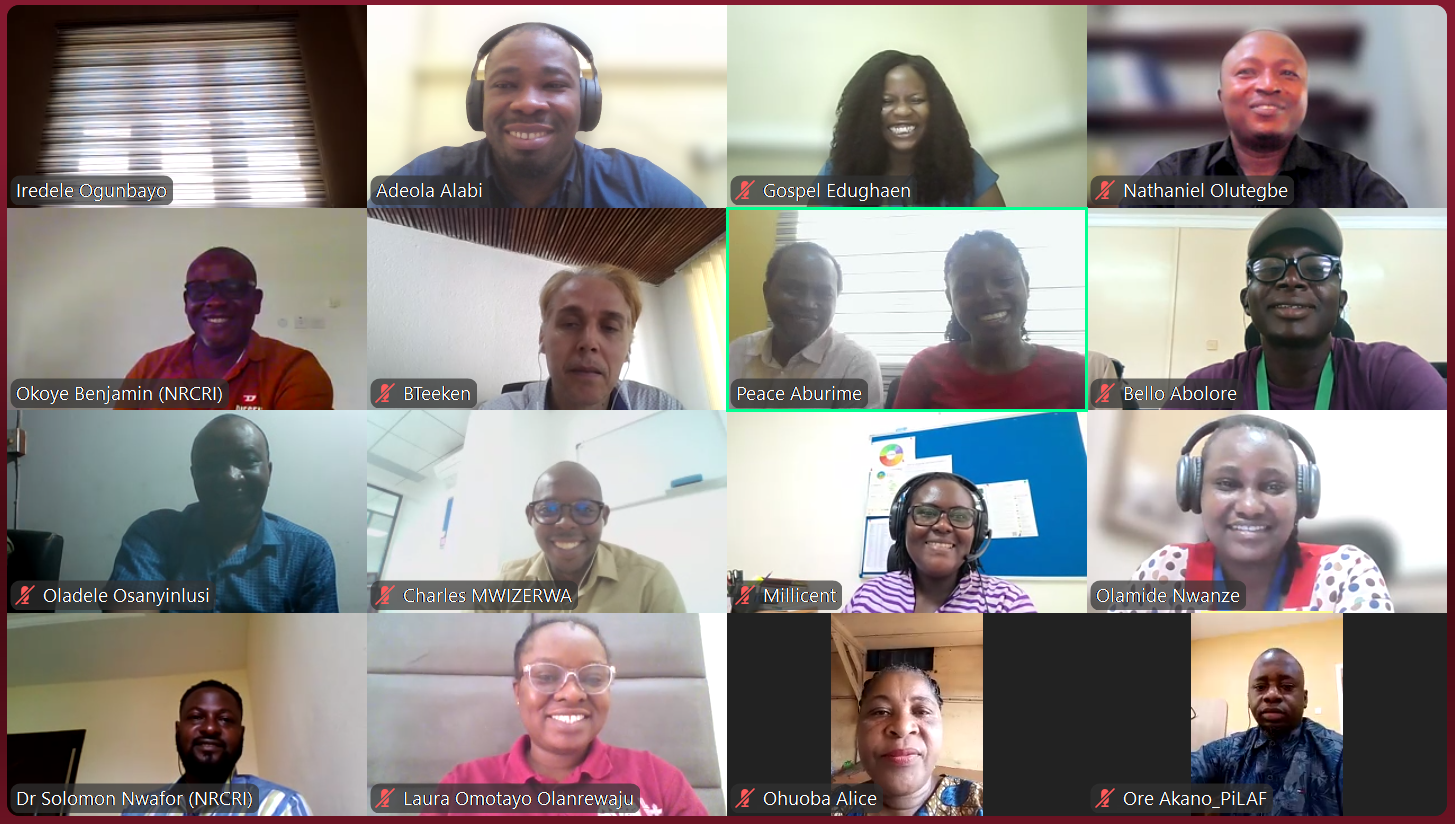
On 10 and 11 November, the IITA Gender, Youth and Social Science team organised an intensive two-day virtual training on the Africa Agricultural Adaptation Atlas (AAA ATLAS).
The training was held in collaboration with the Policy Leadership in Agriculture and Food Security (PiLAF) team at the University of Ibadan, and moderated by IITA Senior Research Associate Olamide Nwanze.
The AAA ATLAS enables access to specialized datasets on gender, socio-economy, nutrition, climate risks, and adaptation organised per region, to inform and strengthen agricultural research and development. The AAA ATLAS aggregates scientific data with the aim to accelerate effective climate change adaptation as well as social and gender inclusion in African agriculture. Through interactive data visualizations, interactive stories and research-ready tools, it offers researchers, policymakers, and investors’ insights into climate risks, vulnerability, impacts, and adaptation strategies—bridging the gap between multidisciplinary scientific evidence and practical action.
The AAA Atlas is particularly relevant within the scope of IITA’s mission to address the current nexus of challenges: rapidly changing socio-economic contexts, the need to enhance agricultural productivity, climate change mitigation, and the prevention of environmental degradation associated with intensification—such as soil depletion, water stress, and biodiversity loss. At the same time, agricultural interventions must be responsive to socio-cultural diversity, differentiated preferences, working conditions, and diverse livelihood strategies along agricultural value chains. This nexus calls for well-thought-through and prioritised cost-effective bundles that combine technical and social innovations tailored to specific regional contexts.
As a platform widely used by key funders such as the African Development Bank (AFDB), mastery of the AAA ATLAS is expected to strengthen the quality, reach, and impact of research proposals, foresight work, and adaptation planning across Africa. In addition, it is also expected to foster Strategic Collaboration to facilitate knowledge exchange between CGIAR centers and initiatives, and partners at regional and national level, fostering a unified and integrated approach to CGIAR Systems Transformation agenda.
The training aimed to strengthen participants’ analytical skills to use the AAA Atlas’ historic, baseline, and foresight datasets for informed decision-making, and build their capacity to systematically integrate gender, climate, and nutrition considerations into research using the Atlas’s data-driven tools.
In his welcome address, IITA Gender Lead, Béla Teeken, outlined the purpose of the training and presented key highlights of IITA’s ongoing work at the intersection of gender, climate change, breeding, and nutrition. Additional opening remarks were delivered by IITA Climate Lead, John Choptiany, and PiLAF Lead, Iredele Ogunbayo. Choptiany mentioned that the ATLAS is a good way to showcase IITA’s work and the work of others, especially on the resilient solutions that can be used to adapt and combat the effects of climate change in agriculture. IITA will be more actively involved in the ATLAS going forward in 2026 to ensure that our research feeds into the tool.
The technical sessions on Day 1 began with an overview of the Atlas, facilitated by Lecturer, Research Associate at PiLAF, Oladele Osanyinlusi, who guided participants through the platform’s navigation and demonstrated how its data-rich tools support climate investment and policy planning.
This was followed by an in-depth practical session led by PiLAF Policy Researcher, Peace Aburime, who focused on analysing women’s exposure to climate hazards and exploring gender-responsive adaptation strategies. The session highlighted how climate actions that intentionally incorporate gender equality considerations can improve women’s empowerment and ensure more inclusive and equitable outcomes.
Participants worked through multiple interactive notebooks on the Atlas platform, including:
- Understanding Heat Stress on Producers
- Evaluating Climate Risks
- Prioritizing Livestock Investments
- Estimating Economic Returns on Adaptation
- Formulating a Climate Rationale for Projects
These exercises facilitated by Oreoluwa Akano, Nathaniel Olutegbe and Benjamin Oyelami, allowed participants to apply their learning directly to real-world climate adaptation challenges. A Question-and-Answer session and a group discussion provided space for reflection, clarification, and experience sharing.
Participants shared some feedback and suggestions to inform strategic actions to enhance the AAA ATLAS platform and maximize its utility:
- ATLAS developers should collaborate more closely with agricultural research institutions such as IITA, which can contribute relevant datasets, enabling continuous improvement of the platform’s usefulness for research-for-development. IITA researchers and partners should jointly identify data and insight gaps and engage the ATLAS team to integrate new contributions that enhance platform relevance.
- The platform should expand to include youth-specific data, complementing existing gender data and enabling funders to assess the impact of investments in youth agribusiness.
- Institutions like IITA are encouraged to integrate AAA ATLAS into the early stages of project conceptualisation and design.
- Future webinars should highlight user stories
Overall, strengthened collaboration and coordinated data contributions across all CGIAR centres will enhance the effectiveness and value of the AAA ATLAS platform
In closing, Teeken expressed appreciation to the PiLAF team for their collaboration and efforts towards the training and commended the participants for their active engagement throughout the training. He acknowledged the diverse insights shared during the discussions, noting that such exchanges strengthen the collective capacity to generate impactful data and research that addresses Africa’s most pressing agricultural, social and climate challenges.
Contributed by Ochuwa Favour Daramola
