
Integrated plant health management: A pathway to food security
16 June 2023
Numerous challenges across the African continent threaten the race to achieve food security. Top on the list of these challenges is crop and harvest losses and quality reduction due to pests—insects, pathogens, nematodes, and weeds—on the field and in storage.
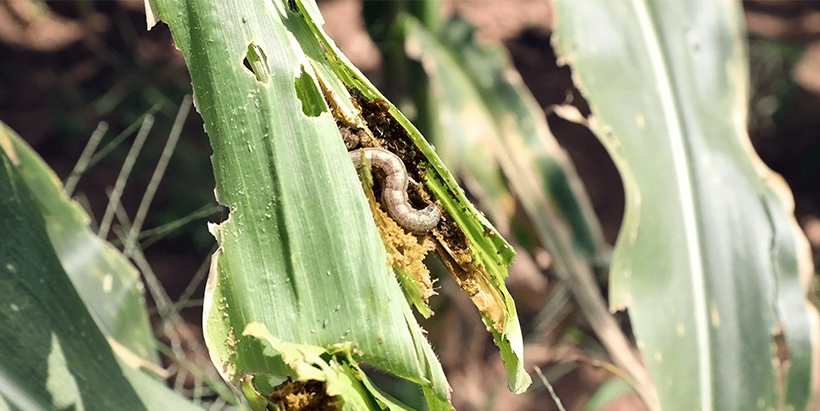
Each year, the continent loses half of its harvest to pests causing investment losses, reduced yields, and loss of livelihoods, denting the progress made in the fight for food security. This is sometimes further exacerbated by climate change due to changing temperatures and rainfall patterns, which alter pest dynamics and disease patterns.
Addressing the impact of pests on food security in Africa requires comprehensive and sustainable strategies and investments that will improve surveillance and early warning systems, promote integrated pest management practices, enhance access to improved seeds and plant varieties, and investing research and development for pest control and plant health.
In the last 55 years, IITA–CGIAR has contributed significantly to sustainable pest management practices, addressing food losses and improving food security across Africa.
According to an article published recently from a study by researchers from the University of Bonn, Germany, the International Maize and Wheat Improvement Center (CIMMYT), and an independent consultant from Oslo, Norway, IITA’s pest management impact spans over five decades of research carried out under 58 pest management projects providing solutions to various pest groups—fungus, virus, mite, insect, bacterium, nematode, and plant.
These projects have helped millions of African farmers growing crops like maize, cassava, yam, cowpea, soybean, plantain, banana, mango, cocoa, cashew, etc., to mitigate crop losses from pests’ invasion and increase crop productivity, thereby addressing food shortage and malnutrition.
In addition, since African farmers are mostly left with two options when faced with pest and disease attacks on their fields, they either expand production to new pieces of land at the expense of biodiverse forests and wetlands, which is important for the mitigation of climate change; or they use cheap broad-spectrum pesticides.
Based on these factors, the article highlights five strategic science-driven interventions that will contribute to the goal of sustainable agriculture and climate change adaptation and mitigation.
According to the article, sanitation at country level with a focus on borders and the fields, ensuring certified planting materials and seeds is the most cost-efficient first line of defense as this will prevent pest damage and losses from exotic pests entering new territories.
Good soil and environmental health management, biological control, breeding resistant varieties, and pest-specific bio-pesticides were recommended for achieving Integrated Pests Management (IPM).

The article reveals that bio-pesticides are to replace synthetic pesticides, which continue to impact the environment and human health negatively.
To enhance the effectiveness of these interventions, new decision-support and climate services tools will empower low-literacy farmers to make timely pest control decisions, thereby improving the potency of all the interventions.
To successfully disseminate these practices across the continent, enhanced and harmonized policy support and collaborative efforts between governments, international organizations, research institutions, and local communities are crucial to developing sustainable solutions and ensuring long-term food security in Africa.
While smallholder farmers, who are a critical part of the conversation, do not read scientific papers, extension services must be strengthened, and collaboration with development actors and NGOs will promote the dissemination of these key recommendations emanating from the studies, which can provide a channel for vital feedback.
With the renewed focus on the indiscriminate use of synthetic pesticides, which adversely affects human, animal, and environmental health, particularly in Africa, where smallholder farmers are increasingly challenged by agricultural intensification, an integrated approach will address numerous issues, including protection of the environment, the weak research and extension capacity, and the harmful effects of pesticides on the continent.
Contributed by Timilehin Osunde
