Research and innovation key to Africa’s agricultural resilience – Dr Kwakwa
29 June 2026
Agriculture remains one of Africa’s greatest opportunities for economic transformation. As countries navigate changing climate conditions, evolving market dynamics, and growing pressure to create jobs and strengthen rural economies, the conversation is increasingly shifting beyond production alone to how agricultural systems create long-term value.
Increasingly, attention is turning to the systems that support agricultural growth, including research, innovation, seed systems, commercialization, and the ability to translate science into practical solutions that reach farmers and markets.
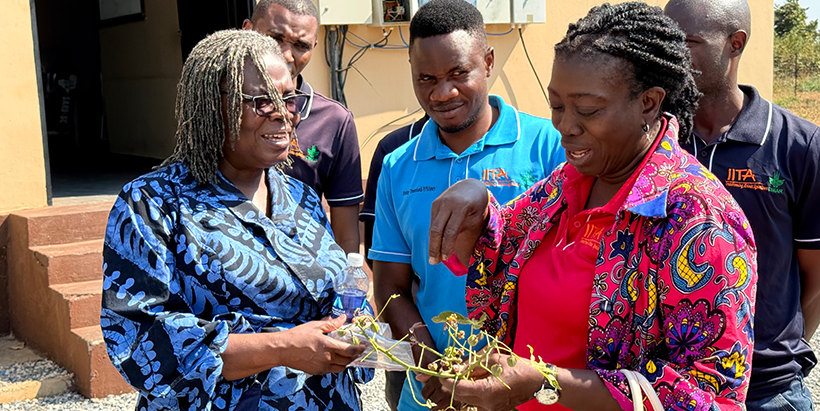
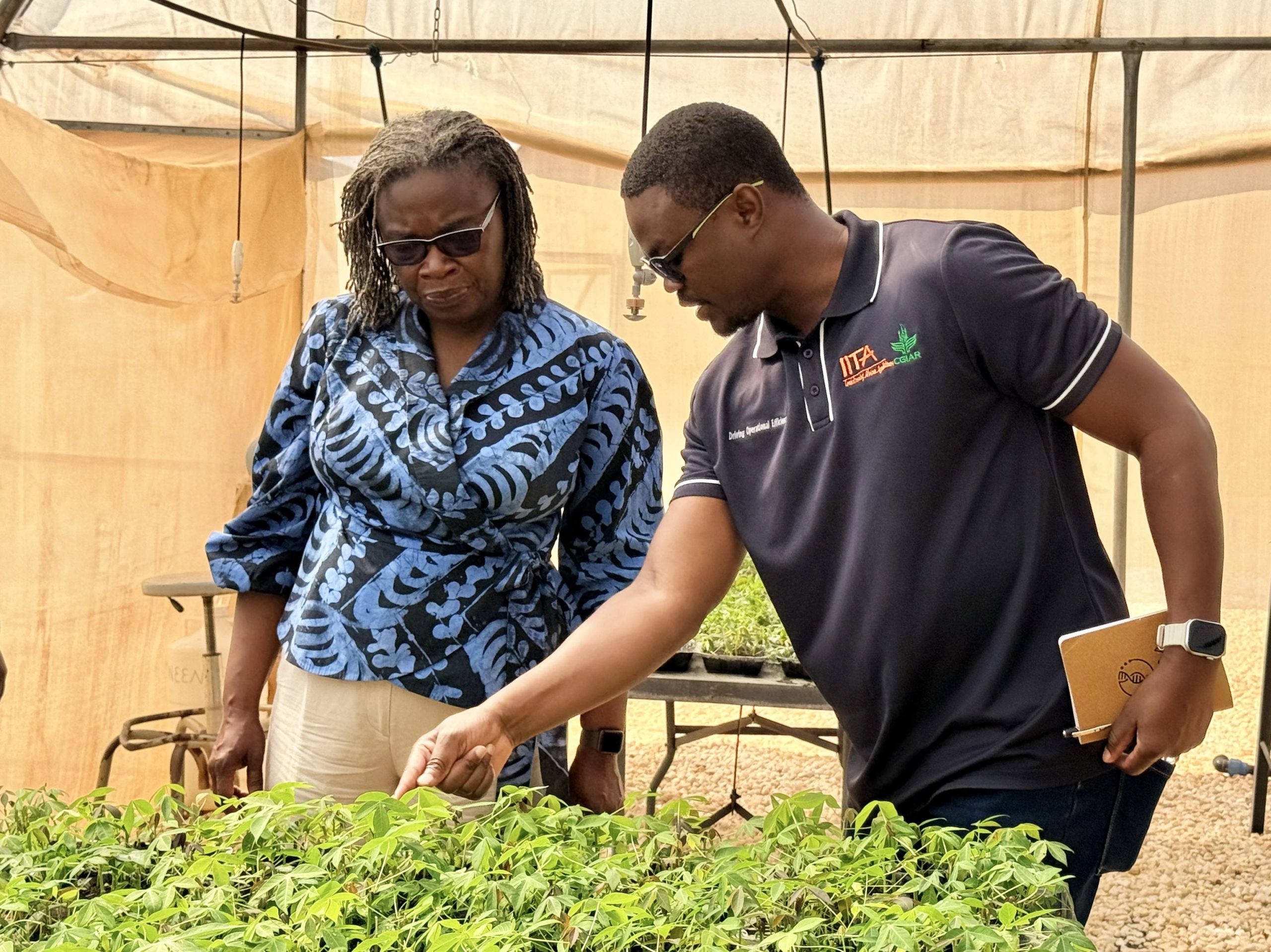
It was within this context that IITA Board Member, Dr Victoria Kwakwa, emphasized the central role of research in building resilient food systems, reducing dependence on external markets, and accelerating economic transformation across Africa during a recent visit to the IITA Southern Africa Hub (SAH) in Lusaka, Zambia.
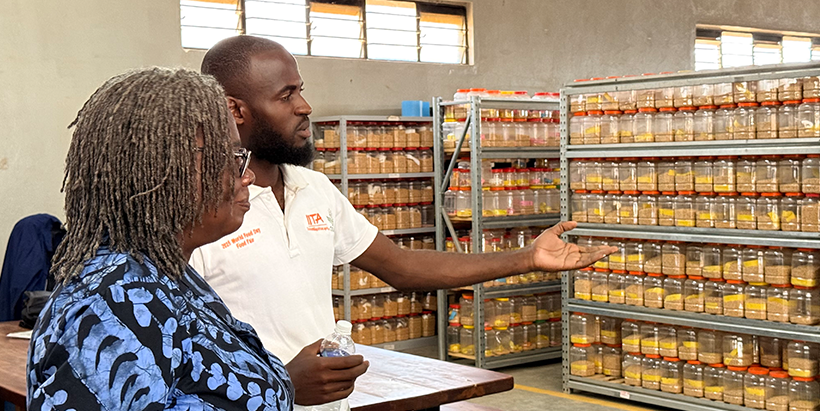
Dr Kwakwa visited the Hub to engage with staff and researchers and gain deeper insight into the Hub’s work and its contribution to advancing agricultural transformation across Southern Africa through research, innovation, and the delivery of scalable solutions.
Addressing staff, she reflected on how recent global disruptions and climate-related shocks have reinforced the urgency for Africa to strengthen its agricultural systems and build greater resilience.
Drawing lessons from recent events, including supply chain disruptions linked to the Russia–Ukraine conflict, fertilizer market pressures, and climate variability across the continent, she observed that Africa’s continued dependence on external systems for food and agricultural inputs poses a growing challenge to long-term development.
“We really need to get our act together in the agriculture sector,” she said. “Africa cannot do this without Africa.”
Dr Kwakwa emphasized that agricultural transformation must extend beyond increasing production and instead focus on building stronger, more integrated systems that connect research, seed systems, commercialization, markets, and industry.
For her, agricultural research institutions remain central to this transformation.
“Research allows us to develop the agriculture sector. We cannot develop agriculture based on what our fathers and grandparents did decades ago. We have to research new solutions, respond to emerging challenges, develop improved crop varieties, commercialize them, and bring them to farmers in meaningful and sustainable ways,” she said.
She noted that strengthening agricultural systems presents an opportunity not only to improve food security but also to drive industrial development, create jobs, revitalize rural economies, and position African countries as competitive players in regional and global agricultural markets.
Commending the work being undertaken by IITA, Dr Kwakwa described the institute as occupying an important position in helping shape the continent’s agricultural future.
“In my view, you are leaders in agriculture,” she said. “Your research and efforts to ensure that solutions are applied meaningfully and sustainably are super important.”
She further acknowledged the scientific excellence and technical capability across the institute and encouraged staff to continue pushing the frontier of agricultural innovation despite an increasingly constrained funding environment.
“What you do here impacts so many people. You are already successful, but the challenges ahead require going even further.”
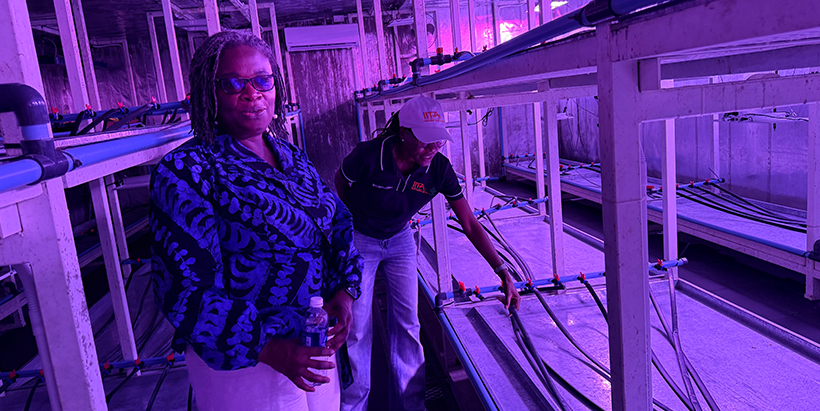
The visit concluded with an institutional presentation and showcase of the Southern Africa Hub’s portfolio of work across crop improvement, breeding, seed systems, climate resilience, mechanization, and research-for-development initiatives being implemented across the region.
Speaking at the close of the engagement, Dr Elizabeth Parkes, IITA Cassava Breeder, who welcomed Dr Kwakwa, thanked her for the visit and reaffirmed IITA’s commitment to generating science-driven solutions that strengthen food systems, improve livelihoods, and contribute to agricultural transformation across Africa.
The priorities highlighted during the visit closely align with the ongoing efforts of the IITA Southern Africa Hub to strengthen agricultural resilience, accelerate commercialization, and improve livelihoods across the region.
Through investments in research and innovation platforms such as the Soybean Speed Breeding Facility, a first-of-its-kind in sub-Saharan Africa, the Hub is accelerating crop improvement cycles and supporting the development of improved varieties capable of responding to emerging agricultural challenges and changing climate conditions.
The Hub is also advancing youth-led agricultural transformation through the Young Agripreneurs initiative, which continues to equip young people with practical skills, technologies, and agribusiness opportunities while creating pathways for employment and participation across agricultural value chains.
In parallel, IITA’s cassava interventions continue to support productivity and commercialization by developing and promoting improved cassava varieties and technologies that strengthen seed systems, increase farmers’ access to quality planting material, and unlock opportunities for value addition and market development.
Contributed by Rachel Namukolo-Nali
