
Rwanda launches BioCap project with IITA as key biotechnology partner
16 January 2026
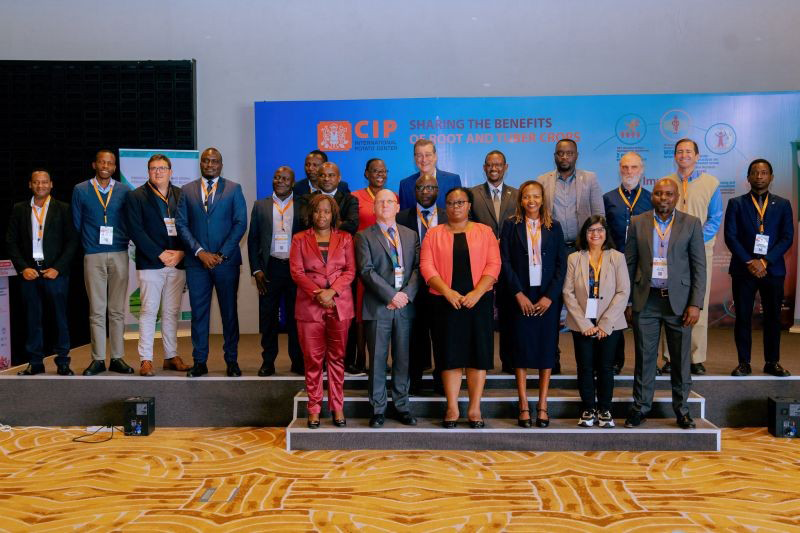
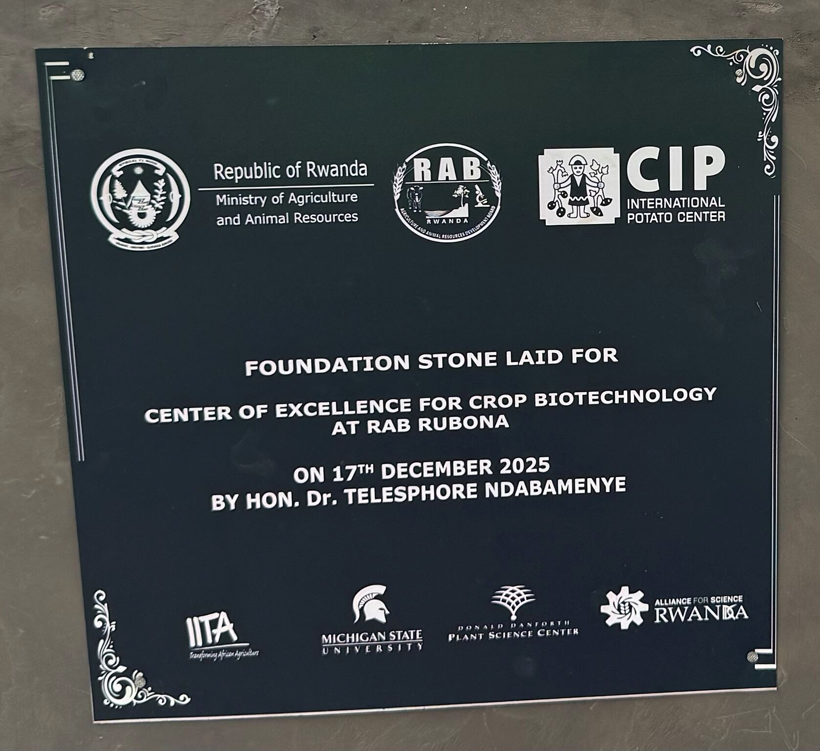
IITA–CGIAR joined national and international partners in Rwanda for the official launch of the Rwanda Biotechnology Capacity Building (BioCap) Project and the ceremonial laying of the foundation stone for a Centre of Excellence for Crop Biotechnology. The initiative, led by the International Potato Center (CIP) and the Rwanda Agriculture and Animal Resources Development Board (RAB), funded by the Gates Foundation, aims to strengthen Rwanda’s capacity to develop, regulate, and deploy improved crop varieties that address key production constraints.
As a core technical partner, IITA brings extensive experience in genetic transformation, genome editing, biosafety stewardship, and capacity building to support the project’s objectives. The BioCap Project is designed to position Rwanda as a regional hub for advanced agricultural biotechnology, with a strong focus on locally led innovation and responsible use of modern breeding tools.
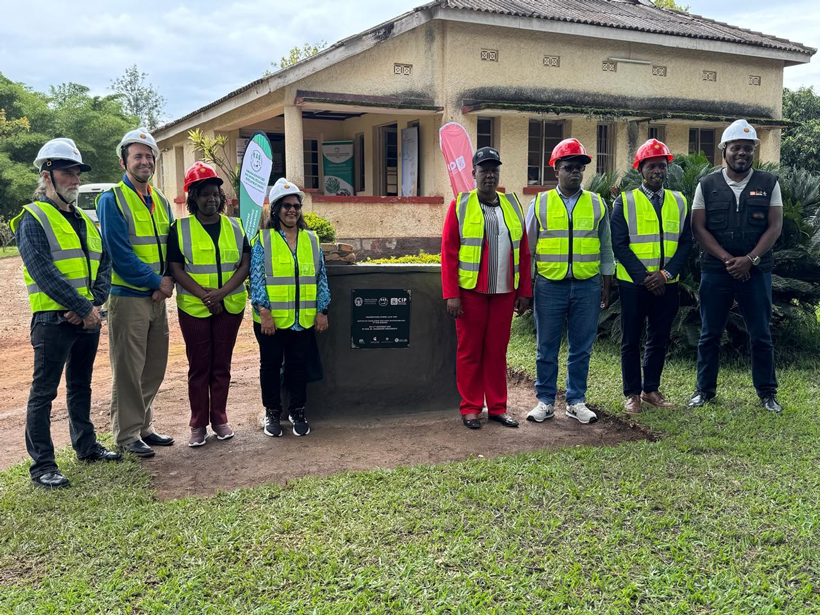
Within BioCap, IITA will lead the banana gene-editing component, drawing on its longstanding expertise in banana research, biotechnology, and capacity development across Africa. IITA will collaborate with partners, including RAB, CIP, Donald Danforth Plant Science Center, Michigan State University, and the Alliance for Science Rwanda. Together, these efforts will support the safe and climate-smart application of biotechnology, complementing Rwanda’s climate adaptation strategy by empowering scientists, strengthening regulatory systems, and translating research into tangible benefits for smallholder farmers.
The Centre of Excellence will provide state-of-the-art infrastructure and training platforms for Rwandan scientists, enabling research on priority crops critical to national food security. Initial research efforts will focus on potato, cassava, and banana, targeting major diseases such as late blight, cassava brown streak disease, and banana bacterial wilt, which continue to cause significant yield losses for farmers.
Speaking at the event, Dr Leena Tripathi, Eastern Africa Hub Director and Director of Genetic Innovations at IITA, highlighted the importance of long-term partnerships in building sustainable national capacity:
“The BioCap Project reflects a shared commitment to empowering national institutions with the skills, infrastructure, and stewardship systems needed to responsibly develop and deliver improved crop varieties. IITA is proud to contribute its expertise in biotechnology to support Rwanda’s vision for food and nutrition security.”
Beyond infrastructure development, the BioCap Project emphasizes human capacity development, regulatory strengthening, and stewardship, ensuring that innovations move efficiently and safely from the laboratory to farmers’ fields. IITA’s involvement builds on its longstanding collaboration with African national agricultural research systems and its mandate to support science-driven agricultural transformation across the continent.
Contributed by Rose Harriet Okech
