
Scaling up High-Quality Cassava Peel technology for livestock in Rwanda
15 August 2025
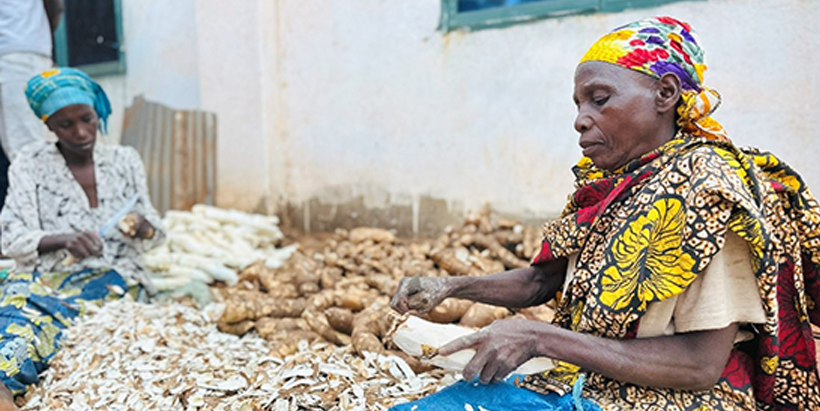
Rwanda’s livestock farmers are grappling with rising feed costs, particularly maize-based ingredients, which now sell for around 400-600 Rwf (USD 0.28-0.41) per kilogram. In contrast, High-Quality Cassava Peel (HQCP) mash, produced from processed cassava peels, costs only 200-250 Rwf (USD 0.14-0.17) per kilogram, yet delivers the same nutritional value as maize in feed formulation.
To address gaps in livestock feed production in Rwanda, IITA–CGIAR has been promoting High Quality Cassava Peels (HQCP) technology as a cost-effective and sustainable feed ingredient through ongoing efforts to scale innovation in sub-Saharan Africa.
The technology was introduced under the Rural-Urban Nexus (RUNRES) project, funded by the Swiss Agency for Development and Cooperation (SDC), as part of efforts to reduce reliance on maize for livestock feed, thereby freeing up maize for human consumption and lowering feed imports.
“Producing animal feed from cassava peels will cut the amount of cereals previously imported for mixing with other feeds. This will increase income for farmers and livestock keepers, especially since imported feed is expensive, and often in short supply,” said Jules Mutabazi, researcher at the Rwanda Agriculture and Animal Resources Development Board (RAB).
Following successful piloting, IITA-CGIAR is scaling HQCP production among cassava and animal feed entrepreneurs to expand access to affordable feed for cattle, goats, pigs, and poultry, while creating new agribusiness opportunities.
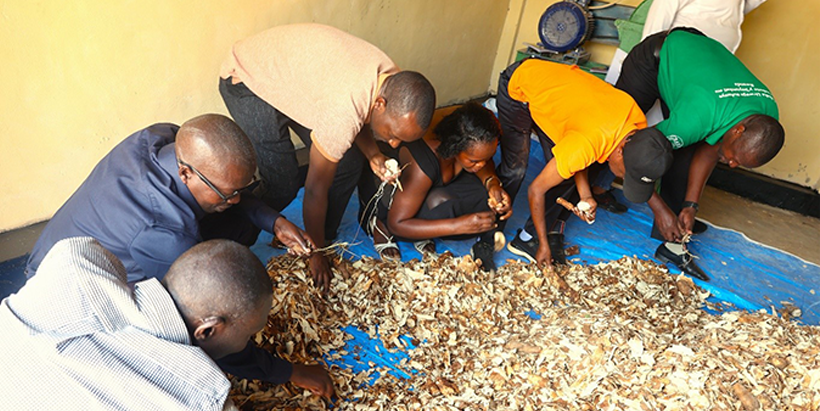
From 5 to 6 August 2025, IITA, through its Gwiza-Muhinzi project (funded by the European Union) and RUNRES, hosted a two-day, hands-on training in Rwanda entitled “Advanced practical training on High-Quality Cassava Peel processing into animal feed” for 35 cassava and animal feed entrepreneurs. The sessions, led by International Livestock Research Institute (ILRI) Scientist, Dr Iheanacho Okike, covered the full production process: sorting of wet peels, grating/milling of wet peels, dewatering, pulverizing, sun drying, milling of dried mash, and storing, so participants can replicate the process in their enterprises.
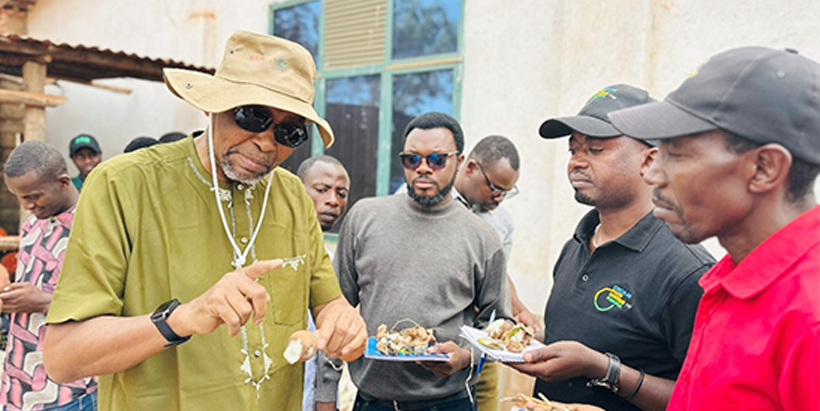
“Wasting cassava peels is like throwing money away. By processing those peels into HQCP feed, we create value from waste, address the rising cost of livestock feed, and reduce environmental impact. This is a win-win for farmers, processors, and the planet,” said Dr Okike.
For Jean Claude Munyaneza Kabayiza, a cassava seed entrepreneur and CEO of Holly Agriculture Company in Eastern Province, the training strengthened his resolve to start a cassava peel processing unit.
“I already had this project in mind, but it gave me even further clarity after this training. I may not start with a large factory, but I can begin with a small or medium-scale unit that processes cassava while ensuring no residue is wasted,” he said.
Participants also noted the direct cost savings HQCP offers;
“This cassava peel flour is helping us reduce the cost of animal feed. It is cheaper than the maize feed we normally buy, and it still has the high quality and nutrients our livestock need,” said Noella Umutoni, animal feed entrepreneur from Bugesera District.
By turning agricultural waste into a valuable resource, HQCP technology offers a practical solution to feed affordability, challenges, and availability, supporting Rwanda’s livestock industry and broader food security goals.
Contributed by Ritha Bumwe
