Seed production and agronomy training strengthens quality seed delivery to farmers
10 July 2026
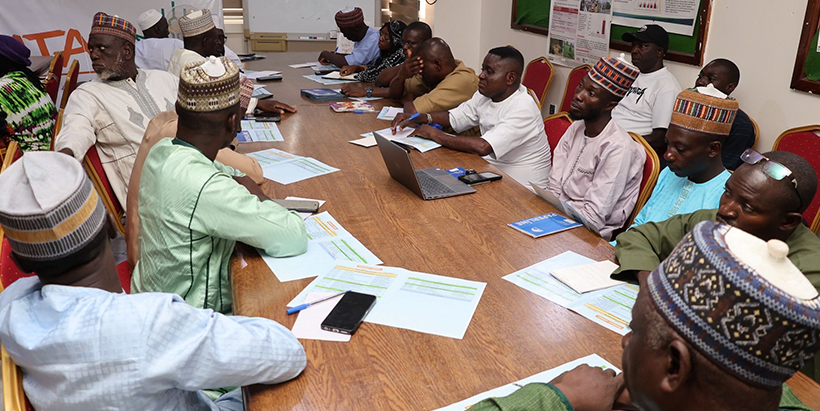
As part of efforts to reinforce commitment to strengthening Nigeria’s seed systems, IITA–CGIAR, Kano station organizing a two-day Seed Production and Field Agronomy Training Workshop for seed stakeholders across the country.
The training, held from 29–30 June 2026, at the IITA Kano Conference Hall, brought together seed companies’ technicians, community seed producers, researchers, extension agents, regulatory officers, and agribusiness entrepreneurs to enhance their knowledge and technical skills in legume seed production and good agronomic best practices to enhance productivity, sustainability, and food security despite climate change impact.
The training was organized under the auspices of inclusive delivery of the One CGIAR, Breakthrough Products-Bill Gates funded, and fast-tracking the release, registration, and commercialization of climate resilient cowpea varieties-AGRA funded the workshop, which focused on techniques for improving the production and productivity of cowpea and soybean through better seed systems, quality assurance, and effective agronomic management.
Welcoming participants, the Head of Station, Dr Alpha Kamara, emphasized the importance of seed companies as a critical link between research institutions and farmers.
He noted that improved crop varieties can only make an impact when quality seeds are multiplied correctly, and farmers are guided on proper agronomic practices.
“Seed companies are the bridge between scientists and farmers. Without them, research outputs may not create the desired impact in farmers’ fields,” he said.
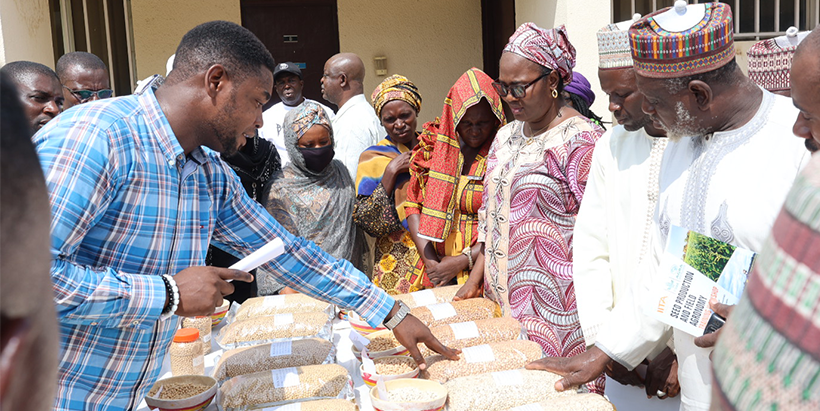
The workshop was facilitated by Prof. Lucky Omoigui, who led participants through technical sessions on seed science, crop establishment, field management, pest and disease control, harvesting, seed processing, and quality assurance.
Participants were also introduced to the importance of seed classification, genetic purity, seed vigor, certification processes, and field inspections, all of which are essential in ensuring that farmers receive high-quality planting materials.

Speaking during the workshop, Dr Esther Ibrahim highlighted the strategic importance of legumes, especially cowpea and soybean, in addressing hunger and improving livelihoods.
She noted that despite the availability of improved varieties, national productivity remains below potential due to poor agronomic practices and limited awareness.
“It is critical that we work together to commercialize improved varieties and get them into the hands of farmers. This is how we strengthen food systems and improve food security,” she said.
She further encouraged farmers and seed companies to adopt newly released improved varieties such as ALKAM SUPER, noting its high yield potential and reduced cooking time.
For Dr Teryima Iorlamen, the training provided the timely knowledge needed to bridge the gap between seed quality and productivity.
Seeds without proper agronomic practices may not yield the desired results. We need both quality seed and proper management to achieve high yields,” he said.
Also speaking, Bello Mohammed Waziri of the National Agricultural Seed Council (NASC) stressed the importance of seed certification in maintaining quality standards and protecting farmers from fake seeds.
He explained that proper certification and awareness would help farmers identify genuine seeds and improve trust in the seed system.
Participants described the workshop as insightful, practical, and impactful, noting that the sessions demystified the theoretical concepts of seed production and equipped them with practical knowledge to improve seed production and to support farmers effectively in delivering quality seed.
The training is part of IITA’s ongoing efforts to strengthen seed delivery systems, empower seed actors, and accelerate the adoption of improved crop varieties to boost productivity, improve food security, and support sustainable agricultural development in Nigeria.
Contributed by Sarah Sallau
