
Strengthening cassava cooperatives and agribusinesses in DR Congo
12 May 2026
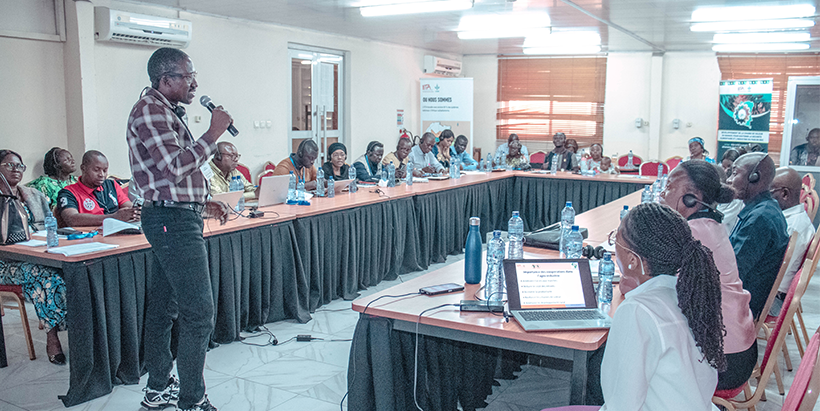
In many rural communities across the Democratic Republic of Congo, cassava is more than just a staple crop; it is a source of food, income, and survival for thousands of farming households. Yet despite its enormous economic potential, many smallholder farmers, cooperatives, and small businesses continue to face challenges in turning cassava production into profitable and sustainable enterprises due to limited business, financial, and organizational management skills. Strengthening these capacities is increasingly seen as essential to reducing post-harvest losses, improving market access, creating jobs, and helping rural communities build more resilient livelihoods.
To address these gaps, IITA–CGIAR, through the Cassava Value Chain Development (CVCD) project, organized a Cooperative Management and Entrepreneurship/Business Management Skills Development training in collaboration with the TAAT Cassava Compact for cooperatives and small and medium enterprises (SMEs) operating within the cassava value chain in Kinshasa.
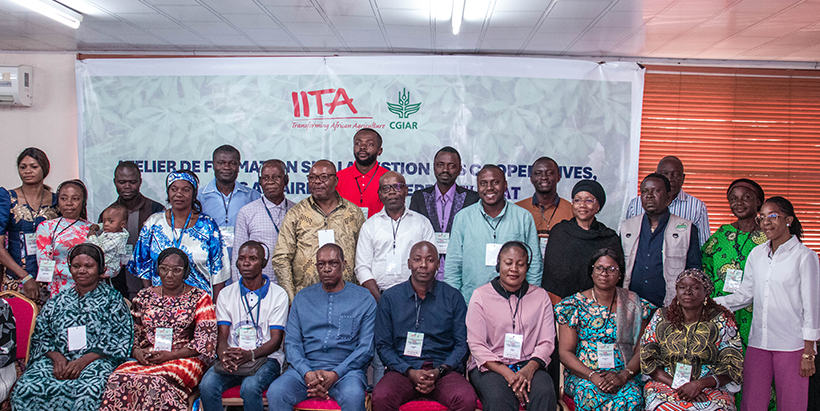
The training brought together cooperative leaders, processors, aggregators, and SME operators to build their knowledge in cooperative governance, leadership, financial literacy, and business management. Participants were equipped with practical skills needed to strengthen the management of cassava-based enterprises and improve coordination across production, processing, and marketing activities.
A major focus of the training was financial literacy and business management tailored specifically to cassava enterprises. Participants learned practical approaches to recordkeeping, budgeting, cost-benefit analysis, and financial planning for cassava production and processing. The program also introduced basic accounting tools to help participants better track revenues from products such as gari, fufu flour, starch, chips, and high-quality cassava flour. With their financial management skills strengthened, the participants can now better explore access to finance, support investment in improved technologies, and reduce risks linked to price fluctuations and post-harvest losses.
The entrepreneurship component of the training showed participants how to identify business opportunities across the cassava value chain, including mechanized processing, value addition, packaging, branding, and market expansion, promoting a market-oriented mindset.
Highlighting the importance of innovation and competitiveness in driving growth within local and regional cassava markets, participants were shown how to understand consumer preferences, quality standards, and the requirements of high-value markets.
The training emphasized the importance of collective action in improving productivity and profitability through stronger cooperative systems. Participants learned the benefits of bulk purchasing, shared processing facilities, access to improved cassava varieties, and stronger market linkages.
Discussions during the interactive sessions addressed key challenges affecting the cassava value chain, including limited access to equipment, weak market connections, inconsistent product quality, and high post-harvest losses, while offering practical solutions to address them.
By strengthening participants’ financial management and entrepreneurship capacities, the training supports the CVCD project’s broader goal of transforming cassava cooperatives and SMEs into competitive, profitable businesses in the region.
Ultimately, the goal of the training is to improve incomes and livelihoods for farmers and value chain actors, while supporting food security, job creation, and inclusive economic growth in DRC.
Contributed by ‘Timilehin Osunde
