
World Bank mission hails FSRP as key milestone in Sierra Leone’s agricultural transformation
9 February 2026
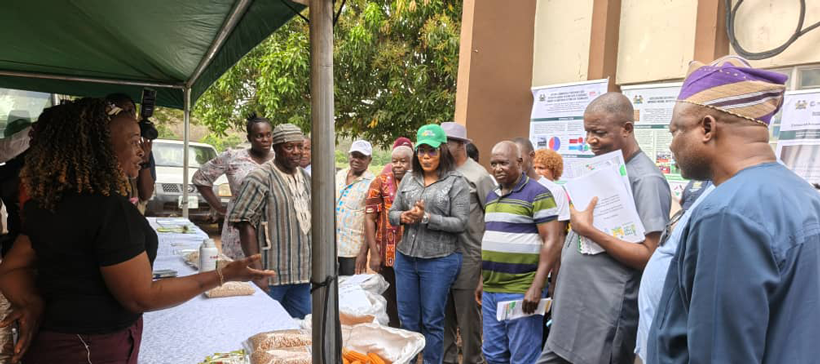
A World Bank implementation support mission to Sierra Leone has expressed delight with the progress and results of the Food Systems Resilience Programme (FSRP)—implemented by IITA–CGIAR, in partnership with the Sierra Leone Agricultural Research Institute (SLARI)—describing it as a standout example of results-driven investment, leading to growing national relevance and a significant milestone in the nation’s agricultural transformation.
The World Bank team, led by Dr Tunji Oredipe, delivered the commendation on 17 January during a high-level engagement at the Njala Agricultural Research Centre (NARC) Conference Hall, following comprehensive technical presentations on the project’s three components and research updates from six SLARI scientists supported through FSRP-funded competitive grants. The meeting was part of a two-day mission to all IITA-SLARI project sites to review two years of implementation, assess on-the-ground results, and confirm alignment with national priorities.
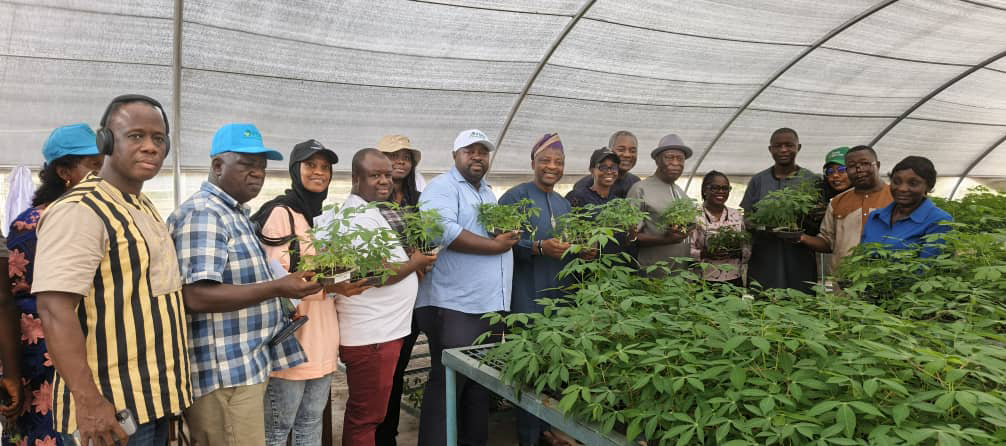
The FSRP project directly supports Pillar 2 of the Government of Sierra Leone’s Feed Salone Strategy, which focuses on strengthening food systems, boosting productivity, and improving food security.
Speaking at the close of the technical sessions, Dr Oredipe praised the quality of implementation and encouraged the IITA/SLARI team to sustain its momentum. He emphasized the strategic importance of maximizing the facilities and infrastructure established under the project to drive long-term impact. “This project is about changing agricultural activities in Sierra Leone,” he said. I want to see the future of agriculture being driven from the facilities provided by the project in the agricultural space.”
FSRP Programme Manager Dr Keprifi Lakoh described the mission’s feedback as a clear validation of the IITA-SLARI collaboration, noting that the project is already generating tangible results and success stories that strengthen the Ministry of Agriculture and Food Security’s (MAFS) delivery of the Feed Salone strategy. Dr Lakoh reaffirmed the World Bank’s commitment to supporting the project’s successful implementation.
IITA-Sierra Leone Country Representative and SLARI Council Chairman, Dr Alfred Dixon, said the progress achieved reflects SLARI’s renewed capacity and growing relevance. He noted that strategic partnerships and targeted investments are enabling the institute to reclaim its position as a driver of high-quality agricultural research and innovation in Sierra Leone.
FSRP-IITA Co-Project Lead, Professor Lateef Sanni, commended the dedication of the implementation team, stressing that their collective efforts are delivering the level of impact expected by the donor. He stressed collaboration and teamwork as essential ingredients for sustaining institutional and individual success.
Acting Director General of SLARI, Dr Abdul Conteh, described the project as an intentional and strategic partnership, referring to it as “Phase Two of the WAAPP experience.” He highlighted the project’s inclusive implementation model, which actively involves SLARI scientists in planning, execution, and learning—strengthening ownership, capacity development, and sustainability.
The Ministry of Finance Representative, Samuel Yankuba, also expressed satisfaction with the project’s transparency, coordination, and visible impact within a relatively short period.
The mission concluded with a guided tour of all FSRP facilities and project sites, during which the World Bank team observed firsthand the innovations and infrastructure positioning the IITA–SLARI FSRP as a cornerstone of Sierra Leone’s food systems transformation.
Contributed by Moses Sahr Fayiah
