
Zanthoxylum leprieurii: A keystone resource for birds and biodiversity conservation in Nigeria
12 February 2026
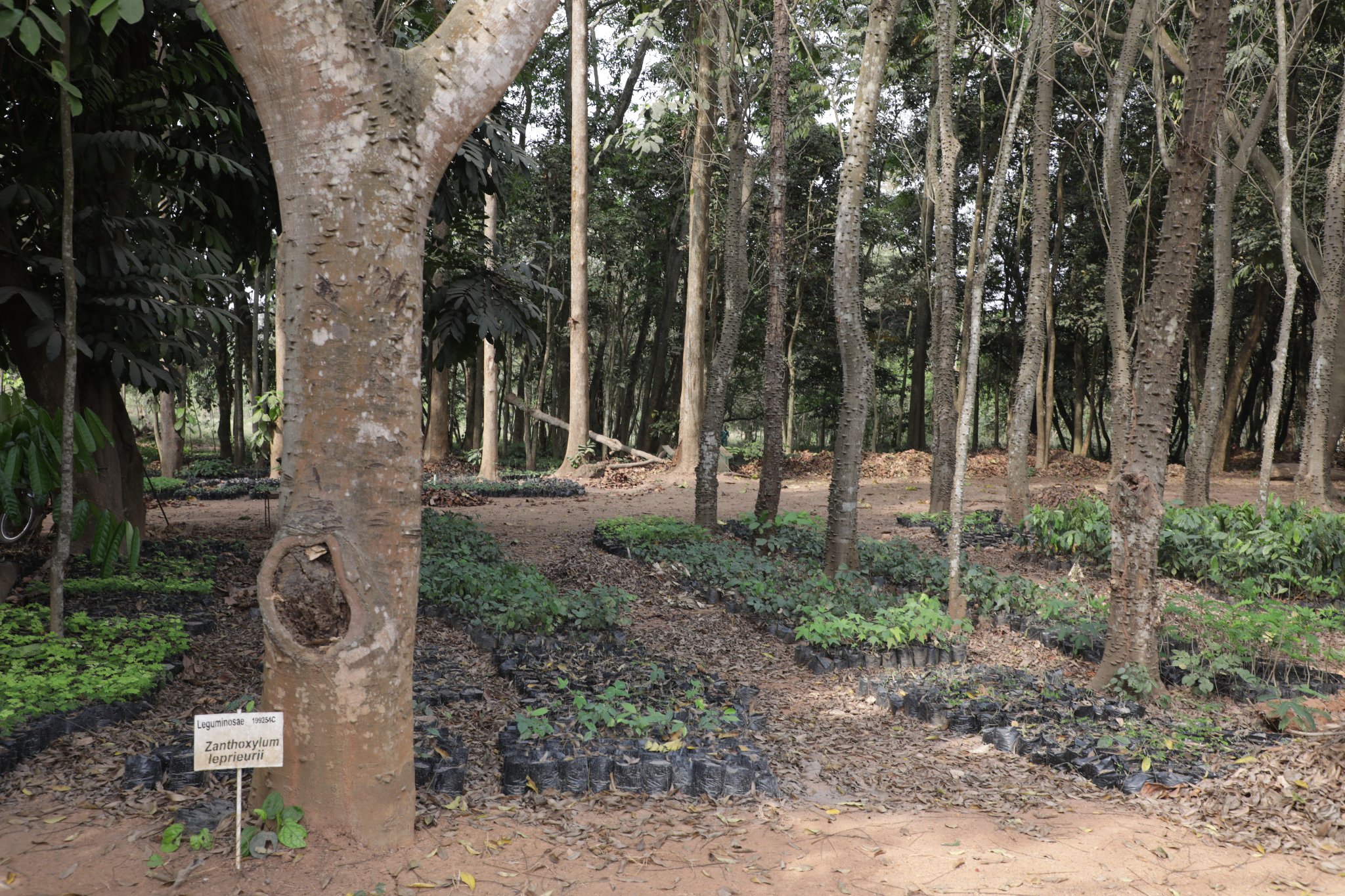
New research led by scientists from the IITA Forest Center has revealed that sand knobwood (Zanthoxylum leprieurii), a native tropical African tree, plays an outstanding role in supporting bird diversity and ecosystem health, underscoring the importance of forest conservation grounded in science. Published in Ostrich: Journal of African Ornithology, the study investigated the role of sand knobwood fruits as a food resource for birds within IITA’s Tree Heritage Park (THP).
Over three peak fruiting seasons spanning 2018, 2019, and 2024, researchers conducted systematic focal observations to document bird foraging behavior. The results were striking: 4,452 individual birds from 30 species were recorded feeding on sand knobwood fruits—far exceeding visitation rates observed on any other tree species in the park. The Red-eyed Dove (Streptopelia semitorquata) alone accounted for nearly half of all visits, followed by species such as the Common Bulbul and Olive Sunbird.
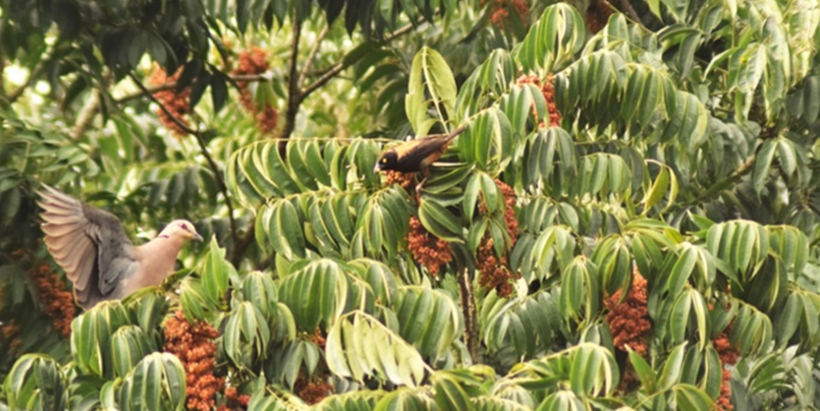
Beyond documenting bird diversity, the study went further to understand why this tree matters so much. Laboratory analyses revealed that sand knobwood fruits are nutritionally rich, containing high levels of fat, protein, and crude fiber—key dietary components that support birds’ energy needs, reproduction, and immune function. Birds were observed feeding in both the canopy and on fallen fruits on the forest floor, highlighting how this single tree supports multiple feeding strategies and ecological niches.
Beyond its nutritional value, the study further suggests that sand knobwood possesses antiparasitic and antimicrobial properties that confer medicinal benefits to birds. The multifunctional properties of the sand knobwood tree, including its fruit size, ease of handling, nutritional properties, and medicinal properties, make it a choice food source for diverse bird species.
These findings position Zanthoxylum leprieurii as a keystone resource—a species whose ecological importance far outweighs its abundance. By sustaining birds that play vital roles in seed dispersal, forest regeneration, and ecosystem balance, the tree indirectly supports the resilience of forest landscapes. This interdependence illustrates a broader truth at the core of IITA Forest Center’s mission: conserving trees is inseparable from conserving biodiversity and from supporting human well-being.
Importantly, the research also highlights the value of long-term investment in conservation. Sand knobwood trees studied in the THP were planted decades earlier when the then arboretum was managed by CIFOR-ICRAF, demonstrating how sustained forest stewardship can yield significant ecological returns over time. Funding from the A. G. Leventis Foundation and further work from the IITA Forest Center reinforce the role of partnerships in advancing conservation science.
As urbanization and habitat loss continue to threaten biodiversity, Zanthoxylum leprieurii, given its relatively small size and normal rooting system, offers suitable options for agroforestry, urban greening, and nature-based solutions for biodiversity conservation. By integrating scientifically proven native trees, such as sand knobwood, into managed landscapes, it is possible to create environments where birds, forests, and people thrive together.
Link to paper: https://doi.org/10.2989/00306525.2025.2606066
Contributed by Folake Oduntan
