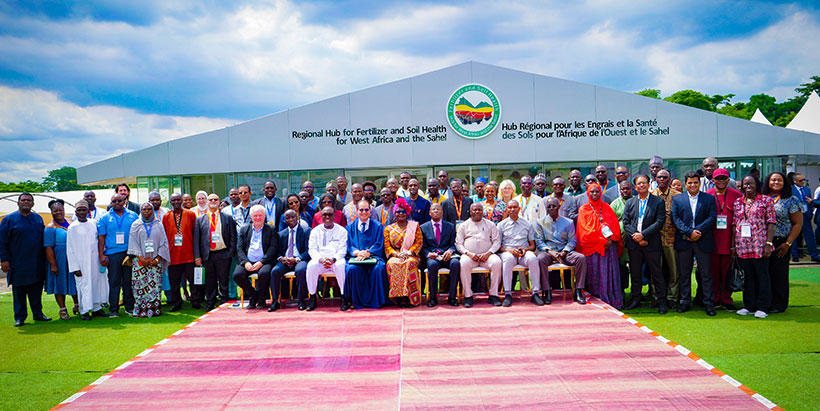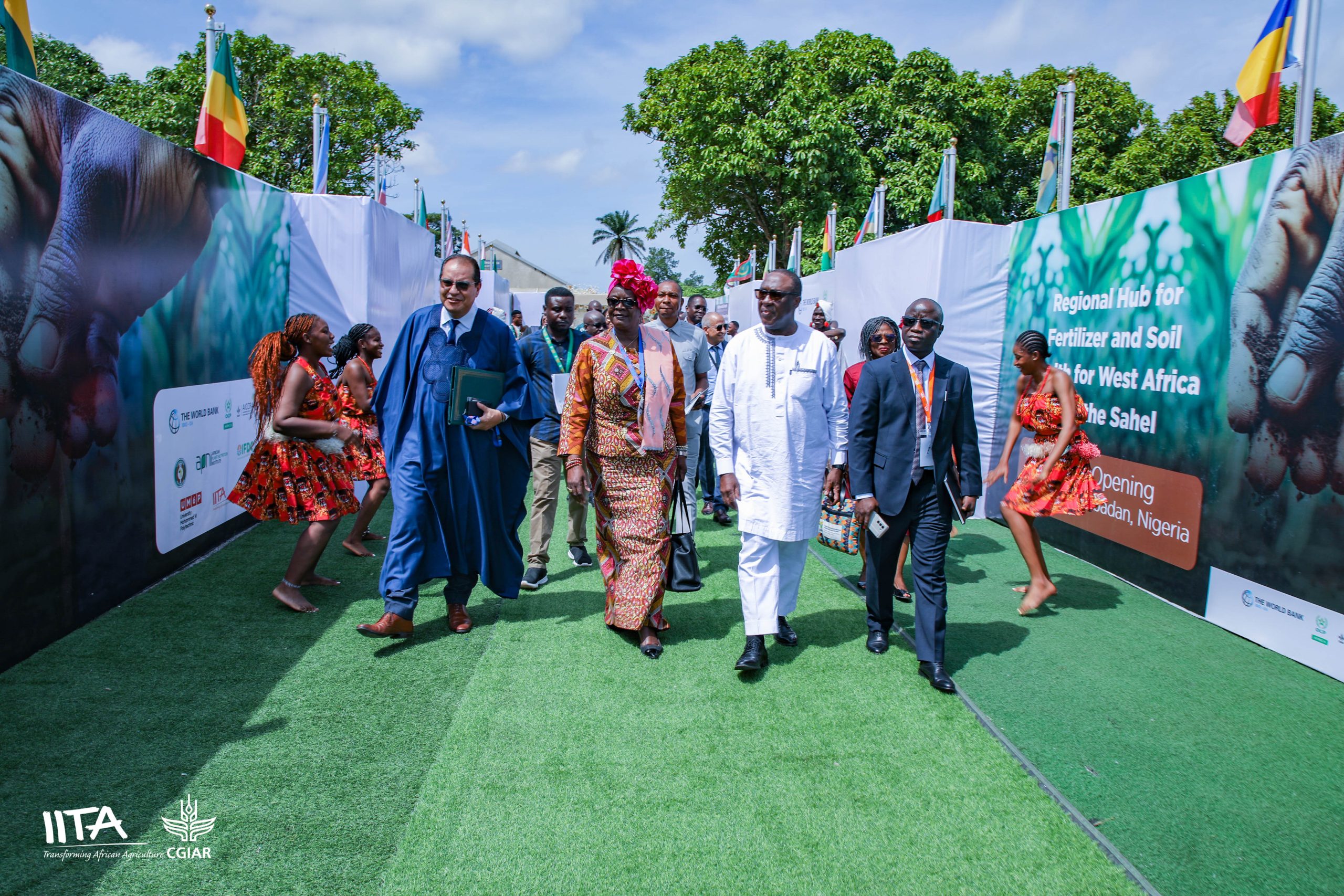
The landmark agreement will support the implementation of the Regional Hub for Fertilizer and Soil Health in West Africa and the Sahel.

Ibadan, Nigeria – July 3, 2024 – Today, OCP Africa and the International Institute of Tropical Agriculture (IITA) signed a pivotal Agreement at the launch of the Regional Hub for Fertilizer and Soil Health in West Africa and the Sahel. The ceremony at IITA’s headquarters marks the beginning of a collaboration to enhance soil health and agricultural productivity across the region. This partnership embodies a shared commitment to sustainable agricultural practices, aiming to foster resilient agricultural systems that benefit farmers and the broader community.

Dr Mohamed Anouar Jamali, CEO of OCP Africa, expressed his enthusiasm, stating, “In line with ECOWAS’ roadmap and the Nairobi Declaration from the Africa Fertilizer and Soil Health Summit 2024, this initiative underscores our commitment to improving soil health and agricultural productivity, with a main focus in West Africa and the Sahel countries. By leveraging our expertise and resources, we aim to facilitate a just and sustainable agricultural transition in the region.”
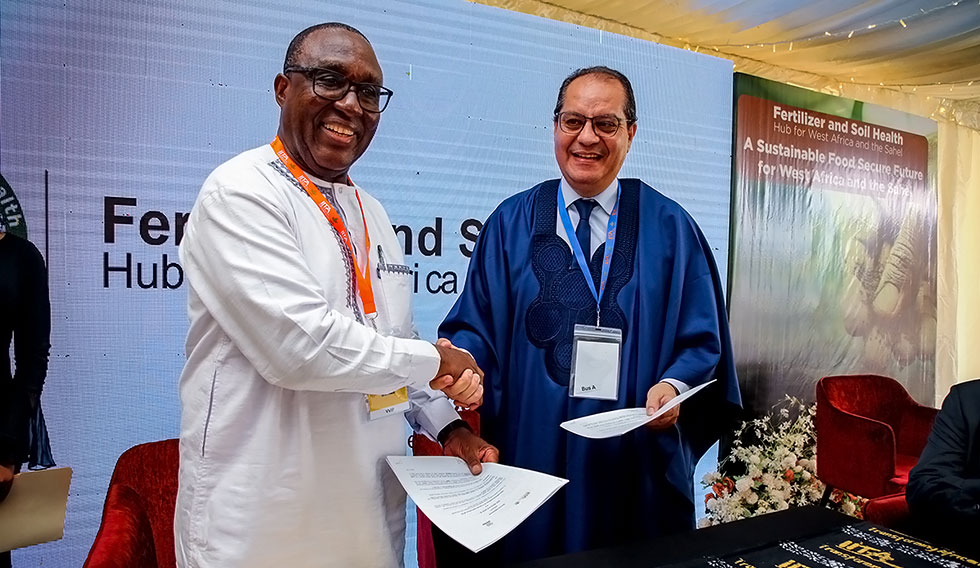
Dr. Simeon Ehui, Director General of IITA, and Regional Director for Africa, CGIAR and Dr. Mohamed Anouar Jamali, CEO of OCP Africa at the signing ceremony.

The partnership highlights OCP Africa’s and IITA’s commitment to sustainable agricultural practices. By leveraging their combined expertise and resources, the two organizations aim to create long-lasting solutions that address the critical issue of soil fertility in West Africa and the Sahel.

OCP Africa supports this initiative through critical projects, including creating digital soil health maps, developing precise fertilization models based on Integrated Soil Fertility Management (ISFM) and 4R+ principles, and providing farmer-centric services.

This agreement commits both organizations to a series of impactful initiatives and is made possible through a consortium that includes the International Fertilizer Development Center (IFDC), the African Plant Nutrition Institute (APNI), and the University of Mohammed 6 Polytechnic (UM6P), working with IITA and OCP Africa.

The collaboration marks a significant step towards enhancing agricultural productivity and sustainability in West Africa and the Sahel. The agreement formalizes the commitment of both organizations to contribute to the objectives outlined in the LomĂ© Declaration on Fertilizers and Soil Health under the auspices of ECOWAS and supported by the World Bank’s Africa Fertilizer and Soil Health (AFSH) Action Plan.

Dr Simeon Ehui, Director General of IITA, and Regional Director for Africa, CGIAR, praised the collaborative effort’s vital role in addressing soil fertility challenges and enhancing food security. Dr Ehui added, “The establishment of the Regional Hub is a critical step towards addressing the challenges of soil fertility and health in West Africa. We are excited to work with OCP Africa to implement innovative solutions to benefit farmers and contribute to regional food security.”

The Hub, formally launched at the Africa Fertilizer and Soil Health Summit in Nairobi on May 8, 2024, aims to enhance soil health and agricultural productivity across the region. It is hosted at the IITA campus in Ibadan, Nigeria, with initial funding from the World Bank and OCP Africa. The Hub is an ECOWAS sub-program governed by a consortium of technical partners, including IITA, IFDC, APNI, OCP Africa, and UM6P, and coordinated by IITA under the auspices of ECOWAS, which chairs the Hub Advisory Committee.

The Regional Hub will focus on soil health and empower farmers through practical demonstrations and capacity-building initiatives. Additionally, the Hub will strengthen national institutions by providing necessary resources and training to enhance their research and extension capabilities.

The signing of the Agreement between OCP Africa and IITA marks a significant milestone in the journey towards enhanced soil health and agricultural productivity in West Africa and the Sahel. This partnership is poised to impact the region’s agricultural landscape, paving the way for a more sustainable and food-secure future.


About the Regional Hub:

Formally launched at the Africa Fertilizer and Soil Health Summit in Nairobi on May 8, 2024, the Hub is an ECOWAS sub-program hosted at the IITA campus in Ibadan, Nigeria, with initial funding from the World Bank and OCP Africa. It is governed by a Consortium of technical partners, including IITA, IFDC, APNI, OCP Africa, and UM6P, and coordinated by IITA under the auspices of ECOWAS, which chairs an Advisory Committee. The Hub aims to provide technical assistance for developing and implementing fertilizer and soil health investments in the ECOWAS countries, including Mauritania and Chad.

About OCP Africa:

A subsidiary of OCP Group – A South-led global leader rooted in Africa, developing scalable partnerships and collaborations worldwide – OCP Africa was created to contribute to a just agricultural transition putting soils and farmers at its core. We develop customized plant and soil nutrition solutions, while working with partners to ensure African smallholder farmers get the agricultural services, knowledge and resources required to close the yield gap.

www.ocpafrica.com  

About IITA (IITA.org):

The International Institute of Tropical Agriculture (IITA) is a not-for-profit institution that generates agricultural innovations to meet Africa’s most pressing challenges of hunger, malnutrition, poverty, and natural resource degradation. Working with various partners across sub-Saharan Africa, we improve livelihoods, enhance food and nutrition security, increase employment, and preserve natural resource integrity. IITA is a member of CGIAR, a global agriculture research partnership for a food secure future.

For more information contact:
Barbra Muzata
+27838092424
b.muzata@cgiar.org

On Thursday, 13 June 2024, the Plant Production Systems (PPS) Group at Wageningen University organized a symposium themed “Farming systems analysis: What have we learned?” The event honored the Emeritus Professor of Plant Production Systems at Wageningen University, Prof. Ken E. Giller, at his retirement ceremony. It featured presentations from his former students, who shared their research activities and the lessons they learned over the years.

A researcher at Wageningen University, Jens Andersson, moderated the symposium. He began by outlining the three foundational elements of farming systems analysis: system thinking in agriculture, interdisciplinary collaborations, and interactions with stakeholders. With this introduction, he invited the speakers to share their experiences.

The Director of Research and Development at the African Plant Nutrition Institute (APNI) in BenguĂ©rir, Morocco, Shamie Zingore, presented “Site-specific nutrient management in smallholder farming systems: Insights from two decades of farming systems research.” He emphasized the need to double crop productivity to close the gap between low production and food consumption, ensuring smallholders can access site-specific agronomic recommendations. Zingore highlighted that fertilizer is crucial for sustainable crop production and smallholder farmers’ productivity. He noted the challenges in developing technologies that work for individual farms but pointed out that effective fertilizer use can double productivity and drive sustainability.

Professor of Livestock Systems at the School of Life Sciences, Technical University of Munich, Prof. Mariana Rufino, discussed “Grazing lands: Building resilience in smallholder farming.”

The French Agricultural Research Centre for International Development (CIRAD) Systems Agronomist, Frederic Baudron, shared his views on the successes, remaining challenges, and new demands on farming systems analysis in Africa.

Assistant Professor at Plant Production Systems (PPS) Group, Wageningen University, Lotte Woittiez, spoke about “Perennial cropping systems research at PPS: What have we learned?”

Following Prof. Giller’s students’ presentations, IITA Research for Development (R4D) Director and a friend to Prof. Giller, Bernard Vanlauwe, presented “Beyond farming systems analysis to facilitate change at scale: Experiences and reflections.” He highlighted the benefits of viewing a “research object” from different angles and discussed the way forward in farming systems analysis. Emphasizing some ways, Vanlauwe mentioned certification, such as the roundtable for sustainable palm oil, where certified farmers achieve higher yields, and intensification, which involves increasing yield per unit of resource— land, labor, water, and nitrogen.

The event concluded with a general discussion, wrapping up a day of insightful reflections and forward-thinking strategies in farming systems analysis.

Contributed by Ochuwa Favour Daramola

Cassava farmers participating in the recently concluded Radio IITA Farmers Outreach expressed their profound appreciation for the newfound knowledge that promises to significantly enhance their farming practices.

The outreach, a collaboration with the IITA Cassava Breeding Unit, provided the farmers with valuable insights into advanced cassava farming techniques and value addition.

RadioIITA Team Lead, Dajie Odok, enjoining participants to make the most of the training and spread the knowledge gained.

In her opening remarks, Dajie Odok, the Radio IITA Lead, emphasized the station’s commitment to transmitting agricultural knowledge and innovations directly from IITA researchers and scientists to the farmers.

“Radio IITA has continued to bridge the gap between groundbreaking research and the practical needs of farmers. We are dedicated to reaching rural areas and ensuring farmers are equipped with the latest agricultural innovations,” Odok stated.

The outreach program included comprehensive sessions where farmers observed various agronomy practices on the field, posed questions, and received practical answers from experts. They were also educated on the importance of value addition to cassava, which can significantly increase their income and market opportunities.

Elizabeth Parkes, the Acting Head of the IITA Cassava Breeding Unit, highlighted the impact of the outreach on the farmers’ productivity. “This initiative is crucial in helping farmers improve their output. By adopting these new practices, they can achieve better yields and contribute to food security in the region,” Parkes remarked.

Happy participants gifted with vegetable seedlings from IITA Forest Center after the training

Some of the farmers shared their experiences and appreciation for the program. Alani Oguntona, a farmer from Oyo State, said: “Before this outreach, I had limited knowledge about modern cassava farming techniques. Now, I feel confident in applying these methods to increase my yield. IITA and Radio IITA have truly empowered us.”

Owolabi Oyenike, a farmer from Osun State, commented: “The practical demonstrations and field observations were eye-opening. I now understand the importance of proper spacing and timely harvesting. This knowledge will transform my farming practices.”

Yusuf Abdulazeez, a farmer from Ogun State, added: “Learning about value addition to cassava was particularly beneficial. I can now process cassava into various products, which will help me fetch better prices in the market. Kudos to IITA and Radio IITA for this initiative.”

The Radio IITA Farmers Outreach demonstrates the power of collaborative efforts in agriculture, combining the expertise of IITA scientists with the wide reach of radio broadcasting. The program has made a significant impact on the lives of farmers.

The station continues disseminating agricultural innovations, reaching even the most remote areas and empowering farmers with the knowledge needed to thrive.

This outreach marks another milestone in IITA’s mission to ensure a food-secure future for sub-Saharan Africa through improved agricultural practices and farmer education.

Contributed by Dada Bamise

Combining cutting-edge laboratory testing and training facilities with cross-sector experts to support development of advanced soil health and fertilizer technologies in West Africa and the Sahel.

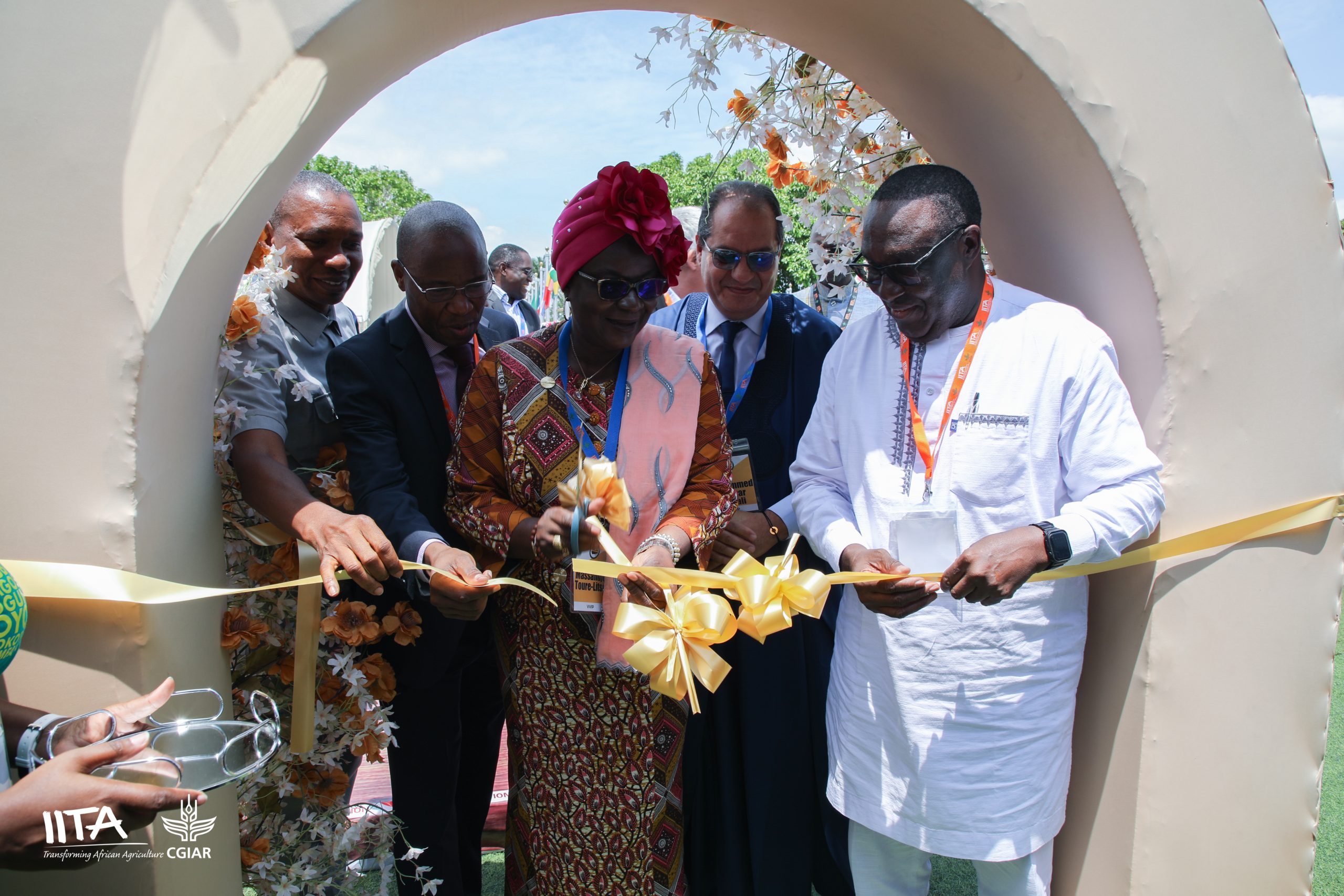
The Regional Hub for Fertilizer and Soil Health for West Africa and the Sahel has officially opened today at the International Institute of Tropical Agriculture (IITA) Headquarters in Ibadan, Nigeria, to significantly enhance agricultural productivity and sustainable profitability across West Africa and the Sahel. By 2033, the Hub will help increase yields and income for three million farmers, improve soil health on 1.5 million hectares of land, and equip 1.5 million farmers to adapt to climate change.

The Hub leverages a step-change in coordination and collaboration to tackle the critical agricultural production challenges in the region by promoting sustainable soil health and optimum fertilizer practices that will enhance the sustainability and resilience of agricultural production and food security. “This regional Hub is a groundbreaking step towards revolutionizing agricultural practices in West Africa and the Sahel,” remarked Simeon Ehui, Director-General of IITA. “By leveraging our extensive research experience and collaborating with key stakeholders, we will empower farmers with the knowledge and tools to improve soil health and achieve sustainable food security across the region.”
In Africa, two-thirds of the land available for agricultural production is considered degraded, resulting is low crop and livestock productivity, poverty, and degradation of natural resources. Average fertilizer application rate is 22 kilograms per hectare, compared to a world average seven-times higher (146 kilograms per hectare), while skyrocketing and highly volatile fertilizer prices reduce their application even further. Moreover, the fertilizers applied are not always suitable to the soil and crops needs, and complementary inputs and advisory services are usually missing, leading to low profitability for the farmer and sometimes even further soil degradation in the long run. The new Hub combines cutting-edge laboratory testing and training facilities with cross-sector experts including the private sector to support development and delivery at scale of advanced soil health and fertilizer technologies. It provides access to rigorous internal scientific research and on-farm testing, ensuring practical solutions tailored to farm-specific challenges and thereby delivering significant value to growers.
“The Fertilizer and Soil Health Hub is critical for agricultural development in West Africa,” commented Mrs. Massandje Toure-Litse, ECOWAS Commissioner for Economic Affairs and Agriculture at the Economic Commission for West African States (ECOWAS). “By focusing on knowledge sharing, capacity development, and evidence-based practices, it perfectly aligns with the strategic guidance outlined in the LomĂ© Declaration on Fertilizers and Soil Health in West Africa and the Sahel, adopted on May 2023 to empower our member states to achieve their sustainable agriculture goals.”

The Hub’s strategy is framed by the priorities of the Fertilizer and Soil Health Roadmap 2023 and the Nairobi Declaration from the Africa Fertilizer and Soil Health Summit 2024. The Hub is propelled by significant financial commitments, including support from the World Bank ($10 million) over the next five years through the Accelerating Impacts of CGIAR Climate Research for Africa (AICCRA) project, and from OCP Africa over the same period.

West Africa Lead of AICCRA Robert Zougmoré highlighted the vital contributions AICCRA will bring to the Hub as a key knowledge partner by building on existing activities and providing soil information, knowledge management and sharing, agronomy recommendations, capacity development, policy support, and advocacy and awareness creation.

“We are committed to helping achieve Sustainable Development Goals 2 and 13 to eliminate hunger, achieve food security, improve nutrition and promote sustainable agriculture, and to take urgent actions to address climate change and its impacts,” said Chakib Jenane, World Bank Regional Director for Sustainable Development. “Integrated soil fertility management and the restoration of soil health are therefore key to ensure the resilience of food systems and achieve food security in West Africa and the Sahel.”

The operationalization of the Hub is part of commitments signed in Marrakech in October 2023 between the World Bank, IITA, and OCP Africa. “OCP Africa is demonstrating a strong commitment to sustainable agriculture and food systems in Africa. Our contribution to the establishment of this Hub underscores our dedication to these goals, and our unconditioned commitment to make the program a pilot to be upscaled in all the continent, said OCP Africa’s CEO, Dr. Mohamed Anouar Jamali.

About the Regional Hub:
The Regional Hub for Fertilizer and Soil Health for West Africa and the Sahel is a collaborative effort initiated at the Africa Fertilizer and Soil Health Summit in Nairobi on May 8, 2024, focusing on combating soil health decline in the region. It brings together key stakeholders, including IITA, OCP Africa, the African Plant Nutrition Institute (APNI), University Mohammed VI Polytechnic (UM6P), International Fertilizer Development Centre (IFDC), and the World Bank. The Hub invites partnerships with other organizations, research institutions, and private sector entities to achieve a thriving agricultural future in the region.

Media Contact

Barbra Sehlule Muzata
b.muzata@cgiar.org

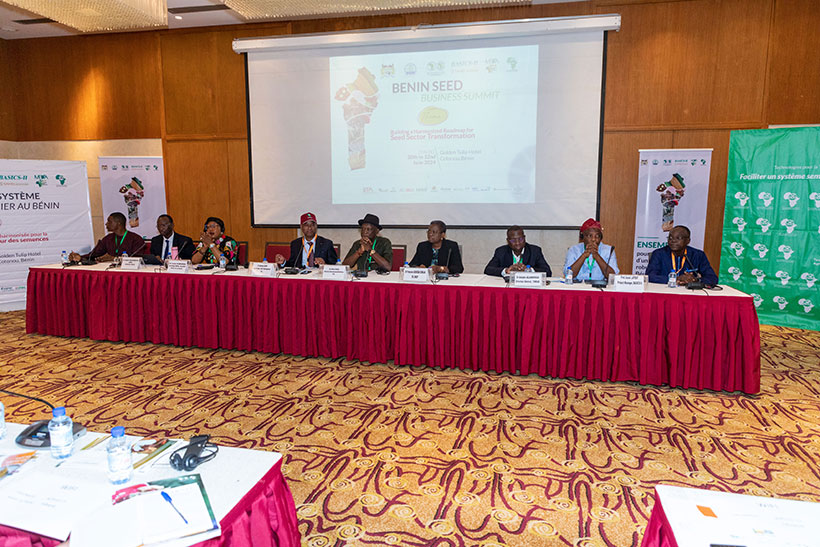
Cross section of the key note speakers during the seed summit.

Stakeholders from the Republic of Benin and across Africa are organizing a summit to draw a seed roadmap for the West African countries.

The consortium includes the Government of Benin, the African Development Bank (AfDB) funded Technologies for African Agricultural Transformation (TAAT), the IITA Building an Economically Sustainable Integrated Cassava Seed System, Phase 2 (BASICS-II) project, the Sasakawa Africa Association (SAA) in Nigeria, the Sahel Consulting and Mennonite Economic Development Associates (MEDA).

The three-day Seed Business Summit, with the theme “Building a harmonized roadmap for seed sector transformation,” is being organized in collaboration with the Beninese Ministry of Agriculture, Livestock and Fisheries (MAEP), the Beninese National Institute for Agricultural Research (INRAB), and other stakeholders.

The summit will be held from 20 to 22 June in Cotonou, the Beninese capital. The forum aims to catalyze an agricultural revolution in Benin by establishing an economically sustainable seed system for priority crops like rice, cassava, maize, soybean, livestock, fish, sorghum, and millet.

According to the Head of TAAT Clearinghouse, Solomon Gizaw, “This summit is a direct response to the need to hold a more comprehensive audience consultation to identify major challenges, develop solutions, and advocate for more investments in Benin’s agriculture.”

“This seed summit will bring together policymakers, international financial institutions and policymakers, scientists, the private sector, and farmer organizations to a roundtable discussion to broker investments for Beninese agricultural transformation with quality inputs, particularly seed as a primary entry point,” Gizaw added.

The BASICS-II Project Manager, Lateef Sanni, explained, “The seed summit will produce outcomes that will form the basis of future investment in Benin’s seed system. It will produce recommendations to help forge a roadmap to feed into the country’s agricultural policies and plans.”

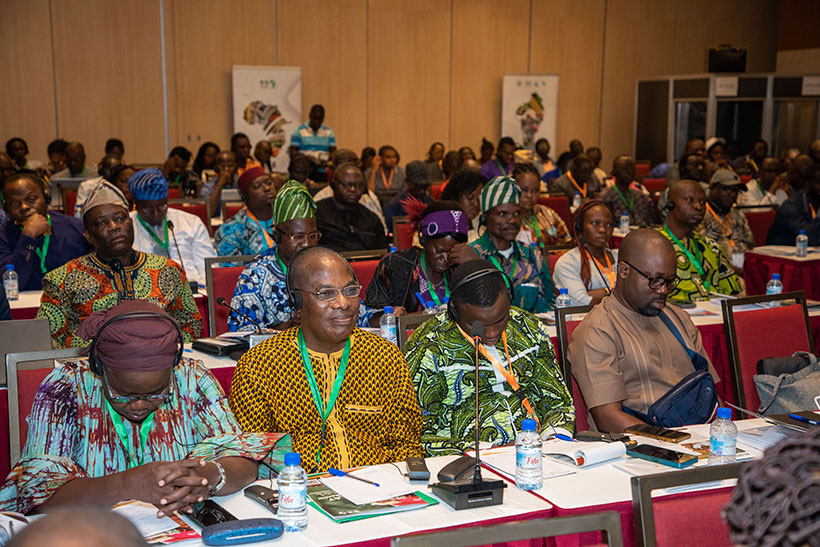
Stakeholders and participants during the seed summit in Benin.

“The summit will address factors limiting growth in Benin’s agricultural sector, including the underdeveloped seed sector characterized by poor quality seeds, a weak seed regulatory framework, a struggling research system for variety maintenance, and a feeble private sector participation in the seed system,” said Godwin Atser, the Country Director of SAA-Nigeria.

“A solid seed system will surely change the country’s agricultural landscape. In this summit, SAA, BASICS-II, TAAT, and other partners will share the models currently strengthening the seed system in Nigeria, Tanzania, DR Congo, Sierra Leone, and Liberia,” Atser added.

The Beninese Minister of Agriculture Livestock and Fisheries, Hon. Gaston Cossi Dossouhoui, will chair the summit’s opening ceremony with the support of other dignitaries and development partners.

Alongside the conveners, several national stakeholders, including farmers, seed producers, and International Development Partners (IDPs), will also participate in the summit.

These partners include the African Development Bank (AfDB), the Bill and Melinda Gates Foundation, the Food and Agriculture Organization (FAO), the World Bank, the European Union, the World Food Programme (WFP), the United States Agency for International Development (USAID), GIZ, and JICA.

AfricaRice, the African Agricultural Technology Foundation (AATF), the International Crops Research Institute for Semi-Arid Tropics (ICRISAT), the World Vegetable Center (WorldVeg), the International Livestock Research Institute (ILRI), and the WorldFish Center are other partners for this summit.

Contributed by BASICS Team.


Agri-food value chains (AVCs) have experienced tremendous growth and transformation in the last two decades in developing regions. This transformation has created huge markets for farmers and employment opportunities in food processing, wholesale, and logistics.

Dr Saweda Liverpool-Tasie

Saweda Tasie, Visiting Scientist at IITA from Michigan State University and Market Economist, delivered research findings on market links between value chain actors and small-scale soybean producers in Zambia at the IITA Knowledge Café seminar on 11 June.

The AVC transformation has been facilitated by huge investments by millions of micro, small, and medium enterprises (MSMEs), substantial foreign direct investments, and domestic investments by large enterprises. MSMEs in the midstream of food supply chains improve smallholder welfare.

In Zambia, increasing domestic and regional demand for meat and edible oil has spurred growth in the demand for soybean—an input for meat and edible oil production. Tasie and colleagues, in their study, explored whether non-contract-based purchasing activities of soybean processing firms and traders (large buyers) affect smallholders’ welfare and livelihoods. They also examined if the benefits of selling to large buyers vary by the scale of smallholders. They also identified channels through which these welfare impacts occur.

They hypothesized that non-contract-based sales are likely to have significantly different implications for smallholders’ welfare than contract-based sales since incentives like the provision of inputs and guaranteed markets by the buyer may be unavailable to smallholders’ without purchasing contracts.

Through a protocol-driven scoping review, they found that soybean sales by smallholder farmers to large buyers are associated with higher crop income for the average Zambian smallholder. They found significant positive effects of selling to large buyers in non-contract arrangements on crop incomes for smallholder farmers in Zambia. However, the effects on gross income are mostly statistically and economically significant only for medium-scale smallholders and not for small-scale smallholders.

While the crop income effects of selling to large buyers did not translate to increased gross income and poverty reduction for small-scale households, the ability to sell to large buyers enables small-scale farmers to sell more output at a higher price. They found no significant impacts on total household income for small-scale smallholders as were found for medium-scale smallholders. Hence, smallholders need additional inputs to increase their soybean yield, and policies supporting their expansion will benefit them.

They proposed actors in the midstream and downstream of input and output supply chains as important mechanisms to support smallholder behavior and welfare. They cited the adoption technologies developed by IITA, such as the GoSeed model and the IITA youth programs, as examples to follow.

Contributed by Folake Oduntan

The BSF for Bio Circular Economy and Environmental Sustainability (BBEST) project team, led by IITA Ghana Country Representative Richard Asare, with partners and stakeholders, received the three black soldier fly (BSF) processing facilities established at Kofisah in the Nsawam Adoagyiri Municipality to begin mass production of BSF larvae and frass.

Dr Asare, IITA BBEST project team, partners, stakeholders and Engineers inspecting the BSF facilities.

BBEST, which is a research for development (R4D) project, seeks to address the challenges of unsustainable biowaste management and unsustainable supply of animal feed and organic fertilizer by recycling urban biowastes such as fruit, vegetable, slaughterhouse, and household wastes into economically viable products—animal feed and organic fertilizer, using BSF.

The processing facility, established within a 50km radius of waste collection points, was handed over to IITA to start production. After a thorough tour and a critical inspection of the facilities by the engineers, the Municipal Coordinating Director, IITA, its partners, and stakeholders, with no defect observed, the contractor officially handed over the three buildings to IITA.

Dr Asare, the engineer, and the contractor touring the lavarium.

On behalf of the BBEST project Management, Asare congratulated the contractor and his team for the excellent work and for completing the building within the assigned period. He thanked the engineers who supervised the work. Before the official handing over, IITA and its stakeholders explored environmentally friendly and sustainable ways to beautify the site, such as building an underground system to harvest water, constructing fishponds, and planting green grass.

With its fully operational processing facilities, the BBEST project is set to become one of the leading producers of chicken, fish, and pig feed and organic fertilizer. Together with the national partners and stakeholders, it will continue to work to achieve its overall objective of improving the livelihoods of smallholder chicken, fish, pig, and vegetable producers and other value chain actors and contributing to improved urban sanitation and climate change mitigation.

Contributed by Francisca Ocloo

Intending to explore possible areas of partnership expansion and contribute to food security in Nigeria and on the continent, a Soy Excellence Center – U.S. Soy Program team recently paid a courtesy visit to IITACGIAR.

IITA Director General Dr Simeon Ehui with the IITA Management and Soy Excellence teams.

Speaking with the Soy Excellence Center team during the visit, IITA Director General and CGIAR Regional Director for Continental Africa, Dr Simeon Ehui, highlighted the institute’s vibrant research history that has consistently contributed to Africa’s agricultural and food systems, adding that its pivotal role in addressing food insecurity in Nigeria and across Africa has made it possible to build partnerships that have advanced its cause over five decades.

DG Ehui said IITA-CGIAR has leveraged its proximity to Nigeria’s premier university to strategically foster collaborations with academic institutions and other partners while aiming for a food-secure continent.

He emphasized the importance of IITA’s alliance with other CGIAR centers and their unified agricultural research and development efforts. “We need to consistently be on our toes to evolve and work with national programs to avoid duplication and overlapping activities. We need to partner and work together to ensure the goal of delivering technologies derived from our research,” DG Ehui said.

The Soy Excellence team during discussions with the IITA team in Ibadan.

The Soy Excellence Center team led by Michael David, while speaking about the partnership between both organizations under the IITA Business Incubation Platform (IITA-BIP), said this significant milestone, which led to IITA becoming a host partner for the Soy Excellence Center in the soybean program, has been instrumental in advancing soybean research and development.

While discussions centered on capacity building and potential areas for further research collaboration, DG Ehui expressed IITA-CGIAR’s openness to expanding partnerships and welcoming interested parties committed to achieving food security.

IITA-CGIAR Soybean Breeder Abush Abebe elaborated on IITA’s efforts in technical backstopping and developing improved soybean varieties tailored for tropical climates. He said IITA-CGIAR’s research is focused on improving food security and smallholder farmers’ livelihood. “Our breeding efforts in soybean has contributed significantly to food systems on the continent,” he added.

While the visit aimed at increasing partnership areas, the critical role of collaborative research in addressing food security challenges was also explored.

With continued collaborative efforts, especially in scaling innovation, IITA-CGIAR and its partners aim to create sustainable solutions for a food-secure future in Africa and worldwide.

Contributed by Timilehin Osunde

Radio IITA joined the global community in celebrating this year’s Children’s Day event. The day was established in 1954 as Universal Children’s Day and has been celebrated on different dates in several countries since then. In Nigeria, it is marked on 27 May and observed as a public holiday for children.

Cross section of school children participating during a quiz session at the Radio IITA's Children Day event.
Cross section of school children participating during a quiz session at the Radio IITA’s Children Day event.

The Maiden Radio IITA Annual Children’s Day program with the theme ‘Sustainable future: Youths leading the way’ provided a unique opportunity for students from invited schools to understand and appreciate the interconnectedness of climate change, smart agriculture, biodiversity, and conservation, health and nutrition, plant health, food systems, and security while inspiring them to take action for a sustainable and thriving future.

School children from various schools across Ibadan during the Radio IITA Children's Day event.
School children from various schools across Ibadan during the Radio IITA Children’s Day event.

In her opening remarks, Kathrine Lopez, Head of IITA Communication, welcomed the students and highlighted that IITA-CGIAR’s mission, over the years, continues to generate agricultural innovations to meet Africa’s most pressing challenges of hunger and malnutrition while improving livelihoods. She affirmed that the Radio IITA Annual Children’s Day program is one such platform to share Knowledge generated from IITA’s research, change the mindset of children about agriculture and environmental sustainability, and inspire them to be better leaders in the future.

Welcoming children from the schools, Dajie Odok, Radio IITA Lead, said that through the Radio IITA Annual Children’s Day program, students will learn about climate change, climate-smart agriculture, protecting nature, plant health, food safety, and nutrition to make the world a better place.

IITA Talent Management and Engagement Manager Lade Oke spoke with the children about how embracing and fostering an environment of diversity and inclusion among children is crucial for their development and building a harmonious and progressive society.

The need to eat a balanced diet (colorful plate), which is vital for children’s overall health and development, was an exciting takeaway lesson for the children after Bussie Maziya Dixon, IITA Food and Nutrition Scientist, took her turn to speak on a balanced diet.

The children learned of different ways to conserve biodiversity, such as promoting native planting, judicious use of all resources, reducing, reusing, and recycling after Ajayi Ademola from IITA Forest Center explained that taking care of Mother Nature and biodiversity is essential for the well-being of planet earth.

Food safety is everyone’s business, according to Titi Falade of IITA Plant Pathology/Mycotoxin/Aflasafe unit. During her session, the children learned about the importance of food safety as it helps avoid harmful things like aflatoxin.

Five schools from Oyo State, Nigeria—Amao International Primary School, Hill Crest Elementary School, God’s Divine Model School, Crescent Model School, and Imperial International School—participated in the  Radio IITA Annual Children’s Day program which featured a debate, quiz, essay writing, poem, and riddles all centered on climate change, smart agriculture, biodiversity, nutrition, and food systems.

Contributed by ’Bamise Dada