IITA recently trained its staff, partners, and farmers in Kongwa District, Tanzania, on how to control aflatoxin using Aflasafe, an effective and safe biological control product developed by researchers at the Institute and partners.
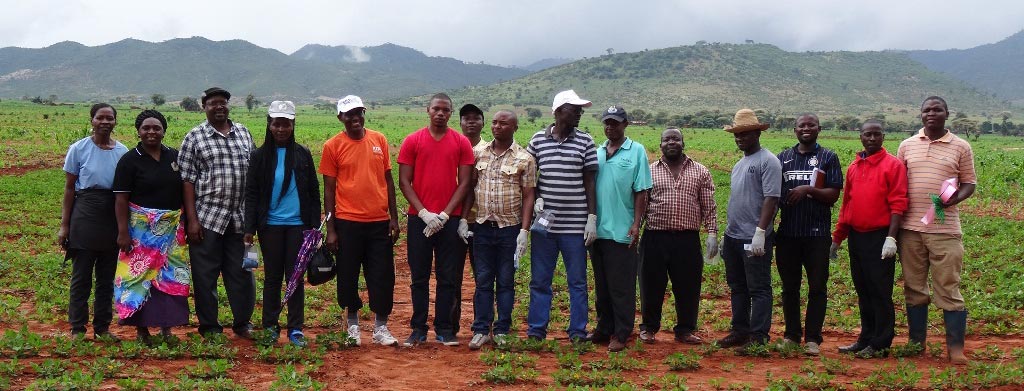
Stakeholders at Kongwa prepare to be shown how to apply the aflasafe in the field.

Stakeholders at Kongwa prepare to be shown how to apply the aflasafe in the field.

Kongwa is a major maize and groundnut growing and consuming area. Both are important basic ingredients in complementary weaning foods in Tanzania.

Consumption of mycotoxin-contaminated complementary foods by children under five years has been implicated in the high rates of child growth impairment in Tanzania, manifested as stunting (42%), being underweight (16%), and wasting (5%).

Before the training, the IITA team paid a courtesy call to Jackson Shija, the District Agricultural, Irrigation and Cooperatives Officer (DAICO), who appreciated the Institute’s efforts in supporting them to tackle the aflatoxin problem in the District.

“We are very concerned about aflatoxins because maize and groundnut are staple crops in the area. Our district has the highest stunting rates in the country; 56% compared to 42%, the national average,” he said.

“Although we have been encouraging farmers to grow small grains, especially bulrush millet and sorghum, they are not willing to grow these crops, preferring instead to grow maize and groundnut. Since we have failed to persuade farmers to grow these other crops, efforts to manage aflatoxin are very welcome. Let us find a solution to make the product safe, as we know that farmers will always grow and consume maize and groundnut.”

In addition to creating awareness on aflatoxin and its health threats, the training, held 21–22 January, focused on how to conduct efficacy trials for Aflasafe. Kongwa is one of the target districts where field trials to develop an effective aflatoxin biological control product for Tanzania are being conducted.

According to George Mahuku, IITA Plant Pathologist who led the training, the participants were trained on how to set up trials, how to handle the Aflasafe product, how to apply it on maize and groundnut, what to do or not do after the application, and the types of data to collect.

For example, he said, the farmers or researchers should keep off the fields, and suspend weeding or any farm activities for two to four weeks after application to avoid burying the product in the soil and affecting its efficacy.

A total of 17 participants were trained. They included extension agents from the Ministry of Agriculture, Livestock and Fisheries, Kongwa District Council, the National Biological Control Program (NCPB), and farmers on whose fields validation trials were being conducted. Also conducting the training was Greg Ogbe from IITA-Nigeria, who shared his experiences from similar activities conducted in Nigeria, Ghana, and Senegal.

IITA has produced and dispatched over 10 tons of experimental biological control products (Aflasafe), which will be tested in field trials for their efficacy to reduce aflatoxin contamination in three countries in Eastern and Southern Africa. The production took place at IITA’s research facilities in Tanzania.

Team at IITA Tanzania preparing the Aflasafe in the laboratory.

Team at IITA Tanzania preparing the Aflasafe in the laboratory.

This is part of the Institute’s efforts to develop a sustainable and safe technology to reduce aflatoxin contamination prevalent in two of the most important key staple crops, maize and groundnut. Aflatoxin is a deadly poison produced by certain types of mold and is known to cause cancer and stunting in children, among other health problems.

IITA, in partnership with USDA-ARS and local national institutions, has successfully adapted the biocontrol technology and developed a biocontrol product with the generic name Aflasafe, which reduces aflatoxin contamination of groundnut and maize consistently by >80%. Currently, the product is registered for use in Nigeria and Kenya.

The biological control product is made from strains of the mold, Aspergillus flavus, that do not produce aflatoxin. These good strains outcompete and displace aflatoxin-producing strains of Aspergillus, thus reducing aflatoxin contamination of important food security crops like maize.

For each country two formulations of the biological control product were produced: (i) a country specific product using strains only found in that country, and (ii) a regional product produced from strains from that country, but these strains also occur in other countries. For
Malawi these were MW02 and MWMZ01—the former was made from strains that are specific to Malawi while the latter was made from region-specific strains. Similarly in Mozambique MZ02 and MWMZ01 were produced and dispatched. In Tanzania, TZ01 made from region-specific strains and TZ02 made from strains that are specific to Tanzania, were produced.

The experimental biological control products will be validated for efficacy to control aflatoxin in groundnut and maize. Both crops are staples in the three countries and are also highly susceptible to aflatoxin contamination. The biological control products will be tested this growing season and the data collected will go towards identifying the best formulation to control aflatoxins. After more validation tests the products will be registered and made available for wider use.

The atoxigenic strains were identified following rigorous tests and characterization done in IITA’s laboratories in Nigeria and USDA-ARS in Arizona, USA. These isolates lack the genes required for aflatoxin production and therefore will not produce aflatoxin in nature. Each product is made up of four atoxigenic strains that are widely distributed in each country and belong to different classes.

To produce the biological control product, atoxigenic strains of A. flavus are coated on roasted sorghum, which acts as a carrier of the product. The sorghum is roasted to prevent it from germinating when applied in the field. A polymer to stick the spores of the fungus to the sorghum and a dye, a natural food colorant, are added. The final product looks blue (from the blue dye) and is readily distinguished from untreated sorghum.

“The production of 10 tons of aflasafe was by no means easy as we had to do it manually—it was three weeks of back-breaking work for our staff, partners, and other hired laborers,” said George Mahuku, IITA’s Plant Pathologist, who led the efforts.

They also received support from IITA staff in Nigeria where IITA already has a plant to produce Aflasafe.

“However, we are very happy and proud of our efforts and the impact it will have in reducing aflatoxins, a major problem in the three countries,” Mahuku added. “It made economic sense to produce the Aflasafe in Tanzania as opposed to Nigeria as the shipping costs would be very high.” They were shipped by road to the two countries.

Picture of Farmers shelling maize at Yohana Isaya’s farm during the postharvest training organized by the Africa RISING–NAFAKA scaling project in Ndurugumi village

Farmers shelling maize at Yohana Isaya’s farm during the postharvest training organized by the Africa RISING–NAFAKA scaling project in Ndurugumi village

For 56-year old Yohana Isaya, a farmer from Ndurungumi village in Kongwa District, central Tanzania, maize farming was always a losing game: a stressful, but extremely important subsistence venture. He has to do something or how else would he feed his family?

To begin with, shelling the maize harvest from his 5-acre plot was a back-breaking job which he, together with his wife and their five children couldn’t do on their own. They needed the help of at least eight extra pairs of hands to finish the job in three days. Isaya would then use the traditional “Kilindo”, a small cylindrical traditional bin made from peeled miombo tree barks, to store his maize to be used sparingly for feeding his family. Most of the time, nearly half the stored maize would be moldy and inedible.

What he didn’t know then was that there was a better way. There were new and efficient postharvest technologies developed by IITA’s AfricaRISING Project that could change the zero sum game that maize farming and storage had become to a winning one.

“Before joining the Africa RISING-NAFAKA-TUBORESHE CHAKULA scaling project activities and training, I was using a raised wood platform for shelling maize. Usually it took me up to three days to shell 700 kilograms. We sometimes had to ask for help from our neighbors whom we’d have to compensate by providing food, local brew, and sometimes cash. But, after the project trained us on using simple and affordable machines like the motorized maize sheller, the same kind of work now takes only 30 minutes,” explained Yohana.

But it is not only the maize shelling machines that the farmers have been introduced to. The postharvest training have also focused on a complete package of technologies including collapsible drier cases capable of drying 400 kg maize in five hours in the sun, and storage using hermetic bags. As a result, farmers have been able to reduce the amount of time spent on crop processing, reduced food losses, and improved food security in their households.

The Africa RISING-NAFAKA-TUBORESHE CHAKULA scaling project aims to scale the use of postharvest technologies among 47,000 Tanzanian smallholder farmers.

Recent studies in the semi-arid areas of northern and central Tanzania have shown that 20−40% of grains and legumes are usually lost during harvesting; a further 5% is lost during shelling−even when the amount of grains shelled per day was very small due to drudgery and the lack of improved shelling technologies; a further 15−25% is lost during storage.

Practices like drying crops on the bare floor also often lead to contamination and storage when the moisture content is high leading to deterioration. These challenges are what drove the project to introduce postharvest technologies to the Tanzanian farmers.

Stakeholders in the agricultural sector in Tanzania support the move by CGIAR to integrate the activities of the different centers and research programs (CRPs) and to better align with the country’s priorities in developing its agriculture sector.

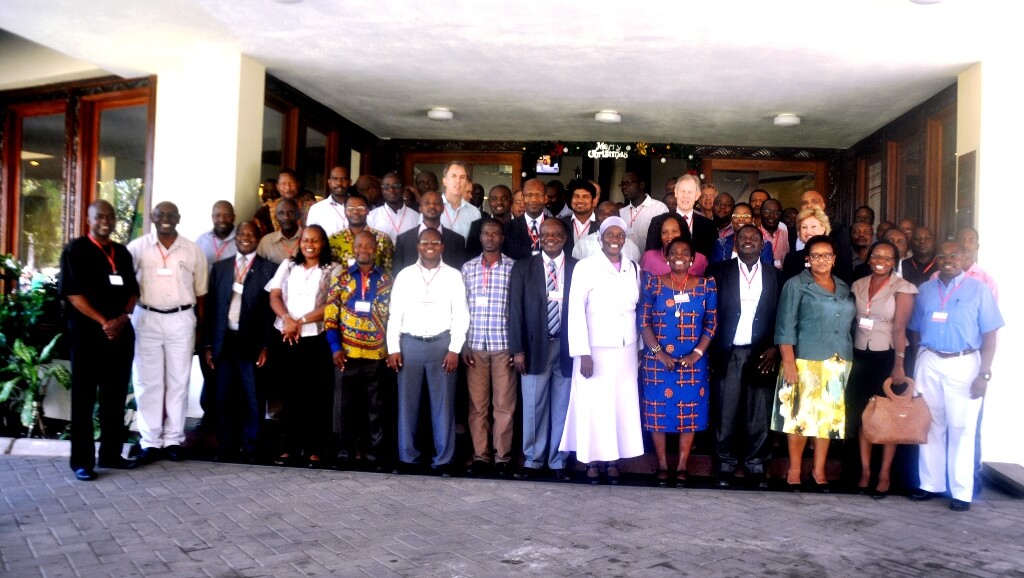
Picture of participants at the CGIAR Site Integration Workshop, Tanzania.

Participants at the CGIAR Site Integration Workshop, Tanzania.

The stakeholders agreed on this at a national consultation workshop on CGIAR “site integration” that was held in Dar es Salaam, Tanzania on 4 December 2015 organized by IITA on behalf of CGIAR and CRPs working in the country. The aim was to discuss how CGIAR/CRPs can work better together and align their activities and research agenda to the country’s priorities. This was the second such workshop organized by IITA for CGIAR; the first one was held in Abuja, Nigeria, in November 2015.

The participants were drawn from the different ministries, national agricultural research systems (NARS), universities, NGOs, donor community, private sector, and farmers’ groups.

The Permanent Secretary in the Ministry of Agriculture, Food Security and Cooperatives, Sophia Kaduma, said that integration across the different CRPs and with a wide range of national partners and stakeholders in the agricultural sector can enhance the outcomes of CGIAR’s research agenda.

She noted the potential of the agriculture sector in Tanzania’s efforts to reduce poverty and achieve its developmental goals of shifting to a middle-income economy by 2025, and reiterated the role of research and development to improve agriculture and combat climate change and her government’s commitment to R&D.

Representatives from the donor community including the Bill & Melinda Gates FoundationIrish AidUSAID, and the World Bank also support the move, which is expected to lead to more efficient use of donor funding and reduction of duplication of efforts.

“Integration” and “alignment” were viewed as important in ensuring that development projects focused on the country’s priorities and not the donors/centers’ whims.

Representatives from the farming communities and the private sector were also at the forum and highlighted some of the challenges they faced. “Farming has to be profitable. As farmers, we face many issues including poor extension services. The extension staff are few, without resources. We are therefore unable to access new technologies from research. Therefore the integration should look at how to support extension to reach farmers,” said Omary Mwaimu from AMSHA Institute.

Participants at the event identified areas where CGIAR/CRP support was needed:

  • Dissemination and adoption of new technologies from research.
  • Business and enterprise development to enable farmers to make money from farming.
  • Capacity building of local researchers especially in areas such as biotechnology.
  • Value addition and management of postharvest losses.
  • Productivity improvement with focus on climate change – one of the major challenges facing smallholder farmers who need support in terms of what crops to grow in the face of climate change.
  • Sustainable intensification of smallholder systems to increase agricultural production and productivity on the same land size but at the same time taking care of their natural resources.

At the end of the workshop, participants came up with a framework for site integration that could help identify the issues and sites as well as suggestions on how to govern and implement the integration, how to monitor and evaluate impact and communicate both within the partners in the integration framework and with external audiences and partners.

For site integration to work, participants agreed that adequate resources should go into its implementation, and to ensure that all the partners are able see the benefit of being part of the integrated approach.

A short narrative highlighting the background, impression, and achievements of Charity Mutegi,
IITA’s East Africa Aflasafe Project Coordinator, is currently being featured on the Featured profile of the week section of the modernizing African food systems’ website.

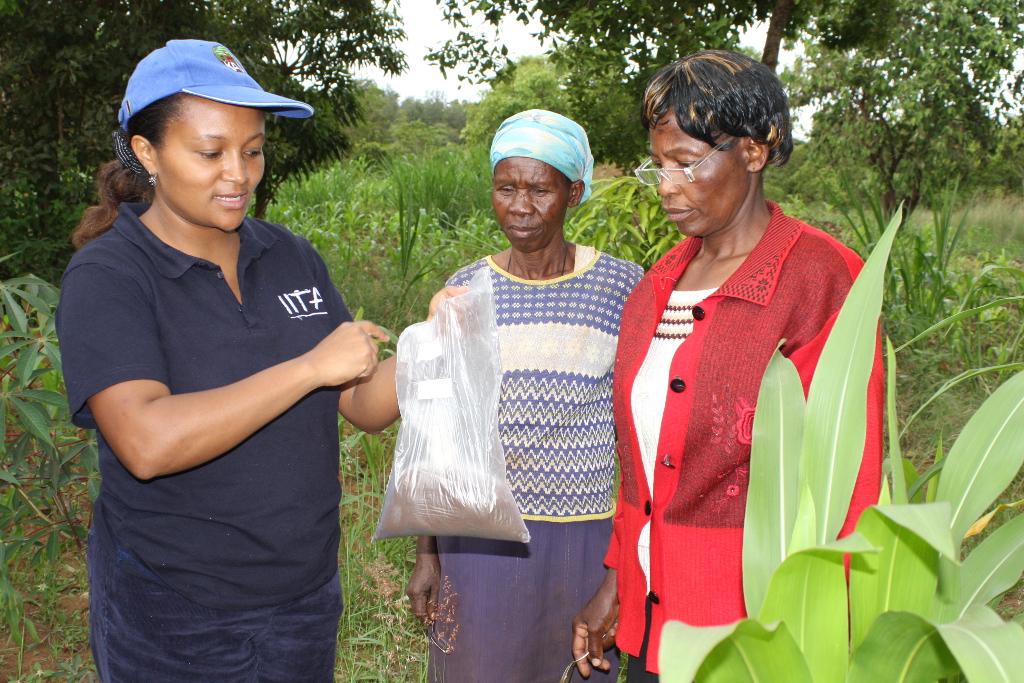
Picture of Charity Mutegi, IITA’s East Africa Aflasafe Project Coordinator with farmers.

Charity Mutegi, IITA’s East Africa Aflasafe Project Coordinator with farmers.

Mutegi was recognized as a role model for young women professionals in agriculture and for her outstanding contribution towards the fight against aflatoxins and food safety in Kenya as well.

Mutegi’s brief has been available on the page since 8 December.