With local media partners, we are sharing the important work that we are carrying out in agriculture in Mozambique.
IITA–CGIAR participated in the launch of the 2025/2026 Mozambique agricultural campaign on 13 November, marking the beginning of the rainy season.
As a strategic partner that has actively contributed to improving agricultural production and productivity in Mozambique, offering innovations in resilient varieties and improved seeds, climate-smart agricultural practices, inoculants, and aflasafe, IITA was invited by the Government to participate in the event, which took place in the province of Nampula.
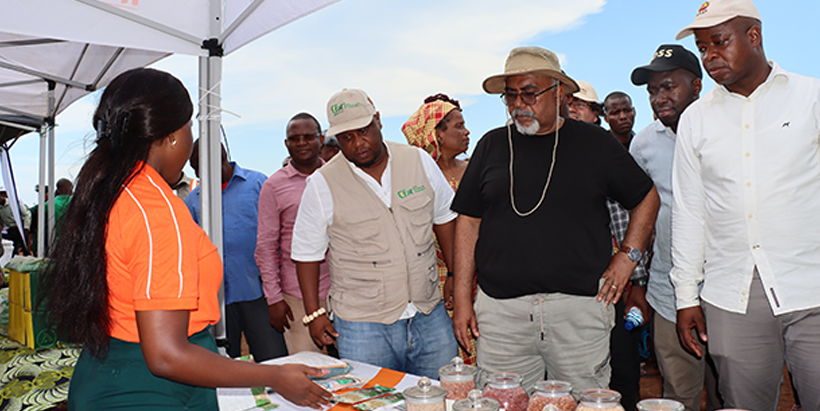
During the launch, IITA showcased its potential, mainly in new varieties of cowpea, sesame, and soybean seeds, and explained to the Governor of Nampula province, Eduardo Mariamo Abdula, how it has contributed to and impacted the lives of communities, with an emphasis on small holder farmers, through partnerships that help facilitate access to seeds, develop the capacity in improved agricultural production techniques adapted to climate change, facilitate market access for the sale of agricultural produce and thus improve incomes, as well as improving diet through the adoption of healthy and accessible eating habits.
Evelina Gobe explaining to the provincial Governor the IITA contributions and efforts to improve the agriculture in Mozambique in general, and particulary in Nampula
“We encourage increased production as the path to increased wealth and reduced poverty in Mozambique, and for this we count on the efforts of the government, the private sector, partners, and producers to ensure that Nampula continues to be a breadbasket of the country,” appealed Governor Abdula.
The event lasted one day and was attended by state institutions dedicated to agriculture, including the Agricultural Research Institute of Mozambique (IIAM), as well as provincial and district agricultural directorates, agricultural producers, and other partners involved in the agricultural sector.
Painel leading the agriculture campaign launch in Nampula
The launch of the agricultural campaign marks the beginning of a new cycle of agricultural production in Mozambique, renewing IITA’s commitment to continue working to boost the sector.
Contributed by Safira Chirindza
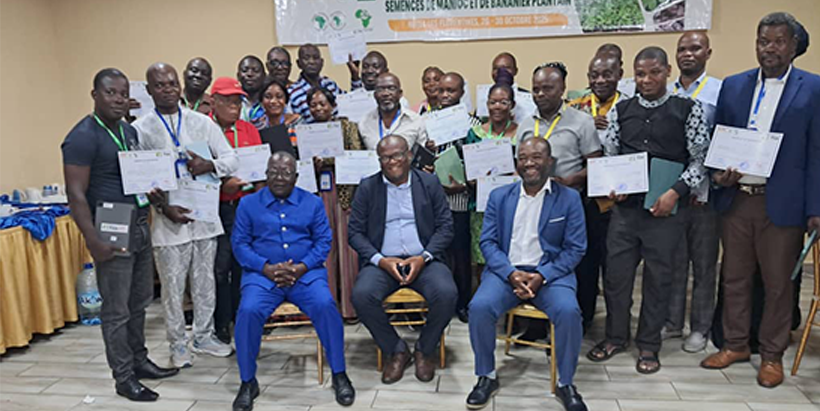
IITA presented certificates to officials from the Ministry of Agriculture in Gabon upon completion of the training
IITA–CGIAR is at the forefront of cassava and banana seed production in Gabon. The Ministry of Agriculture, in partnership with the International Institute of Tropical Agriculture (IITA), organized a two-week phased-in training to accelerate the modernization of agriculture and strengthen the national seed production through the technical assistance to the Projet d’Appui au Programme GRAINE-Phase 1 (PAPG1), under the framework of the Technologies of African Agricultural Transformation (TAAT) program. This two-week program targeted heads of agricultural division services and top government officials within the Ministry of Agriculture in Libreville, from 26 October to 5 November 2025. TAAT is a flagship program of the African Development Bank‘s Feed Africa Strategy. It aims to double crop, livestock, and fish productivity by providing over 40 million African smallholder farmers with proven technologies. Since its inception in 2018, TAAT has supported the Feed Africa Initiative by providing the necessary, productivity-enhancing, and food-processing technologies. The program has also been responsible for implementing inclusion strategies within the bank’s financing of large-scale regional and national agriculture investment projects, driving agricultural transformation across the continent.
More than ever, the Ministry of Agriculture in Gabon has demonstrated its commitment to fostering strong ties with IITA to build pathways for sustainable agrifood systems by maximizing modernized technologies for cassava and plantain seed production, aiming to become self-sufficient in the cassava and plantain value chain. The training aimed to incorporate hands-on practices using innovative digital solutions, such as the Cassava Business Connector and PlantVillage NURU, in agricultural extension services. The training also provided an avenue for participants to reflect on improving extension services to farmers and chart a strategic plan to build technical capacity across all levels of the Ministry.
“We are laying the foundation for a high-performing, digitalized agricultural extension system, one that can better support producers, address the challenges of crop diseases, and ensure Gabon’s autonomy in seed production,” stated Arnaud Kombila Mussavu, Director General of Agriculture in the Ministry.
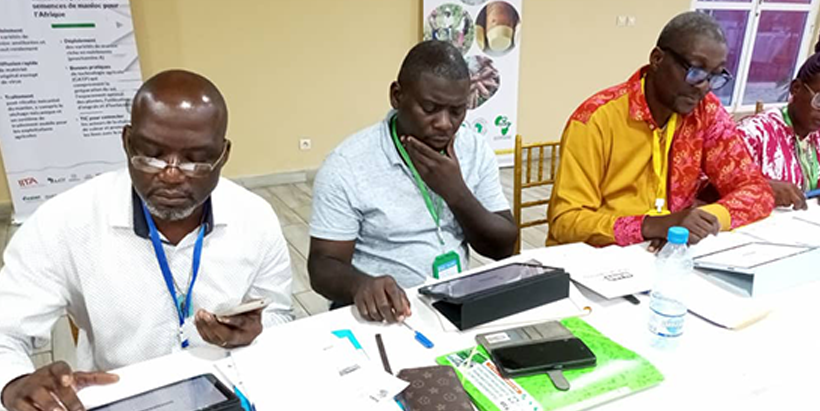
Participants explored key topics including seed legislation, varietal identification, phytosanitary surveillance, soil fertility management, irrigation, tissue culture, and vitroplants acclimatization. They also held practical field sessions, equipping officials to respond to rising threats from fungal, viral, and insect pests.
Ministry officials test the newly provided tablets that will be used for data collection and disease identification
Digital agriculture was a central theme. IITA experts introduced tools such as SeedTracker, Akilimo, Cassava Business Connector, and PlantVillage NURU, platforms designed to streamline data collection, improve planning, and strengthen contingency responses. Twenty-five tablets were handed over to the departmental service heads by IITA to support this cause.
The training workshop also highlighted opportunities for cassava seed multiplication technologies, notably the deployment of Semi-Autotrophic Hydroponics (SAH) technology, a novel approach in the cassava rapid multiplication, which will accelerate the multiplication of clean cassava planting materials to reach millions of farmers.
Moreover, the private partner commended IITA for its success in plantain tissue culture, a breakthrough rarely achieved worldwide due to the crop’s vulnerability to disease contamination. “Let me commend IITA. Many institutions only manage to multiply dessert bananas. Plantain is far more complex, yet IITA has shown its expertise in plantain seed production,” said Dr Sulaimana Assani, Director General of SOCIETE AGRITEC-Gabon (AGRITEC), a private company and a sub-grantee of IITA under the project, in charge of plantain vitroplant acclimatization.
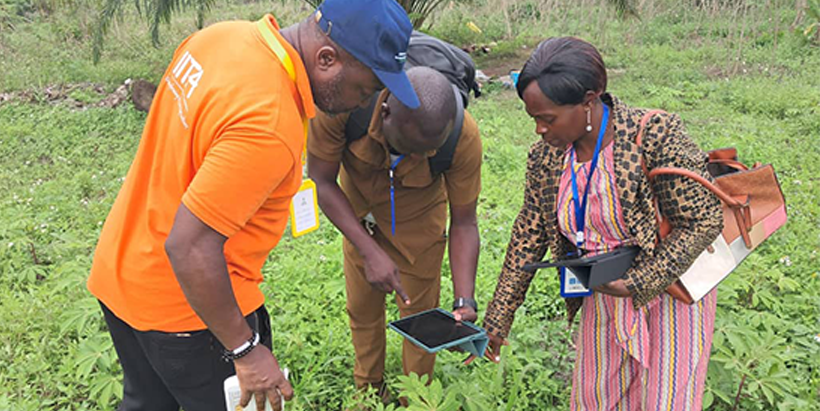
Ministry of Agriculture officials test the newly provided tablets that will be used for data collection and disease identification on the field
On the other hand, Voga Moudoubou, representative of the PAPG1 National Coordinator, presented the project’s achievements in the infrastructure component across six provinces nationwide. He emphasized the importance of the investment made by the Government of Gabon to support the development of the agriculture sector, provide access to modern agricultural infrastructure, and enhance local capacities at all levels.
In his closing remarks, the Director General of Agriculture in the Ministry of Agriculture expressed his satisfaction with IITA’s technical assistance. He underscored the impactful and transformative change brought about by the deployment of IITA technologies and innovative solutions in seed production, and the need to sustain this collaboration. He reiterated the vision of the new presidential initiative, which aims to promote local poultry production using locally produced animal feed. This initiative presents an opportunity for IITA to expand its intervention in Gabon by integrating maize and soybeans into new investments and supporting the country in transitioning towards a more self-sufficient and diversified economy.
Contributed by Fotso Apollin, Ritha Bumwe, and Zozo Rachel
Dr Lava Kumar, Head IITA GHU flanked by Dr Vincent Isegbe, CG NAQS (R); and Dr Joy Ichue, NAQS South-West Zonal Coordinator (L); with other NAQS officials after firsthand engagement with IITA GHU.
In a significant step toward enhancing Nigeria’s agricultural biosecurity, the IITA–CGIAR Germplasm Health Unit (GHU) hosted the Comptroller General (CG) of Nigeria’s Agricultural Quarantine Services (NAQS), Dr Vincent Isegbe, along with other senior NAQS officials, for a strategic workshop held from 27–29 October.
The workshop, designed to exchange insights on germplasm movement procedures, phytosanitary standards, and emerging plant health threats, reinforced the longstanding partnership between IITA and NAQS, which Dr Isegbe described as “enduring,” “mutually beneficial,” and “commendable.”
The event provided an opportunity to update NAQS officials on the latest GHU protocols across the CGIAR and to foster dialogue on protecting national and transboundary agricultural systems from pests, pathogens, and diseases.
In his opening remarks, Dr Lava Kumar, Head of GHU, thanked NAQS for its consistent cooperation in supporting IITA’s germplasm exchange. He noted that the GHU applies a systems approach to ensure pest-free germplasm and rigorous health indexing across the IITA-mandated crops. He also emphasized the importance of close collaboration with national quarantine agencies and the African Union Inter-African Phytosanitary Council (AU-IAPSC) in areas such as pest risk assessment, delimitation surveys, training, and capacity development.
Oguntade Oluwole, GHU Laboratory Manager, provided an operational overview, and Aransi Abideen and Ajamu Bunmi provided an update on Quality Management Systems in GHU. Dr Kazeem Adewale, NAQS Surveillance and Diagnostic Officer, delivered a presentation on the role of Post-Entry Quarantine diagnostics and surveillance in ensuring safe germplasm exchange and maintaining plant health. These talks were followed by engaging discussions among participants, who shared perspectives on strengthening quarantine services and advancing Nigeria’s phytosanitary infrastructure.
Dr Vincent Isegbe, CG NAQS with NAQS officials and IITA GHU staff at IITA Yam Multiplication Laboratory following an update on IITA’s innovative works in rapid seed multiplication technologies, led by Olugboyega Pelemo, IITA Seed Systems Manager Yam Breeding Program
The NAQS delegation, comprising the South-West Zonal Coordinator, Dr Joy Ivbade Ichue; the Special Adviser on Technical Matters to the Comptroller General, Dr Akindele Ogunfunmilayo; and about 20 other officers, toured key IITA facilities, including the Virology and Diagnostics Unit, GHU, the Genebank, Yam Propagation, and the Aflasafe production facility. The visit provided firsthand insights into IITA’s systems for producing, handling, and testing clean planting materials, along with an overview of other core institutional operations.
The Comptroller General and his team expressed strong appreciation for IITA’s innovative work in disease diagnostics, surveillance, pathogen control, and rapid seed multiplication technologies based on SAH for cassava and yams. They also commended the remarkable progress of the Aflasafe program in controlling aflatoxin across Africa.
The CG praised the ongoing collaboration between NAQS and IITA in managing emerging disease threats, such as banana bunchy top and fall armyworm, as well as in preparing for invasive risks, including cassava brown streak and maize lethal necrosis. He emphasized the need for continued vigilance and strict adherence to phytosanitary procedures to ensure institutional compliance.
In his closing remarks, Dr Isegbe commended IITA for its rigorous approach to germplasm health and affirmed the continued collaboration between NAQS and IITA to strengthen Nigeria’s phytosanitary systems and enhance compliance with international standards. “Partnerships like this are vital for protecting our agriculture, facilitating trade, and supporting the development of resilient crop systems critical to food security and economic growth in Nigeria and across Africa,” he said.
Dr Lava Kumar expressed his gratitude to the NAQS team, particularly the post-entry quarantine station in Ibadan and the South-West Zonal Command in Lagos, which serve as key points of contact for GHU operations. He acknowledged their steadfast support for IITA’s international development work and their essential role in enabling safe and efficient germplasm exchange.
Contributed by Folake Oduntan
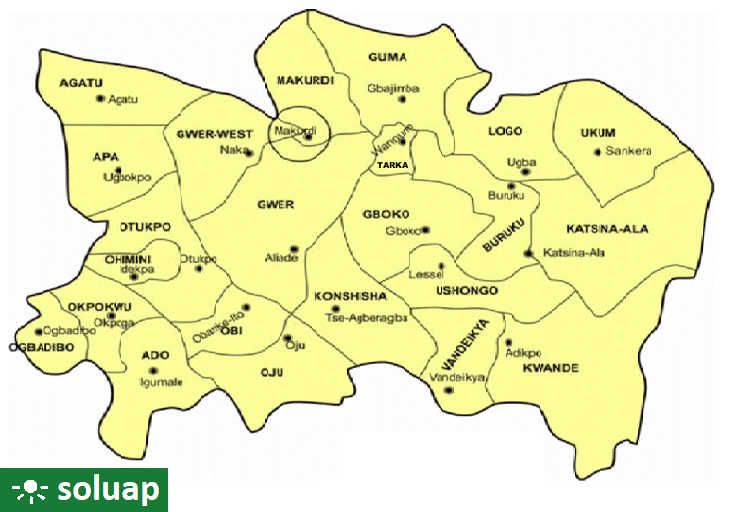
Map of Benue state showing the selected local government area for the study. (Source: Enoch et al., 2020)
In the world of crop improvement, consumer preferences are more than just opinions; they are powerful drivers of breeding innovation. For instance, cassava (Manihot esculenta) is a significant staple food across Africa. Beyond its role as a primary source of calories, cassava’s value addition processes help extend its shelf life, countering the rapid deterioration caused by its naturally high moisture content.
For breeders, understanding what consumers want is essential. In food products, consumer preference is measured by the level of acceptability, with specific quality traits determining whether a product will be embraced or rejected. In cassava, one culinary trait stands out above all others: Cassava Root Mealiness (CRM), the ability of boiled cassava roots to soften quickly, be easily chewed, and dissolve effortlessly upon biting. For many consumers, mealiness is the single most important attribute of boiled cassava.
Recognizing this, scientists have worked to enhance the culinary qualities of cassava varieties, encouraging their adoption by both farmers and consumers. In 2025, a study (Consumer Perception and Sensory Profiling of Cassava Mealiness Attributes using Hedonic, Just About Right (JAR), and Check-All-That-Apply (CATA) methods) evaluated four cassava varieties: danwarri, suppi, akpu, and dangbo.
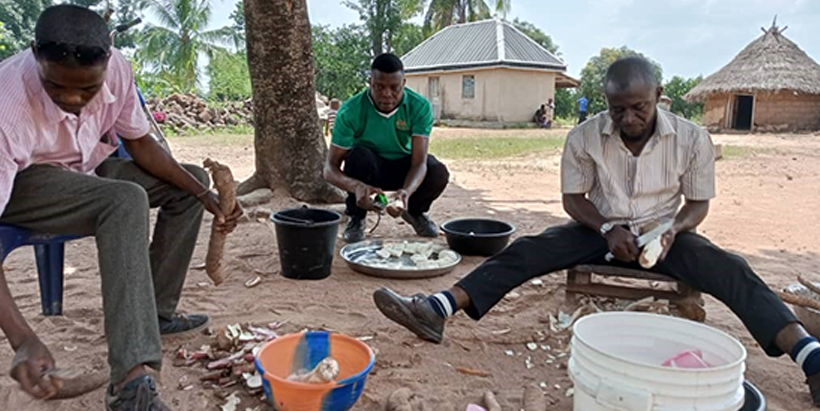
Cassava peeling process during field study
The study funded by the Gates Foundation and conducted by scientists from IITA-CGIAR in collaboration with Ladoke Akintola University of Technology (LAUTECH), Nigeria, worked to identify the specific mealiness attributes preferred by consumers and to evaluate the acceptability of various boiled cassava varieties.
The findings included:
Hedonic and CATA results highlighted three key mealiness traits: dissolving easily, being easy to chew, and moderate softness, which were deemed the most important to consumers.
JAR results showed that the softness and chewiness of certain varieties scored above 50%, indicating they were “just about right” for most respondents.
Among the varieties tested, danwarri and suppi emerged as the most preferred for boiling, meeting consumer expectations for mealiness and overall eating quality.
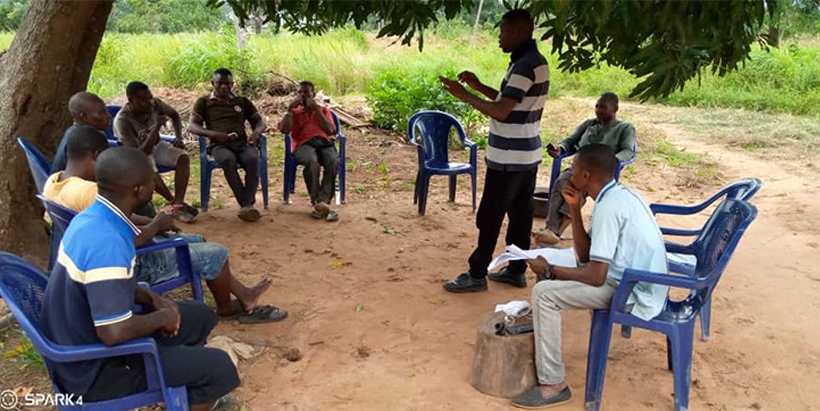
Focus group discussiopn with some farmers
Ultimately, this research holds significant implications for cassava breeding programs. By aligning breeding objectives with consumer-driven traits, scientists can develop improved varieties that are not only high-yielding and resilient but also meet the sensory expectations of the people who eat them.
The study concludes with a recommendation that while danwarri and suppi are currently the best mealy cassava varieties for boiling, other varieties cultivated in South-West and South–South Nigeria, such as okoiyawo, odongbo, molekaga, and banada, should also be evaluated for their mealiness attributes to expand consumer preferences, market potential, and achieve food security.
Contributed by Anita Akinyomade
The Minister of State for Agriculture and Food Security alongside partners unveiling the plaque for the NFSHS
Nigeria has formally launched the Nigeria Farmers Soil Health Scheme (NFSHS), a key component of the Nigerian Presidential Soil Health Initiative, marking a significant national commitment to strengthening soil fertility, promoting sustainable agriculture, and ensuring long-term food security.
The launch, led by the Federal Ministry of Agriculture and Food Security (FMAFS) and supported by IITA–CGIAR and other technical partners, marks a significant step toward transforming soil management practices nationwide.
The Initiative builds on years of collaborative technical work between IITA-CGIAR, an institute dedicated to generating agricultural innovations that tackle hunger, malnutrition, poverty, and natural resource degradation, and FMAFS, the lead institution responsible for national agricultural policy and food security programs.
IITA-CGIAR, through the Regional Hub for Fertilizer and Soil Health for West Africa and the Sahel, is part of the National Technical Committee supporting the vision of the FMAFS, the principal government institution responsible for formulating and implementing national policies and programs aimed at ensuring food security, enhancing productivity, and promoting sustainable agricultural development in Nigeria.
“IITA-CGIAR, through the Regional Hub, is actively engaged with FMAFS, at the strategic level to discuss plans for the country and at the ground level where soil sampling activities are underway, alongside our work on the formulation of new fertilizers adapted to specific crops such as maize and rice,” said Lionel Axel Kadja, Director, Regional Hub.
“IITA remains committed to generating agricultural innovations to combat malnutrition, poverty, and hunger across Africa.”
Kadja noted that, in line with the Nairobi Declaration, the Presidential Soil Health Initiative signals political commitment at the highest level to position soil health and fertilizer management as national priorities linked to food security, climate resilience, and rural livelihoods.
The Presidential Soil Health Initiative facilitates investment in soil mapping, testing laboratories, and extension services, while promoting policy reforms that align subsidies with sustainable and efficient fertilizer use in Nigeria.
Kadja stated that the Regional Hub is designed to serve as the technical backbone for soil health and fertilizer use in West Africa and the Sahel.
“With the Presidential Initiative in Nigeria, the Hub gains a visible champion that elevates soil health from a technical agenda to a political one,” said Kadja. “It creates demand and urgency for the Hub’s outputs — from digital soil maps and fertilizer recommendations to lab standards. Nigeria’s example helps the Hub catalyze momentum across ECOWAS, showing that regional cooperation can deliver tangible national benefits.”
Minister of State for Agriculture and Food Security alongside partners and key stakeholders at the launch.
As a strategic partner in the Presidential Soil Health Initiative, the Hub is leveraging scientific knowledge, technological innovation, and regional synergies to address challenges in soil fertility management, fertilizer efficiency, and the development of sustainable agricultural systems.
The Regional Hub provides technical assistance for developing and implementing ongoing and new fertilizer- and soil health-related investments across West Africa. One of its key functions is to develop site-specific fertilizer recommendations tailored to local soil conditions and crop needs, using high-quality agronomic datasets and cutting-edge data science techniques. These recommendations align with the principles of Integrated Soil Fertility Management (ISFM) and the 4Rs of nutrient stewardship, right source, correct rate, right time, and right place, to support climate-smart, efficient, and sustainable agriculture across the region.
The Hub’s commitments include working with FMAFS to strengthen soil health and fertilizer management systems in Nigeria, while building national capacity through applied research, data systems, and policy support.
About the Regional Hub
The Regional Hub for Fertilizer and Soil Health for West Africa and the Sahel is a collaborative initiative promoting soil health and sustainable fertilizer use across the region. Launched in 2024 as a sub-program of the Economic Community of West African States (ECOWAS), the Hub brings together diverse stakeholders, including the International Institute of Tropical Agriculture (IITA), International Fertilizer Development Center (IFDC), OCP Africa, African Plant Nutrition Institute (APNI), University Mohammed VI Polytechnic (UM6P), and the World Bank through the Accelerating Impacts of CGIAR Climate Research for Africa (AICCRA) project under CGIAR.
Contributed by Barbra Muzata Sehlule and Ilerioluwa Oladipupo
Zimbabwe’s Deputy Minister of Lands, Agriculture, Fisheries, Water and Rural Development, Hon. Vangelis Haritatos with the first cohort fellow and mentors during the CBLP graduation ceremony held during the 4th African Plant Breeders Association conference.
The Collaborative Breeding Leadership Program (CBLP) celebrated the graduation of its first cohort of fellows on 7 October in Victoria Falls, Zimbabwe, at the 4th African Plant Breeders Association conference. CBLP is a CGIAR-led initiative, funded by the Deutsche Gesellschaft für Internationale Zusammenarbeit (GIZ), designed to equip national research institutes mid-career breeders with advanced leadership, management and strategic communication skills to complement their technical expertise in solving the global food systems challenges.
The graduation ceremony was graced by Zimbabwe’s Deputy Minister of Lands, Agriculture, Fisheries, Water, and Rural Development, Hon. Vangelis Haritatos. During his speech, the Deputy Minister noted the importance of such leadership initiatives for the African continent. “Technical skills alone are not enough, and that there is a need to mentor and build a new generation of plant breeding science leaders who can drive collaboration, innovation, and operational excellence across plant breeding networks in Africa is a welcome development,” said Haritatos.
Moreover, the Deputy Minister highlighted the alignment of the program with the national strategic goal. “The government is very keen and interested in having young people in this space. Food security means a lot to us; hence, having these young scientists graduate in their roles is critical for us to move our agenda,” he said.
The pilot program also aligned with CGIAR’s broader transformation agenda to strengthen collaborative breeding networks, enhance institutional effectiveness and partnerships, and accelerate genetic gains for global food and nutrition security. It followed a blended learning model, combining in-person technical, leadership, and social science workshops with virtual coaching and action-learning projects that enabled fellows to apply leadership skills in real breeding network contexts.
“Each fellow was paired with mentors from the CGIAR, university, and NARES, providing consistent, cross-institutional support and guidance throughout the program,” Prof. John Derera, the CBLP Lead from IITA, explained on the learning model. The essence of these placements was to immerse the fellows in real-life breeding program operations, providing hands-on exposure to different research environments while enabling fellows to work with multidisciplinary teams and deepen their understanding of breeding pipelines. Speaking on behalf of other fellows, Dr Kirpal Ofosu, rice breeder from Ghana, expressed how the program had transformed their skills, “We have gained invaluable knowledge and skills in managing our breeding programs through proper data handling, better communication, proper design of product profiles, and breeding schemes,” he said.
Dr Kirpal Ofosu, rice breeder from Ghana sharing his program experience on behalf of the fellows.
Dr Ofosu attests that the program came at the right time for him, as he has been entrusted with leading the rice breeding program at his institute. Through confidence boost and skills gained from the program, he is more than prepared to lead. “But I dare say I am not alone here; my colleagues have also benefited immensely, becoming more confident, informed, and gender-responsive in our breeding decisions,” he assured the guests.
The intensive 18-month pilot program brought 12 mid-career breeders working on important food and nutrition security crops like maize, potatoes, sweet potatoes, soybean, wheat, millet, sorghum, yams, and rice from eight countries, including Benin, Democratic Republic of Congo, Ethiopia, Ghana, Kenya, Malawi, Zimbabwe, and Uganda.
The CBLP has completed its pilot phase, with efforts underway to scale it into a full-fledged three-year program for NARES, CGIAR, and early- and mid-career breeders and scientists from industry with potential as future leaders. This initiative aims to deliver more impactful, collaborative, and sustainable breeding innovations for global food security.
Acknowledgement
This project is funded by the German Federal Ministry for Economic Cooperation and Development (BMZ) commissioned by the Deutsche Gesellschaft für Internationale Zusammenarbeit (GIZ) through the Fund International Agricultural Research (FIA).
Contributed by Gloriana Ndibalema,Trushar Shah and Rose Harriet Okech
President Maada Bio with Dr Abdoulaye Tahirou and Dr Alfred Dixon
The Sierra Leone Agricultural Research Institute (SLARI) in partnership with IITA–CGIAR demonstrated the impact of cutting-edge agricultural research and innovation in national food security during this year’s World Food Day celebration, held in Kambia District recently. The two-day national event, themed “Hand in hand for better food and a better future,” brought together farmers, researchers, development partners, and policymakers to display progress under the Feed Salone Initiative.
A defining highlight of the event was the visit of His Excellency, the President, Dr Julius Maada Bio, to the exhibition grounds. Impressed by the remarkable display of improved crop varieties, soil management technologies, and innovative research outputs, the President publicly commended the exceptional work in driving agricultural transformation. “I want to specially thank SLARI and all the partners,” he remarked, as he encouraged the audience to applaud their efforts, adding, “…they have done well.”
The President’s statement met with loud applause from participants at the event, marking a proud moment that recognized the tireless efforts of SLARI and all the partners in supporting national food security and sustainable agricultural growth in Sierra Leone.
SLARI’s strong highlight at this year’s World Food Day celebration was made possible through a successful collaboration with the IITA-CGIAR team from Ibadan, Nigeria, led by Dr Tahirou Abdoulaye, the Acting Deputy Director General for Partnership, Delivery, and Scaling. The joint effort between SLARI and IITA-CGIAR ensured that the exhibition was impactful, well-coordinated, and reflective of the ongoing regional partnership supporting the Feed Salone vision.
The exhibition featured several cutting-edge technologies developed across SLARI’s research centers, including newly released crop varieties, value-added processing techniques, and innovations aimed at empowering farmers, women, and youth nationwide, as well as printed communication materials on Good Agronomic Practices (GAP). Visitors to the booth commended SLARI’s commitment to scientific excellence and its ongoing efforts to bridge research and real-world applications.
Speaking after the event, the Acting Director General of SLARI, Dr Abdul Conteh, expressed profound appreciation to all staff members who worked diligently to ensure successful representation of the institute. He further extended gratitude to IITA-CGIAR for its continuous technical backstopping and partnership in advancing agricultural research in Sierra Leone. The resounding success of SLARI’s World Food Day celebration reaffirms its central role in transforming the nation’s agricultural landscape through innovation, collaboration, and research that delivers real impact.
Contributed by Moses Sahr Fayiah
The IITA-PDAU team with Aare Afe Babalola and Vice Chancellor of ABUAD, Professor Elisabeta Smaranda Olarinde.
The IITA–CGIAR Project Development and Administration Unit (IITA–PDAU) recently participated in the 2025 Afe Babalola Agricultural Exposition (ABAEX), held from 2 to 4 October at Afe Babalola University, Ado-Ekiti (ABUAD). The three-day event, themed, “Harnessing the power of cooperatives for sustainable agricultural development,” brought together farmers from across the 16 Local Government Areas of Ekiti State, alongside researchers, students, policymakers, and development partners. Participants exchanged ideas, showcased innovations, and fostered partnerships geared toward advancing sustainable agricultural development in Nigeria.
Dr Kayode Awobajo, Head of PDAU, led the IITA delegation, alongside team members including Bukola Latinwo, Joseph Taiwo, and Ayodeji Ogunjale. Their participation highlights IITA’s continued commitment to promoting collaboration, innovation, and capacity building within Nigeria’s agricultural sector.
During his goodwill message, Dr Awobajo commended ABAEX as a dynamic platform that connects agricultural research, innovation, and practice while extending greetings from IITA’s leadership. He also paid tribute to Aare Afe Babalola’s vision and leadership in establishing and funding the exposition as a flagship initiative in Nigerian agriculture.
Dr Awobajo highlighted the strong partnership between IITA-CGIAR and ABUAD, noting ongoing plans to establish a Grants Management Unit at the university. The initiative aims to enhance research capacity, strengthen resource mobilization, and support the preparation of competitive grants. Beyond grants management, the collaboration aims to advance climate-resilient agriculture, empower youth and women in the agribusiness sector, and integrate modern technologies into agriculture practices that align with Nigeria’s development agenda, the African Union’s Agenda 2063, and the UN Sustainable Development Goals.
During the exposition, the IITA–PDAU team held high-level discussions with Aare Babalola and ABUAD management on expanding institutional partnerships. Aare Babalola praised IITA-CGIAR’s contributions to agricultural transformation in Africa and welcomed the Grants Management Unit initiative, emphasizing its potential to strengthen ABUAD’s research and innovation capacity, attract competitive funding, and serve as a model for other institutions. Both parties reaffirmed their commitment to advancing sustainable agriculture and impactful collaboration across the continent.
Contributed by Taiwo Joseph
(l-r) Hon. Solomon Hedd-Williams, Dr Abdoulaye Tahirou and Dr Alpha Kamara.
In a landmark move to deepen its presence in the country, IITA–CGIAR has officially opened its Liberia Country Office in Monrovia, following the launch of the project. The new office, launched on 22 October 2025, alongside the Soils4Liberia Project, marks a major step toward enhancing agricultural research, innovation, and partnerships in the country. The establishment of the Liberia office further underscores IITA’s commitment to supporting evidence-based agricultural development, empowering local scientists, and fostering collaboration between national institutions and international partners for a more sustainable and food-secure future.
Following the office launch, Dr Tahirou Abdoulaye, Acting Deputy Director General for Partnership and Scaling, led a delegation on a courtesy visit to the office of the Minister of Agriculture, Dr Alexander Nuetah during which he expressed appreciation for the support and collaboration from the government of Liberia, and for designating Hon. Solomon Hedd-Williams, Deputy Minister for Technical Services, to represent the Ministry at the Soils4Liberia launch event. He also extended gratitude for the Ministry’s instrumental support in facilitating IITA’s establishment in Liberia.
In response, Dr Nuetah welcomed the delegation while thanking IITA for the steadfast support of Liberia’s agriculture sector. He reaffirmed the Ministry’s readiness to deepen coordination with IITA, particularly in strengthening the country’s agricultural research and extension services.
Dr Abdoulaye Tahirou with the Liberia Minister of Agriculture, Dr Alexander Nuetah.
“We are grateful for IITA’s leadership and commitment to supporting our farmers and our research institutions,” said Dr Nuetah. “The Soils4Liberia Project and the opening of IITA’s office here show that Liberia’s agriculture is on a new path – one that combines science, policy, and partnership for sustainable growth,” he added.
The Dr Nuetah further emphasized the importance of improving soil health and data-driven land management to address Liberia’s long-standing challenges of low productivity, land degradation, and climate vulnerability. He also expressed strong concern and the need for IITA to work closely with the Central Agricultural Research Institute (CARI) to advance the country’s agricultural research.
The IITA Liberia team with the Ministry of Agriculture team during the courtesy visit at the Minister’s office.
Accompanying Dr Abdoulaye were Dr Alfred Dixon, IITA Country Representative for Liberia; Dr Alpha Kamara, Principal Scientist; and Dr Samuel Mesele, Soil Scientist and Interim Project Manager Soils4Liberia.
The courtesy visit ended with a mutual pledge to continue working together to scale research outputs, develop local expertise, and promote sustainable soil management practices that will enhance food security and livelihoods in Liberia.