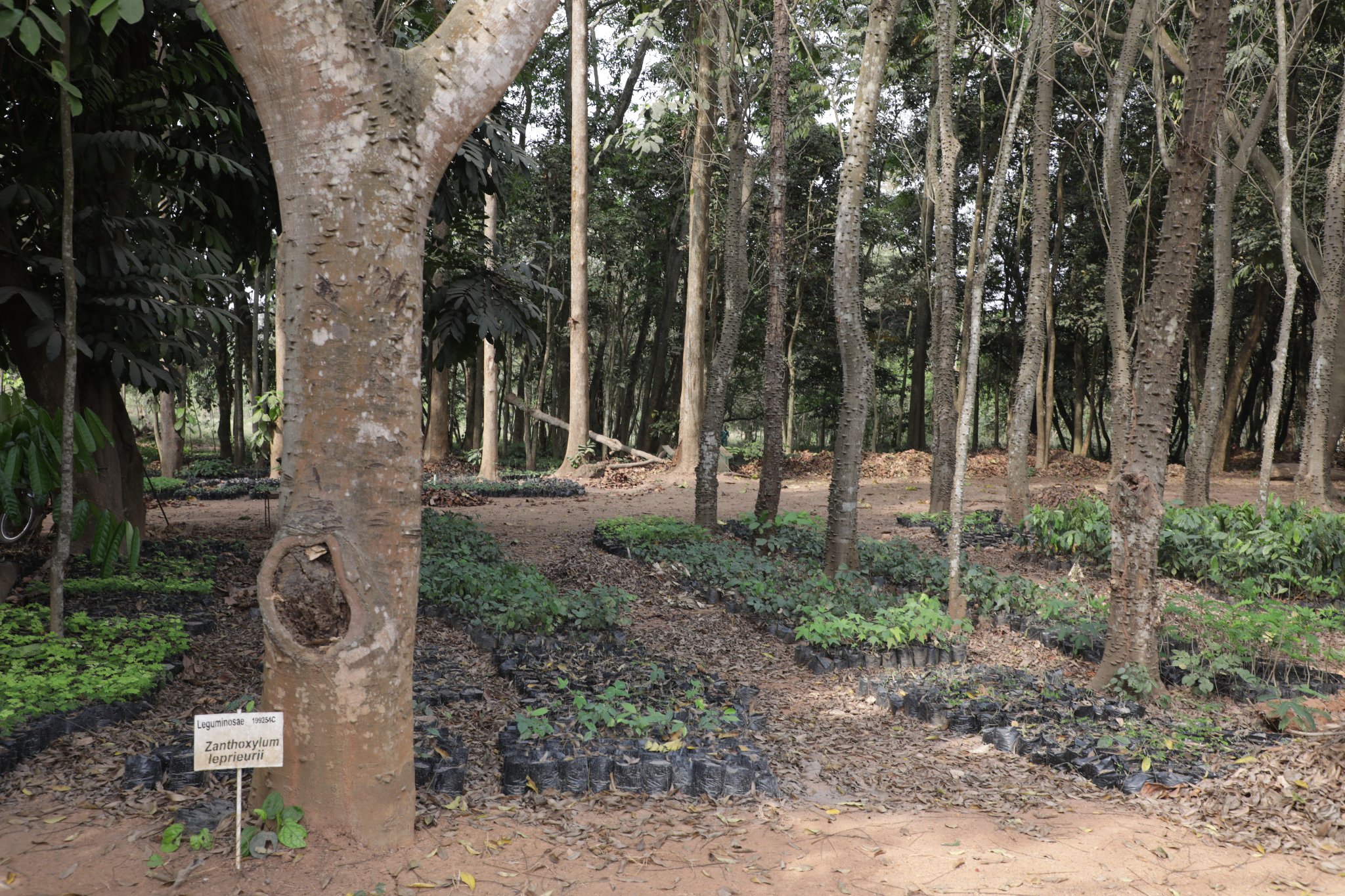
Zanthoxylum leprieurii plot at IITA Forest Center Tree Heritage

New research led by scientists from the IITA Forest Center has revealed that sand knobwood (Zanthoxylum leprieurii), a native tropical African tree, plays an outstanding role in supporting bird diversity and ecosystem health, underscoring the importance of forest conservation grounded in science. Published in Ostrich: Journal of African Ornithology, the study investigated the role of sand knobwood fruits as a food resource for birds within IITA’s Tree Heritage Park (THP).

Over three peak fruiting seasons spanning 2018, 2019, and 2024, researchers conducted systematic focal observations to document bird foraging behavior. The results were striking: 4,452 individual birds from 30 species were recorded feeding on sand knobwood fruits—far exceeding visitation rates observed on any other tree species in the park. The Red-eyed Dove (Streptopelia semitorquata) alone accounted for nearly half of all visits, followed by species such as the Common Bulbul and Olive Sunbird.

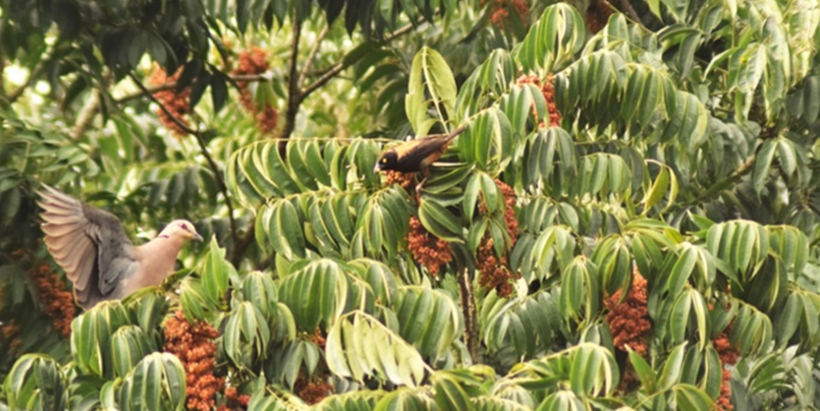
Birds foraging on a fruiting Zanthoxylum leprieurii tree.

Beyond documenting bird diversity, the study went further to understand why this tree matters so much. Laboratory analyses revealed that sand knobwood fruits are nutritionally rich, containing high levels of fat, protein, and crude fiber—key dietary components that support birds’ energy needs, reproduction, and immune function. Birds were observed feeding in both the canopy and on fallen fruits on the forest floor, highlighting how this single tree supports multiple feeding strategies and ecological niches.

Beyond its nutritional value, the study further suggests that sand knobwood possesses antiparasitic and antimicrobial properties that confer medicinal benefits to birds. The multifunctional properties of the sand knobwood tree, including its fruit size, ease of handling, nutritional properties, and medicinal properties, make it a choice food source for diverse bird species.

These findings position Zanthoxylum leprieurii as a keystone resource—a species whose ecological importance far outweighs its abundance. By sustaining birds that play vital roles in seed dispersal, forest regeneration, and ecosystem balance, the tree indirectly supports the resilience of forest landscapes. This interdependence illustrates a broader truth at the core of IITA Forest Center’s mission: conserving trees is inseparable from conserving biodiversity and from supporting human well-being.

Importantly, the research also highlights the value of long-term investment in conservation. Sand knobwood trees studied in the THP were planted decades earlier when the then arboretum was managed by CIFOR-ICRAF, demonstrating how sustained forest stewardship can yield significant ecological returns over time. Funding from the A. G. Leventis Foundation and further work from the IITA Forest Center reinforce the role of partnerships in advancing conservation science.

As urbanization and habitat loss continue to threaten biodiversity, Zanthoxylum leprieurii, given its relatively small size and normal rooting system, offers suitable options for agroforestry, urban greening, and nature-based solutions for biodiversity conservation. By integrating scientifically proven native trees, such as sand knobwood, into managed landscapes, it is possible to create environments where birds, forests, and people thrive together.

Link to paper: https://doi.org/10.2989/00306525.2025.2606066

Contributed by Folake Oduntan

Dr Adewale Awoyemi collecting a blood sample from the brachial vein of a calm Simple Leaflove (Chlorocichla simplex) in Ado-Ekiti on 16 September 2023. The sample was taken to screen for haemosporidian parasites as part of data collection for the present study.
Dr Adewale Awoyemi collecting a blood sample from the brachial vein of a calm Simple Leaflove (Chlorocichla simplex) in Ado-Ekiti on 16

A new study, led by four scientists from Nigeria and Spain, is shedding light on how rapid urbanization in Africa is reshaping wildlife health, particularly among bird communities. The research—conducted by Dr Adewale Awoyemi, IITA Forest Center Manager, and colleagues from the University of Granada, Instituto de InvestigaciĂłn en Recursos CinegĂ©ticos (IREC), CSIC-UCLM-JCCM, Spain, and A.P. Leventis Ornithological Research Institute, Nigeria—provides detailed assessments of avian haemosporidian parasites across urban and non-urban landscapes in southern Nigeria.

Haemosporidians are a diverse group of blood parasites, including Plasmodium, Haemoproteus, and Leucocytozoon, that affect bird species globally. Yet, knowledge of their distribution and impact in the Afrotropics has remained limited, especially in fast-growing urban environments. Recognizing this gap, the research team screened 95 birds representing 31 different species across three sites in southwest Nigeria (Ado, Ibadan, and Lagos) to compare infection patterns between urban and non-urban areas, during both dry and wet seasons.

Pie charts showing the geographic (A) and avian host (B) distribution of Haemoproteus lineages found in birds sampled in the study. The asterisks show the birds examined in the study. The number of infected birds from the study is displayed near each pie chart.

The findings reveal a complex and dynamic picture of host–parasite interactions in the region. Overall, 36.8% of sampled birds tested positive for haemosporidian infection. Notably, Haemoproteus infections were significantly more common in urban birds, with all detected Haemoproteus lineages occurring exclusively in urban habitats. In contrast, most Plasmodium lineages—responsible for avian malaria—were found only in non-urban environments, while Leucocytozoon infections showed no major differences between habitat types.

Beyond highlighting habitat-related differences, the study expands scientific knowledge of parasite diversity in the Afrotropics. The researchers recorded two lineages—hPYNJOC1 (Haemoproteus) and pLUME2 (Plasmodium)—for the first time in the region. They also added new host species (Common Bulbul, Village Weaver, African Thrush, Blue-spotted Wood Dove, and Green Hylia) for more Haemoproteus and Plasmodium lineages, significantly enriching global databases used to understand the ecology and evolution of avian diseases.

These discoveries come at a crucial moment. Africa is urbanizing at one of the fastest rates in the world, transforming habitats and altering ecological interactions that underpin biodiversity. The study underscores how human-driven landscape changes can reshape patterns of disease transmission in wildlife—sometimes in unexpected ways. As cities expand, exposure to certain parasites may increase for some bird species while others become less common, with potential implications for conservation, ecosystem health, and urban planning.

The authors emphasize the need for continued research and surveillance, especially since haemosporidian parasites exhibit a wide range of effects, from benign infections to severe illness and population decline. Understanding how these parasites respond to environmental change is critical for managing risks to both wildlife and, indirectly, human populations.

The study highlights IITA’s growing contribution to biodiversity and urban ecology research in Nigeria. It also strengthens the role of the IITA Forest Center as a hub for cutting-edge ecological studies informing conservation and sustainable development across Africa.

Link to paper: https://doi.org/10.1016/j.avrs.2025.100330

About IITA Forest Center

IITA Forest Center manages and utilizes forest resources for conservation, research, and education. The 350 hectares of Forest Reserve within the IITA-Ibadan’s 1000-hectare land support biodiversity and diverse habitats. IITA Forest is a haven for birds and is designated as an Important Bird Area (IBA) by BirdLife International. The IITA Forest Center has recorded remarkable successes in the propagation and conservation of over 100 native tree species in the Tree Heritage Park, with approximately half these species already listed as Red-Listed by the IUCN. In January 2022, the THP was awarded a Level II Accreditation by The ArbNet Arboretum Accreditation Program and The Morton Arboretum. The IITA Forest supports over 450 plant species, 272 birds, 236 butterflies, 48 mammals, and 28 reptiles.

Contributed by Folake Oduntan


Related Stories:

Partnership advances fertilizer efficiency through the Regional Hub for Fertilizer and Soil Health for West Africa and the Sahel

Abuja, Nigeria — January 15, 2026 — In a major step toward strengthening sustainable agriculture and national food security, the Federal Ministry of Agriculture and Food Security (FMAFS) and the International Institute of Tropical Agriculture (IITA) have signed a Memorandum of Understanding (MoU) to enhance soil health, improve fertilizer efficiency, and boost farm productivity in Nigeria.

The MoU was signed by IITA Director General, Dr Simeon Ehui, and His Excellency, the Minister of State for Agriculture and Food Security, Senator Dr Aliyu Sabi Abdullahi (CON), in support of the Nigeria Farmers Soil Health Scheme (NFSHS) and national soil information system development initiatives. All activities under the agreement will be implemented through the Regional Hub for Fertilizer and Soil Health for West Africa and the Sahel, hosted by IITA.

“The Regional Hub is designed to be the technical backbone of soil health and fertilizer use for West Africa and the Sahel. With the Soil Health Initiative in Nigeria, the Hub gains a visible champion that elevates soil health from a technical agenda to a political one,” said IITA Director General, Simeon Ehui. “It creates demand and urgency for the Hub’s outputs—from digital soil maps and fertilizer recommendations to laboratory standards. Nigeria’s example helps the Hub catalyze momentum across West Africa and the Sahel region, showing that regional cooperation can deliver tangible national benefits.”

The partnership deepens collaboration between IITA, a leading research-for-development institution addressing hunger, poverty, and land degradation, and FMAFS, Nigeria’s lead agency for agricultural productivity and food security policy. Together, the institutions will address persistent soil fertility challenges and fertilizer inefficiencies through the use of data-driven tools, advanced technologies, and regional expertise.

The MoU builds on the Nigeria Farmers Soil Health Scheme, which promotes precise soil testing and crop-specific recommendations to support sustainable intensification and climate-resilient farming systems across the country.

It addresses soil fertility challenges, fertilizer inefficiencies, and sustainable farming through data-driven tools, technology, and regional expertise, expanding the Nigeria Farmers Soil Health Scheme (NFSHS), which was launched on October 14, 2025, for precise soil testing and crop recommendations.

Launched in 2024 as a sub-program of the Economic Community of West African States (ECOWAS) and hosted by IITA in Ibadan, it brings together a strong consortium of partners, including the IITA, the International Fertilizer Development Center (IFDC), OCP Africa, the African Plant Nutrition Institute

(APNI), University Mohammed VI Polytechnic (UM6P), and ISRIC – World Soil Information. The Hub receives financial support from the World Bank through the CGIAR Accelerating Impacts of CGIAR Climate Research for Africa (AICCRA) project, as well as from OCP Africa.

Key deliverables of the partnership include:

  • Crop- and location-specific fertilizer recommendations for staples such as maize and rice
  • Application of Integrated Soil Fertility Management (ISFM) and the 4Rs of nutrient stewardship—right source, right rate, right time, and right place
  • Development of digital soil information systems, laboratory standards, and capacity building
  • Scalable models to support sustainable agriculture across West Africa and the Sahel

“Through the Regional Hub, IITA is working hand in hand with the Federal Ministry of Agriculture and Food Security to put Nigeria’s soil health policy into action, using data and science to deliver real results for farmers and the nation’s food system. This collaboration reflects our shared commitment to smarter fertilizer use, higher yields, and long-term sustainability,” said Axel Lionel Kadja, Director, Regional Hub based in IITA, Ibadan, Nigeria.  “This collaboration reflects our shared commitment to smarter fertilizer use, higher yields, and long-term sustainability.”

This partnership brings actionable solutions to farmers, enhancing productivity for a secure food future.

About the Regional Hub for Fertilizer and Soil Health for West Africa and the Sahel

The Regional Hub for Fertilizer and Soil Health for West Africa and the Sahel is a collaborative initiative that brings together leading research, development, and private-sector partners to deliver science-driven solutions for sustainable agriculture. Hosted by the International Institute of Tropical Agriculture (IITA) and supported by organizations including the International Fertilizer Development Center (IFDC), OCP Africa, the African Plant Nutrition Institute (APNI), University Mohammed VI Polytechnic (UM6P), and ISRIC – World Soil Information, the Hub leverages data, soil testing, and fertilizer technologies to enhance productivity, efficiency, and resilience across regional food systems. With financial backing from the World Bank through CGIAR’s AICCRA project and OCP Africa, the Hub is committed to translating research into actionable solutions for farmers and policymakers, promoting long-term soil health, food security, and sustainable development for West Africa and the Sahel. More information can be found at https://soilhealthwa.iita.org/.

Media Relations Contact:

Tolulope Olabode (for IITA), Ilerioluwa Oladipupo (for the Regional Hub for Fertilizer and Soil Health for West Africa and the Sahel)

Contact Number: 08038037575, 07037180583
Email Address: T.Olabode@cgiar.org, I.Oladipupo@cgiar.org

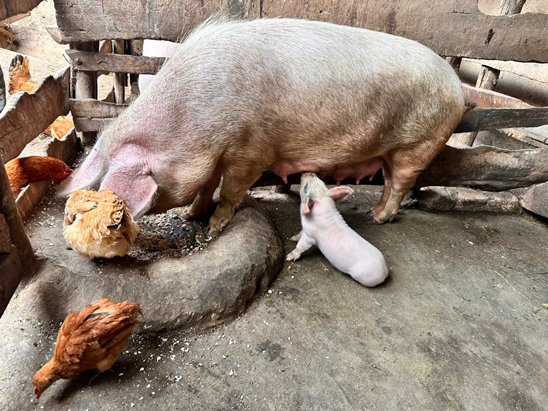
Livestock (pigs and chickens) feeding on high-quality cassava peel (HQCP) mash in Nyamiyaga, Kamonyi District, Southern Province.

In an effort to alleviate the burden faced by livestock entrepreneurs in Rwanda, IITACGIAR has introduced the FeedCalculator app—a digital tool designed to improve animal feed formulation while addressing the growing challenges of feed affordability, availability, and accessibility.

In November 2025, Dr Okike Iheanacho, an IITA-CGIAR consultant, conducted a comprehensive three-day training for animal feed and livestock entrepreneurs. The training introduced participants to the FeedCalculator, a digital solution that enables effective feed formulation using cost-effective and locally available ingredients.

The FeedCalculator is designed to help small-scale livestock farmers optimize feed mixes by considering several critical factors. First, it identifies the nutritional requirements of specific animals. It then analyses available ingredients and their nutritional composition before determining the most efficient combination to meet animal needs. This app can formulate feed recipes for broilers, layers, pigs, catfish and tilapia. The tool also takes into account cost and availability, enabling farmers to produce affordable, nutritionally balanced feed. As a result, the free FeedCalculator generates the least-cost and high-quality feed recipes based on locally available ingredients.

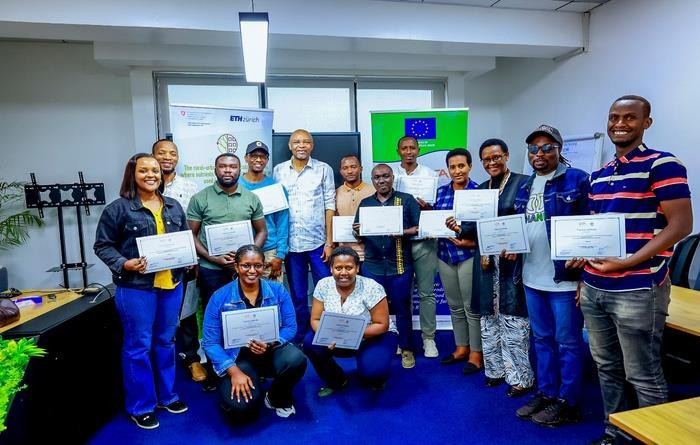
Dr Okike Iheanacho and trainees holding their certificates after the FeedCalculator training.

A key focus of the training was the use of locally available resources, particularly cassava peels, as a major feed ingredient. Dr Iheanacho trained animal feed producers and livestock owners on the use of high-quality cassava peels (HQCP) in feed formulation as an important source of carbohydrates. Often discarded as waste, cassava peels are a cost-effective and sustainable resource that promotes both affordability and resource efficiency in livestock production.

For participants, the tool-FeedCalculator represents a shift from traditional, experience-based feed formulation to a more precise, data-driven approach that improves efficiency, feed quality, and business performance. Participants shared how the training is already influencing their practices and plans.

“I sell animal feed and work as a pig farmer. In addition, I produce animal feed using high-quality cassava peels (HQCP). Thanks to this training, from now onwards, we will use the FeedCalculator to better understand our clients’ needs and provide properly formulated rations that improve livestock growth and performance, ultimately benefiting farmers,” said Mutoni Noella, Manager of Livestock Solution Company Ltd.

Similarly, Mahoro Olivier from Cooperative Ruhango Young Innovators (CORYI), an animal feed production company, highlighted the impact of the training. “We used to formulate animal feed in a traditional way with limited skills. After being trained on the FeedCalculator, I can now automatically produce nutritious feed. It makes calculating rations much easier for us as livestock farmers,” he said.

However, participants also identified areas for improvement. Mahoro noted that some commonly used local ingredients are not yet included in the app. He suggested that developers engage directly with farmers in the field to collect data on locally used ingredients, thereby enhancing the tool’s relevance and effectiveness.

This initiative marks a significant step forward for Rwanda’s livestock sector. By equipping farmers and feed producers with practical digital tools and knowledge, IITA is supporting more efficient, affordable, and sustainable animal feed production, contributing to improved livelihoods and a more resilient agricultural future.

Contributed by Ritha Bumwe

IITA Forest Center welcomes the community to the first Tree Heritage Park Open Day
IITA Forest Center Patron, Dr David Ladipo, with IITA Forest Center Field Supervisors telling the story of the Tree Heritage Park.

IITA Forest Center hosted its inaugural Tree Heritage Park (THP) Open Day recently, bringing together students, researchers, conservationists, and nature lovers for a day dedicated to celebrating Nigeria’s native tree species and strengthening public commitment to environmental stewardship.

The Open Day supports the Center’s continuous mandate to conserve Nigeria’s threatened tree species and upholds the ArbNet Level II accreditation the Park received in January 2022—Nigeria’s first internationally accredited arboretum, the 11th in Africa, and the 500th worldwide.

Located within the 350-hectare IITA Forest Reserve, the five-hectare THP, fondly called the “Noah’s Ark,” hosts more than 100 indigenous species. These include culturally important and endangered trees such as Iroko (Milicia excelsa), African Baobab (Adansonia digitata), African Locust Bean (Parkia biglobosa), and Araba (Ceiba pentandra), where the shy, yellow-billed kite often nests. Many other species in the park were recalled from landscapes affected by urban expansion, illegal logging, storms, and the growing pressures of climate change.

IITA Forest Center Patron, Dr David Ladipo, with IITA Forest Center Field Supervisors telling the story of the Tree Heritage Park.
Students, researchers, and conservationists in different training sessions during the guided tour at the Tree Heritage Park.

Dr David Ladipo, IITA Forest Center patron, who has contributed to conservation work in the Reserve since the 1990s, introduced the participants to the Park’s evolution through a documentary and a presentation. He emphasized the THP’s significance, noting, “This living gene bank is more than a collection of trees; it is a rescue mission. Many of these species would have disappeared without the decades of deliberate conservation efforts here.”

Following the classroom session, participants embarked on a guided tour of the Park. Led by IITA Forest Center staff, the tour highlighted the ecological, cultural, and scientific value of the species conserved in this living genebank, as well as the foundational work of conservation champions such as Phil Hall, Prof Shiwuwa Manu, Dr David Ladipo, Dr John Peacock, Deni Bown, and, more recently, Dr Adewale Awoyemi, the IITA Forest Center Manager.

Speaking on behalf of the Forest Center Manager, Ademola Ajayi underscored the urgency of protecting Nigeria’s native biodiversity. “Our trees are linked to our food. Our food is linked to our health. Many native trees support the growth of indigenous vegetables, fruits, and leaves,” he said. “Destroying our natural forests affects our economy, our food systems, our health, and our cultural heritage. What began as the conversion of an old arboretum into a Tree Heritage Park has now grown into a rallying point for conservation, tourism, and adventure in Ibadan—creating new opportunities for awareness and income generation.”

Professor of Pediatric Hematology and Guest Speaker, Prof. Adekunle Adekile, a passionate naturalist and photographer, encouraged participants to take personal responsibility for environmental protection. “This Park shows how passion-backed science can transform conservation. When communities, students, and experts come together, we create a future where nature and people thrive together,” he said, adding that greater public awareness is vital to addressing myths and deepening appreciation for biodiversity.

Younger participants shared enthusiasm. Adesina Abdul Rahman from Amao College said, “I enjoyed the tour around the THP. I now understand the value of trees and how to plant them. With this knowledge, I plan to become an advocate for conservation among my schoolmates.”

Aderonke Oyewumi from Ibadan International School added, “Today I learnt that every small effort makes a difference. We can protect our environment by joining conservation clubs, recycling plastics, and planting more trees.”

The event also emphasized the Forest Center’s broader impact, including raising seedlings for the restoration of nearly 1,000 hectares of degraded landscapes in Olokemeji, supporting reforestation projects across Nigeria, and nurturing more than 63 Schools Conservation Clubs that groom young environmental stewards.

As visitors departed, many expressed renewed optimism for the future of Nigeria’s forests. The IITA Forest Center remains committed to documenting endangered species, collecting seeds and wildlings, and producing training resources to guide ecological restoration nationwide ensuring that Africa’s native trees continue to stand as symbols of identity, resilience, and pride.

Contributed by Folake Oduntan

The Emerald Forest Reserve (EFR), located in Ikoyi-Osun, Osun State, Nigeria, has been officially designated a global Key Biodiversity Area (KBA), following years of rigorous, IITA Forest Center–led scientific research and biodiversity monitoring contribution. The designation, endorsed in 2024 by the global KBA Partnership, coordinated by the KBA Secretariat with BirdLife International as a core partner, recognizes EFR’s exceptional ecological value and its critical role in conserving globally significant species.

The Emerald Forest Reserve is located within the Abayomi Farm Estates, owned and managed by the Abayomi family for over two decades. The Abayomi family has demonstrated unwavering commitment to biodiversity conservation safeguarding a 120 hectares indigenous forest using pragmatic, community-based conservation approaches. Working closely with local communities and conservation partners—including the IITA Forest Center—the family helped halt logging, hunting, and poaching by transforming former loggers and hunters into custodians of the forest, supporting them with alternative livelihoods such as palm oil processing, beekeeping, agroforestry, furniture making, and tree seedling production.

Central to the KBA designation is the Emerald Forest Reserve’s importance for the conservation of the endemic and endangered Ibadan Malimbe (Malimbus Ibadanensis). Through long-term ornithological monitoring, the IITA Forest Center documented repeated sightings, acoustic calls, nesting attempts, and breeding behavior of the species within the reserve. These records represent some of the most comprehensive and scientifically validated evidence of the species’ persistence in the wild.

Bird monitoring surveys conducted quarterly over several years by the IITA Forest Center scientists, in collaboration with the A. P. Leventis Ornithological Research Institute, produced peer-reviewed publications that formed the backbone of the KBA nomination. These studies confirmed that the Emerald Forest Reserve supports a unique assemblage of Guinea–Congo forest bird species, including breeding populations of rare and restricted-range birds.

The designation, drawing on long-term biodiversity research, peer-reviewed scientific outputs, and standardized KBA assessment protocols, followed a scientifically rigorous nomination led by IITA-CGIAR, with Dr Adewale Awoyemi, IITA Forest Center Manager, serving as the Proposer. This was done alongside Ademola Ajayi, IITA Forest Center Field Supervisor; Dr Stella Egbe, Nigerian Conservation Foundation (NCF) Senior Conservation Manager; and Professor Shiiwua Manu, Professor of Ornithology, Department of Zoology, University of Jos; as co-proposers.

Speaking on the designation in Ibadan, Dr Awoyemi said, “This recognition reflects the strength of IITA Forest Center’s research efforts in identifying, documenting, and validating sites of global biodiversity importance. The Emerald Forest Reserve exemplifies how robust research, when combined with local stewardship, can deliver outcomes of international conservation relevance.”

“The scientific outputs generated by the IITA Forest Center and funded by A. G. Leventis Foundation were instrumental in demonstrating that the Emerald Forest Reserve meets global KBA criteria. Beyond species discovery, the research highlighted the forest’s broader biodiversity value and its role as a refuge for migratory and resident wildlife,” he added.

The BirdLife International Partner in Nigeria, the Nigerian Conservation Foundation (NCF), facilitated national-level coordination and stakeholder engagement during the review process. Congratulating all parties, NCF Director General, Dr Joseph Onoja, described the designation as a milestone for Nigeria’s biodiversity conservation efforts and noted its relevance to national and international biodiversity commitments.

“It is indeed exciting to have EFR as the first newly assessed and nominated KBA in Nigeria. We at NCF are happy with the coordination we provided to make this a reality, and we hope more sites like this across Nigeria will follow suit,” Dr Onoja said.

According to Dr Modupe Ladipo, one of the Directors of the Emerald Forest Reserve, the discovery and documentation of the Ibadan Malimbe was a turning point for the forest’s global recognition. She noted that repeated surveys by IITA Forest Center and its partners not only confirmed the species’ presence, but also recorded nesting structures and the first-ever acoustic documentation of its call. These findings demonstrated that the Emerald Forest Reserve provides a viable and recovering habitat for a species once feared to be disappearing.

The Nigeria Convention on Biological Diversity commended the development, highlighting that, ‘The designation of Emerald Forest Reserve as a KBA is a laudable achievement as it holds a significant population of the threatened and endemic Ibadan Malimbe (Malimbus Ibadanensis). Nigeria as signatory to the Convention on Biological Diversity is delighted at the concerted efforts of all these stakeholders to map out additional sites as KBAs in the country. All these ensure that Nigeria achieve its goals and targets in the National Biodiversity Strategies and Action Plans (NBSAP) to support global efforts to protect biodiversity, halt species declines, prevent habitat loss and preserve the ecosystem services.’

The Emerald Forest Reserve is scheduled to formally celebrate its KBA designation on 22 January 2026, bringing together conservation stakeholders, community representatives, and partner institutions. The milestone underscores the importance of science-driven conservation and reaffirms IITA Forest Center’s leadership in advancing biodiversity research and protection in Nigeria.

All scientific data, analyses, and publications underpinning the KBA nomination were generated through IITA-led research programs and remain the intellectual property of the International Institute of Tropical Agriculture. These outputs form part of IITA’s broader mandate to advance science-based conservation, landscape restoration, and biodiversity knowledge in Africa.

About IITA Forest Center

The IITA Forest Center manages forest resources for conservation, research, and education within the 1,000-hectare IITA campus in Ibadan, of which approximately 350 hectares are designated a forest reserve. Recognized as an Important Bird Area (IBA) by BirdLife International, the IITA Forest supports exceptional biodiversity, including over 450 plant species, 272 bird species, and the endemic Ibadan Malimbe. IITA’s forest research has resulted in internationally accredited conservation achievements, including ArbNet Level II accreditation for its Tree Heritage Park.

About the Emerald Forest Reserve

The Emerald Forest Reserve is a 120-hectare indigenous rainforest located within the Abayomi Farm Estates at Aworin, Ikoyi-Osun, Osun State. The reserve has been protected for over two decades through local stewardship, community ranger programmes, and conservation-oriented land management. In addition to biodiversity protection, EFR supports environmental education, wildlife rescue initiatives, and nature-based livelihood activities. Today, EFR stands as a refuge for rich biodiversity, including endemic and endangered bird species, primates such as Cercopithecus mona, reptiles like Python regius, and ecologically important tree species such as Pterygota macrocarpa, Lophira alata, and Afzelia africana.


Media Contacts

Katherine Lopez
Head of Communications, IITA
Email: k.lopez@cgiar.org


Folake Oduntan

IITA Forest Center Communication
Email: g.oduntan@cgiar.org

Delegates from the Union of Comoros with IITA DG, Dr Simeon Ehui, alongside IITA management staff and scientists during their immersion mission to deepen partnerships in research, innovation, and sustainable development

A high-level delegation from the Union of Comoros visited IITA–CGIAR from 20 to 24 November, to explore areas of deeper collaboration in agricultural research, innovation, and capacity development. The delegation, led by the Honorable Minister of Agriculture, Fisheries, and Handicraft, Dr Daniel Ali Bandar, included senior officials from the Ministry of Agriculture, INRAPE, DNSAE, FSRP, and the Government Secretariat.

During the welcome session, IITA Director General, Dr Simeon Ehui, expressed his honor in receiving the delegation and emphasized the importance of partnerships in achieving food sovereignty and improving livelihoods across Africa. He highlighted IITA’s strong achievements in scaling agricultural innovations, including the delivery of digital agriculture solutions, the improvement of crop varieties, and the establishment of scalable seed systems. Dr Ehui reaffirmed that IITA is committed to listening, co-consulting, and co-developing solutions that respond directly to the Comoros’ national priorities.

Dr Abdoulaye Tahirou, Acting Deputy Director General, Partnerships for Delivery (P4D) presenting an overview of IITA’s research programs and impact across Africa

In his remarks, Minister Bandar underscored the critical role agriculture plays in Comoros’ economy and food system. He outlined three top priorities: increasing production, empowering youth and women in agriculture, and developing competitive value chains—particularly for key crops such as cassava, banana, and yam, as well as important export crops such as cloves, vanilla, ylang-ylang, and ginger. He highlighted new national policies to mobilize unused lands for productive agriculture, ensuring that opportunities are open to young agripreneurs and communities.

“Our ambition is to structurally transform Comorian agriculture,” the Minister said during interviews. “We must adopt new technologies to increase yields without expanding land area. We look to IITA’s expertise in plant health, high-performing varieties, mechanization, and digital tools to support this transformation.”

Presentations and field tours introduced the delegation to IITA innovations relevant to their needs, including banana disease management, Seed Tracker for traceability and certification, AKILIMO for smart agronomy recommendations, and technologies for cassava processing and value addition. Delegates also toured the laboratories at the Germplasm Health, Virology & Diagnostics unit and the Genetic Resources Center, as well as the IITA Farm Management and screenhouse facilities.

IITA DG, Dr Simeon Ehui, presenting a commemorative plaque to the Union of Comoros delegation following the signing of partnership agreements (MoU) between both parties.

The mission concluded with a feedback session, an agreement on priority collaboration areas, and the signing of a Memorandum of Understanding that binds the partnership engagement for the delivery of agricultural solutions to both parties. Looking ahead, Minister Bandar expressed optimism that the impact of this visit will be visible in the short to medium term, through strengthened institutions, improved farmer services, and healthier seed systems.

He concluded by applauding the warm welcome and professionalism of the IITA team. He acknowledged, “We felt at home here. We arrived as guests but were embraced as partners. We are confident that together, we will achieve meaningful transformation for the Comorian people.”

Contributed by Folake Oduntan

Related Story: IITA strengthens collaboration with Comoros Ministry of Agriculture

Members of the global NESST-Smithsonian network at the first NESST in-person convening at Washington DC

IITA–CGIAR is proud to announce the in-person participation of Dr Adewale Awoyemi in the NESST-Smithsonian convening hosted by the Smithsonian Science Education Center (SSEC) in Washington, DC. Dr Awoyemi is the IITA Forest Center Manager, Conservation Biologist, and NESST Scientist Ambassador at the 2025 Network for Emergent Socio-Scientific Thinking (NESST).

The convening was the first since the founding of NESST in 2021, and it was held between 15 and 20 November. More than 100 members of the global NESST network—scientists, teachers, youth, community leaders, and STEM professionals—gathered physically to reimagine education for a sustainable planet.

NESST, with support from the Gordon & Betty Moore Foundation, is a global impact network united by a shared mission: transforming STEM education for a future shaped by the UN Sustainable Development Goals. Its work is anchored on four pillars—scholarship and research, professional community building, youth engagement, and network growth.

A key intellectual discussion during the event was the network’s paper, which introduced the concept of emergent impact networks as a transformative approach to addressing complex socio-scientific challenges such as climate change and biodiversity loss through STEM education. The paper further highlights how such networks can unite young people, educators, scientists, researchers, and cultural institutions across borders and generations to advance STEM Education for Sustainable Development (STEM4SD).

Dr Adewale Awoyemi with NESST professionals during the just-concluded conference

As a Scientist Ambassador (and previously a Research Mentor in 2024), Dr Awoyemi continues to make meaningful contributions to this mission, offering insights from over 10 years of field experience in biodiversity conservation, youth engagement, and urban ecology. His engagement provided an opportunity to share IITA’s grassroots-to-global model of conservation learning, particularly the Forest Center expanding into Schools Conservation Clubs.

Today, the IITA Forest Center proudly coordinates 63 Schools Conservation Clubs across South-West Nigeria, nurturing thousands of young learners who are developing a lifelong commitment to environmental stewardship. These clubs introduce students to forest ecology, climate change awareness, biodiversity protection, and hands-on conservation action—values that resonate strongly with NESST’s vision for emergent, youth-centered STEM education.

Reflecting on his experience, Dr Awoyemi expressed gratitude to the SSEC for the opportunity to represent IITA and Nigeria on the global stage, describing the convening as a powerful platform for learning, exchange, and envisioning the future of STEM education for sustainable development. The experience has strengthened not only his personal leadership but also the entire IITA Forest Center team, broadening our perspective, deepening our collaborations, and reinforcing our commitment to shaping environmentally conscious generations.

As IITA continues to advance conservation education and champion youth engagement through the Forest Center, Dr Awoyemi’s involvement with NESST stands as a testament to the impact of our work—rooted locally, resonating globally, and contributing to a shared transformative future.

Contributed by Folake Oduntan

Related story: Leading IITA conservationist boosts urban ecology research in Africa

The Wuling Bingo Electric Vehicle donated by CIG Motors to IITA.

In a bold move to promote sustainability and accelerate the adoption of eco-friendly technology, CIG Motors Group has entered a strategic partnership with the IITACGIAR  to advance green mobility and environmental conservation in Nigeria.

The collaboration, which aligns with IITA’s Green Initiative, underscores the shared commitment of both institutions to reducing carbon emissions and fostering innovation in sustainable energy use.

At a ceremony held at the IITA Headquarters, CIG Motors officially donated a Wuling Bingo Electric Vehicle (EV) to IITA—marking a significant milestone in the Institute’s transition toward cleaner operations and its journey to achieve carbon neutrality.

In his remarks, Dr Simeon Ehui, IITA Director General and CGIAR Regional Director for Africa, commended CIG Motors for its vision and contribution to sustainability.

“As a leading research partnership that facilitates agricultural solutions to hunger, poverty, and natural resource degradation throughout sub-Saharan Africa, IITA is equally committed to promoting sustainability and environmental responsibility,” Dr Ehui stated.
“I am happy that this partnership has become a reality. On behalf of the IITA staff and friends, I would like to thank CIG Motors for allowing us to test and experience this electric vehicle. This innovation helps us reduce fuel consumption and demonstrates that cleaner energy options are not only better for the environment but also more cost-effective.”

IITA Director General, Dr Simeon Ehui, exchanges pleasantries with Executive Director of CIG Motors, Jubril Arogundade, and General Manager of Operations, Manyo Pan, during the partnership event at IITA Headquarters, Ibadan.

He expressed optimism that the collaboration would strengthen IITA’s commitment to innovation, responsible energy use, and long-term environmental goals.

“CIG Motors can continue to work closely with our teams—we will support you in every way that aligns with the objectives of IITA, our stakeholders, and our Board,” he added. “In two years, IITA will celebrate its 60th anniversary, and part of what has kept us strong is leadership committed to good governance, innovation, and environmental responsibility. This partnership reflects exactly that spirit.”

Speaking at the event, Jubril Arogundade, Executive Director of CIG Motors, said the decision to partner with IITA was deliberate, citing the Institute’s long-standing reputation as one of the most sustainable green communities in Nigeria and sub-Saharan Africa.

“I am thrilled to be at IITA today,” he said. “The reason why CIG Motors Group carefully selected IITA for this sustainability partnership is because of its exemplary history. IITA is one of the most sustainable and green communities in the region, and we believe that our mission as a company—to move the conversation of mobility toward sustainability—requires a strategic partner like IITA.”

Arogundade added that the partnership represents CIG Motors’ effort to prove that the shift to green mobility is achievable and practical.

Executive Director of CIG Motors, Jubril Arogundade, hands over the keys of the Wuling Bingo Electric Vehicle to IITA Director General and CGIAR Regional Director for Africa, Dr Simeon Ehui.

“What we have done today is to demonstrate that moving to green mobility is possible,” he explained. “We are excited that IITA will now begin using the Wuling Bingo Electric Vehicle as part of its mobility system. This partnership advances our company’s initiative to promote cleaner and greener energy in Nigeria and across Africa. We are grateful to IITA for sharing this vision and for the opportunity to collaborate.”

Also speaking, Manyo Pan, General Manager of Operations at CIG Motors, shared her personal admiration for IITA’s environment and expressed enthusiasm about the collaboration.

“It is a great pleasure to partner with IITA,” she said. “For more than ten years, I have travelled here for holidays and have always enjoyed the peaceful, green, and natural surroundings. IITA’s commitment to sustainability makes it the perfect partner for our mission to promote responsible corporate citizenship and greener technologies.”

In his contribution, Farouk Kozah, Head of IITA Facilities Management Services (FMS), described the partnership as a new chapter in the Institute’s sustainability journey.

“This partnership lays the groundwork for our broader plan within the Facilities Management Services (FMS) Department to gradually transition the IITA vehicle fleet to hybrid and electric models,” Kozah noted.

“It reinforces our commitment to reducing carbon emissions and promoting environmental responsibility across all operations. It is also a practical demonstration of IITA’s green policy in action and a testament to how partnerships can accelerate sustainability goals.”

The event concluded with the symbolic handover of the Wuling Bingo Electric Vehicle to IITA’s management team, followed by a demonstration of its features and performance.

Contributed by Dada Bamise