
In Nigeria and across Africa, cassava is more than just a staple crop, it is a powerhouse of potential, silently yet profoundly driving food security, alleviating poverty, fostering sustainable livelihoods, and fueling an emerging entrepreneurial and industrial revolution. This ‘white gold’ is key to unlocking immense economic opportunities and building a resilient future for millions.

Recognizing this immense significance, World Cassava Day is celebrated annually on 28 June. This year, the observance marked a significant milestone in the journey of cassava transformation in Nigeria, with a series of engaging and insightful maiden events. These included a physical conference, an X (formerly Twitter) Space session, and a targeted radio campaign, collectively emphasizing the critical role of cassava in driving food security, ensuring inclusion, and creating sustainable development within the agricultural sector.

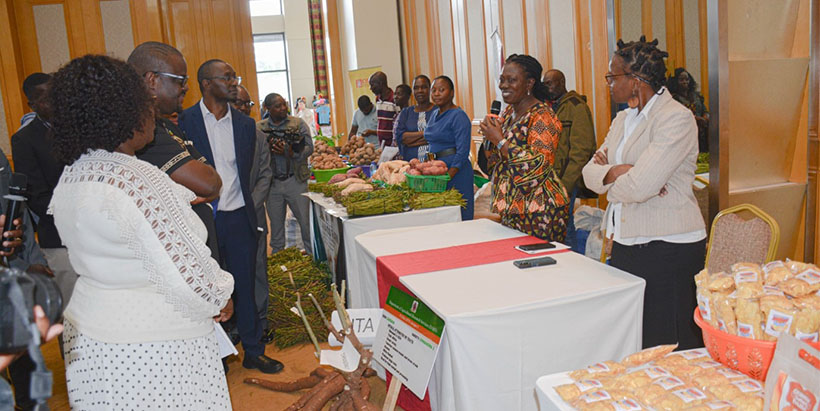
The maiden conference held on 4 July 2025, in Abuja, was the cornerstone of the World Cassava Day celebrations. The theme; “Farm to global markets: Driving industrialization, food security, and exports”, perfectly encapsulated the ambition to transform cassava from a subsistence crop into a major contributor to national wealth and international trade, emphasizing the entire value chain from cultivation to industrial application and export. Policy stakeholders, researchers, private sector players, entrepreneurs, and farmers gathered to chart a course for the future of cassava.

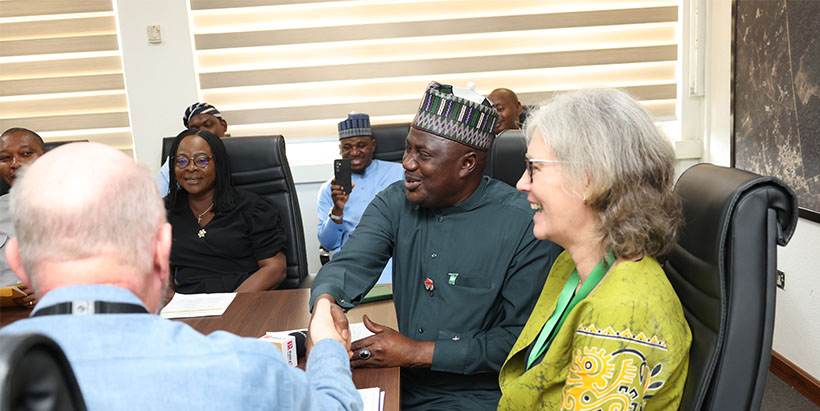
Dignitaries, including Vice President Kashim Shettima, highlighted the government’s commitment to repositioning cassava as a key driver of industrial development and import substitution. He passionately declared, “Cassava, which for long symbolized food security for the vulnerable, can also signify prosperity for the ambitious. Our commitment is unwavering in repositioning cassava not just as a staple crop but as a key driver of industrial development, import substitution, and ultimately, economic diversification.”

Central to the discussions was the remarkable progress in innovative breeding techniques and the strengthening of seed systems. Experts from IITA, National Root Crops Research Institute (NRCRI), and partners highlighted how these advancements are leading to the development and dissemination of high-yielding, resilient cassava varieties tailored to end-users’ requirements.

Prof. Chiedozie Egesi, Executive Director, NRCRI, emphasized, “Our focus is on creating cassava varieties that increase yields for farmers and meet the quality demands of processors and industries. This holistic approach is crucial for sustainable transformation.” He highlighted the strategic shift from supply-driven research to demand-led breeding.
The importance of collaboration between national and private institutions was another key takeaway. Partnerships are instrumental in scaling up the adoption of improved varieties and developing efficient value chains. Dr Mercy Diebiru-Ojo, IITA Seed System Specialist, shared her perspective: “For cassava to transform our economy, we need seamless collaboration across the entire value chain – from research institutions developing innovative varieties to private sector players creating market opportunities and government propelling action plans and inclusive policies. This synergy ensures that advancements at the research level translate into tangible benefits for farmers, processors, and agribusinesses.”

The impact of improved cassava varieties on the productivity of farmers, processors, and industries across Nigeria and Africa was a central theme, demonstrating cassava’s potential to transform rural livelihoods and ensure national food and energy security. An accompanying exhibition showcased the latest advancements in cassava cultivation, processing, and value addition, offering a glimpse into the future of this versatile crop.

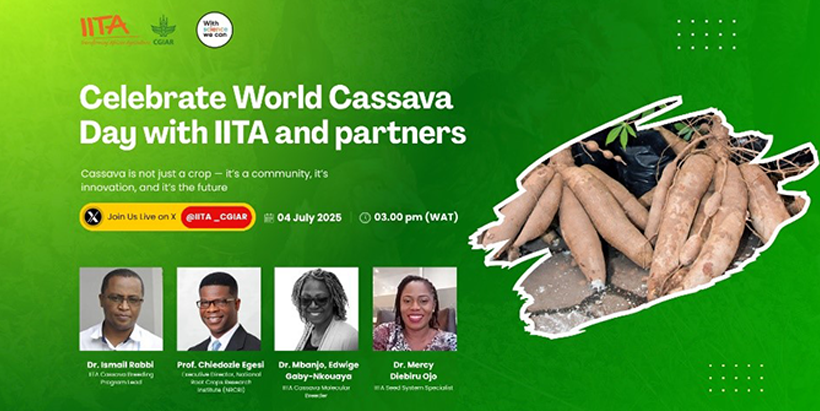
Beyond the partnership for delivery and policy-focused conference, World Cassava Day extended its reach to a broader audience of stakeholders through a virtual platform. The IITA communication team, in collaboration with the cassava breeding program, hosted an engaging X (formerly Twitter) Space session.

This live conversation brought together a diverse group of cassava stakeholders and experts, including Dr Ismail Rabbi, IITA Cassava Breeding Program lead), Prof. Chiedozie Egesi, Executive Director, National Root Crops Research Institute (NRCRI), Dr Mercy Diebiru-Ojo, IITA Seed System Specialist, and Dr Gaby Mbanjo, IITA Molecular Cassava Breeder). They shared valuable insights and experiences on accelerating cassava transformation.

During the insightful session, Prof. Egesi, passionately articulated the paradigm shift in cassava research: “We started by moving away from supply-driven research to demand-led breeding, focusing on improving yields, pest and disease resistance, and more importantly, consumer-preferred attributes. Cassava can drive away rural poverty and bring about development.”

Building on this vision of transformative impact, Dr Mbanjo, detailed the technological strides enabling this progress, explaining: “In the cassava breeding program, we have taken advantage of advancements in technology, combining DNA information (genomics) with advanced phenotyping tools, and implementing quantitative genetics principles to reduce the breeding cycle and increase selection accuracy. Techniques to promote synchronized flowering and accelerate the rate of cassava multiplication are being adopted to speed up breeding. The breeding program is fully digitalized. A central data management platform (CassavaBase) houses all the data. The procedure of analyzing breeding data has been made simpler by the development of an analytical platform.”

Dr Diebiru-Ojo explained further, “through strong collaboration between international and national partners like IITA GoSeed and Umudike Seed, we have established the first early generation seed companies. Utilizing transformative technologies such as semi-autotrophic hydroponics, we aim to flood the country with healthy, quality-certified planting materials of improved varieties, ensuring farmers receive value for their investment.”

Participants raised questions about farming risks, chemical use in cassava processing, and the verification of cassava varieties. Dr Rabbi moderated the questions and feedback session to questions and feedback. He emphasized the need for stakeholder collaboration to improve cassava productivity and impact in Nigeria, aiming to transition cassava from a subsistence crop to an industrial crop. He concluded with a call for continued engagement and feedback from the community to drive innovation in the cassava sector.

Complementing these events and recognizing the crucial role of smallholder farmers in cassava transformation, Radio IITA’s “Olaju Agbe” program played a vital role in disseminating information at the grassroots level. The bilingual (Yoruba and English) program, broadcast on 25 June, featured Bello Abolore and Racheal Abioye, among other experts, who enlightened farmers on the “great importance of cassava value addition to the livelihood of smallholder farmers and national productivity,” aligning perfectly with the overarching goals of World Cassava Day.

These events collectively showcased that cassava is a strategic asset for economic diversification, rural empowerment, and global competitiveness. The commitment from various stakeholders, from government officials to private sector players, underscores a shared vision for a future where agriculture, particularly cassava, is at the heart of shared prosperity, becoming a “white gold” in Nigeria.

Contributed by Mercy Diebiru-Ojo and Olamide Nwaze

The different gari prepared by the processor into eba product samples.

Since 2015, Nigeria’s public cassava breeding program, led by IITA in collaboration with the National Root Crops Research Institute (NRCRI), has focused on developing new cassava varieties to cater to the diverse needs of cassava users across the value chain. A key aspect of this initiative has been identifying gender-specific traits preferences, ensuring that breeding decisions optimally align with the unique priorities of both women and men along the cassava value chain.

A recent study shows that beyond conventional research that interacts directly with crop users along the value chain, commercial seed companies such as IITA GoSeed and Umudike Seeds have become important sources of insights on gender specific preferences and show large potential. By promoting and selling improved seeds (in the form of stem cuttings in the case of cassava) through the upcoming formal commercial seed system, these companies acquire valuable feedback from seed users, thereby validating and complimenting earlier research findings on gender-specific trait preferences and providing breeders with market intelligence data in real time to pragmatically steer future investments.

To assess the role of commercial seed businesses in capturing gendered user feedback, researchers from IITA and NRCRI adopted a case study approach focused on IITA GoSeed and Umudike Seeds commercial companies. It included six key informant interviews with company staff (three men and three women), alongside reviews of company reports and sales data. Findings confirm the importance of previously identified traits such as plant architecture (branched stems and a wide canopy to suppress weeds) and suitability for processing. However, new gender-preferred traits also emerged: ratooning ability (allowing cutting stems from a plant without the plant being affected much) and sweet, poundable cassava roots suitable for direct consumption after boiling.

One of the cassava producers expressing delight with his harvest output from the newly released variety of cassava.

Recently released umbrella-shaped varieties like Game-changer, Obasanjo-2, and Baba-70 are gaining popularity. Notably, women village seed entrepreneurs (VSEs) who sell stems in their communities demonstrated a distinct preference for Game-changer and Farmers’ Pride varieties, surpassing the demand for these varieties by men.   These insights highlight that gendered roles and norms equally influence cassava varietal preferences within the seed market.

Earlier research conducted in cassava-producing regions of southwest and southeast Nigeria shows that high yield, root size, early maturity, and dry matter content are universally valued. Men leaned toward agronomic traits such as field appearance and canopy cover, while women prioritized processing and food products’ qualities more. Participatory processing evaluations of cassava products such as gari, eba, and fufu reinforced the demand for qualities like swelling capacity, texture, and color, which impact marketability and profitability.

A Tricot farmer discussing her preferences for plant architecture.

The participatory research approaches used in these earlier studies, such as mother-baby trials, tricot, and participatory processing evaluations with renowned processors in farming communities, have significantly improved the inclusion of users’ perspectives. The lead researcher, IITA Senior Research Supervisor Durodola Owoade, however, stressed that further integrating participatory approaches like tricot within the seed systems commercial activities of stem selling, and working with stem sellers, can enhance the connection between user feedback and breeding innovation, ultimately fostering a more inclusive and sustainable cassava seed system in Nigeria.

In conclusion, seed businesses must actively connect to research by providing feedback guiding the selection of new commercial crop varieties. This is especially important in a growing formal seed sector, where farmers are increasingly looking for high-performing varieties with clear benefits: varieties that are not easily accessed through friends or neighbours and that they are thus willing to pay for.

To boost the impact and relevance of research, companies like IITA GoSeed and Umudike Seeds offer excellent platforms for integrating social science, participatory approaches, and transdisciplinary action research. Their involvement helps identify market segments that include different social, and gender groups and supports the development of stronger investment cases for breeding programs aligned with the One CGIAR social impact areas.

This underscores the importance of creating structured feedback loops between seed system activities and breeding efforts, in addition to participatory research that directly engages with crop users along the value chain.


Contributed by Ochuwa Favour Daramola

Dr Ismail Rabbi, IITA Cassava Breeding Program Lead interacting with a female cassava farmer-processor.

In a compelling show of research-community collaboration, the IITACGIAR recently hosted its annual Cassava Farmers-Processors Outreach Program—a flagship event jointly organized by Radio IITA and the Cassava Breeding Program (CBP). The event brought together farmers, processors, researchers, and communication experts with a common goal: to transform cassava productivity through innovation, knowledge sharing, adoption of improved varieties, and value addition.

Farmers and processors from Osun, Oyo, Ogun, Ekiti, and Lagos States participated in the outreach, which was designed as a “train-the-trainer” initiative. Additional participants engaged on Facebook. This model empowers selected participants to serve as ambassadors, returning to their communities with valuable knowledge on best agronomic practices, improved cassava varieties, and value-added food products.

Dr Ismail Rabbi, Head of the IITA Cassava Breeding Unit, emphasized the program’s participatory approach. “Cassava farmers are central to our mission,” he said. “This outreach is not just about delivering innovation; it’s about listening, learning, and co-creating solutions that work in the field and for users.”

Participants at the Semi-Autotrophic Hydroponics (SAH) screen house facility.

The Head of IITA Communication Office, Katherine Lopez, emphasized the impact of the outreach. “This program bridges the gap between research and the field. When farmers engage directly with our scientists, the results are transformational for yields and livelihoods.”

Dajie Odok Blessing, Radio IITA Lead, noted, “The impact stories we have heard from past participants are proof of the model’s success. Our follow-up visits show that real change is taking place across communities.”

During the interactive sessions, farmers shared challenges and success stories. Felicia Owolabi from Oyo State praised the new ‘Biggie’ variety for its high yield after just eight months while voicing concerns about rodent damage. Another farmer highlighted the need for varieties with longer in-ground shelf lives to allow harvest flexibility during favorable market conditions.

Hands-on training on weed control and fertilizer use led by experts Toye Ayankanmi, Oke Esezobor, and Abolore Bello.

In response, Dr Rabbi explained ongoing breeding efforts to address such concerns. He mentioned that the breeding program was screening its collection for varieties showing less attraction to rodents and those that can stay in the ground for more than 12 months without rotting or becoming fibrous. He advised farmers to use the updated cassava variety handbook to select varieties suited to their specific conditions. He also urged farmers near IITA testing stations to collaborate by offering parts of their land for use as demonstration plots. To improve stem preservation, he recommended a simple method: storing cut stems upright with their bases in moist soil under shade, which can extend their viability for several weeks.

Participants received hands-on weed control, fertilizer use, and herbicide application training led by experts, Toye Ayankanmi, Oke Esezobor, and Abolore Bello. These practical sessions complemented a visit to IITA’s state-of-the-art cassava processing center, where participants witnessed the transformation of cassava into high-value nutritious food products such as cassava cake, snacks, leaf soup, and even cassava ice cream, highlighting opportunities for value addition and income diversification. These innovations, showcased by Abioye Racheal, Dayo Ogunade, and Owoade Durodola, directly address marketability and income diversification for farmers.

Interactive cassava food products exhibition at the cassava modern supermarket with outreach participants led by Racheal Abioye.

A major highlight was the tour of the Semi-Autotrophic Hydroponics (SAH) laboratory led by ThankGod Ogwuche, who demonstrated the use of clean, certified stems and advanced multiplication techniques to ensure timely access to healthy planting materials, crucial for food security and genetic integrity.

With continued follow-up, increased farmer-scientist collaboration, and a commitment to knowledge dissemination, IITA Cassava Outreach is advancing a more productive, resilient cassava sector for Nigeria and Africa.

Contributed by Ismail Rabbi and Bamise Dada

Prof. Amal El-Ghazaly during the training with IITA researchers. (Photo: Rashid Hadi/IITA)

Enhancing efforts in developing agricultural technologies is key to revolutionizing the agriculture sector. Such innovations can significantly reduce losses caused by plant diseases and empower smallholder farmers to make informed decisions throughout the production process.

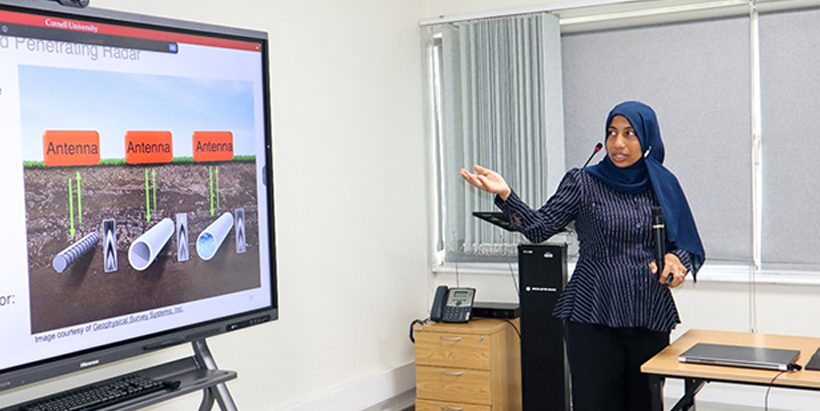
Prof. Amal El-Ghazaly from Cornell University delivered a powerful seminar and valuable insights to the IITACGIAR breeders and scientists on “Sensing underground crops to understand the interdependence of food, agriculture, and climate.”  She introduced ground penetrating radar (GPR), an innovative technology for monitoring underground crop growth at all stages. This technology will help boost Cassava productivity and ensure food security.

While introducing this technology to participants, she noted, “I am sure you all wonder how exactly you see what is in the ground. How do you monitor a crop that is growing underneath the soil surface? And ideally, can we do that without destroying or uprooting the crop? There are many ways to detect properties in the soil, and they are used in different contexts based on their environment. But what we use is what is called ground-penetrating radar (GPR).

Prof. Amal El-Ghazaly explaining the importance of GPR technology to participants. (Photo: Rashid Hadi/IITA)

Moreover, Prof. El-Ghazaly has been working closely with the Cassava breeding program, and this crop was used as a test. She engaged with the IITA cassava breeding team to collect data in the field and showed its importance in enhancing food, agriculture, and nutrition security. More efforts are also invested in understanding the development of technologies to help bananas, tubers, and roots since this technology can be used for many crops.

Prof. El-Ghazaly, expressing his interest in choosing cassava over other crops, noted, “Cassava is a staple household crop, and every part of the plant is utilized. The leaves are commonly used as a food ingredient and can also serve as animal feed. The stems are used for replanting to grow new cassava plants. Cassava roots can be boiled or fried — we had it for breakfast on my first day here. Additionally, cassava starch is used in producing beverages, as a sweetener, and even for making alcohol.”

Staff from IITA expressed their strong interest in technology and emphasized the importance of creating a scalable environment to extend its reach to a greater number of smallholder farmers. This includes raising awareness among agricultural stakeholders such as extension officers, farmers, and partners to ensure the effective dissemination and adoption of technology.

“There is a need to use this technology in terms of sustainability. Hence, we can link our technologies for cassava, such as AKILIMO and Plant Village Nuru, into one platform to ensure many smallholder farmers benefit from these technologies,” Mwantumu Omari, IITA Scaling Specialist, noted.

Contributed by Rashid Hadi

Genetic map showing the new insert.

Science often throws us a curveball, and it came from cassava this time. Researchers have uncovered a massive, previously unknown chunk of DNA in a farmer-preferred cassava landrace, shedding new light on the crop’s genetic complexity.

While digging into the genome of TMEB117, researchers stumbled upon a previously uncharted 9.7 Mb chunk of DNA sitting quietly on chromosome 12. This huge insertion does not exist in the current cassava reference genomes. It is like finding a hidden attic in a house you have lived in for years.

So, what is in this genetic attic?

It is packed with transposable elements, those nomadic pieces of DNA that copy and paste themselves around the genome. One group, the MUDR-Mutator superfamily, was especially overrepresented by the rowdy guests of the genomic party.

However, here is where things get interesting: on the border of all this genetic clutter are two unique genes—HDA14 and SRT2. These genes are involved in epigenetic regulation through histone deacetylation (how the genome decides which genes to turn on or off). Their presence suggests that this mysterious insertion may play a role in shaping the cassava genome’s chromatin architecture and perhaps even its expression behavior.

Michael Landi receiving his certificate for the Best Poster.

A PhD student, Michael Landi, led the work with support from IITA scientists Trushar Shah, IITA Virologist Livia Stavolone, and IITA Bioinformatician Andreas Gisel. The project was carried out in collaboration with researchers at the Italian Research Council in Bari, Dr. Laurent Falquet from the University of Fribourg, and Dr Adnan Niazi from the Swedish University of Agricultural Sciences. The PhD research was conducted under the supervision of Professor Erik Bongcam-Rudloff, who was also at the Swedish University of Agricultural Sciences.

Michael’s findings also made waves at the First African Plant Genomics Symposium, where he presented a poster on the TMEB117 insertion and won the Best Poster Prize.

Now, the team is zooming in even further, looking at DNA methylation patterns across this mysterious region to determine its function. Could it be regulating stress responses or influencing important traits? Only time and more data will tell.

For a crop that feeds over 800 million people, every new insight into cassava’s genome is a step toward better varieties and smarter breeding. In addition, as this study shows, sometimes the most fascinating discoveries are hidden in plain sight.

Contributed by Rose-Harriet Okech

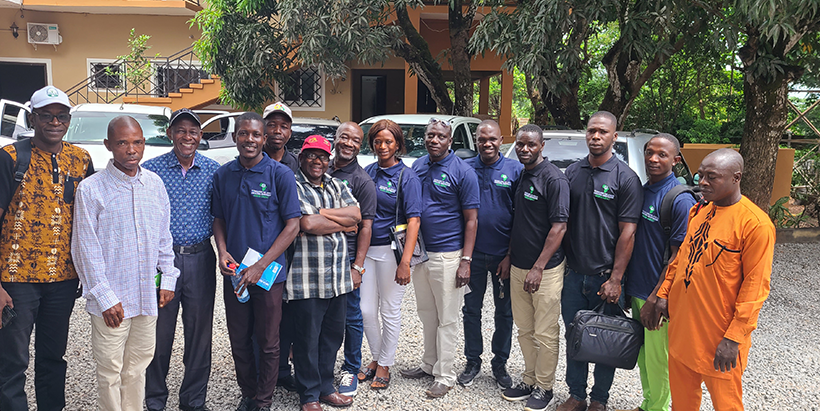
Partner Representatives.

To strengthen cassava seed systems in Guinea, the TAAT Cassava Compact completed a two-day training workshop in Conakry from 2 to 3 June 2025.

The training brought together 14 participants—including two women—from the Guinean Institute of Agronomic Research (IRAG). During the workshop, participants deepened their expertise in the identification, management, and production of healthy cassava planting materials.

The workshop focused on building capacity among technicians and seed producers, with sessions on integrated pest and disease management, Good Agricultural Practices (GAP), legal frameworks for cassava seed production, and practical pest and disease identification and field sampling techniques.

Training participants after the TAAT Cassava Compact workshop.

One of the highlights was a hands-on session in a cassava collection field, where participants applied what they learned in diagnosing diseases and pests with discussions and peer-to-peer learning.

Day 2 focused on the safe cross-border transfer of cassava cuttings, reinforcing the importance of safeguarding Guinea’s cassava sector against pest and disease risks. The training concluded with enthusiastic participant feedback and strong institutional support from IRAG leadership.

Training participants during field practice.

This sets the stage for broader impact, especially with ongoing discussions with Guinea’s Emergency Food Production Project (PPAU), which is focused on exploring opportunities to scale the adoption of Semi-Autotrophic Hydroponics (SAH) technology, enabling the large-scale multiplication of clean cassava seeds in the country.

This training signifies a strategic step in unlocking Guinea’s vast potential in cassava production—one clean seed at a time.

Contributed by Apollin Fotso

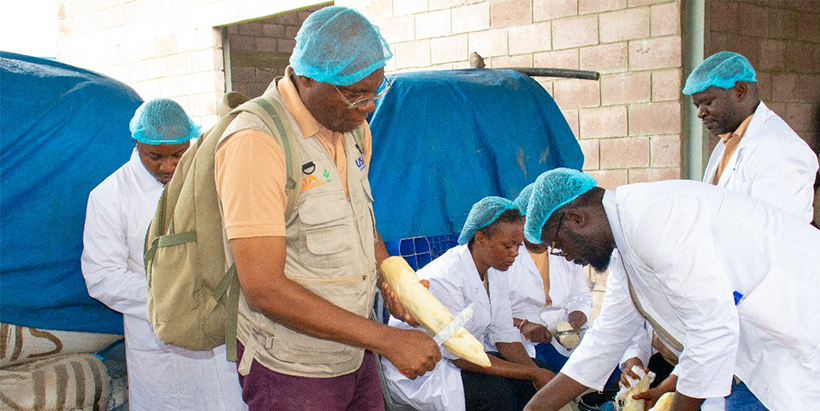
 Gregory Nwaoliwe, IITA Research Associate at the Nutrition and Health unit with participants during the practical session.
Gregory Nwaoliwe, IITA Research Associate at the Nutrition and Health unit with participants during the practical session.

Post-harvest technology plays a vital role in preserving crop quality, reducing losses, and enhancing the efficiency of agricultural value chains. For cassava, a key staple in tropical regions, effective post-harvest management is essential to transform the perishable root into safe, market-ready products. This reduces spoilage and improves food safety, farmer incomes, and sustainable development.

To strengthen coordination and efficiency within the cassava value chain, the IITA Cassava Value Chain Development Project, recently organized a workshop themed “Post-Harvest Management and Cassava Processing” in Kinshasa, Democratic Republic of Congo.

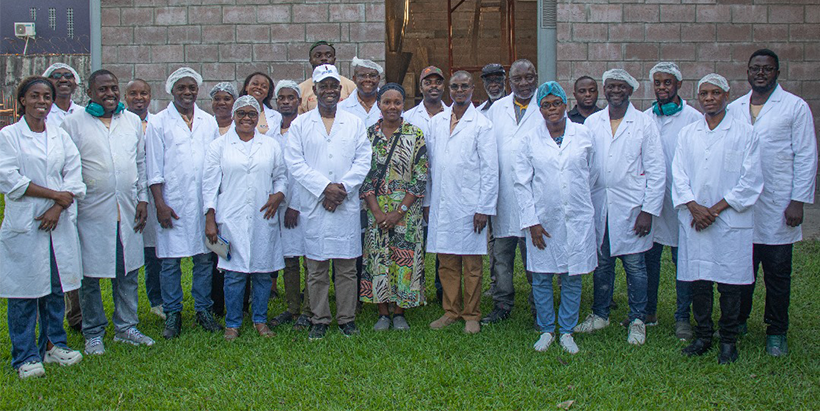
The two-week workshop included twenty-one participants; processing assistants, small- and medium-scale processors, and subject-matter experts. It focused on building technical capacity in cassava varietal selection, processing methods, hygiene and safety protocols, quality assurance, and value-addition techniques.

The training participants with the facilitator and company owners.

Participants engaged in interactive sessions, hands-on demonstrations, and field visits to functional cassava processing facilities – Nutripo, Limete Industrielle, and 10ùme Rue. These practical experiences helped reinforce operational knowledge and workflow best practices.

The key outcomes of the workshop included:

  • Improved knowledge of cassava processing and safety standards.
  • Enhanced collaboration among value chain actors.
  • Identification of challenges and development of practical solutions.
  • Commitment to adopting best practices for improved product quality and market access.

The participants also called for stronger partnerships with research institutions, cooperative networks to support bulk processing and marketing, and continued training opportunities.

Gregory Nwaoliwe, a Research Associate at the IITA Nutrition and Health unit, said, “By empowering processing assistants with technical skills and insights, the workshop contributed to improving productivity, quality, and livelihoods in the cassava sector.”

As demand for cassava products grow, such initiatives are essential to empower local processors and ensure a resilient, competitive value chain.

Contributed by Anita Akinyomade

Dr Elizabeth Parkes briefing the Minister of Trade and participants on IITA cassava work in Malawi. (Photo credit: CIP)

At the dissemination workshop for Malawi’s roots and tuber crops markets, the Malawi government has asked producers and processors to take advantage of the import ban directive on some products to produce more to meet the domestic market demand.

The order prohibits the importation of products, including potato tubers, maize meal, rice, fresh milk, and peanut butter.

IITA-CGIAR, under the Market-led Root and Tuber Crops for Agricultural Transformation in Malawi (RTC-MARKETS) project, funded by the Embassy of Ireland in Malawi, participated in the workshop that was also attended by the Minister of Trade and Industry, Vitumbiko Mumba, as guest of honor. The Minister emphasized the need to empower indigenous businesses and farmers by linking them to big markets to grow the economy, realizing that Malawi’s economy is mainly Agro-based.

Andrew Mtonga of the Department of Department of Agricultural Research Services (DARS) decries the consumption behavior and attitude that still favors cereals over roots and tuber crops and over-reliance on rain-fed production as some major factors contributing to the inconsistent supply of roots and tuber products in Malawi.

“There is also limited investment by the private sector in seed production. However, we need to shift towards climate-resilient crops and utilize lucrative market opportunities,” Mtonga noted in his presentation.

IITA distributing cassava stems to farmers in Malawi under the RTC-MARKETS project.

Despite the obvious dominance of maize, the area for cultivation of crops like cassava has steadily increased from 210,000 hectares in 2014 to 260,000 hectares in 2023, with production increasing from 5 million metric tons to 6 million metric tons between the same period.

Sweet potato has enjoyed a sharp increase in hectarage and production, almost doubling from 4 million metric tons in 2014 to above 7 million metric tons in 2023. However, this is still described as “below the potential levels” by experts. This is partly due to the low adoption of mechanization and limited value-added activities.

A survey conducted by International Potato Center (CIP) between May and November 2024 shows an estimated market value opportunity of over US$17 million in trade for Major roots and tuber crops and products.

Briefing the Minister, IITA’s cassava breeder, Elizabeth Parkes, noted the potential of cassava for food and nutrition security. She narrated how the High Cassava Quality Flour (HQCF) with high production can replace wheat flour as an import substitution. She describes cassava as a climate-smart crop that, with crop improvement and early generation work, will provide food and income, with the peels and waste able to create wealth in the animal feed and livestock industry.

As Malawi continues to celebrate the release of a new cassava variety, Chinangwa 3, Parkes notes the importance of a sustainable and resilient breeding system and the need to invest in genetic improvement programs to generate high-yielding crop varieties to enhance agricultural productivity and commercialization.

IITA showcased various products made from cassava and how cassava can complement maize by bringing out the favorite Nsima dish that Malawians enjoy the most.

The RTC-MARKETS project, led by the CIP, aims to boost the production and consumption of these crops by supporting the country’s agricultural productivity and commercialization. These activities directly support the Malawi government’s 2063 development blueprint, Agenda 2063 pillars.

Contributed by Emmanuel Mwale

In a significant step to reinforce national agricultural institutions through deeper collaboration with IITA–CGIAR, the Honourable Minister of State for Agriculture, Federal Ministry of Agriculture and Food Safety (FMAFS), His Excellency Dr Aliyu Abdullahi, paid a working visit to IITA’s headquarters in Ibadan on 30 April.

The Honourable Minister of State for Agriculture Dr Aliyu Abdullahi handholding IITA Director for West Africa Hub Michael Abberton for the urgent need for collaboration.

The IITA Director for West Africa Hub and Head of Genetic Resources Centre (GRC), Michael Abberton, outlined the institute’s contributions toward building a sustainable food system. He highlighted IITA’s integrated research efforts in breeding, agronomy, socio-economics, nutrition, and health. He also emphasized the importance of scaling innovations through robust partnerships with national institutions.

The IITA Program Lead for Food Security, Nutrition, and Health, Mercy Lung’aho, commended FMASF for its collaboration on the National Food Consumption and Micronutrient Survey (NFCMS) and reaffirmed IITA’s continued support for nutrition-sensitive agriculture through strategic partnerships with FMASF.

In his address, Dr Abdullahi expressed deep appreciation for IITA’s research-for-development initiatives and their positive impact across the continent. He stressed the urgent need to strengthen national agricultural research institutions and proposed the creation of a “mirror image” of IITA within these institutions. This initiative, he explained, would involve IITA “handholding” national institutions to build their capabilities, ultimately transforming Nigeria’s food system. “If we succeed in Nigeria, we will succeed in Africa,” the Minister stated.

The Honourable Minister of State for Agriculture Dr Aliyu Abdullahi with the Renewed hope cassava variety.

Dr Abdullahi also spoke on the sustainability of agricultural development projects, underscoring the need for long-term impact and resilience within the agricultural sector.

Regarding youth engagement, Dr Abdullahi highlighted the need to expand IITA’s programs to underserved regions, particularly Borno and Yobe states, which have been affirmed to have considerable agricultural potential. He stressed the importance of selecting participants who are already involved in agriculture. This is to ensure the effectiveness of training and capacity-building initiatives. Responding to this, the IITA Agribusiness Hub Manager, Waheed Oni, noted that the institute is actively engaging with donors to develop proposals to extend program coverage to northern Nigeria.


The Regional Hub Director for Fertilizer and Soil Health in West Africa and the Sahel, Lionel Kadja, presented the Hub’s mission and initiatives during the visit. He underscored its vital role in coordinating technical support to countries across the region in fertilizer and soil health management. In line with this, Dr Abdullahi referenced the Nigerian Farmers Soil Health Scheme, commending IITA for hosting and managing the program’s research data. He emphasized the importance of this partnership and called for enhanced collaboration to ensure broader and more effective implementation.

Kadja reaffirmed the Hub’s commitment to advancing soil health initiatives and continuing collaboration with FMARD.

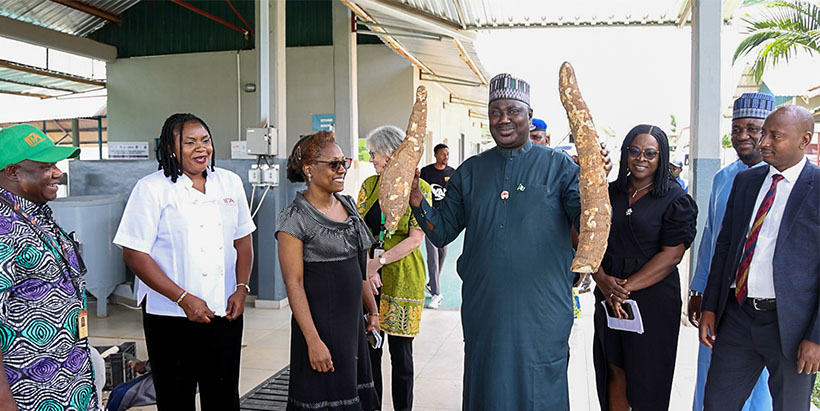
Dr Abdullahi also visited the IITA Cassava unit, where he expressed admiration for the improved cassava varieties and technologies on display. He stated, “I would develop a program around the ‘Renewed Hope,’ featuring the latest cassava variety, and aligning the program with the Nigerian President’s agricultural agenda. This initiative, he said, would be disseminated to smallholder farmers as part of a broader effort to transition Nigeria from conventional to modern agricultural practices.”

Contributed by Anita Akinyomade