
Bees are one of the most hard-working creatures on earth. Bees do so much for our planet, including pollinating flowers, fruit and food crops, and even some trees. They produce the nutritious sweet syrup called honey and contribute to the earth’s biodiversity and ecosystem stability. Bees could constitute a source of livelihood for anyone who learns to keep bees for honey production.
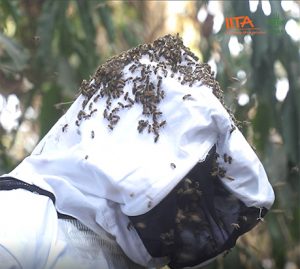
Beekeepers will do well to love nature, exercise patience, and possess tender care and a sense of duty. With training from experts, investment capital, and a conducive environment for the bees, anyone can start.
The IITA Forest Center keeps bees in several hives in the wild for honey extraction. It also offers training to intending beekeepers. We recently harvested about 35 liters of honey from four hives, worth NG₦210,000 (approximately US$500).
A healthy, well-protected, and thriving hive can produce between 20 and 100 liters of honey annually. However, a poorly maintained hive will be exposed to infestations and attacks from bee predators, such as bears, birds, mice, beetles, moths, and fungi. This is bad for business.
Bees need enough space in their hives to function maximally. They keep producing honey, which is also their food, even after storing enough to last them a long time. If bees run out of space in their hives, they swarm out to search for larger living spaces. This is also bad for business. Bees need enough space to be functional. One way is to check in the hives to collect stored honey regularly. Another way is to add shallows to the hives when the bees run out of space. Shallows are frames set on top of the main hive, with space only big enough for worker bees to pass through. The added space only serves as a vault to store extra honey.
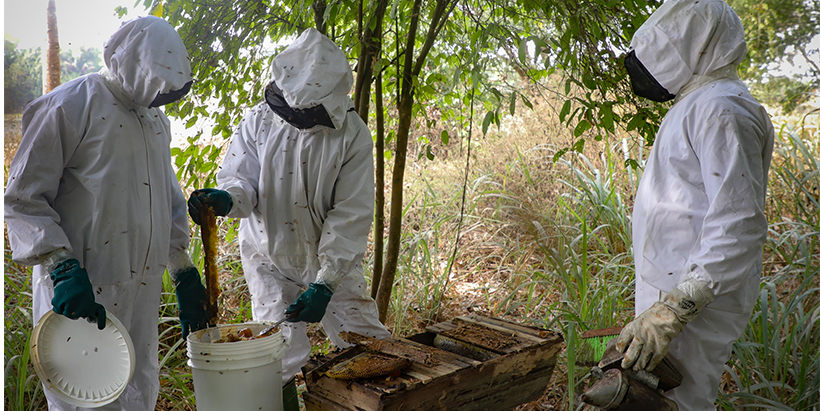
When collecting honey, make sure not to take the whole lot at once. Since the honey is food for the bees, they would read complete extraction as a threat to their safety and desert the hive for a more protective space. A healthy colony will give a beekeeper a huge honey harvest, and it will serve to pollinate surrounding vegetable gardens.
Bees can travel an average of three miles from their hives looking for food. They forage for nectar from flowering plants, pollen from pollen-producing plants, and resin from trees used to make propolis—the brownish substance bees use to seal open spaces in their hives. These three are essential for a healthy and thriving beehive. The nectar gets converted to honey, while the pollen feeds young bees.
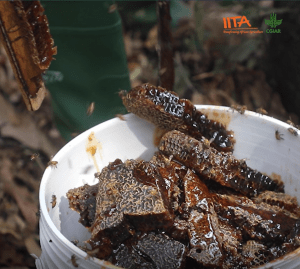
If looking to set up a beehive for honey production, look out for these things: a teeming population of nectar and pollen-producing plants and trees. Other equipment needed includes a constructed hive, a smoker to ward-off bee attacks, protective jackets, long gloves, and a hive tool, which looks like a crowbar to lift the hive lid during inspection or harvesting.
Contributed by Folake Oduntan
Contributed by
Recent stories