
Catalyzing change through youth capacity building to unlock Africa’s soybean potential
12 January 2026
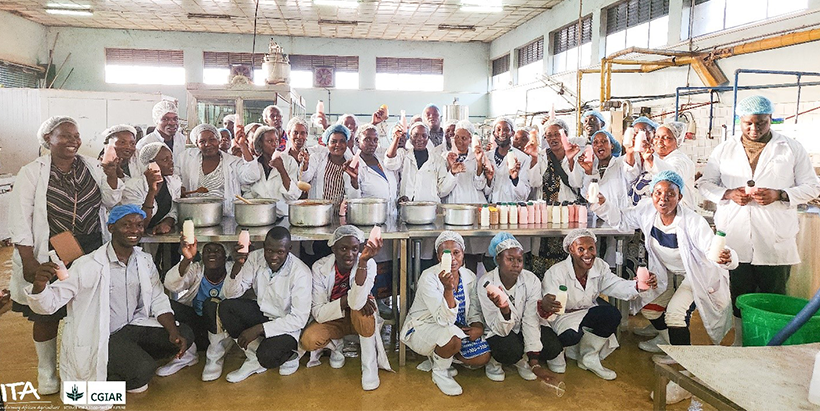
In Uganda, value addition and product development are crucial for enhancing agribusiness competitiveness and sustainability. However, many youths and women in agri-food enterprises face challenges in processing, product formulation, and quality assurance, limiting their ability to meet market standards and scale their businesses. To address this, IITA–CGIAR, through the Technologies for African Agricultural Transformation (TAAT) Soybean Compact and ENABLE TAAT Youth Compact, in collaboration with Makerere University and Smart Foods Uganda Limited, organized a 5-day Training-of-Trainers (ToT) workshop on Food Processing and Value Addition under the TAAT Soybean project. This training hosted by Makerere University’s Department of Food Technology and Nutrition in Kampala, Uganda brought together 60 youths, women and men. The training objectives were multifaceted, focusing on strengthening technical skills in formulating diverse soy-based products, building knowledge and competencies in Good Hygiene and Manufacturing Practices (GHP/GMP), and equipping trainees with practical experience in the manufacturing of soy-based products.
Africa strategy (2016-2025) aims to boost agricultural productivity across Africa by rapidly delivering proven technologies to millions of farmers. TAAT also seeks to generate an additional 120 million metric tons (MT) of agricultural produce and improve the livelihoods of over 40 million smallholder farmers across Africa by 2025. Specifically, the TAAT Soybean Compact focuses on building capacity and providing technical assistance to National Agricultural Research and Extension Services (NARES) and the private sector, enhancing soybean production and productivity for improved nutrition and income.
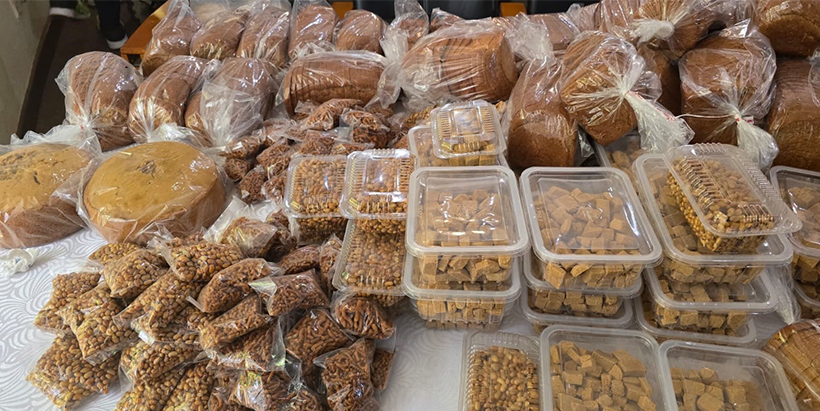
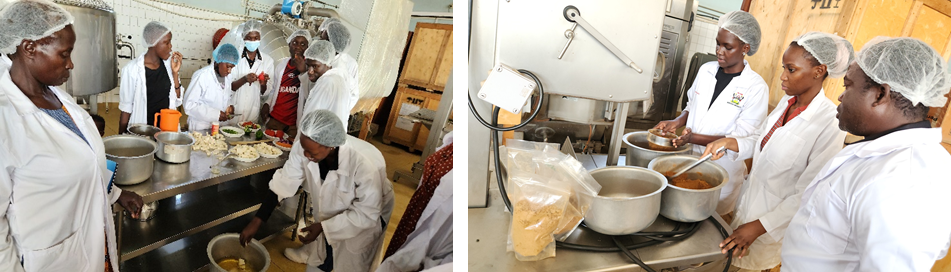
The training utilized a mix of theoretical instruction and rigorous hands-on practical sessions in the Makerere Food Technology and Business Incubation Centre (FTBIC) pilot plants, covering various aspects of soy-based product manufacturing. Experts emphasized the delicate balance of temperature and ratios required for dairy alternatives, protein concentration and coagulation techniques, and fortifying common snacks with soy flour to increase nutritional value. Participants learned about soy milk and yoghurt processing, using a ratio of 1 cup of soybean to 6 cups of water, and pasteurizing the milk at 90°C to 100°C to inactivate trypsin inhibitors and destroy harmful microorganisms. They also learned about tofu production, focusing on protein concentration and coagulation techniques, including the use of Magnesium Chloride as a coagulant. Additionally, participants learned about soy-enriched baking, experimenting with substitution levels of soy flour in bread and snacks, and dry processing of soy flour and coffee, involving roasting, grinding, and hygienic packaging.
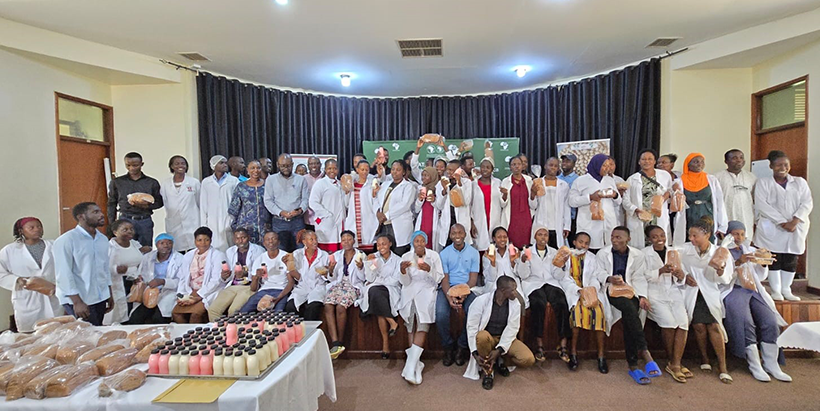
Facilitators emphasized the importance of collaboration, innovation, and food safety, setting the stage for a new wave of agripreneurs to make their mark. Martin Ssali, Director of Smart Foods Ltd, encouraged young minds to adopt a mindset of abundance, reminding them that “there is enough space for everyone to fly,” and urging them to collaborate rather than compete. Prof. Ivan Mukiisa Muzira, Head of the Department of Food Technology and Nutrition at Makerere University, drove home the crucial point that food safety is the cornerstone of the food business, extending an open invitation to participants to utilize the university’s facilities, saying, “This equipment belongs to you… Don’t let that knowledge stay in those books.”
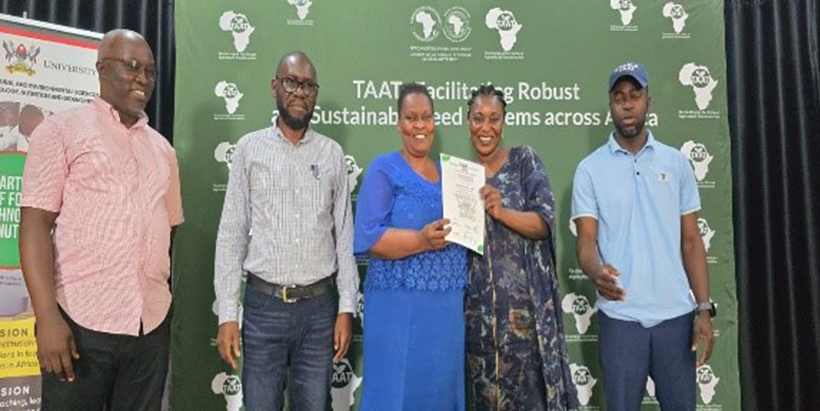
Emphasizing the power of partnerships, John Obaniyi of IITA-ENABLE TAAT Youth Compact challenged participants to innovate and compete with established brands, noting, “Starting alone might be challenging.’ ‘What happens when you have a partner? You can share the burden.”
The way forward involves the youth translating the skills and knowledge gained from the training program into viable agribusiness ventures. Participants are expected to start small-scale production using the formulations developed, leveraging access to FTBIC equipment for initial production runs. Strategic partnerships with Makerere University and Smart Foods Ltd will provide market connections and opportunities for growth. A monitoring and learning framework will track performance, technology adoption, and enterprise growth, guiding future interventions and scaling strategies. With this support, the 60 certified trainers are poised to make a significant impact on their communities, contributing to the growth of the soybean value chain and improving nutrition and income levels.
Contributed by Moureen Awori (IITA-Uganda), Welissa Mulei (IITA-Kenya/TAAT), Beckie Nakabugo (IITA-Uganda/TAAT), Oluwaseun Omikunle (IITA-Nigeria/TAAT), John Obaniyi (IITA-Nigeria/TAAT), Ivan Mukiisa Muzira (Makerere University) and Martin Ssali (Smart Foods Ltd).
