
CGIAR supports RUFORUM at second Triennial Conference
20 August 2024
With the growing population across Africa, the race to address critical challenges in human capital development intensifies. Governments and development agencies are deploying various initiatives to tackle the deficiencies in the human capital sector.
The human capital sector, comprised of the teeming youth population, is pivotal to the economic development of African countries. Yet, the youth population is faced with a myriad of challenges. For Africa to develop its human capital towards implementing its development agenda, it is crucial to address these challenges by providing the relevant human resources and development solutions.
In the last 20 years, the Regional Universities Forum for Capacity Building in Agriculture (RUFORUM) has been driving transformative efforts, catalyzing sustainable and inclusive agricultural development to feed and create prosperity for Africa through universities in 40 countries on the continent.
Hundreds of young scholars benefit from the programs and initiatives under the RUFORUM platform, and over 300 technologies developed from these programs are delivering impact across the continent.
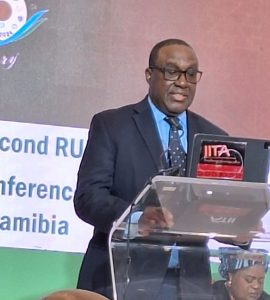
RUFORUM organized its second Triennial Conference in Namibia from 12 to 16 August to mark two decades of driving change in Africa’s agricultural sector. Themed “Operationalizing higher agriculturaleducation and research ecosystems for innovation, industrialization, and economic development in Africa: A call for action,” the conference enabled education, research, and agricultural ecosystem actors to showcase and present their key findings, share lessons and inform each other on key actions required to harness science, technology, and innovation for Africa’s development.
CGIAR’s presence at RUFORUM’s second Triennial Conference marked a show of support, with the CGIAR Regional Director for Continental Africa and IITA Director General Dr Simeon Ehui’s speech expressing solidarity. Dr Ehui commended RUFORUM’s impactful work on the continent at the 20th symposium while speaking at the opening symposium, which was themed, “Educating Africa: Implementing transformative higher agricultural education to meet Africa’s human capital needs.” He said that by fostering strong partnerships with institutions like RUFORUM and University Mohammed Polytechnic VI (UM6P), CGIAR centers aim to ensure that the latest advancements in agricultural research are accessible to students, educators, researchers, and policymakers alike.
“The role of higher agricultural education extends beyond imparting knowledge; it encompasses the empowerment of individuals and communities. It is about equipping the next generation with adaptive skills, critical thinking abilities, and innovative mindsets necessary to drive change. It is about cultivating leaders who are knowledgeable and also passionate and committed to the sustainable development of our continent,” DG Ehui said.
The second Triennial Conference brought together various stakeholders and partners, during which issues like harnessing digital innovations to shrink agricultural value chains were discussed.
With Africa’s agricultural sector holding tremendous potential to transform the lives of millions, the importance of collectively harnessing the inherent potential towards building and nurturing a cadre of well-trained, innovative, and adaptive professionals who can tackle the multifaceted challenges of climate change, food insecurity, and policy engagement was the highlight of CGIAR’s presence at the conference.
RUFORUM’s mission is to strengthen the capacities of universities to foster innovations responsive to the demands of smallholder farmers through the training of high-quality researchers. CGIAR reaffirmed its dedication to this cause and the output of impact-oriented research and the maintenance of collaborative working relations among researchers, farmers, national agricultural research institutions, the private sector, and governments.
DG Ehui called for sustained collaboration, investment, and steadfast commitment to excellence to create a resilient and sustainable agricultural sector that is equipped to meet the demands of a growing population, ensure food security, and foster economic growth on the continent.
Contributed by Timilehin Osunde
