
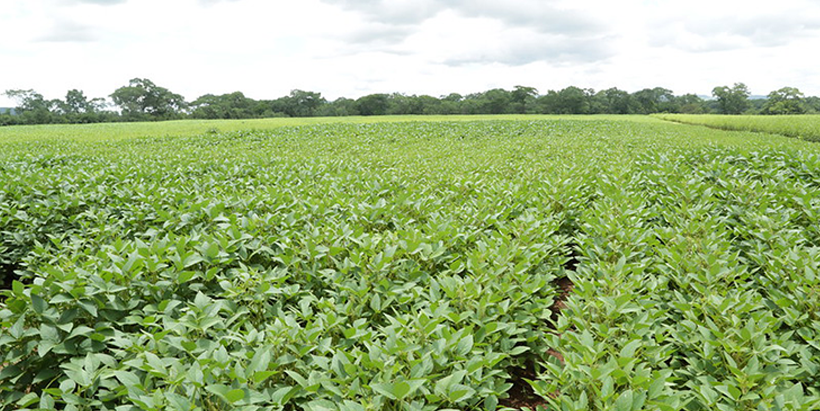
In an era when the challenges of food security, climate change, and sustainable agriculture continue to define global priorities, stakeholders in the plant science space gathered for an engaging mini-symposium that offered deep insights into how innovation in plant science and research can shape the future of agriculture and food systems in Africa and beyond.
The hybrid mini-symposium themed; “Plant Science and Innovation – Bridging Discovery and Application”, a side event of the Cassava Source Sink (CASS) project meeting, hosted by IITA-CGIAR, brought together students, researchers, and scientists across IITA hubs as well as donors. Seven distinguished speakers through their different presentations offered insight on how technological breakthroughs and innovations have impacted plant science, highlighting key turning points, prospects, and a thorough grasp of plant health regulations.
Uwe Sonnewald, the chair of biochemistry at the University of Friedrich-Alexander-Universität Erlangen-Nürnberg (FAU), shed light on the genetic mechanisms that underlie heat tolerance in potatoes. It was shown that tolerance genotypes exhibited early tuberization and high expression of SELF-PRUNING 6A (SP6A), a key tuberization genes and heat tolerance is associated with a reduced expression of defense genes like terpene synthase. Given climate change, global food insecurity, understanding the genetic of heat tolerance is essential for sustainable agriculture in sub-Saharan Africa.
Wolfgand Zierer, a senior scientist at the University of Friedrich-Alexander-Universität Erlangen-Nürnberg (FAU) in simple terms, explained how biotechnological concepts are tested in cassava. Ideas are identified, introduced into DNA constructs, transformed, and taken to the field for testing. Through this approach, several genes have been tested followed by target phenotyping measurement. Wolfgang and colleagues, whose research focuses on improving the source-since relationship, reported the favorable role of ATK2, a plant gene encoding a kinesin motor protein, in carbon allocation, and its impact on tissues under drought stress. Evidence of symplasmic phloem loading was highlighted. Understanding and manipulating source-sink relationships can increase the efficiency of carbon capture (source), its conversion to sugar, and its movement through the vascular system to the root (sink), where the sugar is converted and stored. This will increase the root yield of the plant.
Field phenotyping as shown by Onner Muller, the deputy head of field phenotyping at the Forschungszentrum Jülich research center plant phenotyping is a cornerstone of sustainable agriculture. The increasing use of high-throughput phenotyping and robotic platforms will significantly enhance data collection efficiency and quality, resulting in greater precision in crop evaluation.
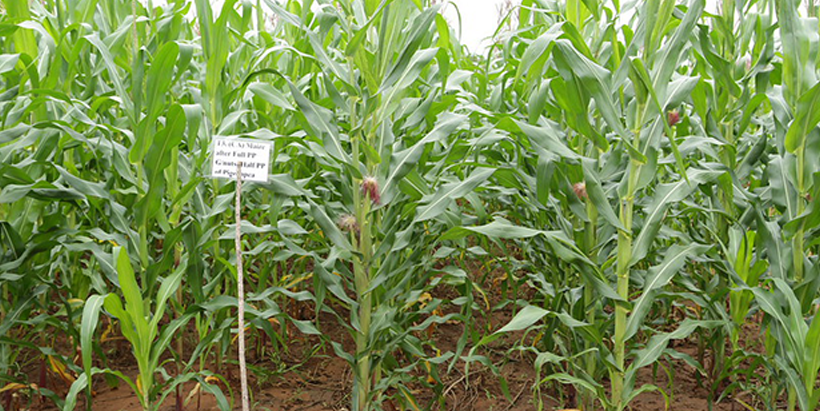
“To close the production gap, gene editing is crucial for important staple crops, especially in sub-Saharan Africa,” said Leena Tripathi, Head of the Biotechnology Program at IITA, and Director of IITA Eastern Africa Hub. At IITA, the technologies are being implemented to develop superior crop cultivars, including Bambara groundnuts, rice, tomatoes, bananas, and yams. Bananas have seen the greatest advancements, with a focus on pests and diseases and promising results.
Crop improvement is a catalyst for transforming the agri-food system. Modernizing breeding programs is therefore essential to meeting the evolving needs of end-users noted Hapson Mushoriwa, head of breeding at IITA. As evidenced by the numerous improved varieties released, IITA’s success has been fueled by operational innovations, the integration of modern tools and technologies, advanced breeding techniques, and the routine implementation of best practices to optimize the breeder equation and the breeding schemes. Strategic partnerships, human and biophysical capacity, and adaptability to constant changes have also been key factors.
Insight on plant health regulatory framework is crucial for safe and effective, and responsible deployment and agricultural innovations. The program lead for plant health, Lava Kumar, talked about the various regulations in place and how the plant health unit, which operates in multiple countries, oversees all operations pertaining to plant health. According to Kumar, the unit oversees the movement of germplasm at IITA and ensures compliance with all regulations.
Discussions focused on how integrated seed health systems generate high-quality planting materials in large quantities and the IITA health unit’s diagnostic capabilities, which range from traditional to more advanced methods. A nature-based strategy for sustainable pest management is also incorporated into the program. Other envisioned strategies include RNA interference (RNAi) for pest management and precision pesticide distribution.
Donors are key to the future of plant science. Financial resources enable innovation, support long-term research to address pressing global challenges, and bridge the gap between science and society. Brigitte Weston, the director of product development for Gate Ag One talked about the organization’s priories, which, include accelerating research in important area such as carbon-fixing photosynthesis, yield protection, carbon assimilation and transport, and carbon-fixing bacterial symbiosis. The organization focuses on smallholder farmers who need innovations the most and strives to ensure that the products reach local markets. The following six crops are given priority: soybean, maize, sorghum, rice, and cassava. She underlined the importance of partnerships with key actors, including academic institutions, international organizations, researchers, the government, non-governmental organizations, regulators, and market actors to achieve the targets. The Alliance for Cowpea Improvement in Africa (ACIA), Cassava Whitefly Control (CWC), Enabling Nutrient Symbioses in Agriculture (ENSA), and Realizing Increased Photosynthesis Efficiency (RIPE) are a few of their current collaborations. Two IITA projects: Cassava Source Sink (CASS) and increased photosynthetic efficiency in cassava through implementation of a carbon-negative photorespiration bypass (TaCoCass) are currently funded by gate Ag One.
Africa’s agricultural potential is immense. Investing in research, adoption of moderns’ tools and technologies, scaling and access to technologies are key to building adaptive and sustainable food systems. The symposium served as a platform for students and young researchers to engage directly with global experts, exchange ideas, and gain perspectives on navigating the evolving landscape of plant science.
As the symposium concluded, there was a renewed sense of purpose that the breakthroughs of plant science must continue to bridge the gap between the laboratory and the field, ensuring that every discovery contributes to a more food-secure and climate-smart future.
Contributed by Edwige Gaby-Nkouaya Mbanjo and ’Timilehin Osunde
Contributed by
Recent stories