
IITA–CGIAR has reaffirmed its commitment to global partnerships that support its mission of alleviating poverty and ensuring food security for millions of farm families across sub-Saharan Africa.
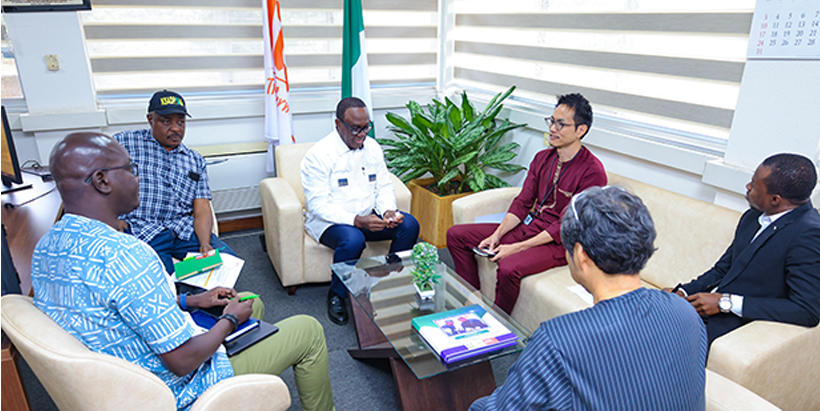
On 26 August, IITA welcomed the Chief Representative of the Japan International Cooperation Agency (JICA) Nigeria Office, Yuzurio Susumu, to its headquarters in Ibadan. Danbaba Dogara, JICA Technical Staff for the CD Seed Project; Stephen Nwanya, JICA Program Coordinator for Education and Long-Term Training; Hikaru Kusakabe, JICA Basic Education Advisor at the Universal Basic Education Commission, accompanied him.
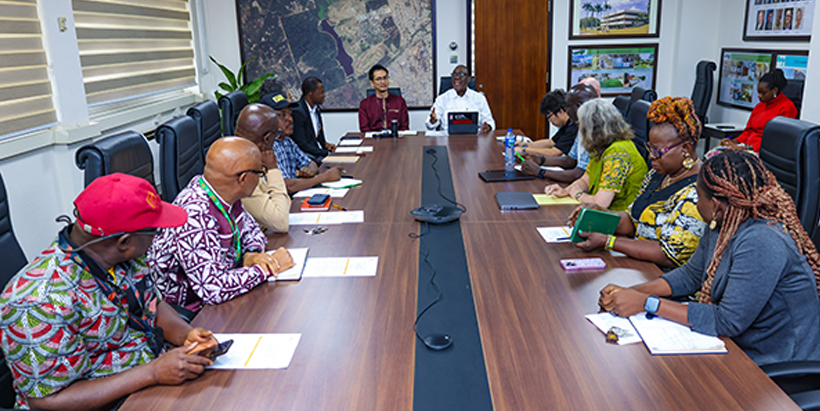
The visit aimed to strengthen the long-standing partnership between the two organizations and explore future areas of collaboration. In his remarks, the IITA Director General, Dr Simeon Ehui, emphasized Japan’s role as a trusted partner of Africa, highlighting that strong partnerships are central to advancing food security and agricultural transformation on the continent.
The Director of IITA’s West Africa Hub, Professor Michael Abberton, gave an overview of the institute’s hubs, stations, value chains, and projects. This was complemented by an IITA documentary that showcased the institute’s diverse initiatives, including its work in value chains, youth in agribusiness, gender integration, and ongoing research and development projects.
Impressed by the presentation, JICA’s Country Coordinator noted that IITA and JICA share similar goals in agriculture, food security, youth engagement, and support for smallholder farmers. He outlined JICA’s three key pillars of collaboration: economic development (with agriculture as a major focus), social development (including education), and peace, stability, and governance. “We would like to observe IITA’s facilities and discuss future collaboration,” he stated, adding that agriculture remains JICA’s largest intervention area and requires strong partnerships with organizations like IITA.
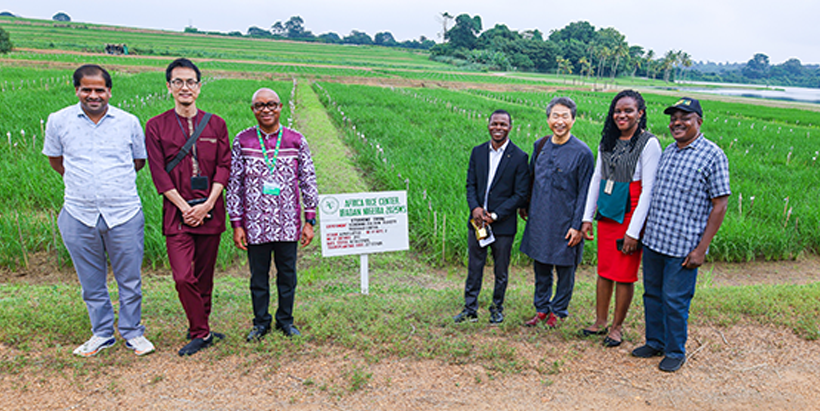
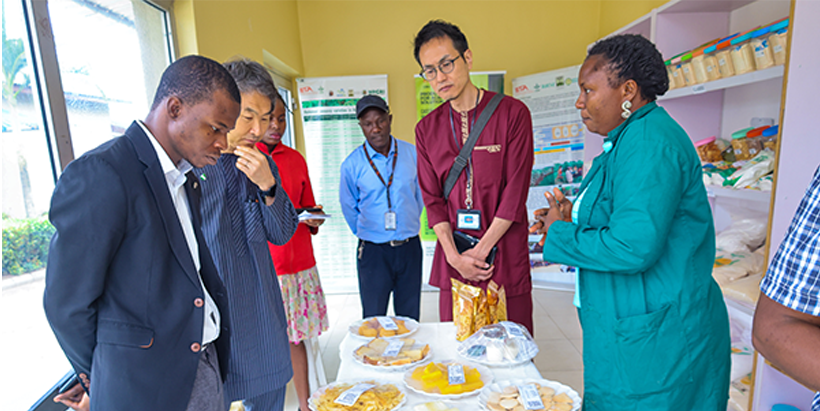
The delegation toured IITA’s facilities, including the Cassava Processing Unit and the AfricaRice trial field. They expressed admiration for the diversification of cassava products and praised IITA’s collaboration with the private sector, describing it as an effective pathway for driving innovation and development to the public. “This has opened our eyes to what we can do in collaboration with IITA in the future,” said JICA’s Country Representative.
Highlighting potential areas for collaboration, the JICA President emphasized capacity development and partnering with AfricaRice through IITA for rice production, which is a core part of their operation. He also revealed plans to integrate lessons from IITA’s private sector partnerships into JICA’s upcoming project on two-step loans for farmers, implemented in collaboration with financial institutions.
Wrapping up the meeting, Dr Ehui emphasized the importance of continued dialogue to ensure the success of future collaboration. He reiterated IITA’s commitment to partnerships that promote sustainable food systems, improve livelihoods, and transform agriculture across Africa.
Contributed by Ochuwa Favour Daramola
Contributed by
Recent stories