
From 14 to 15 April in Kinshasa, IITA launched the Strengthening the Supply of Improved Seeds and Improved Public-Private Partnerships in Central Africa (SISCA) Project under the patronage of the Minister of State for Rural Development, His Excellency Francois Rubota Masumbuko. The IFAD-financed SISCA is a regional project, which will be implemented in Cameroon, the Democratic Republic of Congo, and the Republic of Congo.
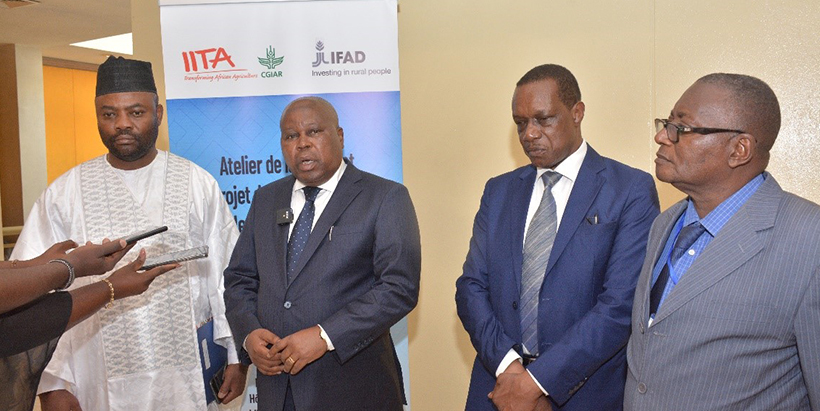
SISCA is a support project for the leading players in the seed sector, namely agricultural research organizations, private sector operators, farmers’ organizations, and communities involved in the seed supply chain. It aims to provide improved, quality seed at competitive prices for smallholder farmers in the three countries, which will impact the Central African region. The core foundation of the SISCA project is the creation and strengthening of the Public-Private Partnerships and the collective learning processes on seed value chains in the region.
IFAD’s DRC Representative, Dr Valentino Achancho, recognized that sustainable increases in agricultural productivity are necessary to achieve food and nutrition security and inclusive economic growth in Central Africa but noted that this would not be possible without a thriving seed sector. “IFAD believes that concomitant and coordinated actions need to be implemented in six priority areas to address current challenges and develop the seed sector, namely: (i) the governance of seed value chains; (ii) the structuring and functioning of seed markets; (iii) the research and development; (iv) seed policies; (v) capacity development of actors and (vi) funding mechanisms. The SISCA project will contribute to these areas,” he said.
The IITA regional office in Kinshasa will coordinate the Project. Country facilitation will be established in Cameroon and the Republic of Congo, where consultants specializing in seed technology and business will be working with the stakeholders.
The SISCA Project has the potential to have a positive impact on the national food and nutrition security objective of the country concerned once the improved seeds and planting material have reached the target farmers. The adopted model should empower seed producers, youth, and women to seize emerging economic opportunities by providing them with technical capacity building.
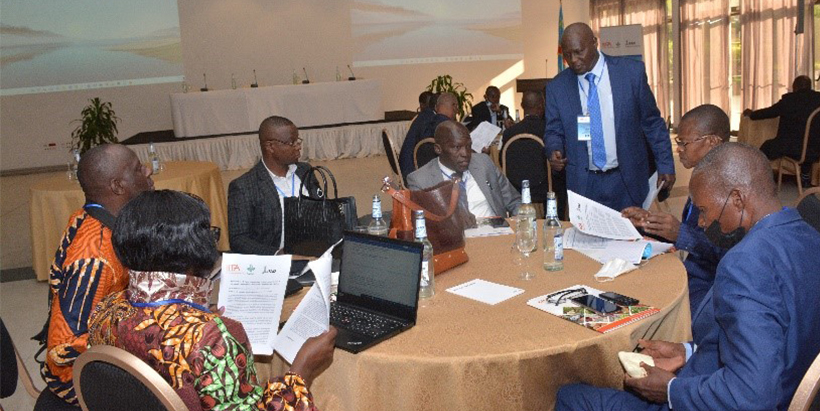
At the end of the workshop, delegates delivered the activity plan for implementing the Project in Cameroon, Congo-Brazzaville, and the Democratic Republic of Congo.
Contributed Michèle Kimpwene
Contributed by
Recent stories