
In a recent high-profile event in Sierra Leone’s capital, Freetown, IITA Director General and CGIAR Regional Director for Continental Africa Dr Simeon Ehui signed a 3-year Memorandum of Understanding (MoU) with the Sierra Leone Minister of Agriculture, Honorable Henry Kpaka.

The MoU signing took place during the launch of two milestone programs—Food Systems Resilience Program (FSRP) and Pathways to a Transformation of the Agri-Food Sector—that will reshape the agricultural landscape in the country by targeting three major components.
This is coming at a time when the Sierra Leone government is driving the implementation of the Agricultural Transformation Agenda (ATA) aimed at improving food systems, increasing smallholder farmers’ productivity, and strengthening the value chain while collaborating with several key stakeholders.
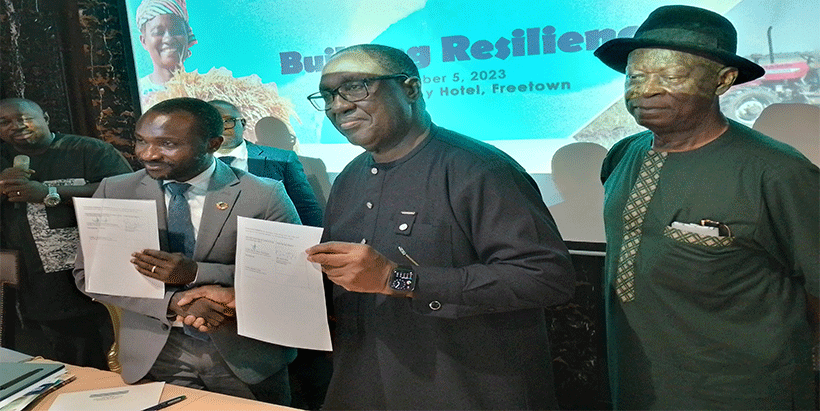
With IITA’s strategic technical role, the MoU will create the foundation for scaling technologies in alignment with the Sierra Leone government’s “Feed Salone” campaign and the ATA.
Speaking at the signing, Sierra Leone Chief Minister Honorable David Sengeh commended the initiation of the MoU, adding that there is a need for collaborative efforts among stakeholders in the country. “We need reliable partners that will be able to stand with us in these times that we seek to improve the food system in Sierra Leone,” he said.,

Dr Ehui expressed optimism for the future of Sierra Leone’s food systems, emphasizing the need for innovation scaling and climate adaptation in implementing the programs. “I will continue to champion the important role of science—through research and innovation—and climate-smart agriculture, which is critical to the work of transforming the national food system and providing the technologies and solutions that millions of farmers need,” said Ehui.
Sierra Leone Minister of Agriculture, Honorable Henry Kpaka, said the signing of the MoU will ensure the delivery of measurable and realistic results.
The implementation of the FSRP, which IITA helped in undertaking the study on pathways to transformation of the agri-food sector, will contribute significantly to the agricultural sector and strengthen specific value chain development in Sierra Leone.
With the FSRP project creating climate-smart agricultural solutions and addressing phytosanitary issues, especially in the seed systems, farmers can produce healthy foods and increase productivity in the country.
Contributed by Timilehin OsundeContributed by
Recent stories