
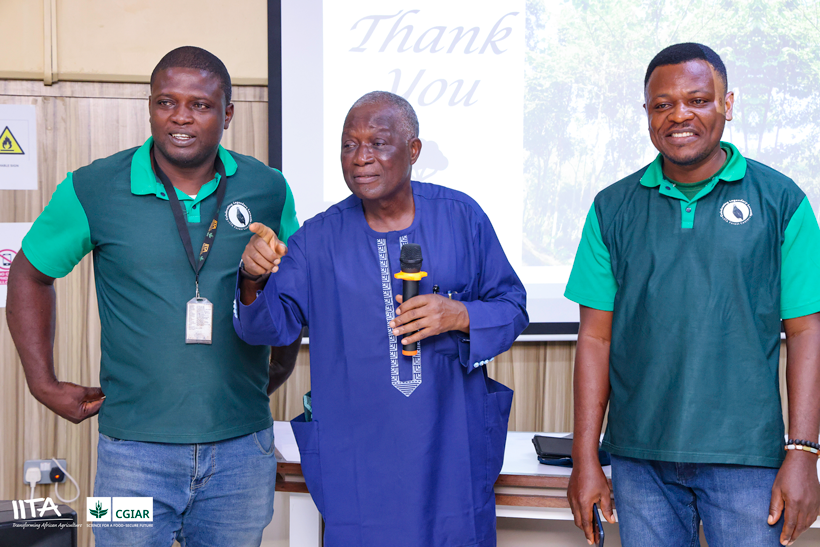
IITA Forest Center hosted its inaugural Tree Heritage Park (THP) Open Day recently, bringing together students, researchers, conservationists, and nature lovers for a day dedicated to celebrating Nigeria’s native tree species and strengthening public commitment to environmental stewardship.
The Open Day supports the Center’s continuous mandate to conserve Nigeria’s threatened tree species and upholds the ArbNet Level II accreditation the Park received in January 2022—Nigeria’s first internationally accredited arboretum, the 11th in Africa, and the 500th worldwide.
Located within the 350-hectare IITA Forest Reserve, the five-hectare THP, fondly called the “Noah’s Ark,” hosts more than 100 indigenous species. These include culturally important and endangered trees such as Iroko (Milicia excelsa), African Baobab (Adansonia digitata), African Locust Bean (Parkia biglobosa), and Araba (Ceiba pentandra), where the shy, yellow-billed kite often nests. Many other species in the park were recalled from landscapes affected by urban expansion, illegal logging, storms, and the growing pressures of climate change.
Dr David Ladipo, IITA Forest Center patron, who has contributed to conservation work in the Reserve since the 1990s, introduced the participants to the Park’s evolution through a documentary and a presentation. He emphasized the THP’s significance, noting, “This living gene bank is more than a collection of trees; it is a rescue mission. Many of these species would have disappeared without the decades of deliberate conservation efforts here.”
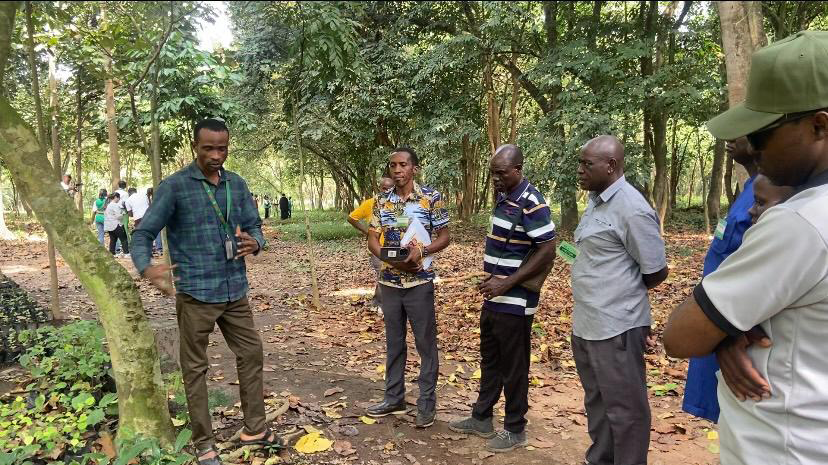
Following the classroom session, participants embarked on a guided tour of the Park. Led by IITA Forest Center staff, the tour highlighted the ecological, cultural, and scientific value of the species conserved in this living genebank, as well as the foundational work of conservation champions such as Phil Hall, Prof Shiwuwa Manu, Dr David Ladipo, Dr John Peacock, Deni Bown, and, more recently, Dr Adewale Awoyemi, the IITA Forest Center Manager.
Speaking on behalf of the Forest Center Manager, Ademola Ajayi underscored the urgency of protecting Nigeria’s native biodiversity. “Our trees are linked to our food. Our food is linked to our health. Many native trees support the growth of indigenous vegetables, fruits, and leaves,” he said. “Destroying our natural forests affects our economy, our food systems, our health, and our cultural heritage. What began as the conversion of an old arboretum into a Tree Heritage Park has now grown into a rallying point for conservation, tourism, and adventure in Ibadan—creating new opportunities for awareness and income generation.”
Professor of Pediatric Hematology and Guest Speaker, Prof. Adekunle Adekile, a passionate naturalist and photographer, encouraged participants to take personal responsibility for environmental protection. “This Park shows how passion-backed science can transform conservation. When communities, students, and experts come together, we create a future where nature and people thrive together,” he said, adding that greater public awareness is vital to addressing myths and deepening appreciation for biodiversity.
Younger participants shared enthusiasm. Adesina Abdul Rahman from Amao College said, “I enjoyed the tour around the THP. I now understand the value of trees and how to plant them. With this knowledge, I plan to become an advocate for conservation among my schoolmates.”
Aderonke Oyewumi from Ibadan International School added, “Today I learnt that every small effort makes a difference. We can protect our environment by joining conservation clubs, recycling plastics, and planting more trees.”
The event also emphasized the Forest Center’s broader impact, including raising seedlings for the restoration of nearly 1,000 hectares of degraded landscapes in Olokemeji, supporting reforestation projects across Nigeria, and nurturing more than 63 Schools Conservation Clubs that groom young environmental stewards.
As visitors departed, many expressed renewed optimism for the future of Nigeria’s forests. The IITA Forest Center remains committed to documenting endangered species, collecting seeds and wildlings, and producing training resources to guide ecological restoration nationwide ensuring that Africa’s native trees continue to stand as symbols of identity, resilience, and pride.
Contributed by Folake Oduntan
Contributed by
Recent stories