
In a collaborative effort, IITA–CGIAR and the Tokyo University of Agriculture (Tokyo NODAI) scientists have revealed a remarkable discovery of a bacteria sourced from yams that is poised to transform crop growth in Africa, enhancing food production across the continent. They unveiled this at the jointly organized Knowledge Café—an insightful seminar on a unique theme, “Using bacteria from yam to enhance crop production in Africa.” This special event marked the maiden edition of the seminar series at the IITA headquarters in Ibadan, Nigeria, on 29 August.

IITA Communication Office Head Katherine Lopez revealed that the gathering represented a rebranded version of the Knowledge Sharing event, a monthly series dedicated to research topics. Lopez emphasized that the café’s primary purpose was to establish a dynamic platform for knowledge and idea exchange among the Institute’s staff.
Addressing the collaboration between IITA and Tokyo University, IITA Yam Agronomist Ryo Matsumoto shed light on their partnership, starting in 2012. The partnership was renewed in the present year, with a new collaboration research project commitment spanning the next three years, specifically focusing on yam.
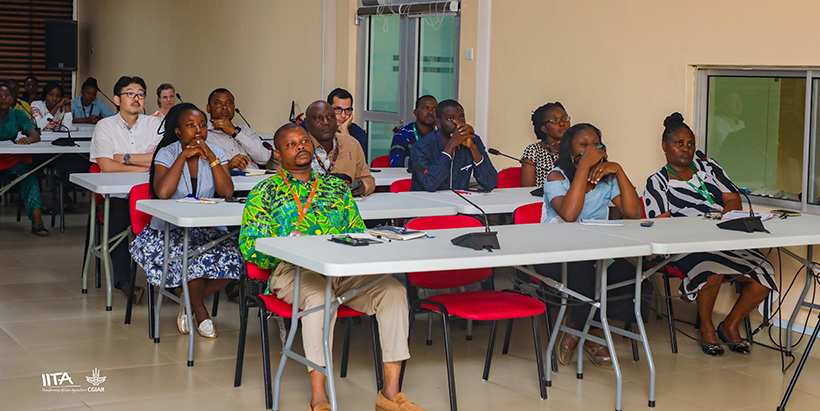
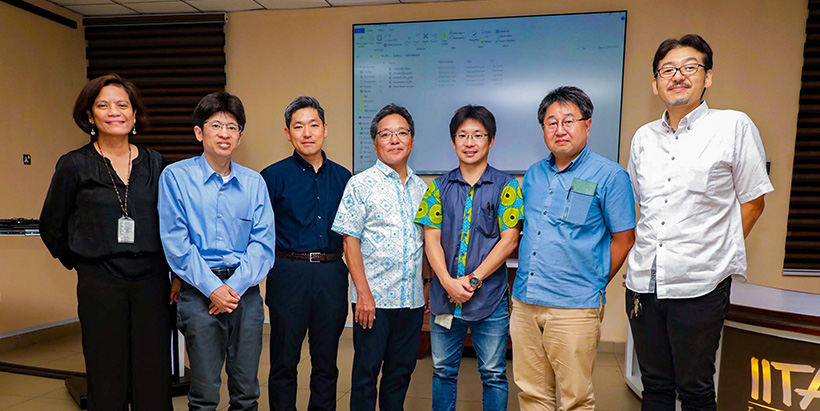
The seminar featured four representatives from Tokyo NODAI, the first two of whom were IITA alumni (Prof Hironobu Shiwachi and Prof Hidehiko Kikuno). Shiwachi discussed “Plant growth promoting bacteria (PGPB) in yams,” while Kikuno explored “The effect of PGPB inoculation on the growth of water yam and upland rice.” Yuh Shiwa shared insights from metagenomics analysis during his stay in IITA, and Kosuke Yamamoto provided valuable information about “Changes in the rhizosphere and root-associated bacteria community of white guinea yam impacted by genotype and nitrogen fertilization.”
The context revealed that yam is significant in Japanese tradition, with diverse varieties nationwide. Its inherent growth-promoting capabilities have drawn increasing attention, and the potential of Plant Growth Promoting Bacteria (PGPB) has emerged as a viable alternative to chemical fertilizers and pesticides for yam cultivation. The research team conducted an intricate 6-day metagenomics analysis at IITA, involving sample preparation, DNA extraction, library creation, nanopore sequencing, and comprehensive data analysis. The results indicated that nanopore sequencing offered remarkable resolution.
The presentations also revealed that an ongoing microbiota composition screening at IITA influenced plant growth. Preliminary findings suggested that growth and bacterial diversity remained relatively consistent between water yams cultivated with or without chemical fertilization. However, the team anticipates a more conclusive result soon. Water yam was identified as a prime candidate for mechanization due to its connection with nitrogen-fixing bacteria.
Lopez expressed her gratitude to the speakers and participants, recognizing their invaluable contributions to the seminar’s success. She concluded the event by encouraging everyone to anticipate the announcement of the following Knowledge Café seminar, which promises to unveil new layers of innovative knowledge.
Contributed by Favour Ochuwa Daramola
Contributed by
Recent stories