
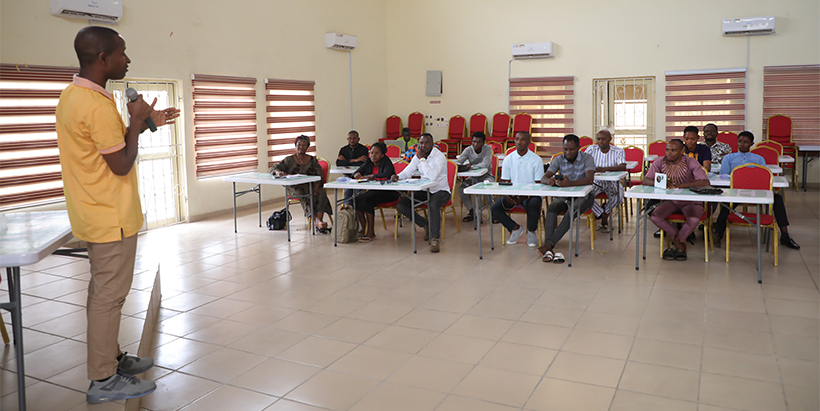
Lead farmers and extension agents in Nigeria’s Benue (cassava farmers) and Ebonyi (rice farmers) states have validated the IITA-led Zero Hunger project baseline study report for the two states. The validation exercise was conducted in Makurdi on 17 August 2022 at the Center for Food Technology and Research, Benue State University Makurdi (CEFTER-BSU) for Benue State, and in Abalaki on 23 August at the Ebonyi Agricultural Development Programme (EBADEP) office for Ebonyi State.
 The Zero Hunger project in Nigeria is a three-year IFAD-funded project implemented in three states—Benue, Ebonyi, and Ogun—in Nigeria and two regions (Kara and Plateaux) in Togo with a target of 35,000 direct and 500,000 indirect beneficiaries. It seeks to increase rice and cassava farming system productivity and improve nutrition by adopting locally developed and tested agricultural technologies and innovative crop management practices leveraging on two pillars, “technology and innovation” and “policy analysis and policy engagement”. In realizing these objectives, it was necessary to identify and address specific challenges faced by stakeholders along commodity value chains, hence the baseline survey and subsequent validation by stakeholders.
The overall objective of the Baseline Survey was to support the Zero Hunger project team to establish benchmarks against the outputs, outcomes, and impact of the program for assessment during and after implementation, focusing on the core outcome Indicators related to productivity, income, and nutrition. It seeks to establish baseline value indicators of intended outcomes against which future measurements can be made of changes in behavior, systemic capacity, and impact on the conditions of households and individuals. It also aims to gather and analyze information that will assist the project’s stakeholders in designing or modifying appropriate interventions or generating information to refine the project’s logframe and monitoring and evaluation plan.
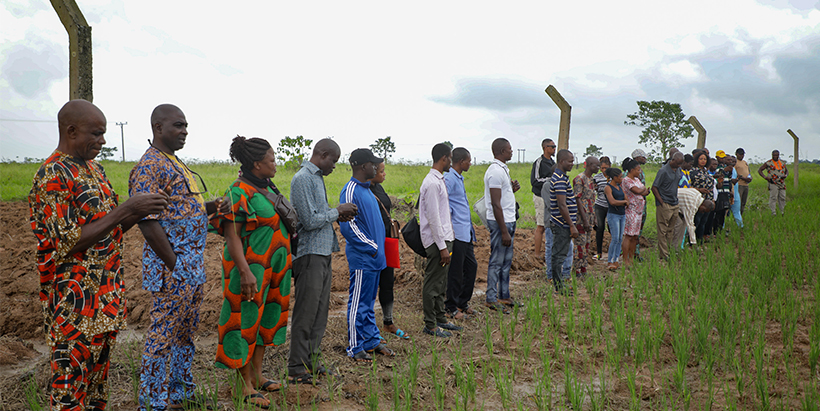 According to the Project Monitoring, Evaluation, and Learning Manager, Oyewale Abioye, the essence of the validation exercise was to hear directly from the farmers and extension agents who acted as enumerators to enable them to contribute to the interpretation of the study and validate the result. He noted that during the validation exercise, it was discovered, among many issues, that there was a need to set up demonstration farms to showcase different cassava varieties, which can be used to organize a variety identification workshop. He added that the demonstration plots also give first-hand practical knowledge of best farming practices. The study also helped the ZHI team identify action points and areas to follow up on interventions and policy issues, one of which is the government’s efforts to curb the menace of adulterated and harmful agrochemicals.
In their separate remarks, Abdul Samuel Ngbede and Mbalaha Joseph Terkula, extension officers from Agatu and Buruku Local Government Areas, respectively, validated the baseline study report, calling for the adoption and implementation of its findings and suggestions. This was echoed by other extension officers and lead farmers who participated in the exercise. Similar validation remarks were made by farmers and extension agents in Ebonyi State. The project team also visited the Ebonyi State Commissioner of Agriculture and Natural Resources, Prof. Humphrey Nwobashi, to brief him on the project’s progress. He used the opportunity to reiterate the Ebonyi State government’s commitment to ending hunger in the state and thanked the Zero Hunger team (IITA and AfricaRice) for the partnership toward this goal.
Contributed by the Zero Hunger Project team
Contributed by
Recent stories