
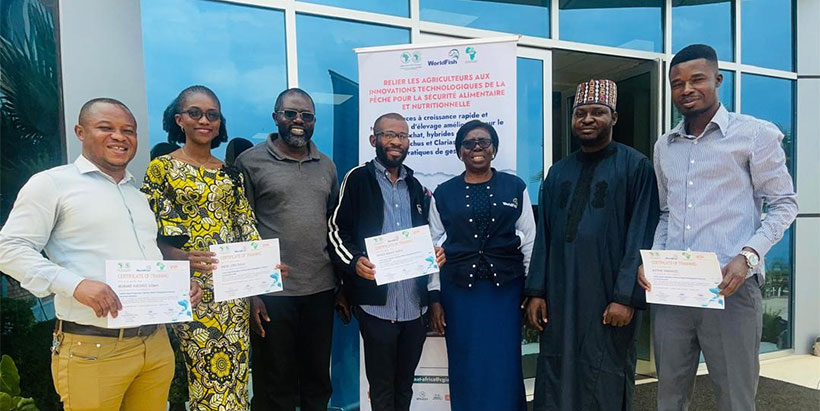
To enhance fish production and processing in the province of South Kivu, the African Development Bank (AfDB) has partnered with WorldFish to provide fish farmers and the national aquaculture service with comprehensive training in aquaculture technologies and practices in the DRC as part of the Technologies for African Agricultural Transformation (TAAT) aquaculture program. This was achieved through a series of training courses held from 4 to 17 September in the province of South Kivu.
The TAAT program, with its ambitious goals, aims to double the productivity of crops, livestock, and fish by 2025 by expanding access to productivity-enhancing technologies to more than 40 million smallholder farmers across Africa. It also seeks to generate an additional 120 million metric tons (T) of food while lifting 130 million people out of poverty.
The TAAT program was prioritized around priority crop, livestock, and aquaculture value chains. It rolled out a “twin approach,” which involves facilitating the delivery of productivity-enhancing technologies to farmers at scale while also seeking to create an enabling environment of policies and regulations for technology adoption and functioning of input and output markets. This approach is significant as it not only provides farmers with the necessary tools but also ensures that they can effectively use these tools in a conducive environment.
TAAT’s partners and stakeholders, including the African Development Bank, WorldFish, and the national aquaculture service, work in close collaboration to ensure the accelerated dissemination of the right knowledge and technologies at an accelerated pace, demonstrating the strength of our collective efforts.
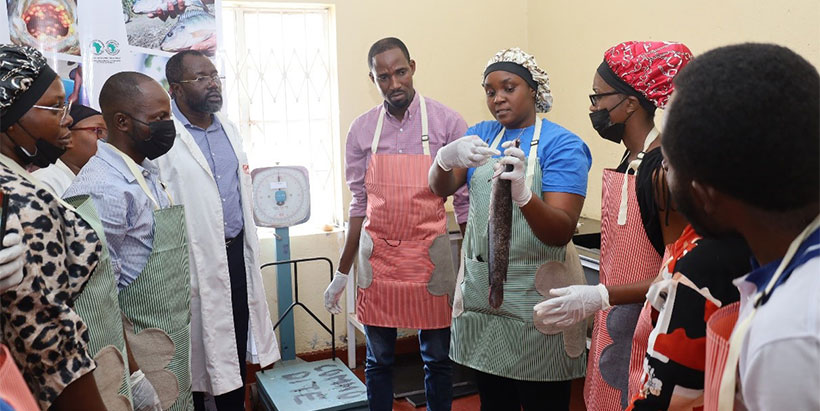
With this in mind, WorldFish and IITA organized four Training of Trainers (ToT) sessions on four topics: Catfish fingerlings production, feed fish production, post-harvest and processing, and tilapia fingerlings production.
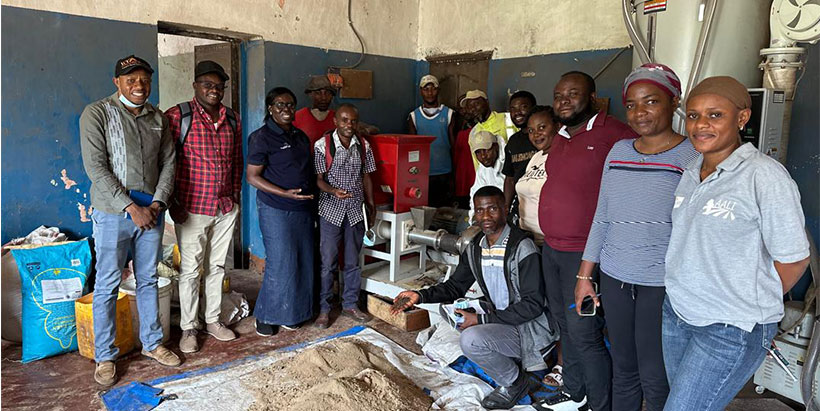
The workshop’s main objectives were to assess the present status of catfish and tilapia fingerling production, including challenges and opportunities along the value chain. They also aimed to identify facilities, inputs, and capacity-building needs for hatchery management in the catfish and tilapia industry. They also extend to increasing aquaculture production and productivity by identifying and deploying quality tilapia and catfish seeds, producing low-cost fish feed, and adding value through outreach campaigns, extension, and market linkage campaigns in RMCs.
In 2018, AfDB launched TAAT as a major continent-wide initiative designed to increase agricultural productivity by rapidly delivering proven technologies to millions of farmers.
Contributed by Isabelle Buhoro
Contributed by
Recent stories