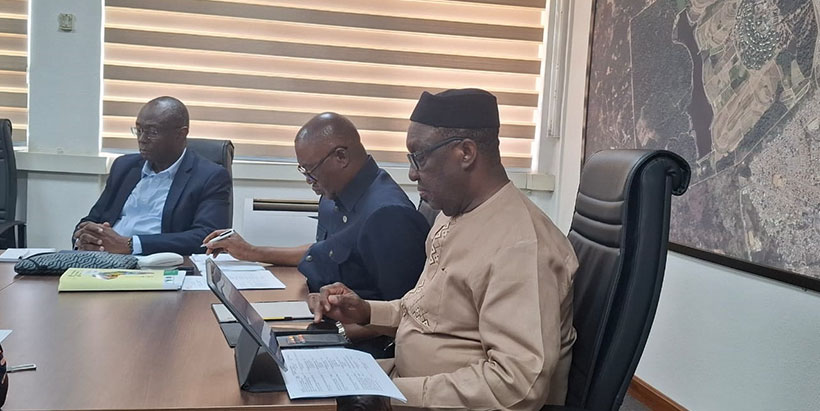
Dr Simeon Ehui with AfDB Director General for Nigeria, Dr Abdul Kamara and AfDB Chief Agro-Industry Officer, Dr Chukwuma Ezedinma during discussions.

In a bid to advance partnership efforts between IITACGIAR and the African Development Bank (AfDB), the Director General for Nigeria, Dr Abdul Kamara, accompanied by AfDB Chief Agro-Industry Officer, Dr Chukwuma Ezedinma, met with IITA Director General and CGIAR Regional Director for Continental Africa, Dr Simeon Ehui, at IITA headquarters in Ibadan.

This engagement emphasized the importance of collaboration in advancing food security and agricultural transformation across Africa.

Welcoming Dr Kamara, Dr Ehui expressed enthusiasm for the visit. “It’s a pleasure to have the AfDB team at IITA. Beyond our professional relationship, I am proud of Dr Kamara’s leadership in this critical role for our shared vision of a food-secure continent,” Dr Ehui remarked.

The visit underscored IITA’s contributions to agricultural research and innovation. The delegation explored cutting-edge work in cassava, maize, food safety (including biocontrol innovations like Aflasafe), youth engagement, and the Technologies for African Agricultural Transformation (TAAT) program.
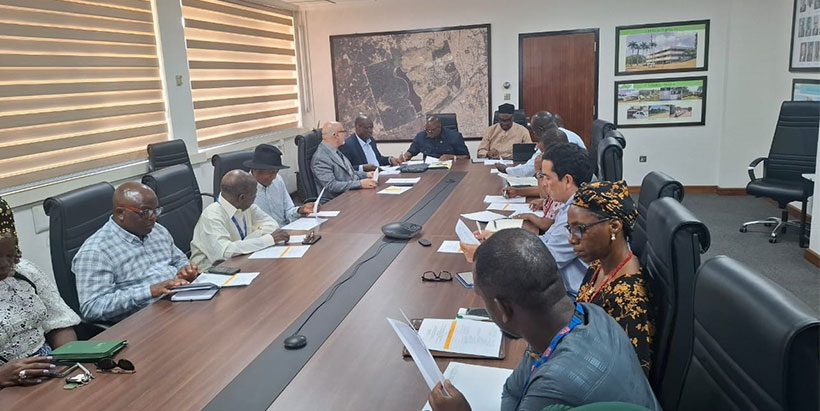
The IITA research and Management teams during discussions with the AfDB team.

Dr Kamara commended IITA’s efforts, emphasizing the need to align research outputs with scalable innovations while addressing challenges.

“We must think ahead—exploring opportunities for future programs like TAAT 3 and integrating gender and climate considerations into our efforts,” he stated. He highlighted the significance of program preparation and feasibility studies to maximize impact, noting, “It’s not just about funding; it’s about ensuring tangible outcomes.”

Dr Ezedinma commended IITA’s progress over the years and advocated for a focus on scaling innovations and formalizing approaches to transform agriculture. He also stressed the importance of leveraging lessons from previous initiatives, such as State Project Implementation Units (SPIUs) and Special Agro-Industrial Processing Zones (SAPZs), to inform future programs.

Dr Simeon Ehui with AfDB Director General for Nigeria, Dr Abdul Kamara, AfDB Chief Agro-Industry Officer, Dr Chukwuma Ezedinma, and some members of IITA Management team.

Following the brief from some of IITA’s researchers present at the meeting, Dr Ehui said IITA is focused on leveraging strategic partnerships to scale innovations that can transform the food systems’ landscape. AfDB is one of the significant allies the institute has worked closely with over the years.

Looking at ways to further streamline collaborations with IITA, Dr Kamara said his office will dedicate a focal point to ensure seamless interactions. Speaking on youth engagement, he commended the IITA Youth program, adding that youth-led agribusinesses need business-friendly loan rates and entrepreneurship ecosystems that will strengthen agriculture value chains.

Following a tour of IITA’s facilities, during which the visitors saw first-hand some of the existing technologies at IITA, Dr Kamara highlighted the importance of scaling and market access for technologies like Aflasafe and the need to leverage partnerships with policymakers.

Speaking on engaging the government and policymakers, Dr Ehui said this is necessary for innovation to scale and impact, as state actors are critical in the process of scaling.

Discussions also focused on soil systems, climate change, food safety, nutrition, and seed systems. “We can take advantage of the existing technologies at IITA to make the change that we all seek to transform Africa and the lives of millions,” Dr Ehui said.

Reaffirmed AfDB’s commitment to impactful partnerships with IITA, envisioning transformative results for Nigeria and the broader continent, “I look forward to working with IITA to bridge critical gaps and drive change in Africa’s agricultural landscape,” Dr Kamara added.

This visit reinforced the shared commitment of IITA and AfDB to harness innovative solutions, foster collaboration, and scale impact to ensure sustainable food systems across Africa.

Contributed by ’Timilehin Osunde.

Taiwo Bankole, IITA Forest Center Field Staff, tutoring the participants on the field.

On 14 November, the IITA Forest Center conducted hands-on training on Vegetable Propagation and Management for youths from Olokemeji community and beneficiaries of the LAPO Microfinance Bank youth empowerment program. The training aimed to strengthen the economic capacity of participants, particularly women and youths, by equipping them with skills to optimize vegetable farming for both to improve their livelihood and make profit.  

The training commenced with an engaging indoor session facilitated by IITA Forest Center Field Supervisor Olukunle Olasupo, , and Lolami Bernard, an intern at the Center. The session emphasized the economic and health benefits of cultivating indigenous vegetables and fruits. Participants explored strategies to optimize crop yield, sustain thriving businesses, and produce visually appealing and nutritious vegetables.  

Key topics included nursery establishment, pest and disease management, and adopting good farming practices. 

Olokemeji youth beneficiaries with their start-up kits to begin lucrative vegetable farming.

Participants moved to the Forest Nursery for field learning after the theoretical session. Under the guidance of Olasupo and IITA field staff Joshua Babatunde and Taiwo Bankole, participants practiced growing various local vegetables and learned about their specific adaptive habitats. They were shown how some crops thrive in shaded areas while others flourish under direct sunlight. The session also highlighted propagation techniques—such as using seeds or stem cuttings—and proper harvesting methods to maximize yield and quality. 

To kickstart their farming ventures, each participant received a starter kit comprising first-generation seeds for vegetables like cucumber, spinach, and tomatoes and essential tools such as topsoil, watering cans, hoes, and cutlasses. These resources were sponsored by the Nigerian Breweries Plc Reforestation Project at Olokemeji and LAPO Microfinance Bank in partnership with the IITA Forest Center. 

LAPO Microfinance Bank youth empowerment beneficiaries with their start-up kits.

Olasupo encouraged participants to preserve trees on their farmland, highlighting their role in pest and erosion control. For instance, the Neem tree serves as a natural pest deterrent for vegetable farms. Expressing gratitude, one of the participants Taiwo Fashola said, “I’m very glad and grateful to our sponsors. I learned a lot I didn’t know before, and I’m optimistic this will significantly add to my income.” Participants left with certificates of participation and a renewed determination to invest in vegetable farming, empowered to make meaningful contributions to their households and communities. 

Contributed by Folake Oduntan 

Related stories:


Prof. Paul Bolorunduro presenting NAERLS souvenirs to the visiting SUL President Dr Taofeek Adegboyega while other staff of NAERLS looks on.

In a bid to solicit for support and increase awareness on the importance of underutilized legumes, the President of the Society for Underutilized Legumes (SUL), Dr Taofeek Tope Adegboyega who also represented the IITA Chapter, recently visited the National Agricultural Extension and Research Liaison Services (NAERLS), Ahmadu Bello University, Zaria, to advocate for enhanced support from stakeholders towards the promotion of underutilized legumes in Nigerian farming systems. Discussions during the visit focused on ways to leverage the untapped potential of indigenous legumes to improve food and nutrition security, and economic stability for smallholder farmers in Nigeria. 

 Raising the critical need to diversify agriculture, particularly by promoting and incorporating lesser-utilized legume varieties such as Bambara groundnut, African yam bean, and pigeon pea, Dr Adegboyega called for alignment of activities among stakeholders from the academia, national research systems and agricultural research organisation. 

According to him, these legumes hold immense promise for enriching soil fertility, increasing farmer resilience to climate challenges, and offering more nutritious food options for Nigerian communities. 

 Emphasizing that these underutilized crops, often overlooked, have high potential for local and international markets, “Nigeria has a vast array of indigenous legume species with immense agricultural and nutritional value. However, due to limited research and support, they remain underutilized. By bringing together resources, expertise, and commitment from various stakeholders, we can unlock the potential of these crops to benefit both farmers and consumers,” he stated. 

 The NAERLS Assistant Director of Research, Planning, and M&E, Prof. Paul Bolorunduro, who received the visiting team on behalf of the NAERLS management, expressed strong support for this initiative, highlighting that one of the institute’s missions is to promote sustainable agricultural practices that align with local ecological conditions.  

“Working with SUL is a key step in ensuring these crops receive the attention they deserve, potentially leading to new research programs, farmer education, and improved seed varieties,” he remarked. 

 Dr Adegboyega’s visit signals a new chapter in agricultural advocacy for underutilized crops in Nigeria. With coordinated efforts, stakeholders -including government agencies, research institutions, private sector partners, and non-governmental organizations—can impact millions through support the initiative. Enhanced research, training programs for farmers, and market development were identified as essential steps to integrate these crops into the national agricultural framework. 

 As the global and local demand for sustainable, climate-resilient crops continues to grow, SUL’s leadership is committed to placing underutilized legumes at the forefront of agricultural development in Nigeria. This partnership with NAERLS marks the beginning of a coordinated campaign to support these valuable crops’ cultivation, commercialization, and consumption, offering a promising path toward a more resilient and diversified agricultural sector. 


Contributed by Kafilat Abiodun Odesola

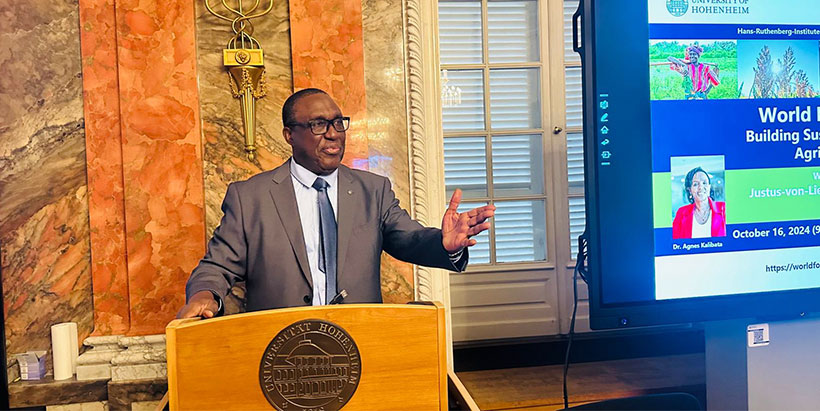
During the recent celebration of this year’s World Food Day, global leaders, researchers, and young advocates gathered at the historic Balcony Hall of Hohenheim Palace to champion the theme, “Right to Foods for a Better Life and a Better Future.” This year’s event, focused on Building Sustainable and Resilient Agri-Food Systems, was hosted by the University of Hohenheim, drawing a diverse audience committed to creating equitable, sustainable food systems worldwide. 
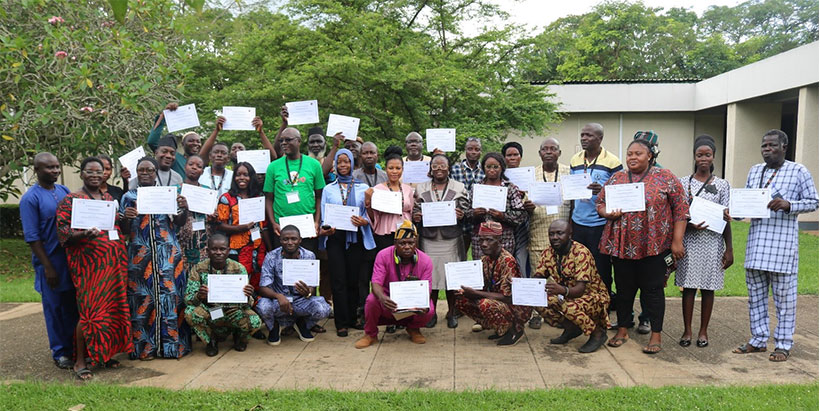
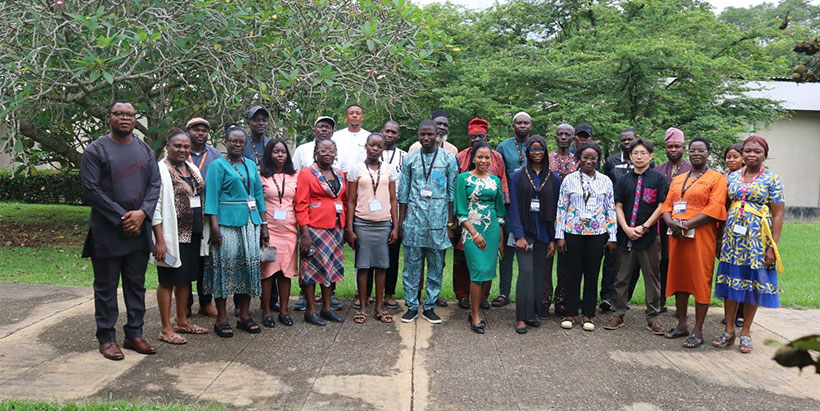
The event spotlighted three prominent speakers, with Dr Simeon Ehui, IITA Director General and CGIAR Regional Director for Continental Africa, delivering the keynote address.  

Dr Ehui’s presentation, titled “Science-Driven Transformation of Agri-Food Systems: CGIAR’s Impact in Africa,” highlighted the critical role of research, science, and partnerships in transforming agriculture across the African continent, addressing pressing global food challenges and securing food rights for all. 

He highlighted CGIAR’s mission to reduce hunger and poverty, particularly amid climate challenges, and outlined CGIAR’s long-term vision for resilient food systems through innovations that boost food production and enhance health, nutrition, and trade.  

“To meet the food demands of Africa’s growing population, projected to reach 2.5 billion by 2050, we need robust, scalable solutions that can withstand climate impacts and restore our natural resources,” Dr Ehui emphasized. 

Having dedicated a significant share of its resources to Africa—over 60% of its budget invested in the region—as the world’s largest publicly funded research consortium, CGIAR’s Africa-based centers work closely with government agencies, private sector partners, and local stakeholders to pioneer agricultural innovations designed to foster sustainability and resilience. Dr Ehui emphasized the impact of collaborations with African leaders, including the African Union and various sub-regional organizations, to further amplify CGIAR’s impact, delivering practical, science-based solutions directly to communities across the continent. 

Dr Ehui particularly highlighted CGIAR’s collaboration through IITA, the Excellence in Agronomy Initiative, and Germany’s BMZ and GIZ on a new initiative for soil health and fertilizer improvement, which positions IITA at the forefront of Africa’s agricultural transformation agenda.  

He said, “Healthy soils are the foundation of productive agriculture, and this initiative will play a pivotal role in empowering farmers and fostering sustainable farming practices.” 

With Africa facing several formidable challenges in agriculture, including 65% of the continent’s land already degraded, the urgency of science-backed restoration is critical.  

He pointed out that climate change, erratic weather patterns, prolonged droughts, and extreme rainfall pose an existential threat to Africa’s food systems and water resources.  

“The UN Intergovernmental Panel on Climate Change (IPCC) warns that if these trends continue, Africa’s agricultural output could decline by 30% by 2100—a scenario with catastrophic implications for global food security,” he said. 

Closing his keynote with an appeal for ongoing support for research initiatives, Dr Ehui highlighted the vital importance of CGIAR’s research-for-development (R4D) efforts, which have yielded countless innovations across Africa’s farming landscapes. These innovations, spanning improved crop varieties, climate-smart agriculture techniques, and community resilience-building strategies, represent a beacon of hope for a sustainable, equitable, and food-secure future. 

Contributed by ‘Timilehin Osunde.

Participants after the training.
Participants with their certificates at the end of the training.

IITA-Yam Breeding Program engaged yam farmers from across southwest Nigeria in hands-on seedling and farm management training recently. This practical approach was designed to enhance smallholder farmers’ knowledge and skills on modern techniques, new technologies, and best agronomy practices to maximize land space and increase yield and income.  

The training, which took place between 17 and 18 October 2024, allowed all the participants to observe, participate, and learn about various aspects of yam production and management. 

The training objectives included: 

  • Knowledge transfer: Participants were equipped with the modern skills and knowledge needed to improve productivity, adopt new technologies, and implement sustainable farming practices.
  • Exposure to best practices: Participants were allowed to see successful yam farming operations and learn directly from experts.
  • Hands-on training: Participants were provided practical demonstrations where they physically participated in the activities, ensuring they gained practical experience in yam farming techniques.
  • Networking opportunities: Participants were able to connect for a common goal, fostering agricultural experts, extension officers, and industry players such as seed suppliers or buyers.
Participants with their certificates at the end of the training.
Participants after the training.

The participants benefitted from a well-structured training module on Land Preparation and Soil Management, Seed Yam Selection and Preparation, Planting Techniques, Crop Management, Harvesting Techniques, Post-Harvest Management, Marketing, Field Demonstrations, Practical Sessions, Extension Support, Follow-Up and Access to Resources. 

Seedling and farm management training are critical tools in helping yam farmers across the southwest region of Nigeria improve their skills, adopt modern farm technologies, and boost productivity. The training provided the participants with technical knowledge and empowered them to make informed decisions, connect with markets, and increase their income sustainably.   

At the end of the training, participants were awarded an end-of-training certificate and provided with improved seed yams to help them implement the newly acquired techniques on their respective farms. 

Contributed by Emmanuel Onasanya

Particpants after the side event.

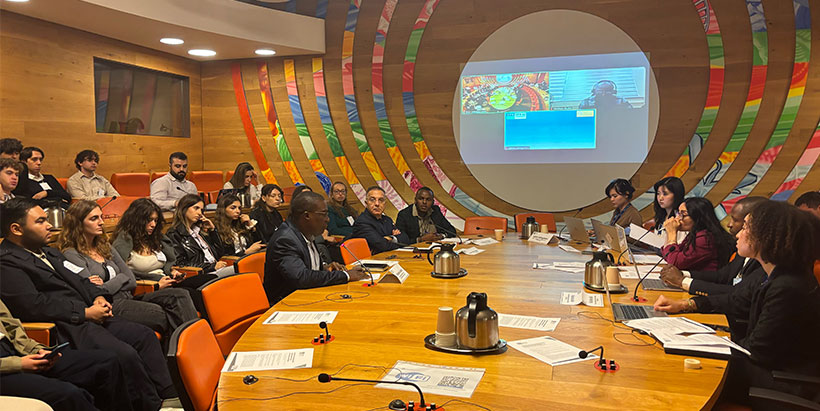
The International Fund for Agricultural Development (IFAD) and IITA co-organized a side event under the Zero Hunger Project at the 52nd Committee on World Food Security (CFS) session on 25 October at FAO headquarters in Rome. This event highlighted the crucial role of policy frameworks in facilitating technology trials, scaling innovations, and building cross-sector partnerships to address food security. Speakers included representatives from diverse stakeholder groups, such as government agencies from Nigeria and Togo, research institutions like the Conseil Ouest et Centre Africain pour la Recherche et le Développement Agricoles (CORAF) and the Institut Togolais de Recherche Agronomique (ITRA), civil society organizations like the Mazingira Institute in Nairobi, and private-sector entities. Together, they shared insights into advancing agricultural policy and accelerating technology adoption across Africa. 

The event, themed “Pathways for achieving zero hunger through policy, innovation, and partnership,” was facilitated by Dr Viviane Fillipi, IFAD Program Officer, and it offered a comprehensive overview of strategies to bridge the science-policy divide. It underscored the importance of strong collaboration among government bodies, research institutions, and the private sector. Adebowale Akande, the project lead, highlighted ongoing initiatives in Nigeria and Togo under the Zero Hunger Project, focusing on the sustainable boost of agricultural productivity through technology adoption and evidence-based policy initiatives aimed at empowering decision-makers. 

Participants during the side event.

Oyewale Abioye, an IITA Project Management Specialist who leads the project’s Monitoring, Evaluation, and Learning (MEL), outlined the project’s theory of change, which began with policy mapping to identify existing gaps, followed by technical assessments to capitalize on the expertise and technological resources provided by IITA and AfricaRice. These efforts laid the groundwork for developing policy options aligned with government strategies. Abioye noted that findings identified key areas for improvement, including seed system enhancements and strengthening of extension services through digital tools to empower farmers and extension agents. 

Panelists from the project’s two focal countries of Nigeria and Togo include Dr Tighankoumi Gmakouba Zero Hunger Togo Cassava Focal Point; Dr Abraham Shaibu, Rice Seed System Specialist, AfricaRice; and Regina Okore, Director of Extension, Ebonyi State Ministry of Agriculture, Abakaliki, shared project insights by highlighting the impact of the project on extension services, which include the use of digital use and development of seed protocols for staple crops such as cassava, yam, and sweet potato in Togo and promoting increased productivity and sustainability. Their presentations underscored the transformative potential of targeted training and technology adoption in advancing local agricultural development. 

The event also offered an opportunity to explore the challenges and potential of collaborative approaches to food security as outlined by Akande and CORAF Director of Research Dr Emmanuel Njukwe when they emphasized significant obstacles such as limited access to mechanization and the need for adaptable, context-specific technology solutions. They further stressed the importance of gender-sensitive, inclusive approaches and harmonized data collection to foster effective policy integration and broader adoption. 

A recurring theme was the importance of grassroots involvement in integrating traditional knowledge and supporting smallholder farmers with accessible, practical solutions. Panelists advocated for grassroots engagement as essential to developing affordable and culturally relevant technologies that meet the needs of smallholder farmers, ensuring that agricultural innovation remains accessible and impactful at all levels. 


Contributed by Oyewale Abioye 

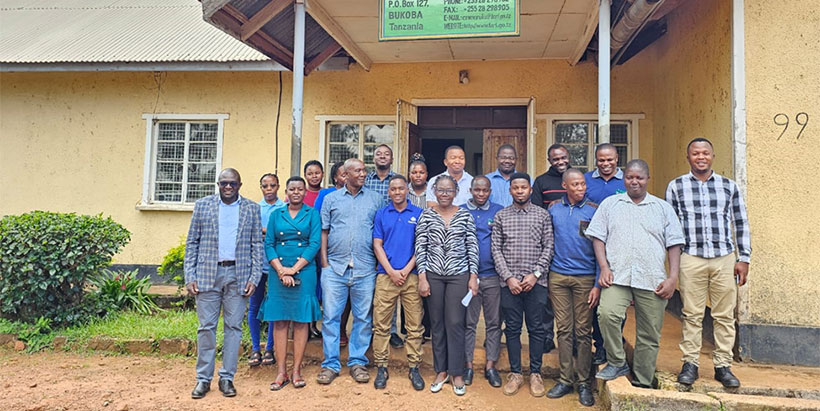
Participants of the banana seed production training with facilitators.

Seed systems play an important role in food security and agricultural productivity. However, the subsector faces several challenges, including limited access to quality seeds, seed market monopolization, a lack of seed diversity, and climate change. 

As part of efforts to solve the challenges in Tanzania, IITACGIAR, through its PROSSIVA (Program for Seed Systems Innovations for Vegetatively Propagated Crops in Africa) project, conducted a training workshop for its local partners, the Tanzania Agricultural Research Institute (TARI) and PlantVillage focusing on using macro-propagation technology to produce healthier, disease-free banana seedlings with improved yields. This initiative aims to enhance food security and boost agricultural productivity. 

The training objective was to equip the teams with practical skills in banana macro-propagation and nursery management to improve the production of quality planting materials. The hands-on training aimed to support community-level seed entrepreneurship and address the challenge of insufficient high-quality banana seeds in the country. 

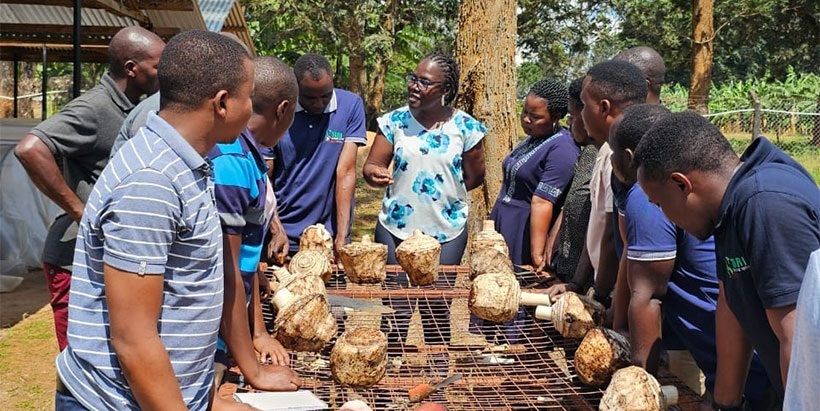
Banana macro-propagation is a moderately simple and cost-effective technique to multiply banana plantlets rapidly. It benefits smallholder farmers and areas with limited access to tissue culture labs. This technique is simple and low cost, with the potential for increased seed accessibility, control of diseases, and faster multiplication of seeds compared to the traditional method of field sucker production. Research expert Delphine Amah, from IITA Nigeria, led the training on propagation techniques and procedures, including constructing basic propagation facilities, field selection of parent material, corm preparation, and management for optimal performance. 

Moreover, she demonstrated how a single banana corm can produce between 10 to 100 seedlings in just four months, compared to the traditional method, which yields only 5 to 10 seedlings over a longer period. 

Dr Delphine Amah trains the participants on preparing corms for planting in the macro-propagator humidity chamber.

Dr Mpoki Shimwela, TARI Maruku Center Manager and the National Banana Research Coordinator, believes that learning macro-propagation is one of the crucial measures to fight the Banana Bunchy Top Virus (BBTV) disease and other banana diseases like Banana Xanthomonas Wilt (BXW). “To combat BBTV and other diseases, producing high-quality, disease-free seeds is essential. We previously had limited knowledge and practice of this advanced technology, but this training has broadened our understanding. We now aim to produce more banana seeds using these new techniques and train banana producers in the country,” said Mpoki. 

This initiative marks a significant step toward advancing agricultural development in East Africa, where bananas are a crucial food source and income generator for millions, particularly smallholder farmers. The 20 participants in the training came from various TARI centers, including Maruku, Tengeru, Kihinga, Uyole, and other agricultural stakeholders from the private sector Plant Village Tanzania. Training participants formed a WhatsApp platform to share and learn from each other beyond the training with a strong commitment to promoting the technology in their various communities within the country. 

PROSSIVA project aims to refine and integrate this technology in seed business models with community-level seed producers, assess the productivity and profitability for sustainable seed production in Tanzania, and ultimately help alleviate poverty for smallholder farmers. By enhancing the partners’ expertise in macro-propagation techniques, the initiative hopes to ensure a more efficient implementation of this technology in their respective roles within the banana seed value chain. 

Contributed by Rashid Hadi 

Women dairy farmers in Adamawa following a successful training session.

As the world recently marked the International Day of Rural Women, I took some moments to reflect on the plight and prospects of women in Nigeria’s rural communities. 

Nigeria boasts hardworking women across all sectors, from the North to the South, whether in the city or rural hinterland. Indeed, in some communities, women’s involvement in agriculture, whether in production or value addition, has helped to ensure food availability and improved families’ well-being. 

However, before I delve into the prospects, I would like to take a brief look at the solvable challenges faced by rural women, who, till today, contend with cultural limitations and other perennial challenges, like poor access to quality healthcare, sexual and gender-based violence, barbaric practices like female genital mutilation, and lack of basic amenities like good roads, power supply, and potable water. While life is generally harsher for people in Nigeria’s rural communities, I empathize more with women, who have much more to contend with. 

Drawing lessons from my visit to several communities, especially in the North, where subsistence and commercial agriculture are more evident, I align with the position of the Food and Agriculture Organization (FAO) that while women constitute 43 percent of the global agricultural labor force, they face significant discrimination in matters of land ownership, livestock ownership, equal pay, participation in decision-making entities and access to credit and financial services. 

A woman struggling for acceptance, survival, or freedom may be unable to raise responsible children. That partly explains the number of out-of-school children, creating a fertile pool for bandits and criminals. This implies that society suffers when women are disadvantaged, emphasizing the need for governments at all levels and public-spirited private-sector players to genuinely put rural women at the center of their intervention programs. 

However, it’s not all gloom. During my recent visit to Awala in Awala Madugu Local Government Area of Adamawa State, I was amazed by the dedication of rural women in Northern Nigeria to dairy production and how that venture has improved their livelihoods. I then imagined how genuine empowerment could improve their livelihoods and enhance local dairy production, saving us some forex used to import dairy products. 

When we talk about milk production in West Africa, the Fulani tribe, predominantly nomads, comes to mind, with a vast population in Nigeria, Senegal, Guinea, Mali, Niger, and Cameroon, among others. 

Read more: Enhancing lives of rural women in Northern Nigeria (punchng.com) 

Contributed by Omotomiwa Adesanya

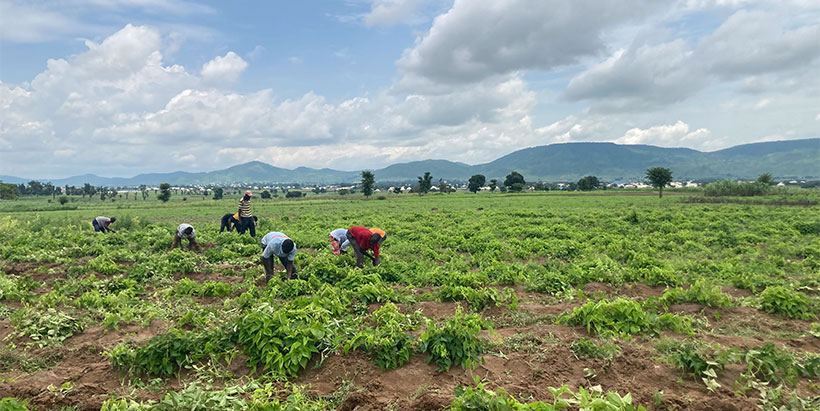
The workers' union sent IDPs as temporary workers to farmers' fields in Kwali, FCT, Nigeria.
The workers’ union sent IDPs as temporary workers to farmers’ fields in Kwali, FCT, Nigeria.

The Government of Japan, in collaboration with IITA, has initiated a project to assist internally displaced persons (IDPs) in Abuja in achieving self-reliance and generating employment opportunities. IDPs continue to receive emergency humanitarian assistance to feed themselves for the year, and it has been more than ten years since they could start a new, independent life. On the other hand, the lack of employment opportunities and sources of income, and their continued dependence on assistance for their livelihoods, has led to a loss of independence and the need for measures to support self-reliance.

To overcome the IDP situation, the project supports employment opportunities for IDPs without job opportunities. The project has established a labor dispatch union, which sends IDPs as temporary workers to farmers facing labor shortages. The activities provide IDPs with cash income through agricultural work and meals during deployment. From June to October 2024, IDPs were sent to farmers as temporary workers and received assistance with meals during their deployment and a cash income.

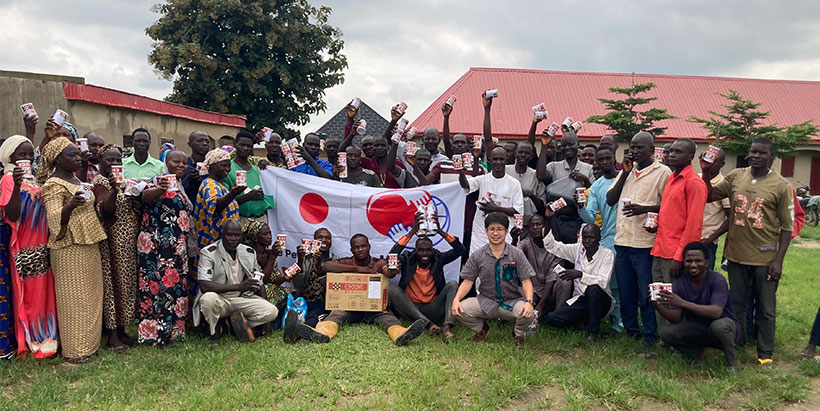
IDP farmers with KANPAN as part of the food aid.

In addition, the project provided 1.5 tonnes of tubers of high-yielding improved varieties to a group of yam farmers in Kwali, struggling with rising labor and material costs. Farmers are implementing yam cultivation with the provided agricultural input and the support of displaced temporary workers sent by the labor dispatch union. It is possible to assist IDPs and farmers by providing employment opportunities and temporary sources of income to IDPs and by supporting farmers with free labor and agricultural inputs, thus contributing to self-reliance for IDPs and food security in the targeted areas.

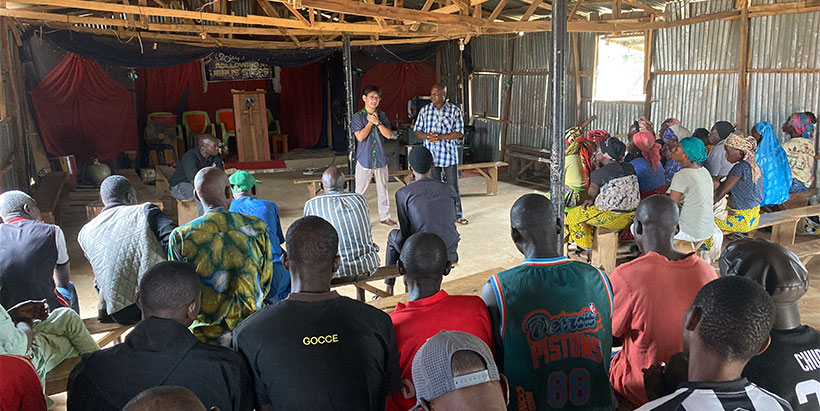
Dr Matsumoto explaining the activities and objectives of the IITA MoFA project to the IDPs.

The project also supports agricultural materials (improved seeds and fertilizers) for IDP farmers who borrow farmland to cultivate for themselves. In addition to supporting agricultural materials, KANPAN was distributed to IDP farmers as temporary food aid. In Japan, KANPAN is regarded as a valuable emergency food during disasters. It can be stored for extended periods, doesn’t need cooking, has a solid texture, and provides satiety. Temporary food and agriculture material support for IDP farmers will help increase their working vitality and support their return to work.

Agriculture-based IDP-supported projects have the potential to contribute to increased employment and agricultural production. The project will also help strengthen the country’s agricultural sector by encouraging IDPs to become self-reliant and return to agriculture

Contributed by Ryo Matsumoto