WATEA Stakeholders at the cassava processing factory at IITA, Ibadan.
Cassava, a versatile and nutritious crop, is gaining global recognition for its economic and dietary value. Recently, WATEA stakeholders, including six Polytechnic Rectors from different Nigerian states, technical officers, and SMEs, visited the IITA cassava processing factory to explore its innovative operations.
The group received by IITA Trial Manager, Cassava Breeding Unit, Peter Iluebbey, toured the processing factory, and saw firsthand the scale of operations and how staff handled each processing stage with a commitment to quality and safety.
Iluebbey explaining the cassava processing journey from farm to factory to the group said after harvesting, tubers undergo rigorous inspection before entering the processing line, adding that the first phase of processing – washing, peeling, and cutting before transformation into a variety of value-added products is critical to how the quality of the end products turn out.
Peter Iluebbey welcoming the visitors into the IITA cassava factory at IITA, Ibadan.
Research Supervisors Durodola Owoade and Rachael Abioye further detailed the processing techniques used to create staple products such as garri, tapioca, flour, starch, and cassava-based pastries. The visitors were shown advanced milling machines producing gluten-free cassava flour – an increasingly popular alternative for health-conscious consumers. They also learned about tapioca production, a key ingredient in bubble tea and culinary dishes worldwide.
During discussions some of cassava’s nutritional benefits were highlighted, particularly its high carbohydrate content and gluten-free nature, making it an essential energy source.
Rachael Abioye introduced the cassava-based products to the visitors.
The IITA cassava processing line emphasizes sustainability efforts, including waste reduction and the repurposing of by-products for animal feed and bioenergy production.
Before departing, the visitors sampled cassava-based products such as chips, bread, and pastries—an experience that underscored the root crop’s versatility. They expressed appreciation for the informative visit and anticipation of future collaborations in training and capacity development for their institutions.
The IITA cassava processing factory stands as a testament to innovation, sustainability, and the vital role of cassava in global food security.
Growing up in Kenya, I looked forward to the occasions—once or twice a month—when meat was part of our meal and disliked the numerous days that we ate pulses—edible seeds of plants in the legume family. After I became a nutritionist and learned more about their nourishing value, I stopped seeing them as a boring dish and now regularly serve pulses to my family as a snack or in stews, sauces, or coconut milk.
Today, many Africans still underappreciate pulses as I did. World Pulses Day on February 10 is a chance for everyone to learn of their immense value—not just as nutritious seeds but as catalysts for transforming agrifood systems. Two climate-smart crops, Cowpea and Bambara groundnut, particularly deserve attention for their untapped potential.
Cowpea and Bambara groundnut are more than staple food crops; they could be lifelines for millions across sub-Saharan Africa. Cowpea, often referred to as “the poor man’s meat,” is renowned for its rich protein content and its ability to thrive in drought-prone areas. This makes it a critical food source for communities grappling with climate variability. Recent advances showcased at the 7th World Cowpea Research Conference in September 2024 highlight climate-resilient cowpea varieties with higher yields and improved nutritional profiles. These innovations provide smallholder farmers with a dependable crop, growing even in harsh environmental conditions, bolstering food security and economic resilience.
Bambara groundnut, on the other hand, is often called “the complete food” due to its nutrient density and resilience. It thrives in marginal soils where other crops fail, offering hope for combating food insecurity. At the International Institute of Tropical Agriculture (IITA) where I work, ongoing research is uncovering innovative ways to integrate Bambara groundnut into diverse farming systems across Africa. This pulse not only improves nutrition but also enhances household incomes and agricultural sustainability. Its dual role as a nutrient-dense food and an adaptable crop underscores its potential as a game-changer in the fight against hunger and malnutrition.
Pulses like Cowpea and Bambara groundnut are critical because they are uniquely positioned to counter the adverse effects of climate change. Their natural drought tolerance ensures consistent food production in arid and semi-arid regions. This resilience is crucial for communities, particularly in West Africa, which rely on these stable food sources amid increasingly unpredictable weather patterns. Additionally, pulses play a vital role in improving soil health. Through nitrogen fixation, they enrich soil fertility, reducing dependency on synthetic fertilizers and promoting sustainable agriculture. Moreover, compared to crops like rice and wheat, pulses are better for the environment as produce lower greenhouse gas emissions, helping to reduce pollution and climate change.
Despite their immense potential, Cowpea and Bambara groundnut remain underutilized due to limited private-sector investment and low consumer awareness. Bridging this gap requires strategic interventions to promote these crops as staples in both local and global markets. For instance, more private-sector investment in the value chains of Cowpea and Bambara groundnut can look at how investors led to quinoa’s integration into the mainstream and niche markets through innovative products such as fortified flours, snacks, healthy foods, and ready-to-eat meals.
Consumer awareness among the younger generation in Africa is another critical area of focus. They did not grow up eating pulses since meat is relatively more affordable. Public campaigns highlighting the nutritional and environmental benefits of pulses can transform perceptions and encourage widespread adoption. Educating communities about the versatility and health benefits of these crops can make them everyday staples, fostering healthier diets and sustainable consumption patterns. For smallholder farmers, government support must extend beyond awareness. Providing access to improved seed varieties, technical training, and market linkages is essential for empowering farmers to scale their operations sustainably. This holistic approach ensures that farmers maximize their benefits while contributing to the resilience of food systems.
The theme of this year’s World Pulses Day, “Pulses: Bringing Diversity to Agrifood Systems,” underscores the transformative power of crops like Cowpea and Bambara groundnut in building resilient food systems. However, realizing their full potential requires concerted efforts from all stakeholders, including governments, development agencies, and philanthropic organizations. Robust investment in research by entities like CGIAR through its research centers and in partnership with National Agricultural Research Systems (NARS), infrastructure improvements, and market development is critical to unlocking their value and ensuring they reach the communities that need them the most.
On this World Pulses Day, let us pledge to champion Cowpea and Bambara groundnut—not just as crops but as instruments of change. Together, we can make these pulses household names in Africa and vital contributors to food security, nutrition, and environmental sustainability.
Contributed by Mercy Lung’aho Program Lead for Food Security, Nutrition and Health
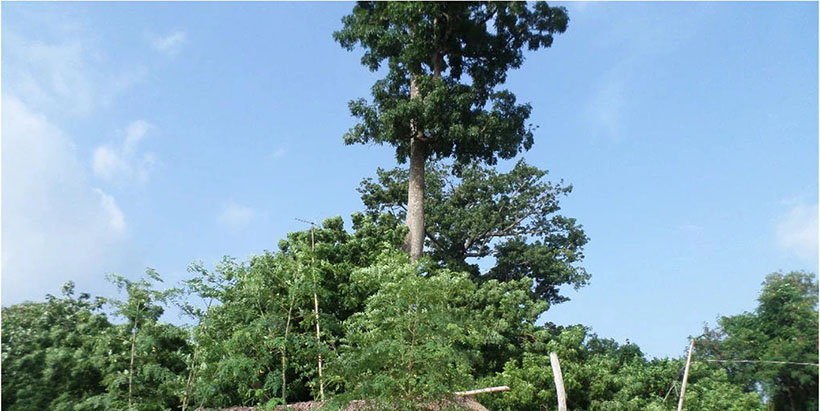
Typical Forest island in Ghana.
West Africa’s ecosystems are transforming, reshaping its vast savannas into forest islands or arable lands. This change, mainly driven by human activity, has profound implications for soil health and ecosystem sustainability.
The study revealed that when savannas transition into forest islands, soil health significantly improves. The SOM in the topsoil rose dramatically—up to 794%—and the abundance of essential nutrients such as potassium, calcium, and magnesium surged. These improvements are attributed to the favorable microclimate and nutrient cycling fostered by forest ecosystems.
Soil profile photos of the ecosystem types at Elewure community (ELE), Nigeria.
Conversely, converting savannas to arable land paints a more concerning picture. The SOM levels plummeted up to 74%, particularly in topsoil layers. This decline compromises the soil’s productive capacity, making it prone to erosion, reduced aggregation, and decreased activity of beneficial soil organisms. Despite efforts to enrich soils through fertilization, the benefits of these practices often fall short of compensating for the inherent losses caused by the transition.
The role of local communities in preserving soil health cannot be overlooked. The study highlights how indigenous land management practices have contributed to the formation of forest islands, countering earlier misconceptions that these patches were remnants of ancient forests. These community-driven efforts offer valuable lessons in sustainable land stewardship and could inform strategies to mitigate the adverse effects of climate change on resource-poor agrarian systems.
The research showed that soil quality indicators vary significantly by land use type and geographic location. For instance, nutrient-rich soils and intensive farming practices at one site in northern Ghana, led to better soil quality in arable lands than in forest islands or savannas. However, this was an exception rather than the rule, with forest islands generally outperforming other ecosystems in soil health.
With the growing demand for food production, there is also an urgent need to convert more savannas into farmland. The findings underscore the urgent need to adopt sustainable farming practices. Techniques such as agroforestry, improved crop rotation, and soil conservation methods could help offset the negative impacts of land-use changes.
As we look ahead, the study offers a hopeful perspective. Restoring marginal lands as forest islands enhances soil fertility and contributes to overall ecosystem health. As West Africa grapples with balancing agricultural expansion and ecological preservation, embracing indigenous practices and promoting sustainable land use could hold the key to a more resilient future.
This research adds a critical voice to the global conversation on land use and climate change, highlighting how localized solutions can make a significant difference in safeguarding soil health and improving food security on the continent.
Contributed by ‘Timilehin Osunde
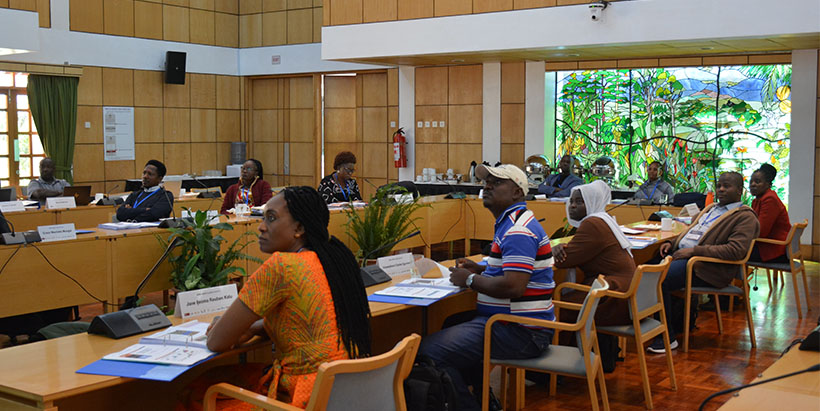
Class III course participants and their instructors.
The AfPBA CRISPR Class III, commencing on 20 January 2025, will provide 11 selected scientists from five African countries with advanced training in the know-how of genome editing using CRISPR-Cas technology. The initiative is designed to empower participants to develop more resilient crops to climate change, pests, and diseases—critical for addressing Africa’s food and nutritional security challenges.
“We are committed to equipping Africa’s scientists with the skills they need to tackle the pressing challenges facing smallholder farmers. The AfPBA CRISPR course represents a vital step toward fostering agricultural innovation and ensuring the resilience of African food systems,” said Dr Leena Tripathi, Director, IITA Eastern Africa Hub and Genetic Innovation Science area and Lead, IITA Biotechnology Program.
Participants listen in during the introductory sessions of the course.
The CRISPR training course is structured into three sessions to ensure a comprehensive learning experience:
With participants from Benin, Burkina Faso, Ghana, Kenya, and Nigeria, the program encourages women scientists to apply, fostering gender equity in agricultural research and innovation.
Since inception, the AfPBA CRISPR program has trained 21 scientists from 9 countries – Burkina Faso, Ethiopia, Ghana, Kenya, Malawi, Morocco, Mozambique, Nigeria, and South Africa – who are now leading transformative projects in their respective countries. These alumni are advancing national agricultural strategies, enhancing crop productivity, and contributing to sustainable food systems.
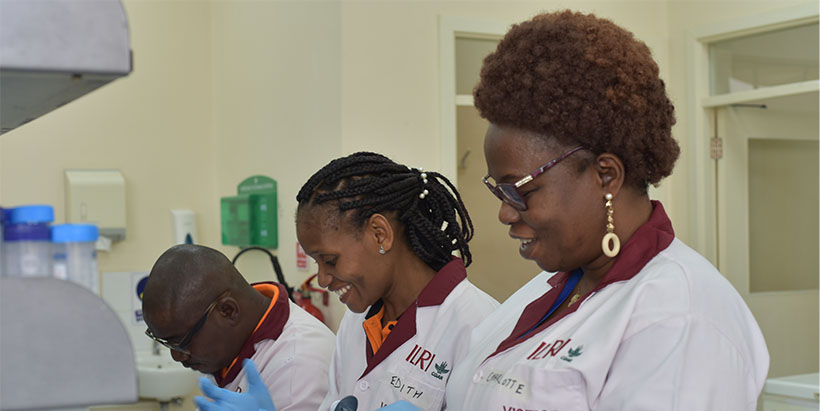
Class III fellows in the lab starting the practical aspect of the course.
The course focuses on key staple and orphan crops essential to African farmers’ livelihoods. After completing the course, participants gain hands-on experience with CRISPR tools and receive ongoing mentorship to establish gene-editing programs at their home institutions.
The AfPBA CRISPR program is sponsored with generous support from several donors, including Stephen M. Badger, Grantham Foundation, Syngenta Foundation for Food and Agriculture Research (FFAR), Bayer, and UM6P Ventures, covering all costs for participation. The program also benefits from partnerships with global leaders in biotechnology, including IITA, IGI, and UC Davis, ensuring world-class expertise is available to African scientists.
“By empowering scientists with cutting-edge tools like CRISPR, we are enabling them to tackle complex agricultural challenges and contribute to the sustainable development of food systems across the continent,” said Dr Allen Van Deynze, Director of the Seed Biotechnology Center at UC Davis and Scientific Director of the AOCC.
“This training is the first of its kind to impart knowledge, skills, and tools to accomplish gene editing in crop plants to national program scientists in Africa,” said Dr Rita Mumm, who oversees capacity building and mobilisation at the AOCC and directs the African Plant Breeding Academy.
This program is the first CRISPR hands-on training course in Africa. It will run for five years and empower 50+ scientists to use CRISPR technology for crop improvement.
The AfPBA CRISPR program represents a bold step in addressing Africa’s agricultural challenges. By fostering innovation, the program builds the capacity of scientists and drives the broader mission of building a resilient and sustainable future for African agriculture.
On 21 January, IITA officially assumed leadership of the Soy Agronomy Center of Excellence, marking a significant milestone in its commitment to advancing soybean production in Nigeria and sub-Saharan Africa. The transition was formalized during a visit by the U.S. Soybean Export Council (USSEC) team to IITA headquarters, where they ceremoniously handed over the baton of leadership to the institute.
IITA DDG Partnerships for Delivery Dr Kenton Dashiell officially receiving the baton from the U.S. Soybean Export Council (USSEC) team.
The USSEC delegation was warmly received by IITA Deputy Director General, Partnerships for Delivery, Kenton Dashiell, and other key officials. During the meeting, representatives from both organizations shared insights on their respective contributions to the growth and sustainability of soybean cultivation across the region.
The USSEC team underscored handover’s importance, emphasizing that the transition aligns with U.S. regulations. A USSEC representative presented Dashiell with a formal handover letter and the curriculum for the Soy Agronomy Center of Excellence, symbolizing the institute’s new role in driving the initiative forward.
Dashiell expressed enthusiasm and optimism and reaffirmed IITA’s commitment to maximizing the program’s impact. He highlighted the importance of strengthening collaboration between IITA and USSEC, ensuring that the partnership fosters new opportunities for both organizations.
As part of their ongoing support, USSEC pledged to facilitate connections with major private sector stakeholders, including West African Soy Industries Limited (WASIL), OLAM, and Flour Mills of Nigeria (FMN), who have greatly benefited from the program. USSEC will leverage its annual conference and exhibition, scheduled for June 2025, as a platform to enhance these linkages.
The IITA team with the U.S. Soybean Export Council (USSEC) team during the handing over ceremony.
Dashiell advised that IITA’s Business Incubation Platform (BIP) should actively participate in the upcoming USSEC conference. He specifically recommended showcasing Soy Agronomy training and NoduMax, a biofertilizer developed by IITA, at the exhibition booth. This strategic engagement aims to attract key private sector players, encouraging them to enroll in the training program and integrate NoduMax into their soybean outgrower networks.
Wrapping up the meeting, USSEC reaffirmed its commitment to leveraging its influence within the soybean value chain to support IITA’s success in leading the Soy Agronomy Center of Excellence. Meanwhile, IITA, represented by BIP Head of Administration and Corporate Governance, Wole Oladokun, will oversee the seamless execution of the Soy Big Players Connect Platform, ensuring greater efficiency and value creation across the soybean industry.
The meeting concluded with both institutions shared commitment to elevating their partnership, fostering long-term success and impactful advancements in soybean agronomy.
French Ambassador to Nigeria, H. E. Marc Fonbaustier (l) and IITA Director General, Dr Simeon Ehui (r).
The French Ambassador to Nigeria, H.E. Marc Fonbaustier, on a courtesy visit to IITA headquarters in Ibadan, reinforced the shared commitment between France and IITA to agricultural development, private sector engagement, and agricultural knowledge exchange.
Expressing admiration for IITA’s work in a meeting with IITA Director General and CGIAR Regional Director for Africa, Dr Simeon Ehui, Ambassador Fonbaustier praised the Institute’s dedication and international talent pool. “I am impressed by the level of commitment and struck by the combination of staff and talents from many different countries. What you do here is not only for Africa but also for the world. We must build bridges and capacity between IITA and France, and I will do my best to speak for IITA,” he stated.
IITA Management team with the French Entourage.
A highlight of the visit was a video presentation showing IITA’s innovation and impact across Africa. During discussions, Dr Ehui emphasized the importance of expanding partnerships. “IITA is keen to strengthen collaboration with France, particularly in funding and agricultural research,” he noted.
Ambassador Fonbaustier inquired about key areas where he could influence support, particularly in mobilizing resources. Discussions highlighted opportunities in agricultural research, private-sector collaboration, and technical education. IITA’s Director for West Africa, Dr Michael Abberton, pointed to existing partnerships in crop research, particularly on cowpeas and yam. Simultaneously, the Deputy Director General for Partnerships for Delivery, Dr Kenton Dashiell, emphasized the role of private-sector engagement in advancing agricultural innovations.
H. E. Marc Fonbaustier discussing with Dr Simeon Ehui.
Regional Counsellor for Agriculture, Embassy of France in Nigeria, Sonia Darracq, who underscored the potential to revitalize partnerships with institutions like CIRAD and enhance cooperation in cocoa research, banana production, and agri-tech education, further reinforced French agricultural collaboration efforts.
“It’s not too late to build stronger synergies, and we are already engaging private-sector players in these discussions,” she remarked.
The meeting concluded with an agreement to explore practical steps, including:
Initiating an exchange program between scientists and students.
Strengthening collaboration in agri-tech education.
Leveraging private-sector partnerships for agricultural development.
As both parties move forward, the renewed engagement between IITA and France sets the stage for deeper cooperation, ensuring that agricultural research translates into impactful solutions for Africa and beyond.
Contributed by ‘Timilehin Osunde
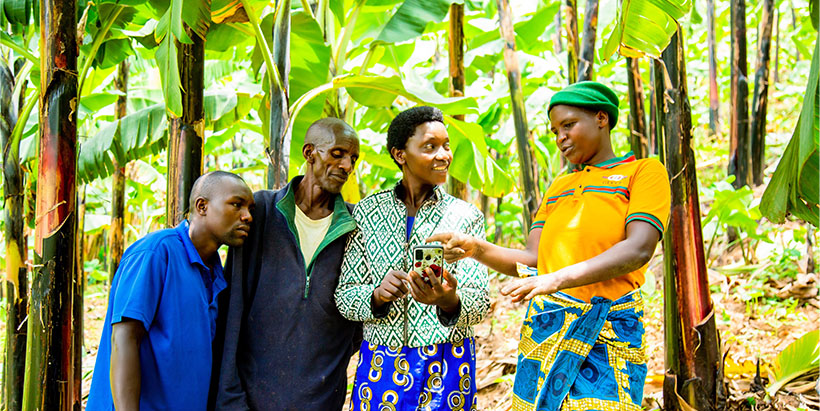
Farmers in a banana farm exploring a moblie app on a phone.
One critical observation stands out in the evolving landscape of agricultural development especially from farmers’ engagements: farmers often understand their agricultural contexts better than anyone else. However, many development and research projects are implemented, with the assumption that the innovations conceptualized by scientists and high-level developers are inherently suitable and can be readily adopted by farmers. The reality is more complex, characterized by gaps between expectations and realities, often resulting in poor adoption and sustainability of innovations.
The ICT4BXW Project exemplifies the importance of aligning project design with the contextual realities of farmers. Over six years (2018-2023), the project was implemented to deploy digital innovation for surveillance and control of Banana Xanthomonas Wilt (BXW) disease in Rwanda.
As a devastating banana disease, BXW has significantly impacted the livelihoods of smallholder farmers. While the project initially envisioned delivering smartphone-based digital tools to address the disease, engagement with farmers and the national extension system revealed the need for a more nuanced approach.
The ICT4BXW Project commenced by creating and disseminating digital tools to help farmers and extension workers combat BXW. However, early consultations highlighted significant barriers to adoption, including low internet connectivity in rural areas, limited digital literacy, and low smartphone ownership among farmers.
Recognizing these challenges, the project realigned and developed a suite of tools tailored to the farmers’ realities. These included USSD (Unstructured Supplementary Service Data), a text-based system accessible on basic mobile phones; IVR (Interactive Voice Response), which provided audio messages in local languages to guide farmers; chatbots for those with limited digital literacy; and traditional communication channels such as radio programs, community meetings, and newsletters to reach broader audiences. This diversified approach ensured that regardless of their technological capabilities, farmers could access the tools they needed to protect their crops.
The ICT4BXW project team navigated the ups and downs of ideating, developing, testing, and scaling the co-envisioned digital tools and took additional steps to distill and publish the critical lessons learned that can guide future digital innovation initiatives in agriculture. Central to these lessons is the importance of valuing farmers’ input at every project stage. The solutions developed must address the specific challenges and constraints of the target community. Leveraging community leaders, such as Farmer Promoters, who are trusted opinion leaders, proved instrumental in disseminating tools and knowledge. Training these influencers ensured wider adoption within communities. Incentives also played a significant role in encouraging farmers to test and use digital tools. However, when the incentives ended, there was a noticeable decline in tool usage, underscoring the need for sustainable motivation strategies.
The project team underscored a critical point: “The Fourth Agricultural Revolution, characterized by digital and technological advancements, is reshaping global food systems.” African farmers must be part of this transformation to ensure sustainable food security. However, the engagement and empowerment of smallholder farmers are central to attaining the vision for transformation. Projects can achieve greater relevance, adoption, and impact by engaging farmers in the development process and designing solutions that reflect their realities.
While the ICT4BXW Project made significant strides in combating BXW, it also unraveled the challenges of sustaining digital innovation in smallholder agricultural systems. The gradual decline (without incentive) and subsequent resurgence (by reintroducing incentive) in using the core digital tool after the end of the project underscore the importance of consistent engagement and support. Future initiatives must explore ways to ensure long-term adoption by integrating digital tools into broader agricultural support systems.
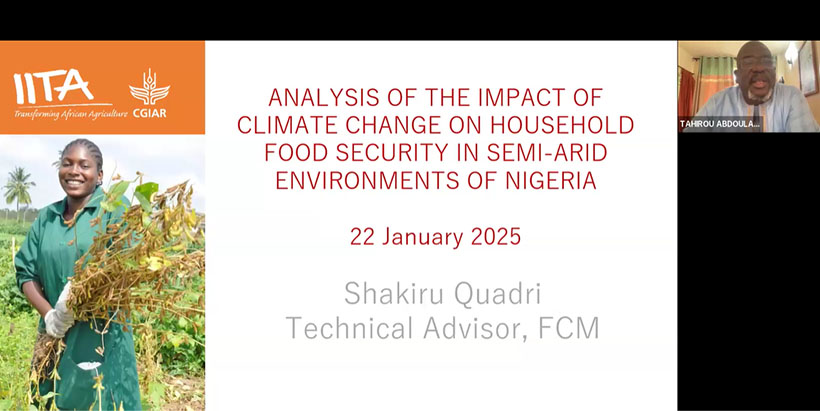
Kicking off the IITA Knowledge Café series for 2025, Shakiru Quadri, the IITA Technical Advisor for the CGIARFragility, Conflict and Migration (FCM) Initiative, delivered an insightful presentation on his research work. The discussion, which was held on 22 January and coordinated by IITA Director for Sahel Africa Hub Tahirou Abdoulaye, focused on the impact of climate change on household food security in the semi-arid regions of Nigeria.
IITA Director for Sahel Africa Hub, Tahirou Abdoulaye, coordinating the Café.
Quadri mentioned that the study was inspired by his research team’s experience working in fragile and conflict-affected areas of Nigeria. These regions are uniquely vulnerable to climate change due to their reliance on natural systems and resources critical for survival in dryland environments. He added that climate change has become a pressing issue globally, significantly affecting agriculture and food security. This reality spurred researchers to investigate the implications for communities in northern Nigeria.
Conducted in the semi-arid eco-climatic zone, where recurrent droughts and conflicts are common, the study analyzed data from 626 respondents across three states: Borno, Katsina, and Sokoto. Using secondary data from the Food and Agriculture Organization (FAO) alongside cross-sectional data, the team employed multi-stage sampling techniques and specified several linear and non-linear models to analyze the trends.
The study showed that food security across the three states is highly vulnerable to climate variability, with a statistically significant impact at the 1% level. Forecasts for five years (up to 2025) shows a continued decline in food availability. A combined normalized livelihood exposure index of 0.79 indicates a high level of exposure to climate risks, while the adaptive capacity remains moderate at 0.35. The data revealed a 51% reduction in household food availability due to conflicts. Also, variables such as rainfall, drought, temperature, and conflict were found to significantly affect food security at both 1% and 5% significance levels.
The study concluded that climate variability and extreme weather events, compounded by disruptions from the COVID-19 pandemic, rising fertilizer and fuel costs, widespread banditry, and insurgency, have significantly destabilized the region’s food systems. The likelihood of a major food system shock remained high through 2024.
IITA Technical Advisor for FCM project, Sakiru Quadri, presenting on his research.
The study has proposed several solutions to address these challenges, including promoting drought- and flood-tolerant crop varieties, adopting climate-smart and precision farming practices, and expanding agricultural innovation. The suggested solutions were also to invest in functional irrigation systems, routinely desilting rivers and streams, and strengthening social safety nets.
Developing sustainable, climate-adaptive food systems that minimize environmental damage and promote long-term resilience were also suggested solutions.
Quadri emphasized the urgent need for coordinated efforts to protect vulnerable communities and build sustainable systems capable of withstanding future climate challenges. “There is a need for collective action to secure food systems for the 21st century and beyond,” he concluded.
Contributed by Ochuwa Favour Daramola
IITA-DDG P4D Kenton Dashiell assuring Aletheia University of a promising partnership.
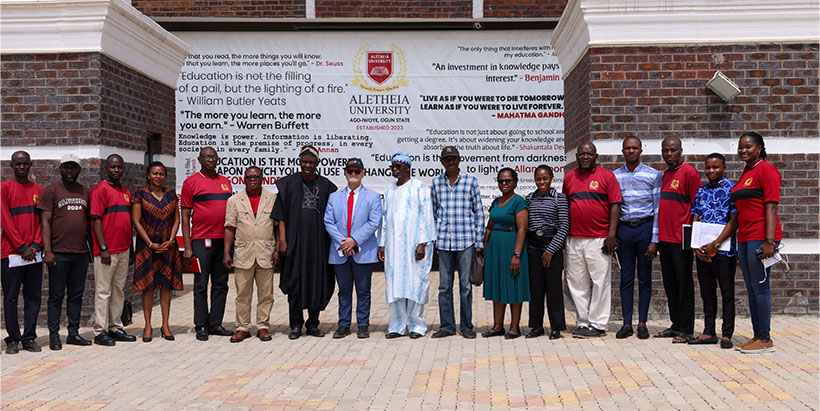
On 22 January, the IITA–CGIAR Deputy Director General Partnerships for Delivery (P4D), Dr Kenton Dashiell, accompanied by a team, paid a courtesy visit to Aletheia University, Ago-Iwoye, Nigeria. Highlight of the visit was the signing of a Memorandum of Understanding (MoU) between the two parties to advance agricultural research, capacity building, and sustainable development in Nigeria.
In his opening remarks, Aletheia University Vice-Chancellor, Prof Amos Onasanya, warmly welcomed the IITA team and provided an insightful overview of the university’s mission and activities. He emphasized Aletheia’s unique approach to education, which integrates moral values, academics, technology, entrepreneurship, agriculture, and ICT into its curriculum. Prof Onasanya explained that every university graduate has at least four distinct skills, including agricultural expertise, to contribute to eradicating hunger and driving Africa’s economic growth.
The partnership with IITA, leveraging the institute’s extensive research portfolio and proven successes in innovation scaling, will enable Aletheia University to focus on tropical agriculture as a cornerstone for research, publications, and capacity development for students and staff.
Representatives from IITA and Aletheia University team after the meeting.
In his address, Aletheia University’s Chancellor and Founder, Major General S. A. Awosanya (Rtd), lauded IITA’s dedication to combating food insecurity across Africa. He shared his vision for establishing Aletheia as a transformative force within Nigeria’s academic system, designed to foster sustainability and innovation. He expressed optimism that the collaboration with IITA would lead to the development of a thriving agricultural system that aligns with the university’s founding objectives.
Dashiell, impressed by Aletheia’s mission and educational model, commended the institution for its forward-thinking approach. Echoing the sentiments of the Aletheia team, he noted that the university’s emphasis on skill acquisition and entrepreneurship aligns seamlessly with IITA’s vision of empowering youths to drive food security and development.
“Based on our shared goals, I am thrilled about this partnership,” Dashiell remarked. “Together, we will identify programs and initiatives to engage and inspire millions of young people.”
During the discussion, the IITA Youth Agribusiness (IYA) Communication Officer, Babatunde Ajaja, encouraged adopting climate-smart agricultural practices to achieve sustainable outcomes. He highlighted IYA’s efforts across Africa to reposition agriculture as a profitable enterprise for the youth, emphasizing the potential impact of this partnership.
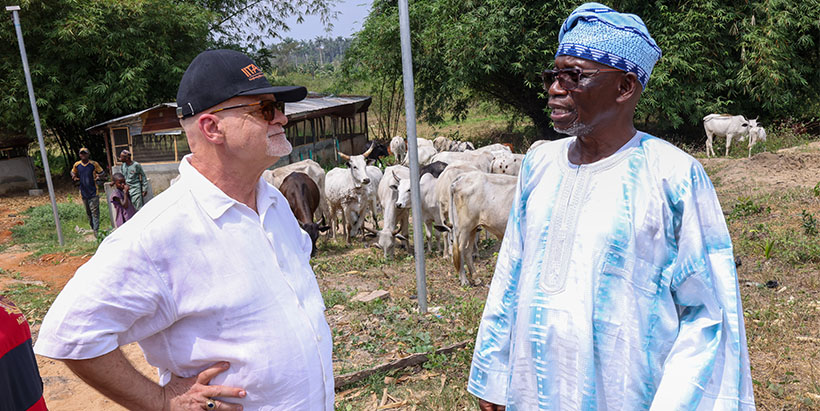
IITA-DDG P4D Kenton Dashiell with Aletheia University’s Chancellor and Founder, Major General S. A. Awosanya on a tour of the university’s farm.
Additionally, IITA Partnership and Stakeholder Engagement Manager Adetola Adenmosun underscored the critical role of ICT in agriculture and encouraged Aletheia to integrate advanced digital technologies into its agricultural initiatives to expand its reach and impact.
Prof Onasanya concluded the session by emphasizing the partnership’s potential to catalyze agricultural projects that could extend beyond Ogun State to other regions in Nigeria.
“This collaboration is pivotal to harnessing our shared strengths for impactful implementation,” he said.
The visit concluded with a tour of Aletheia University’s campus and farms, during which the IITA team saw the university’s agricultural output and innovative livestock-rearing practices. Dashiell admired the impressive farm operations and the application of modern technology in cattle rearing.
The partnership between IITA and Aletheia University marks a significant step toward fostering sustainable agriculture, advancing educational innovation, and empowering the next generation of agripreneurs in Nigeria.