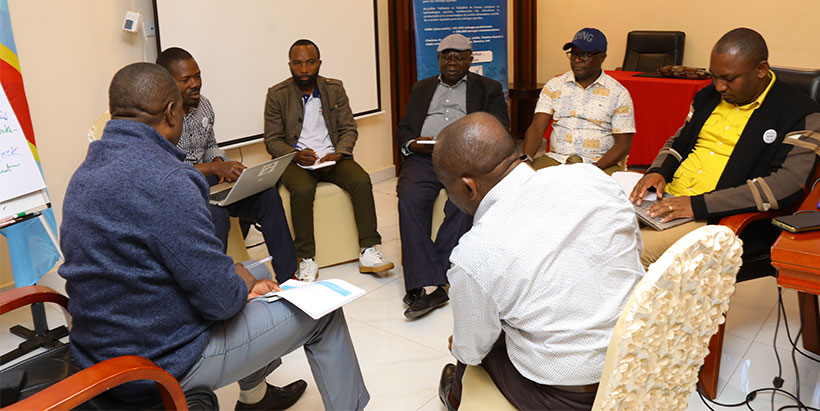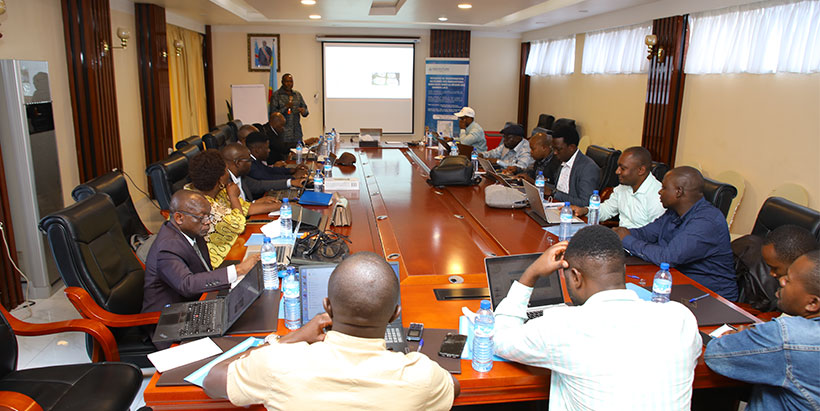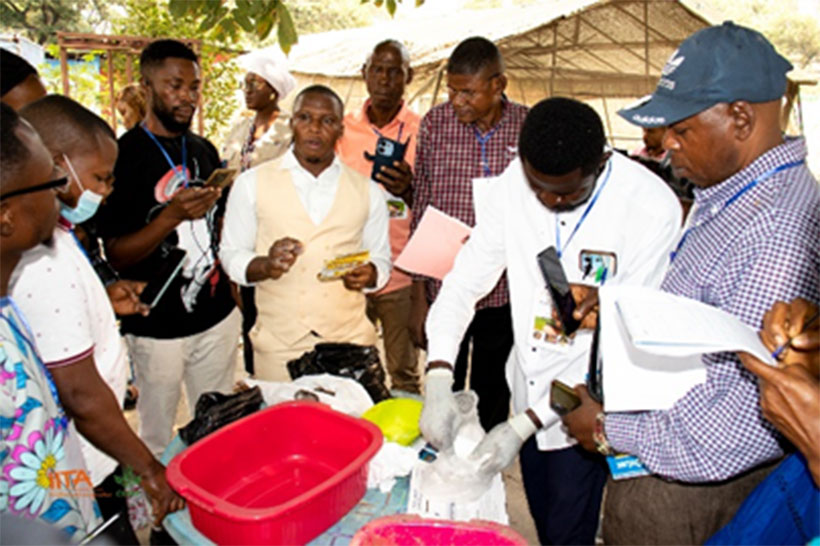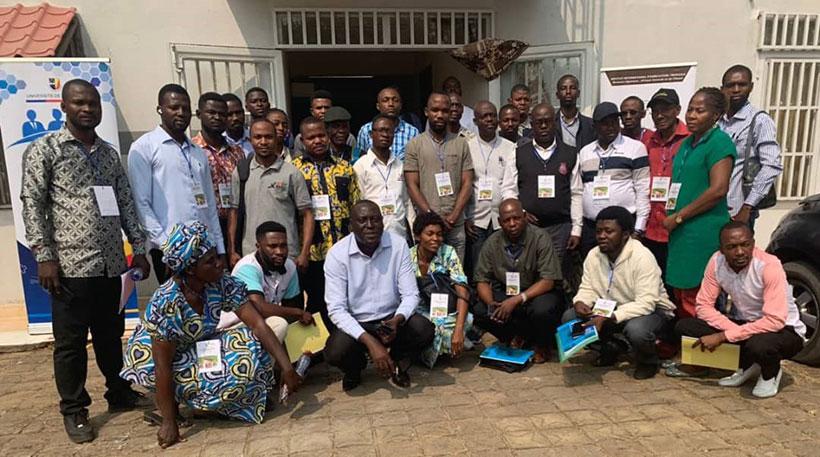
As part of the Black Soldier Fly (BSF) for Bio-Circular Economy and Environmental Sustainability (BBEST) project activities, led by IITA and funded by the Norwegian Agency for Development Cooperation (NORAD), one of the project’s partners in the Democratic Republic of Congo (DRC), the Institut National pour l’Etude et la Recherche Agronomiques (INERA), held a two-day technical workshop in Kinshasa on 19-20 July. The workshop proposed an inter-ministerial decree and aimed to define the standards for using black soldier fly larvae in animal feed production.

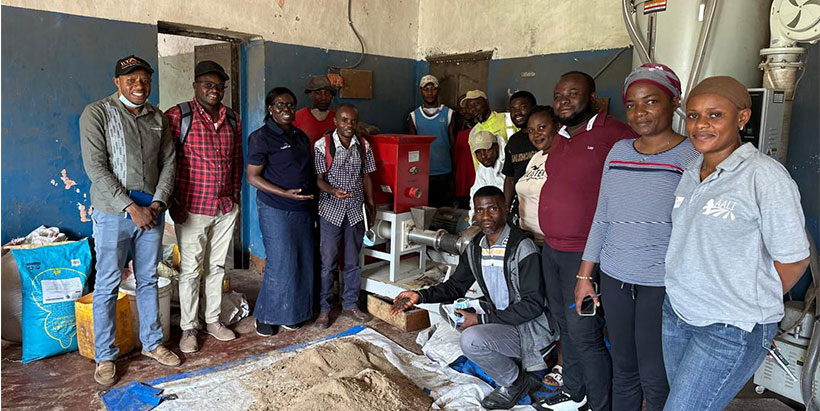
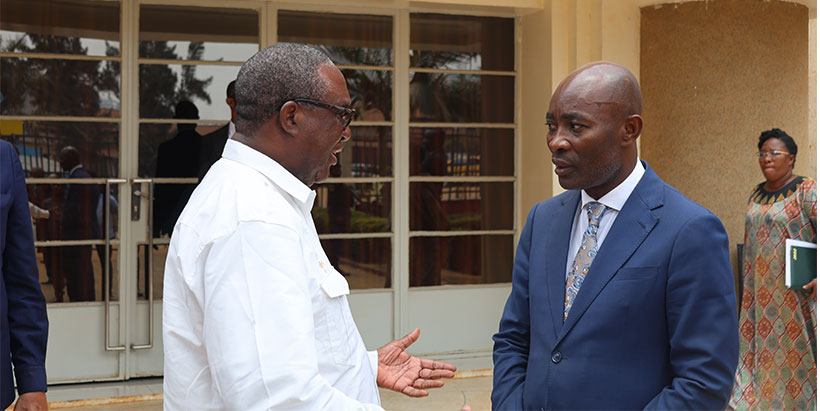
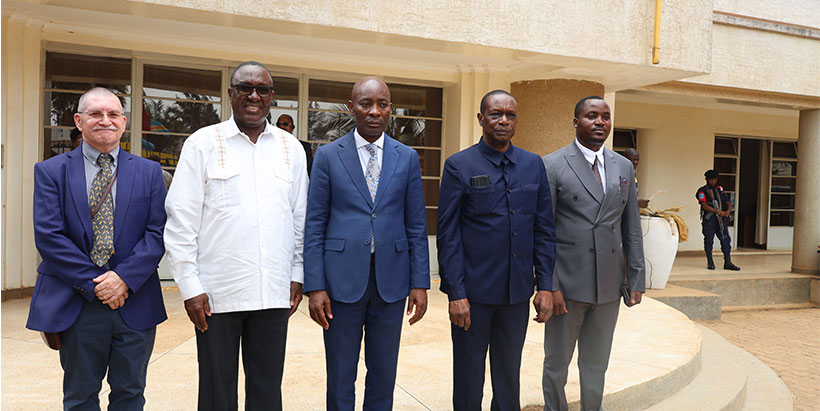
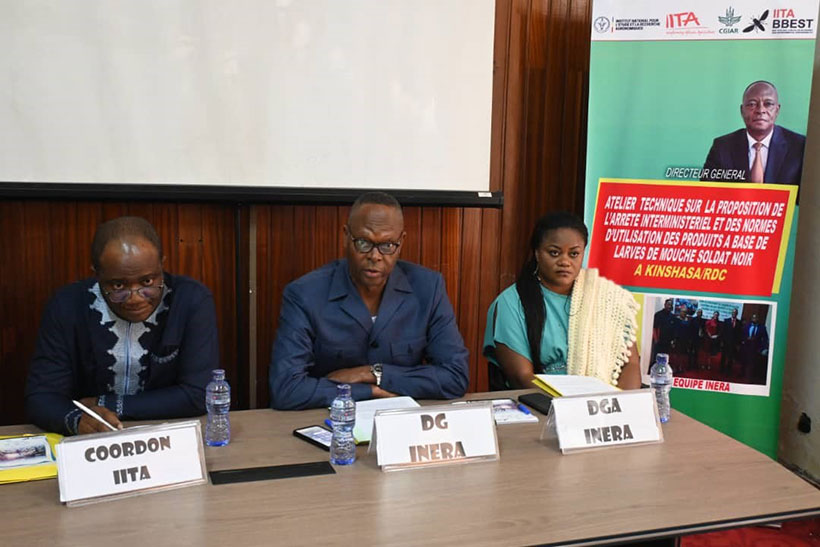
IITA BBEST Project Coordinator and INERA Authorities at the workshop.

The event brought together various technical experts, representatives of the relevant ministries, researchers, members of environmental civil society, and actors in organic waste recycling. The workshop’s highlight was a review of standards for using black soldier fly larvae (Hermetia illucens) and their by-products in animal feed and vegetable production.

The discussions highlighted the critical importance of these standards in ensuring food safety and promoting environmental sustainability. Participants explored how these standards can provide safe and healthy food by reducing pathogens such as Escherichia coli and Salmonella in animal feed.

From an environmental perspective, using black soldier fly larvae offers an innovative solution for recycling organic waste, thereby reducing waste volumes and the cost of agricultural products. This practice significantly contributes to sustainability by transforming food residue into valuable resources, promoting more environmentally friendly agriculture.

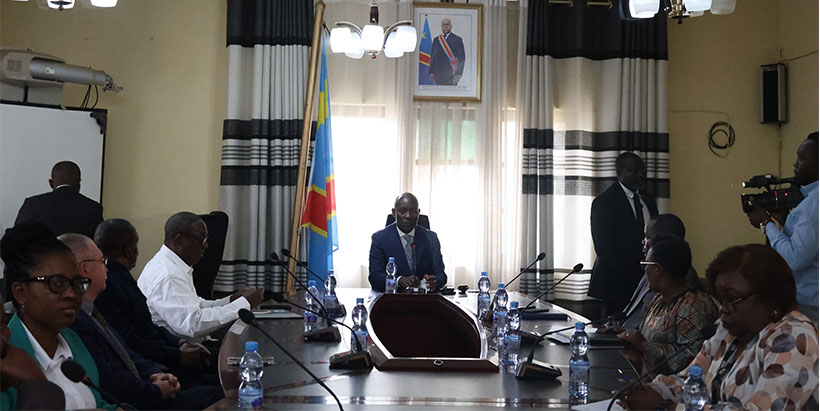
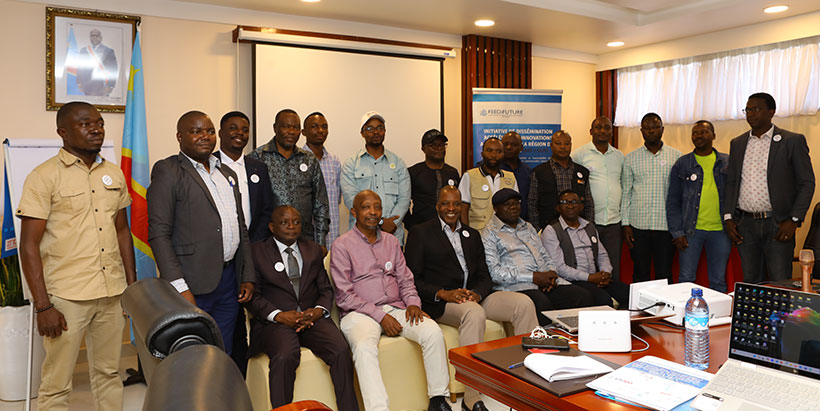
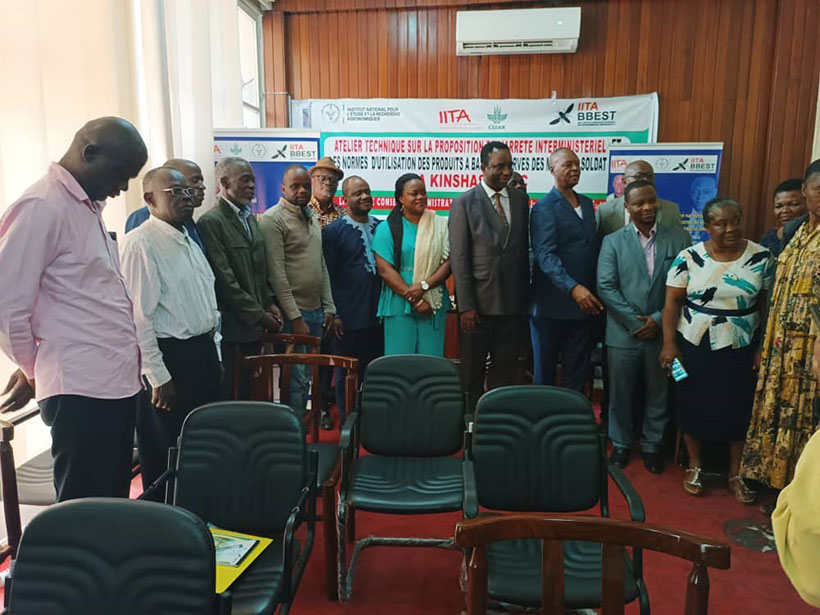
Participants at the standard validation workshop.

In addition, the proposed standards structure a market for these products, increasing the competitiveness of local products and offering small producers viable alternatives to economic and climatic challenges.

In terms of regulatory compliance, these standards ensure that production practices comply with European regulations, making it easier to place products on international markets. They cover organically produced feed production, preparation, import, processing, and marketing. By ensuring a sustainable and secure value chain, these standards are essential for developing organic farming in DRC, opening up new opportunities for local producers.

Contributed by Faustin Lokinda and Francisca Ocloo


In their stride to promote sustainable agriculture practices among farmers, the University of Kinshasa (UNIKIN), a partner of the BSF for Bio Circular Economy and Environmental Sustainability (BBEST) led by IITA, organized a workshop on rearing black soldier fly (BSF) in Kinshasa in DRC. The three-day training from 29 to 31 July aimed to equip agripreneurs to produce BSF and its larvae and incorporate it into quail, chicken, fish, and pig feed.

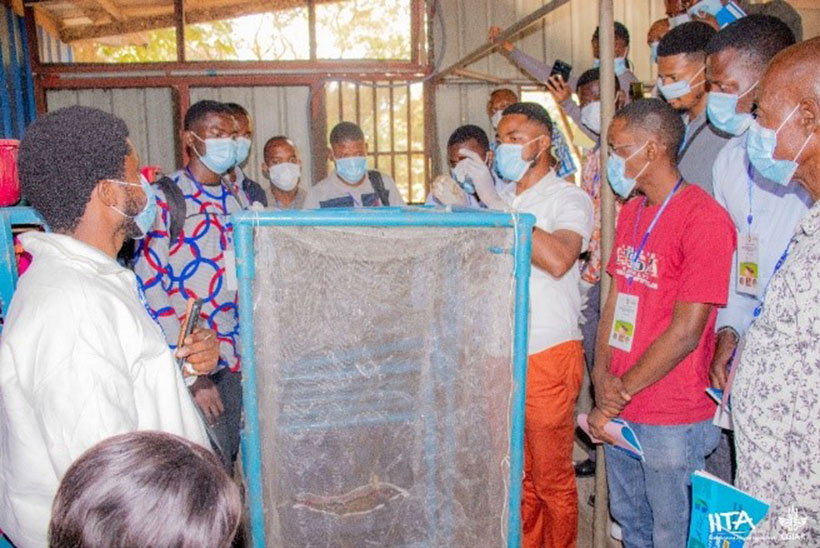
Practical workshop session demonstrating how to establish the adult fly cages.

In his welcome address, Prof. Patrick Mafwila gave an overview of the chicken, fish, and pig feed and organic fertilizer value chain development using BSF-based urban biowaste processing in Ghana, Mali, Niger, and DRC, funded by the Norwegian Agency for Development Cooperation (NORAD), highlighting the various experiments carried out on animals including quails, chickens, fish, and pigs.

Joel Mangana highlighted the overall and specific objectives of the BBEST project. His presentation focused on BSF production, explaining to the participants the need for using organic waste in the fly’s diet. He also specified the need to allocate space for the rearing, with all the possible equipment, including the black cages, the nesting boxes, mosquito nets, and shelves. He elaborated on the elements conducive to successful breeding, such as temperature, light, and the quality of the organic waste. He emphasized the fly’s life cycle and the importance of rearing it.

The theoretical training was followed by a series of questions from the participants who visited the black soldier fly-rearing unit at UNIKIN.

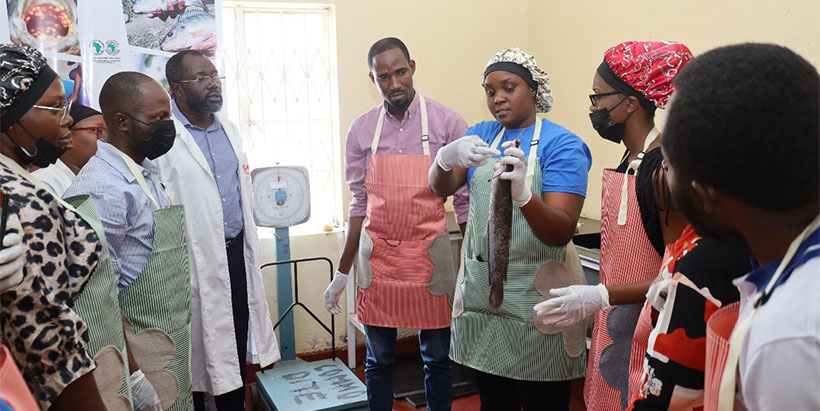
Participants learning to incorporate the black soldier fly in animal feed.

On the second day of the training, three groups were formed around the three training modules. Toussaint Mabiala taught the first module on incorporating larvae meal in poultry feed, Pierrette Nzaba taught the module on using larvae meal in pig feed, and Pascal Kokota taught the module on the incorporation of larvae meal in fish feed. After the three theory modules, the beneficiaries practiced mixing larvae meal with pig, fish, and poultry feed.

Following the two days of theoretical sessions, each group discussed incorporating the larvae meal into pig, poultry, and fish feed.

Through the training, Antoine Roger Kadima Tshiyombo, an agripreneur, attested to the challenges of the high cost of animal feed. With the training provided by UNIKIN and the BBEST project, he could produce animal feed locally and reduce production costs.

According to Jaccard Ngania, “The training provided the needed answers to all the questions he had before attending the training and recommended to the organizers to provide such training throughout the country.”

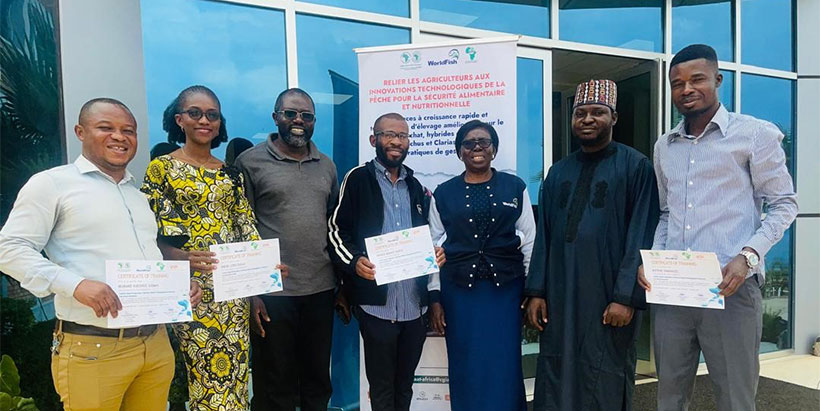
Workshop attendees at the BSF training at UNIKIN.

The five beneficiaries supported in various ways by the IITA BBEST project, namely, Aron Lukanu of the CoopĂ©rative Agricole de Centre de Kimbanseke (COOPACEK), Mpova Ewing of the CoopĂ©rative Agricole de Centre Maraicher de N’djili, (COOPACEN), Jean Rene Mangiba of the Association des Pisciculteurs pour le DĂ©veloppement au Congo, (APIDEC), Lipasa Ngandu of the Judith farm, and Stanis Kambula of the Kabala Kamesa Kalundi (KAMKA) farm shared their experiences on rearing black soldier fly and encouraged participants to adopt the rearing and mass production of the BSF.

The participants thanked the IITA BBEST project, UNIKIN, and NORAD. They asked for support from the IITA BBEST project to enable them to carry out their activities, as they understood the importance of black soldier fly rearing as a solution to the problem of the high cost of protein meals in the formulation of animal feed and organic fertilizer.

Contributed by Claude Bahati and Francisca Ocloo

Delivery of legal documents from the youth agribusiness owners.

Engaging youths in agricultural entrepreneurship is crucial in alleviating the increasingly growing youth unemployment and boosting rural transformation. This is prompting most countries and national and international development partners to prioritize agricultural entrepreneurship as a means of economic growth.

With this in mind, IITA has initiated a program targeting young agripreneurs in a bid to develop entrepreneurship in agri-business through imparting skills and to create a conducive environment allowing for youths (both girls and boys) to own profitable agri-businesses, using an ad hoc incubation model. The program aims to create—along with priority agricultural value chains—business opportunities and decent employment for young girls and boys.

Beneficiaries of the entrepreneurship program.

Through this initiative, IITA is involved in various projects to promote youth entrepreneurship, such as the “Projet d’entreprenariat des jeunes en agriculture et agro-business” [Project for Youths’ Entrepreneurship in Agriculture and Agri-business] (PEJAB project), which aims to promote the entrepreneurship development among young men and women in agricultural and agri-food value chains, by way of strengthening youths’ skills and supporting the said youths in setting up and managing viable businesses, and making it easier for them to access finance.

In the framework of this DR Congo government-led project, IITA supported over 60 youths over three months through training in cross-cutting modules, mentoring and coaching, experience-sharing and learning visits, and market access facilitation.

Representative of the Minister for Agriculture delivering opening remarks.

Such action is driven by IITA’s mission, which partly involves engaging youths in agribusiness through its youth entrepreneurship development program, which includes technical and managerial training in entrepreneurship.

After incubation, IITA, in collaboration with PEJAB, held a workshop to present and finalize the business plans of young entrepreneurs in the presence of stakeholders involved in promoting youth, bankers, and members of the provincial government.

During the workshop, over 20 youths presented their respective bankable business plans to the attending officials, thereby applying for financial support.

Contributed by Isabelle Buhoro

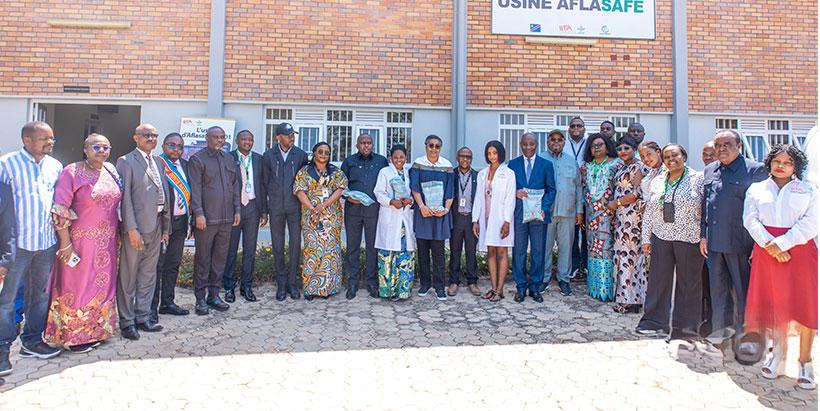
Following the activity of the Agricultural Transformation Agenda program in the Democratic Republic of Congo (ATA-DRC) to transform the agricultural sector, DRC Prime Minister Judith Suminwa Tuluka, accompanied by South Kivu Provincial Governor Jean Jacques Purusi, recently paid a courtesy visit to the IITA Olusegun Obasanjo research campus in South Kivu Province.

Tuluka’s visit was driven by a clear objective: to gain an in-depth understanding of research for development and partnership for delivery activities conducted by IITA in South Kivu. It also gave her insights into the significance and benefits of the ATA-DRC program.

ATA-DRC is a program initiated by the Congolese government with the endorsement of DRC’s President, His Excellency Felix Antoine Tshisekedi, to improve the agricultural sector of DRC, foster sustainable development and economic growth, and improve the population’s livelihoods. The DRC Ministry of Agriculture implements the program and receives technical support from IITA and the African Institute for Agricultural Leadership (AALI).

Prime Minister Judith Suminwa Tuluk visiting a youth agripreneur display stand during a mini exhibition.
The meeting outlined a comprehensive framework for learning and strengthening the collaborative efforts crucial for the success of the ATA-DRC program in its various niches, laying the groundwork for its ongoing implementation.

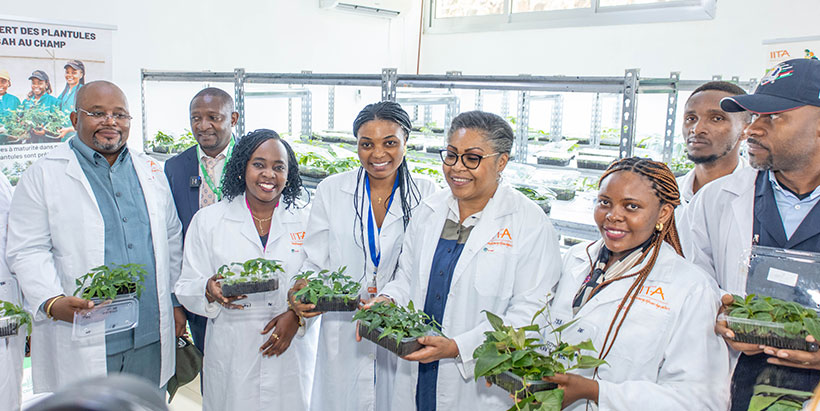
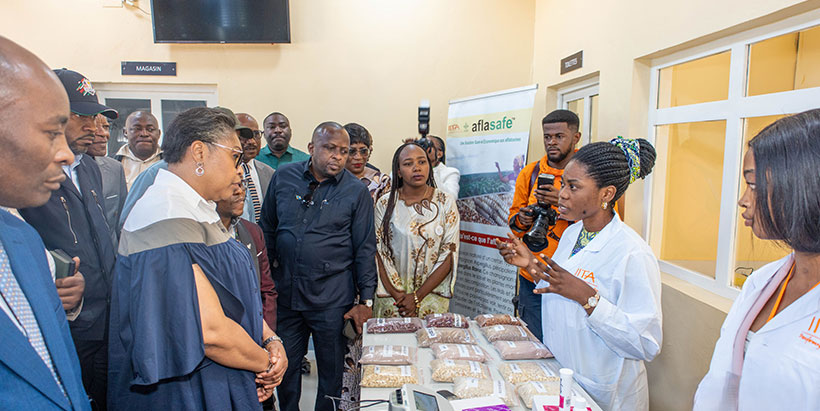
During the visit, the team explored the research facilities—Tissue Culture, Aflasafe, Semi-Autotrophics Hydroponics (SAH) laboratories, hatchery, and AALI. Tuluka expressed her excitement, stating that the meeting provided an invaluable opportunity to gain a deeper understanding of the significance and advantages of the project with IITA.

“I am committed to continuing this partnership and advancing effectively towards achieving tangible results to ensure food security in DRC. I extend my heartfelt congratulations to the entire team, particularly the agripreneurs and the courageous young people,” she said, expressing her support.

To wrap up the meeting, the team agreed to invite AALI President Nteranya Sanginga to harmonize the form and content of the ATA-DRC program to ensure its coherence and effectiveness and develop strategies for scaling up the program in other provinces of DRC. Therefore, “this collaborative effort would optimize the program’s impact across the country, fostering agricultural development and economic growth,” Tuluka said.

Contributed by Isabelle Buhoro
On 7 May, IITA Kalambo hosted a scientific conference to celebrate the Day of Agroecology 2024. Representatives from research institutions, educational institutions, and national and international NGOs attended the conference under the IITA and ETH Zurich DELIBERATE Project.

This Day of Agroecology aligned with the project’s activities for exchanging knowledge and research results with the scientific community, farmers, and players in the coffee and soybean agri-food value chains in DR Congo. The conference provided a platform for participating organizations to present their agroecology-related activities and programs, including the consortium of South Kivu universities: UniversitĂ© Catholique de Bukavu (UCB), UniversitĂ© Officiel de Bukavu (UOB), UniversitĂ© EvangĂ©lique en Afrique (UEA), and UniversitĂ© Catholique du Graben (UCG).

Million Belay of the civil society organization Alliance for Food Sovereignty in Africa (AFSA) spoke about the research and his institute’s practical experiences in agroecology and food sovereignty in Africa. Participants actively contributed to the conference’s objective of promoting exchanges on agroecology research as a science, practice, and social movement. Furthermore, the conference aided in disseminating case results to relevant regional players and strengthened collaborations between various institutions. The conference was attended by 125 people, including students, teachers, researchers, and NGO staff.

The DELIBERATE Project, powered by IITA, ETH Zurich, and the Swiss Federal Institute of Technology, links the deliberative quality of soy and coffee value chains to ecological and social “foodprints” in South Kivu and Kasai-Lomami, DR Congo.

The conference participants thanked the project’s financiers, IITA and UCB, for facilitating the program. The organizers appreciated all the attendees for making the day memorable.

Contributed by Johanna Jacobi

Related story: https://www.iita.org/news-item/iita-and-partners-to-hold-agroecology-day-in-dr-congo/


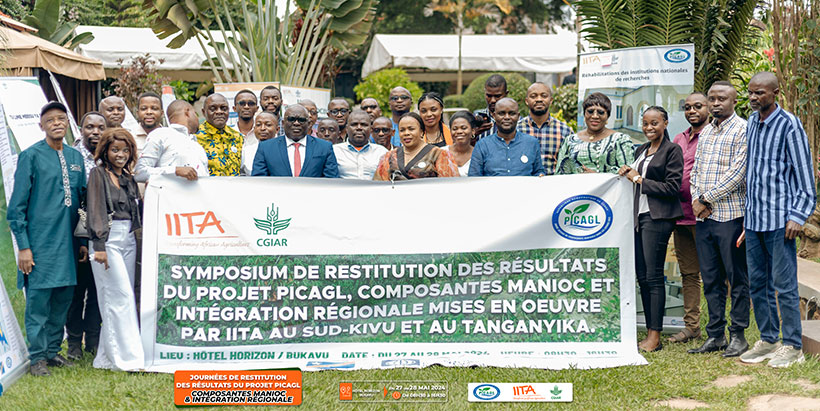
As an implementing partner in the provinces of Sud-Kivu and Tanganyika in eastern DRC, IITACGIAR has just unveiled the results achieved by the cassava and regional integration components of the Projet Intégré de Croissance Agricole dans le grand-lacs (PICAGL).

Participants after the PICAGL symposium in DRC.

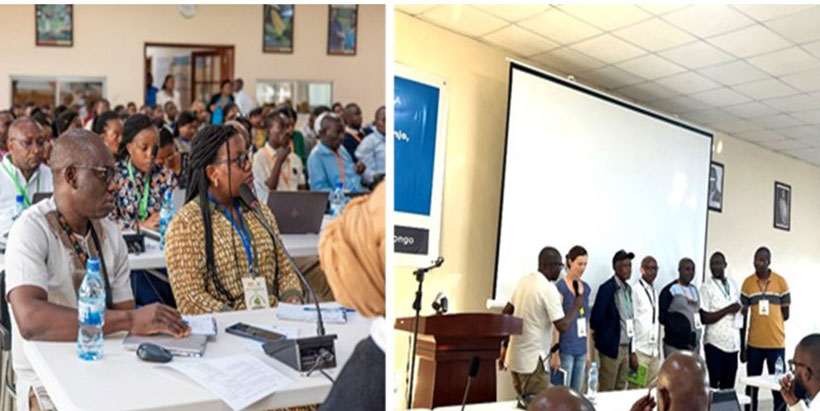
The symposium was held over two days in Bukavu, the capital of South Kivu, from 27 to 28 May. During the symposium, IITA reviewed the major achievements of this project, which has provided improved varieties of cassava and rice in the two provinces concerned.

According to IITA Deputy Director General, Research for Development (DDG-R4D), Bernard Vanlauwe, in addition to the improved seeds introduced by PICAGL, the project’s two components have also enabled the rehabilitation and equipping of laboratories at CRSN Lwiro and INERA Mulungu in Kabare territory, and the construction and equipping of the aflatoxin analysis laboratory.

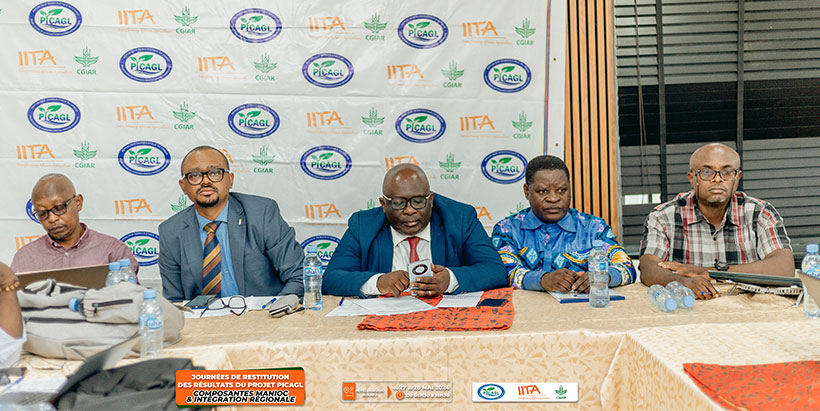
Facilitators at the symposium.

Thanks to PICAGL, Tanganyika now has outlets selling high-quality cassava flour (planifiable flours), making manufacturing cassava-based products such as Chikwange, bread, and cookies easier. The results show that the project has exceeded the planned target of 14 tonnes per hectare to over 20 tonnes per hectare for cassava yields in the field. Similarly, the household project has reached over 44,000 in Tanganyika out of a planned 52,000.

Regarding regional integration, the project’s achievements include scholarship holders who have obtained their Masters’ degrees and the introduction of fortified organic maize seeds.

Added to this are agroforestry and reforestation activities, including training for producers and the various players in the value chain.

The project’s results include several studies, such as the food quality project, which has established a major innovation in South Kivu: an Aflasafe plant producing 5 tons per day. The plant helps to ensure healthy and toxin-free food.

Poster presentation during the PICAGL symposium.

The results presented over the two days revealed the significant progress made, notwithstanding some difficulties encountered during the implementation of the project’s activities.

In his presentation, the head of the PICAGL project at IITA, Leon Nabahungu, praised the Institute’s contribution to the success of this Congolese government project to improve agricultural production. He estimated that PICAGL’s cassava and regional integration components were more than 90% successful.

Nabahungu asserted, “For regional integration, the work was much more related to doing research that can help the rice, milk, and agroforestry value chains. So, we worked with government departments like INERA and SENASEM to research and find solutions. There was also the question of training INERA staff because we know that it’s the institution that will ensure the sustainability of this project, and to be a researcher, you have to study and have either a master’s degree or a doctorate.”

He explained further, “For cassava, the target was over 80,000 households (60% in South Kivu and 40% in Kalemie). We have invited our partners to show the results we have achieved and to discuss the lessons learned during the project’s implementation and sustainability. The success rate is 95%.”

He added, “In South Kivu and Tanganyika, we had a target of over 80,000 households, but we reached 20 million, and we think we have done a bit more. The donor is there and can easily see what has been planned and what has been done. In South Kivu, 64,000 households have benefited directly from our seeds and agricultural technologies for manioc.”

The provincial coordinator of PICAGL in Tanganyika participated in this feedback symposium and praised the results. For Jean Paul Batibuha, the lessons and results will enable the central and provincial governments and development stakeholders to successfully implement future development projects in the two provinces (South Kivu and Tanganyika).

He reminded participants to capitalize on the results presented and perpetuate PICAGL’s achievements.

Contributed by Isabelle Buhoro
Agroecological concepts and principles have gained importance in scientific, agricultural, and policy fields in recent years.

In the South-Kivu province – in the Democratic Republic of the Congo –, some research institutions, academia, NGOs, and farmers’ organizations are currently carrying out various activities and programs relating to agroecology. Part of these activities are carried out in partnership while others are implemented in a stand-alone manner.

In line with the DELIBERATE project, for instance, the International Institute of Tropical Agriculture (IITA) and the Swiss Federal Institute of Technology Zurich (ETH Zurich) jointly embarked on research undertakings in agroecology in the South-Kivu province.

This also applies for CANALLS Project, in which several national and international partners are engaged in the joint search for solution approaches towards an agroecological transition. Some local universities – including the Catholic University of Bukavu (UCB), the Université officielle de Bukavu (UOB) and the Université évangélique en Afrique (UEA) – also administer diploma (Degree) curricula in agroecology.

Hence, in a bid to share the results of the research carried out, IITA and ETH Zurich – in collaboration with the Catholic University of Bukavu (UCB) – are organizing an Agroecology Day, under the DELIBERATE project which sets a nexus between quality deliberative discussion regarding soybean and coffee value chains and the ecological “food footprints” in South-Kivu and KasaĂŻ provinces.

It is in that light that a Conference is planned, as a forum for sharing experiences and knowledge on agroecology, so as to have a wholesome picture of activities relating to this area in the South-Kivu.

The said Conference will be held on May 7, 2024, at the Olusegun Obasanjo Research Campus (IITA Station) in Kalambo, South-Kivu, and is expecting about 120 attendees.

It is worth noting that, as side events of the Conference proceedings, two workshops are planned in collaboration with soy and coffee producer organizations, for the purpose of strengthening the cooperatives’ potential and discuss the roles and ways of improving the peasant organizations’ functioning for sustainability.


Youth entrepreneurs at the chilli pepper drying stand.

In line with the mandate of the PICAGL integrated agricultural growth project in the Grand-Lakes region, implemented by IITA as part of its youth entrepreneurship development program in the cassava component, young entrepreneurs from the DRC, Rwanda, and Burundi took part in exchange sessions, intending to boost their activities by drawing inspiration from the models of other young people who are sufficiently advanced in entrepreneurship.

These exchange visits enabled young people from the countries of the Great Lakes region to learn about the reality and operation of their small and medium-sized enterprises (SMEs).

In Kigali, Rwanda, young people from  Bukavu and those from the Kabare territory in South Kivu in the DRC took an interest in livestock breeding and fish farming.

A female entrepreneur inspecting a macaruja fruit before harvest.

Accompanied by their colleagues, they visited GASOGI FISH RABBIT PIG (over five years experience) FARMLTD, a fish farm with a semi-modern hatchery with a production capacity of modern hatchery with a production capacity of 30,000 alvins per week and rabbit breeding, and the SEVERINE BUSINESS company (five years experience) specializing in laying hen breeding, with a henhouse with a capacity of almost 6,000 laying hens, which it delivers to its various customers in Rwanda and the DRC.

In Burundi, on the other hand. The youths that came from the RDC, promoted by IITA works in the production, transformation and commercialization of agricultural products were able to visit the fruit and pepper plantations for the purpose of exchanging experience and learning from their agripreneur colleagues in the country.

The companies in question are Best Food Solutions Plus and SIFA Business (SAFIBU), which specialize in the processing of chili pepper and maracuja juice, and tangawizi – ginger and infant flour, respectively.

The young people discussed the opportunities offered by the environment and the challenges they face daily, as well as the good agricultural practices used to produce fruit for the processing of maracuja juice in Bujumbura.

SIFABU, for example, produces an average of 80 cases of 30 bottles a week and employs at least 100 people in the various raw material production sites and the factory.

A female entrepreneur inspecting the chilli pepper during the drying process.

At the same time, in Burundi, the team of entrepreneurs from Bukavu, Plaine de la Ruzizi in South Kivu, and Kalemie in Tanganyika province exchanged views with MDE (Maison De l’Entrepreneur), a youth business incubator in Burundi.

It supports young people working in the market-oriented value chain, especially in fruit, pepper, and vegetable production. MDE’s support includes technical training, coaching, and facilitating access to credit.

Contributed by Isabelle Buhoro
IITACGIAR and six national agricultural research centers have signed the Mchare and Matooke Regional Target Product Profiles to enhance banana breeding and breeding impact in East Africa to better serve smallholder farmers and their families. This agreement, signed during the recent East Africa Banana Network Meeting in Kampala Uganda, aims to develop and test new banana hybrids jointly in the highlands of Eastern Africa, following standardized breeding and testing procedures.

The country banana research leads signing the Mchare and Matooke Regional Target Product Profiles. (Photo: G.Ndibalema/IITA).

The agreement was signed by country banana research leads from Burundi, the Democratic Republic of Congo, Kenya, Rwanda, Uganda, and Tanzania in the presence of IITA Head of Breeding Hapson Mushoriwa and representatives of Genetic Innovation’s Accelerated Breeding Initiative. These countries represent about 40% of banana production in Africa, and this initiative marks the establishment and launch of the East African Banana Breeding Network, which aims to accelerate the delivery of improved banana varieties in the region.

IITA Banana Crop Lead Rony Swennen highlighted the significance of the network, noting that traditional banana breeding processes are time-consuming and costly. He emphasized that through the network, breeding and testing can be expedited, with a focus on meeting specific country needs rather than solely relying on what breeders can offer. In the end, farmers will benefit more quickly from the new varieties.

 The country banana research leads handing over the signed protocol to Dr Rony Swennen. (Photo: G.Ndibalema/IITA).
The country banana research leads handing over the signed protocol to Dr Rony Swennen. (Photo: G.Ndibalema/IITA).

Just like the breeding of all RTB crops—banana, cassava, potato, sweet potato, and yam—is being tackled together instead of on an individual crop basis, through the Bill & Melinda Gates Foundation-funded project, RTB Breeding, it is important and practical for NARS to also work together despite the different countries and realities they represent, so all benefit from the shared learning and intellectual cross pollination.

The network aims to streamline the breeding process by sharing breeding data collected by a few breeders. This collaborative effort will focus on product profile and market segmentation, product design, on-farm testing, product registration, and product launch in their respective countries.

To ensure a standardized and systematic flow of information for decision-making, the network will follow stages and gates of communications throughout the breeding process using the RAPID (Recommend, Input, Agree, Decide, Perform) model. These stages involve product design, trait deployment, crossing and screening, early testing, pre-commercial testing, product registration, and product introduction. Breeders must pass through gate decisions, including crop strategy and product profile agreement, defining trait deployment strategy, selecting clones for preliminary yield trials, advancing candidates for on-farm trials, and advancing candidates for variety release to move to the next stage.

IITA Molecular Breeder Brigitte Uwimana advised, “NARS and breeders are encouraged to apply the stages and gates depending on what suits their work to adopt the framework of the communication flow.”

The banana network was well-received and commended by participants as a transformative initiative in accelerating regional banana improvement. NARS representative from Burundi Celestine Niyongere suggested, “I recommend we start by prioritizing the countries’ needs and demands and use the already available resources.”

Jules Bagula, the NARS representative from the Democratic Republic of Congo, expressed, “INERA is willing and ready to follow the Mchare and Matooke dissemination procedures. Moreover, the new network is an opportunity for DRC to improve its collaboration with CGIAR and other NARS involved in the region.”

Generose Nziguheba of VIB-IPBO emphasized that the participants should consider harmonization and data/protocol sharing by observing country policies and accepting the data from specific countries to enhance the efficiency of the network.

During the meeting, participants defined the network’s main activities and members’ responsibilities. All country representatives had the opportunity to nominate the network steering committee representative for their respective countries. The chair of the steering committee is Rony Swennen (IITA) and members are Alex Barekye (NARO-Uganda), Mpoki Shimwela (TARI-Tanzania), Benjamin Kivuva (KALRO-Kenya), Mary Mwanga (KU-Kenya), Immaculee Nishimwe (RAB-Rwanda), Celestin Niyongere (ISABU-Burundi), Jules Ntamwira  Bagula (INERA-DR Congo).

This collaboration marks a significant step towards enhancing banana breeding efforts in East Africa, focusing on meeting the specific needs of the region’s farmers and increasing food security and income through farming of improved cooking banana.

Contributed by Gloriana Ndibalema