
Indian Consul-General explores collaboration opportunities with IITA
16 June 2025
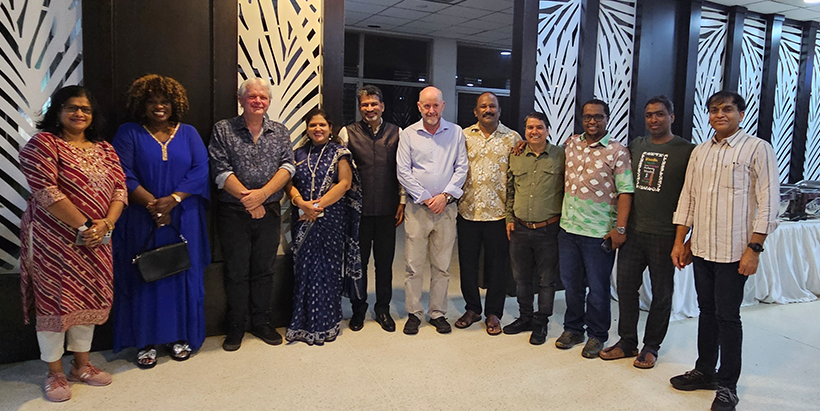
The Consul-General of India to Nigeria, Chandramouli Kumar Kern, visited IITA–CGIAR headquarters in Ibadan from 31 May to 1 June, aiming to strengthen India-Africa collaboration in agricultural research and innovation. Lava Kumar, the IITA Head of Virology and Germplasm Health, moderated the meeting.
In his welcome remarks, the IITA Deputy Director General for Research for Development (DDG-R4D), Bernard Vanlauwe, introduced Kern to IITA’s mission, strategy, and core research programs. He also highlighted ongoing collaborations between IITA and Indian research institutions, including:
- Development of Fusarium wilt-resistant banana varieties with the National Research Centre for Bananas (NRCB);
- Root and tuber crop research with the Central Tuber Crops Research Institute (CTCRI), including capacity building on cassava gene editing and Bambara groundnut breeding;
- Genetic resource exchange from IITA genebank and Indian organizations, including the National Bureau of Plant Genetic Resources (NBPGR). India;
- Agronomy and soil health initiatives through the Excellence in Agronomy (EiA) program in Odisha, India; and
- Biocontrol efforts include successfully introducing predators for papaya mealybug from IITA-Benin and ongoing discussions on scaling Aflasafe in India.
Vanlauwe remarked that a formal Memorandum of Understanding (MoU) between IITA and the Indian Council of Agricultural Research (ICAR) would broaden collaboration in breeding, crop protection, mechanization, and digital agriculture. He also highlighted the Nigerian government’s interest in replicating India’s successful Soil Health Card initiative, positioning IITA as a potential lead partner for implementation.
Contributions from IITA scientists further enriched the discussions. The IITA Cassava Breeding Program Lead, Ismail Rabbi, noted India’s impressive cassava productivity and called for strengthened cooperation to enhance disease resistance. Rajneesh Paliwal, IITA DNA Fingerprinting for Genetic Resources Management, recommended accelerating germplasm exchange and adopting Digital Sequencing Information (DSI) tools to modernize gene banking. At the same time, IITA Emeritus Scientist and Senior Plant Pathologist Ranajit Bandyopadhyay highlighted the need to scale Aflasafe to combat mycotoxin contamination in India.
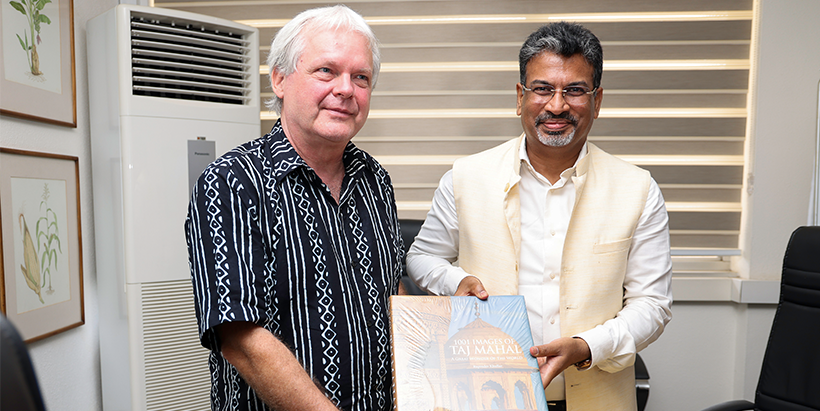
Kumar emphasized the importance of scaling IITA innovations for the benefit of end users and reaffirmed the potential for mutually beneficial collaboration with ICAR and other Indian partners.
In response, Kern expressed his gratitude for the warm reception. He shared insights on India’s journey from food insecurity to self-sufficiency, driven by advancements in sustainable agriculture, soil health, renewable energy, and digital advisory services. He introduced India’s “Development Partnership” (DP) initiative, which provides grants, concessional loans, and capacity-building opportunities. He encouraged IITA to develop concept notes in partnership with Indian institutions that are aligned with DP priorities.
Kern offered to facilitate connections between IITA and stakeholders involved in India’s Soil Health Card Scheme to strengthen institutional ties. This initiative helps farmers identify soil types and adopt appropriate agronomic practices based on research disseminated by the government and extension agents. He emphasized the importance of continued engagement with the Indian High Commission and noted that Indian agricultural practices could be adapted and deployed in Africa with the support of IITA. The initial follow-up step involves organizing an exchange visit between ICAR experts and IITA and establishing a task force to identify mutual priority areas for Development Partnership grants.
Kern’s visit concluded after visits to Genebanks, Virology and Molecular Diagnostics, Cassava Processing, and the Aflasafe unit.
Contributed by Lava Kumar and Anita Akinyomade
