Resilient agriculture: IITA empowers stakeholders to build sustainable food systems in Burundi and South Sudan
13 September 2024
Efforts to enhance agriculture breeding programs in countries, specifically those considered fragile, are crucial to addressing the ongoing food and water shortages in the current climate crises. Strong research programs equip countries with a pipeline of modern agriculture solutions that help these nations respond to climate shocks and erratic rainfall patterns. These solutions must ensure that breeding programs are paired with effective agronomy advice. This integrated approach, driven by collaboration among scientists across the continent, turns research into real-world solutions for farmers.
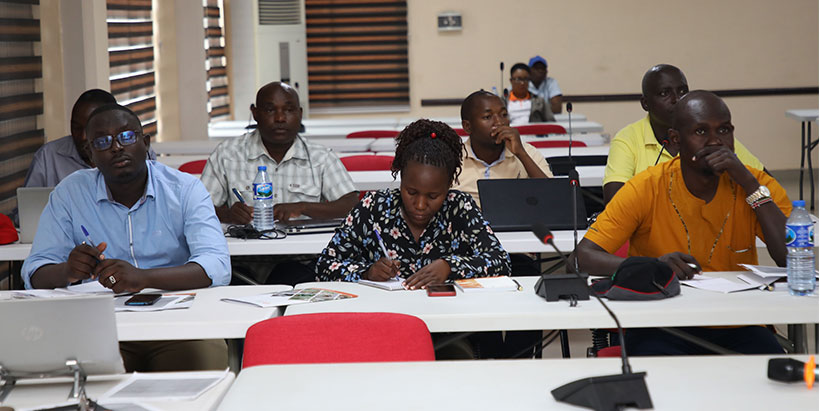
Through two MoUs between IITA–CGIAR and the Food and Agriculture Organization (FAO), supporting the African Development Bank’s Strengthening Emergency Preparedness and Response to Food Crisis (SEPAREF) project and the World Bank’s Resilient Agriculture Livelihood Project (RALP), a comprehensive five-day training program was organized for agronomists, breeders, seed certification officers, and extension agents from Burundi and South Sudan. Coordinated by the IITA Capacity Development Office (CDO), this training represents the first step in helping stakeholders and policymakers from both countries develop soybean and maize breeding programs tailored to the needs of these countries. The linkage of IITA to these projects results from TAAT’s efforts to link technologies to country investment projects funded by Multilateral Development Banks, namely the World Bank and the African Development Bank.
The TAAT Monitoring and Evaluation Expert and SEPAREF Coordinator, Rachel Zozo, highlighted the immense value of the training, noting that uniting national experts at IITA’s research station fosters collaboration, trust, and mutual gains. She also emphasized that this training is just the start of a long-term commitment to helping countries in fragile states develop their breeding programs that can contribute to feeding their people and achieving food security.
The training emphasized research’s critical role in developing resilient and sustainable food production systems. The experts and scientists provided in-depth knowledge and practical skills to equip these frontline professionals with the necessary modern tools and techniques to establish breeding programs to help countries produce high-quality early-generation seeds (EGS) of maize and soybean—essential components in improving high-quality crop yields.
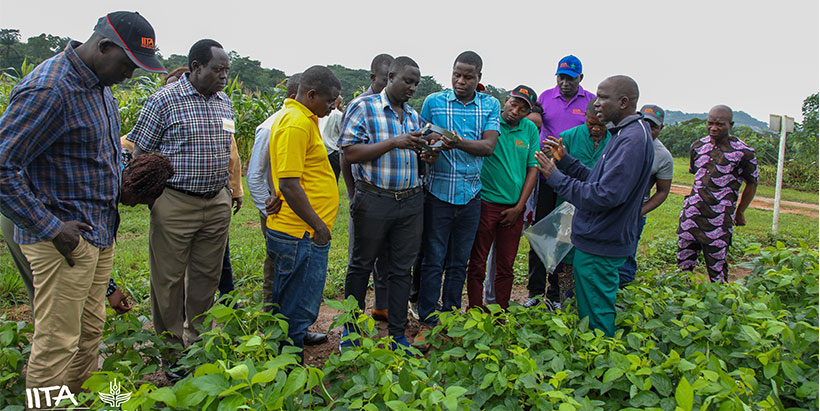
Participants learned about the development and selection of maize and soybean varieties, participated in field tours in the research fields, and observed cross-pollination techniques. Such practical demonstrations helped deepen understanding of the breeding methods and controls key to developing high-yielding and resilient crops. This experience created new partnerships between scientists and highlighted the importance of adapting agronomic practices to their local context.
Dr Luka Atwok, a Maize Breeder from the Ministry of Agriculture and Food Security (MAFS) in South Sudan, noted that the valuable knowledge gained from guiding the team through a wealth of new scientific information is the turning point for establishing a sustainable maize breeding program in South Sudan.
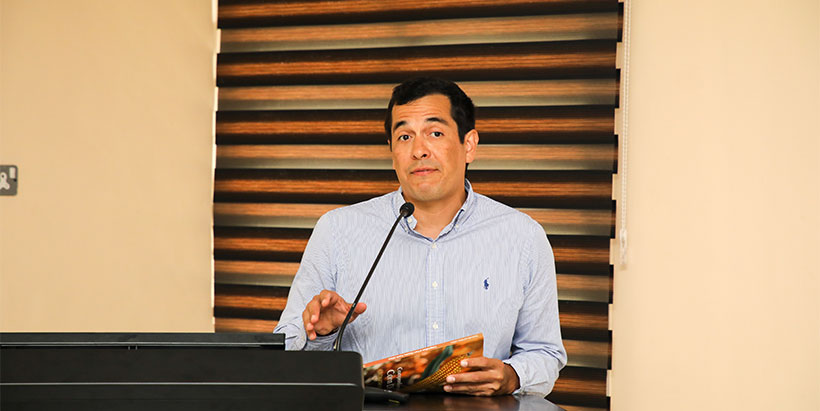
IITA Soybean Breeder Abebe Abush and Maize Breeder Abebe Menkir led the training on breeding high-yielding varieties. They focused on the scientific principles and practical applications that underpin successful crop improvement.
Nigeria National Agricultural Seed Council’s (NASC) South-West Regional Coordinator, Dr Adekunle Adeseko, introduced the participants to the importance of field and seed certification, assuring them that quality seeds would have to be identified and accessible through an established NASC of equivalent. He emphasized that certified seeds are crucial for increasing private-sector investment and supporting sustainable agricultural growth. ENABLE TAAT Business Development Officer Idowu Osun guided participants on agribusiness development and emphasized the importance of registering seed businesses with regulatory agencies for long-term success and compliance with industry standards.
IITA Senior Plant Pathologist Alejandro Ortega-Beltran urged participants from Burundi to engage in the ongoing integrated aflatoxin management efforts in their country, led by IITA and its partners. He also encouraged those from South Sudan to collaborate with IITA in establishing a mycotoxin control program. He also stressed that mycotoxin contamination is a significant concern in both countries. He expressed hope that the training would catalyze the implementation of effective management strategies, leading to safer food supplies and increased public health awareness.
TAAT Soybean Compact Coordinator David Ojo remarked that this training is a prime example of how IITA’s research and innovations remain central to the agricultural priorities of these countries. By nurturing these collaborations, IITA ensures its cutting-edge technologies are leveraged to promote sustainable agricultural growth and strengthen food security across Africa. He noted that this training is not just a one-time event but the beginning of a broader initiative to build the capacity of these countries to develop and maintain resilient farming systems.
The comprehensive training was an impactful first step, with positive feedback affirming that the information was well received. However, the journey does not end here. The strong appetite for further collaboration highlights a clear mandate to do more and build on this momentum, working closely with our Burundi and South Sudan partners to develop their research and breeding programs. By leveraging the expertise of IITA, CGIAR, and TAAT, we can translate the available knowledge into tangible results that will significantly enhance agricultural innovation and sustainability in these regions.
Contributed by Anita Akinyomade
