Program for the launch and training workshop on the digitalization of the seed sector in the DRC (Synergy: EmergenSys & PNDA).

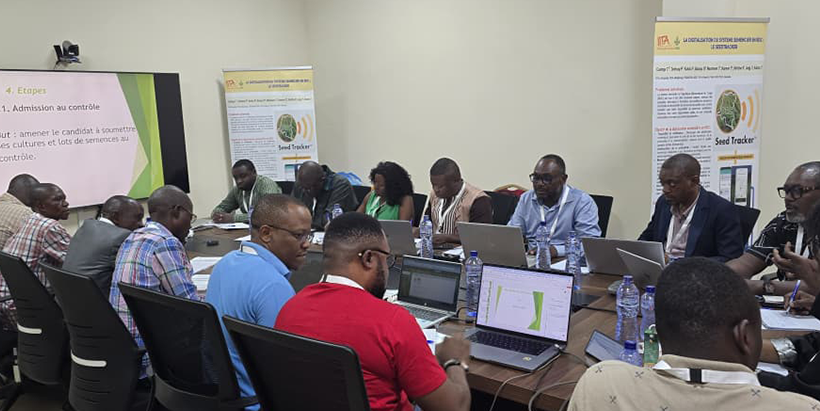
A four-day Training-of-Trainers workshop on digitalizing the seed sector in the Democratic Republic of Congo (DRC) using SeedTracker was held on 7-10 April 2026 at IITA Kinshasa under the FAO EmergenSys and National Agricultural Development Program (PNDA) projects implemented by IITA-CGIAR.

The training brought together 21 participants, including eight national seed inspectors from the National Seed Service (SENASEM), two staff members each from the National Institute of Agronomic Studies and Research (INERA), IT specialists from DANTIC (IT department of the Ministry of Agriculture), and seed companies, to strengthen digital seed quality assurance and seed system management in the country.

According to Project Leader Dr Paul Donstop, based at IITA-Kinshasha, the initiative addresses major challenges in the DRC seed sector, including limited technical capacity, inadequate quality assurance systems, and poor access to improved, disease-free seed. Through the Agricultural Transformation Program (PTA-DR Congo), the PNDA and EmergenSys projects aim to strengthen seed systems resilience and improve agricultural productivity.

Dr Clerisse Casinga, the course organizer, noted that the training focused on assessing SENASEM’s digitalization needs, operationalizing SeedTracker in the DRC, building the capacity of seed inspectors and stakeholders, and promoting awareness of digital tools for seed certification and traceability. Participants received practical training on SeedTracker installation, data collection, and field reporting, led by Busayo Ogunya, an IT Programmer from IITA-Ibadan, Nigeria.

SeedTracker is expected to play a transformative role in strengthening the DRC seed system by improving seed traceability, quality assurance, certification processes, and real-time data management. The platform enables efficient monitoring of seed production, inspection, and distribution, helping to ensure farmers have access to quality seed while supporting transparency and accountability across the seed value chain. The tool also provides a foundation for data-based decision-making and faster response to seed system challenges, contributing to improved food security and agricultural resilience in the DRC.
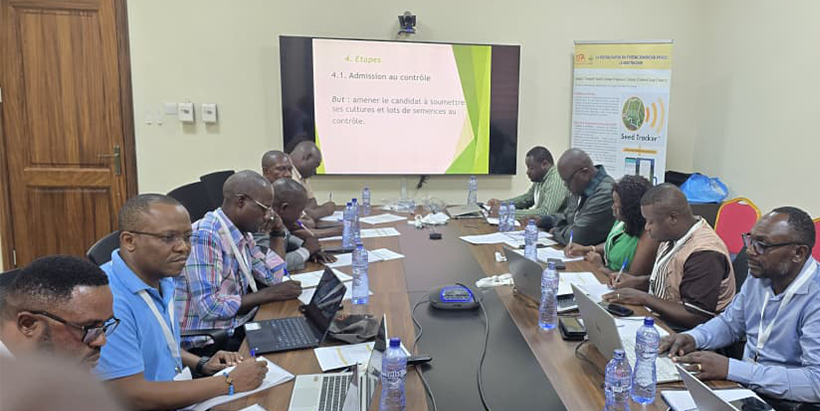
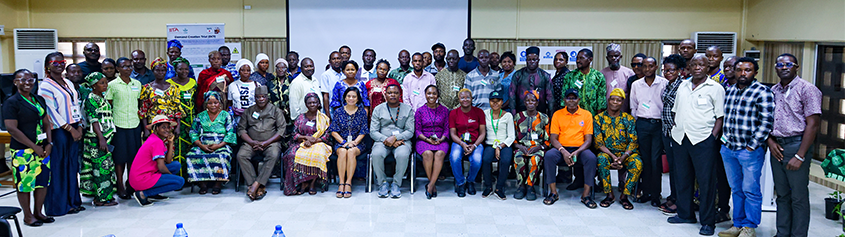
Workshop training of trainers on the digitalization of the seed sector in the DRC using the SeedTracker software.

As part of the initiative, a needs assessment was conducted at SENASEM, the national seed quality assurance agency, to support the integration of digital tools into seed sector operations. Technical support from DANTIC, the Ministry of Agriculture’s IT department, is helping establish the infrastructure needed to adopt SeedTracker, including plans for a dedicated SeedTracker control room to monitor implementation.

Dr Lava Kumar, Virologist, Head of IITA’s Germplasm Health Unit, and SeedTracker lead based at IITA-Ibadan, Nigeria, thanked the EmergenSys and PNDA projects for supporting SeedTracker adoption in the DRC and emphasized that the SeedTracker-DRC platform has been tailored to meet the country’s specific seed system and certification needs.

At the end of the workshop, participants shared their insights and expressed enthusiasm for adopting digital tools. Speaking on behalf of all participants, Daniel Mwambi, Head of Division at SENASEM-Kinshasa, emphasized the importance of this digitalization initiative using SeedTracker for modernizing agriculture and within the seed sector in the DRC. Additionally, he indicated interest in ongoing collaboration with trainers for further data collection. All participants approved a roadmap for sustainable digitalization. Field practice with the SeedTracker app demonstrated their ability to collect and report data effectively.

Contributed by Clerisse Casinga and Lava Kumar
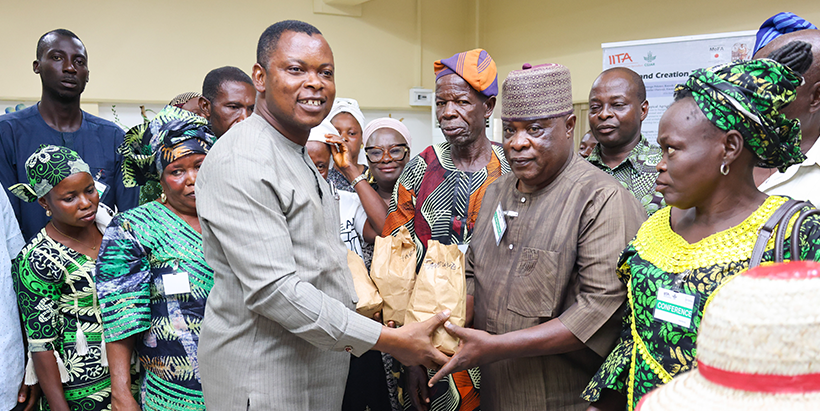
 

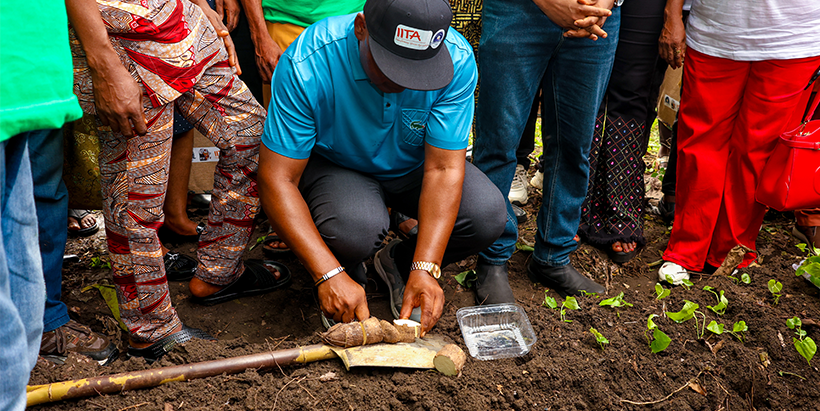
Dr Olugboyega Pelemo handing over yam seeds to participating farmers at the Outreach.

IITACGIAR recently hosted an impactful farmers’ outreach program through the RadioIITA outreach initiative in collaboration with the IITA Yam Breeding Program to equip local farmers and community members with practical knowledge on improved yam seedling production and modern planting techniques. The outreach aimed to strengthen food security, agricultural productivity, and farmer empowerment.

Cross-section of the facilitators and participating farmers with the IITA team.

Participants learned innovative methods such as cutting yam tubers into smaller seed pieces and treating them before planting, a technique designed to improve planting efficiency, maximize resources, and increase harvest yield. Through interactive teaching sessions, practical demonstrations, and farmer engagement, participants gained firsthand experience with easier and more productive approaches to yam farming.

This method allows farmers to produce more planting material from a single yam, reduces waste, lowers planting costs, and makes yam cultivation more accessible to both large- and small-scale farmers. Participants also learned the importance of proper spacing, soil preparation, and seed treatment to improve germination and overall farm productivity.

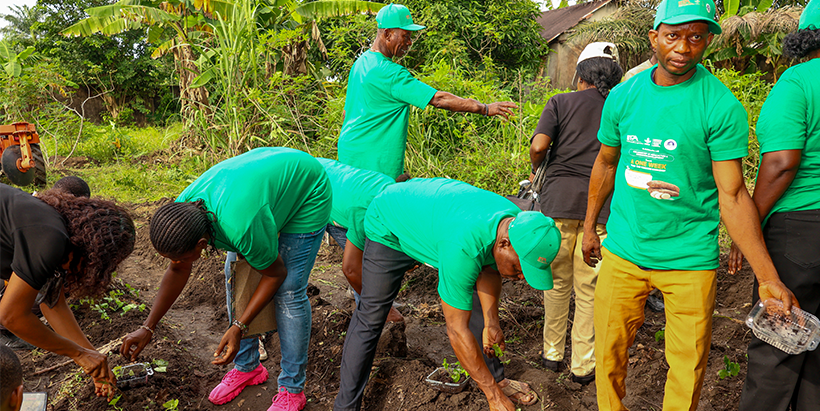
Some of the participating farmers during the field hands-on practicals.

Through interactive teaching sessions, demonstrations, and farmer engagement, participants gained firsthand experience with easier and more productive approaches to yam farming. To support immediate adoption, they were also provided with seedlings to practice the techniques on their own farms.

During interviews, several participants described the training as valuable and transformative. Participant Emmanuel Folorunsho said the outreach introduced him to a new method of planting yams, which he believes will greatly improve his yield and overall farm productivity.

Another participant, Idihosa, a fashion designer, expressed her excitement about the knowledge gained. Although she is not a farmer, she said the training inspired her to start planting yams herself, share the knowledge with others, and apply what she learned from IITA in her daily life. Her testimony showed how agricultural knowledge can benefit people from diverse professions and backgrounds.

Beyond knowledge sharing, the outreach reflected IITA’s continued commitment to improving livelihoods, enhancing food systems, and promoting sustainable agricultural development. By directly engaging communities with practical solutions and improved farming techniques, IITA continues to bridge the gap between agricultural research and real-life farming practices, ensuring that innovation reaches those who need it most.

Contributed by Tolulope Akinola and Anu Oyeleye

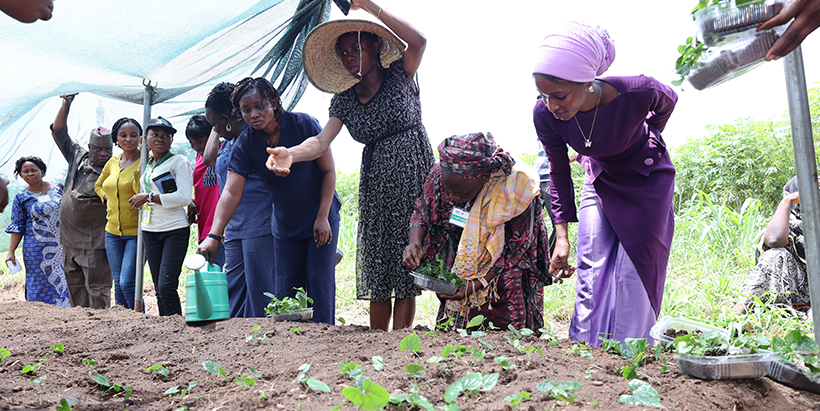
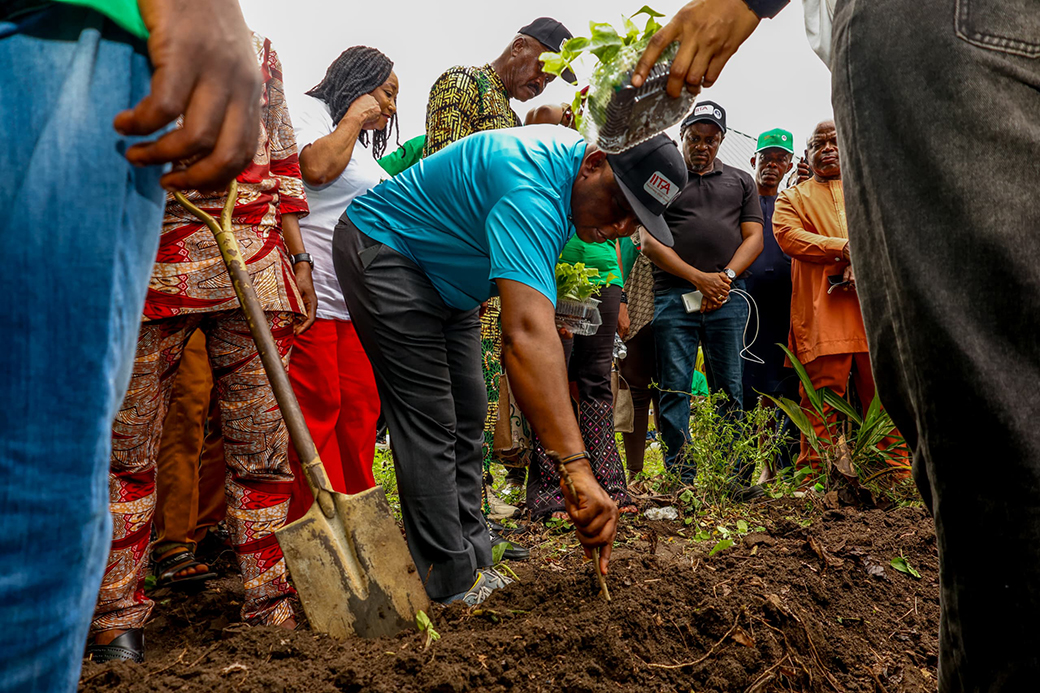
Dr Pelemo showing the farmers how to divide miniseets before planting on the field.

Yams are more than a staple food in Nigeria. For millions of households, they are central to food security, income, and cultural identity. Yet, many farmers continue to struggle with poor seed quality, limited access to improved farming practices, and limited market linkages.

In Cross River State, some farmers travel over 300 kilometers to Taraba State each planting season to source seeds, often facing high costs and the risk of poor quality planting materials.

To address these challenges and unlock new opportunities for farmers, IITACGIAR, in partnership with the Cross River State Government, organized a week-long Training of Trainers (ToT) program in Calabar focused on yam seed technologies, agronomic best practices, and agribusiness development. The training brought together farmers, extension agents, and government officials to strengthen the yam value chain and improve productivity across farming communities in 17 local government areas.

Yam farmers during the field practicals in Calabar Municipal
Yam farmers during the field practicals in Calabar Municipal.

At the heart of the training was a simple message: agricultural innovation delivers impact only when farmers have the knowledge and capacity to use it effectively. Participants are expected to replicate the training in their communities through a structured step-down approach that ensures wider reach at the grassroots level.

The training serves as the first phase of a broader capacity development strategy designed to equip participants with practical skills and technical expertise in modern yam seed systems and production methods.

Speaking during the training, Dr Olugboyega Pelemo, Field and Seed Systems Specialist under the IITA Yam Improvement Program, emphasized the importance of scaling innovation through capacity development.

“Innovative technologies like the minisett, vine cutting, semi-autotropic hydroponics (SAH), and mini tubers that we developed at IITA will only become visible when they are scaled, and scaling can become impactful when the capacity of key actors is developed. At the end of the seed yam production training, farmer-beneficiaries will transfer the knowledge to farmers in their various communities across Cross River State.”

The training which was organised by the IITA Yam Breeding Program along with the Capacity Development Office of IITA, focused on innovative technologies and good agronomic practices (GAP) for yam production, including improved seed systems that help farmers increase yields, reduce losses, and improve the quality of planting materials.

Modupe Banwo, IITA External Training Manager who co-facilitated sessions, enjoined the farmers to endeavor to practice what they have learnt while also sharing the knowledge as this will help drive the impact faster in the state.

The Cross River State Government says the initiative aligns with its broader agricultural development agenda, which aims to empower farmers and strengthen food systems across the state.

Commissioner for Agriculture and Irrigation Development, Johnson Andiambey Ebokpo, reaffirmed the government’s commitment to supporting farmers through capacity development and strategic partnerships.

“As part of the agricultural agenda, the government is committed to providing the requisite capacity and resources to support the farmers of Cross River. This training for yam farmers facilitated by IITA is the first and will be replicated across other crops like plantain.”

The collaboration reflects the importance of partnership between research institutions and government agencies in delivering innovation directly to farming communities.

Beyond improving farm productivity, the initiative also aims to strengthen agribusiness opportunities along the yam value chain. By developing community-based seed producers and improving access to quality seed technologies, the program seeks to create sustainable economic opportunities for farmers and rural entrepreneurs.

Farmers are already feeling the impact. Esther Emmanghe from Etung Local Government started sharing new techniques with fellow neighbors in her community immediately after the training.

“I told people about the minisett and vine cutting technology; many of us farmers will put together a group that will use all we learned during this training,” she added excitedly.

Dr Michael Udam, a secondary school vice principal and a yam farmer in Adagom community in the Ogoja local government, said that while he had some knowledge of vine cutting and minisett, the training provided new knowledge that he would pass to his community.

“I am happy that this training came now when some farmers have been complaining of traveling to far places like Taraba State to get seed yams to plant. With this training, I will start planting seed yams myself. I am sure some other farmers will do the same,” he said.

The IITA Yam Breeding Program under the leadership of Dr Asrat Amele continues to lead research and innovation that addresses the needs of farmers while promoting food security and rural development.

Through this initiative, IITA and its partners are working to ensure that improved technologies and knowledge reach farmers at scale and contribute to building a more resilient and profitable yam sector in Nigeria.

Contributed by ‘Timilehin Osunde

Calabar, Nigeria | 22 April, 2026 — The International Institute of Tropical Agriculture (IITA), in partnership with the Cross River State Government, has commenced a week-long Training of Trainers (ToT) aimed at strengthening yam seed systems, promoting value addition, and advancing agribusiness development across Cross River State.

IITA Field and Seed Systems Specialist, Dr Olugboyega Pelemo demonstrating the transferring of yam vines from SAH box to the field.

The training brings together yam farmers, Local Government Directors of Agriculture, State Agriculture Officers, and Extension Agents in a strategic effort to scale best practices in seed technologies and agronomic management.

Designed as the first phase of a broader capacity development initiative, the program equips participants with the technical knowledge and tools required to drive productivity and efficiency across the yam value chain. Following this phase, participants will implement a structured step-down training model, transferring knowledge and innovations to farmer groups and communities within their respective localities.

Highlighting the importance of capacity building for scaling impact, Field and Seed Systems Specialist under the IITA Yam Improvement Program, Dr Olugboyega Pelemo said:

“Technologies like the minisett, vine cutting, SAH and mini tubers that we have developed at IITA will only become visible when it is scaled, and scaling can become impactful when the capacity of key actors are developed. At the end of the innovative technologies for seed yam production training, the beneficiaries will transfer the knowledge to the last mile users in their various communities across Cross River State.”

Yam remains a critical staple crop in Nigeria, contributing significantly to food security, rural livelihoods, and income generation. However, challenges related to seed quality, limited access to improved agronomic practices, and weak market linkages continue to constrain productivity.

Through this initiative, IITA and the Cross River State Government aim to address these gaps by strengthening local capacity, enhancing adoption of improved technologies, and fostering agribusiness opportunities for farmers and stakeholders across the state.

Speaking at the training venue, Commissioner for Agriculture and Irrigation Development, Cross River State, Johnson Andiambey Ebokpo said:

“As part of the agricultural agenda, the government is committed to providing the requisite capacity and resources to support the farmers of Cross River, and this training for yam farmers being facilitated by IITA is the first, as we will be replicating the same initiative across other crops like plantain.”

This collaborative effort underscores a shared commitment to transforming the yam sector through innovation, partnerships, and inclusive knowledge dissemination, ensuring that improved practices reach farmers at scale.

With the IITA Yam Breeding Program under the leadership of Dr. Asrat Amele, and funded through the RTB Breeding initiatives, the key objective of the one-week training is to scale innovative technological packages otherwise tagged Good Agronomic Practices (GAP) for yam, extend IITA developed yam varieties and to generate Community-based Seed Producers in Cross River State.

About the International Institute of Tropical Agriculture (IITA)

The International Institute of Tropical Agriculture (IITA) is a leading African-based international research-for-development organization working to reduce hunger, poverty, and malnutrition, and to enhance natural resource management across sub-Saharan Africa. IITA develops and delivers innovative solutions that improve agricultural productivity and livelihoods.

Media Contact

iita@cgiar.org

Panelists from IITA, SLARI and FSRP during the panel session.

Sierra Leone’s agricultural sector remains central to millions of livelihoods, employing a significant proportion of the population. Yet, it continues to face persistent challenges, including low productivity, limited access to improved inputs, climate variability, and weak market linkages. These constraints have contributed to food insecurity and a heavy reliance on food imports, underscoring the urgent need for a coordinated and systems-based transformation of the sector.

In response, the Government of Sierra Leone launched the Feed Salone Strategy as a flagship national initiative to drive agricultural growth, enhance food self-sufficiency, and create economic opportunities, particularly for smallholder farmers, women, and youth. The strategy prioritizes key value chains, promotes climate-smart agriculture, and strengthens institutions across the country’s agricultural ecosystem.

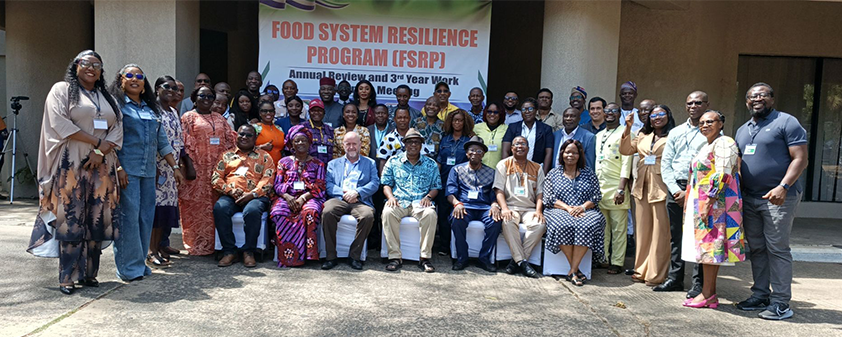
IITA team with the SLARI and FSRP team.

To support the effective implementation of this agenda, IITACGIAR is providing technical assistance through a World Bank-funded Food System Resilience Programme (FSRP). The program aims to strengthen food system resilience by enhancing productivity, improving regional coordination, and building the capacity of national institutions to respond to shocks and long-term challenges.

Professor Michael Abberton during the panel session.

IITA’s technical assistance focuses on delivering science-based solutions, capacity building, strengthening research-extension linkages, supporting policy and institutional development, and facilitating partnerships that enable the scaling of proven agricultural innovations. Through this integrated approach, the project is helping to translate the Feed Salone vision into tangible outcomes that improve food and nutrition security while building a more resilient agricultural system in Sierra Leone.

Through its technical assistance to the Feed Salone Strategy under FSRP, IITA-CGIAR recently convened stakeholders for the 2nd Annual Review and Planning Meeting for Year three implementation plans in Freetown, Sierra Leone, marking another milestone in the country’s journey toward agricultural transformation and food security.

The annual review and planning meeting, held at the Radisson Blu Hotel, brought together key national and international partners, including the Sierra Leone Ministry of Agriculture and Food Security (MAFS), the Sierra Leone Agricultural Research Institute (SLARI), and development partners. The platform provided an opportunity to reflect on achievements, assess implementation progress, and align priorities for the coming year.

Over the past two years, the FSRP-supported technical assistance has recorded significant milestones, contributing meaningfully to the implementation of the Feed Salone Strategy. These achievements have been driven by strong collaboration among key stakeholders, including SLARI, the Sierra Leone Seed Certification Agency (SLeSCA), universities, and private sector actors, ensuring a coordinated and inclusive approach to agricultural transformation.

IITA-CGIAR’s role in providing technical assistance, a critical component of the country’s flagship program, has supported the government in strengthening agricultural systems through research-driven innovations, institutional capacity building, and the deployment of proven technologies. It has also facilitated stronger coordination among national systems and key partners, ensuring that interventions align with the country’s agricultural transformation agenda.

The annual review meeting highlighted progress across several strategic areas, including improved access to agricultural technologies, entrepreneurship and business management skills development, enhanced Agribusiness advisory services, including a mentorship program, establishment of cooperatives for beneficiaries, and capacity strengthening of national research systems. These efforts align with the broader objectives of FSRP, which aim to improve food system resilience, boost productivity, and enhance regional agricultural coordination across West Africa.

Speaking at the meeting, Chief Dr Alfred Dixon emphasized the importance of sustained partnerships and innovation in delivering impact.

“This review meeting reflects our shared commitment to transforming Sierra Leone’s agriculture through science, innovation, and strong partnerships. By working together, we are building resilient food systems that will improve livelihoods and ensure long-term food security,” he said.

Also speaking, Prof Abdulai Jalloh reaffirmed the government’s commitment to the Feed Salone Strategy, noting that collaboration with IITA and partners is critical to achieving national food sovereignty.

“Feed Salone is a national priority, and partnerships such as this are essential to unlocking the full potential of our agricultural sector. With the support of IITA and our partners, we are laying the foundation for a more productive, resilient, and inclusive food system,” he stated.

Looking ahead, the project is entering its third year of implementation, with a renewed focus on consolidating gains and expanding impact. The team plans to deepen engagement with existing partners while bringing on board new collaborators to ensure that all project objectives are fully achieved.

The meeting concluded with the approval of the work plan and budget for the third year of implementation, signaling continued momentum and stakeholder commitment to delivering measurable results.

As Sierra Leone, IITA-CGIAR, and partners move into the next phase, the focus remains on scaling proven innovations, strengthening institutional systems, and accelerating impact at the last mile.

Contributed by ‘Timilehin Osunde

Guests, facilitators, UL and IITA Staff, and Participants.

As part of a capacity-building intervention under the EU-funded Liberia Land and Soil Resources Knowledge Project (Soils4Liberia), IITACGIAR organized a specialized technical laboratory training on soil analysis, quality control, and the installation of an Atomic Absorption spectrometer (AAS) at the University of Liberia’s Soil Testing, Plant and Water Analysis Laboratory on 2 – 9 February 2026.

The training facilitated by experts from IITA-CGIAR Nigeria and Cameroon, brought together 19 participants – nine men and ten women – from the University of Liberia (UL), the Ministry of Agriculture (MoA), and the Central Agricultural Research Institute (CARI). With hands-on technical sessions, participants strengthened their capacity in soil analysis, laboratory quality control systems, and the operation of advanced analytical equipment.

Female Participant explaining the usage of the Newly Installed AAS to the Minister.

The initiative reinforces IITA-CGIAR’s contribution towards building national systems’ capacity and supporting evidence-based agricultural transformation in Liberia.

The Soils4Liberia Project continues to play a pivotal role in improving knowledge and institutional capacity for sustainable land and soil management. Soil samples from the nationwide soil inventory and mapping will be analyzed at the University of Liberia Soil Laboratory, positioning the institution as a key national hub for soil research and data generation. The installation of the Atomic Absorption Spectrometer (AAS), provided under the project, will significantly enhance the precision and speed of soil nutrient analysis, supporting informed planning and decision-making for resilient agricultural systems.

Deputy Minister giving his remarks at the closing ceremony.

The closing ceremony was attended by the Deputy Minister for Technical Services at the Ministry of Agriculture, Honorable Solomon Hedd-Williams, alongside the UL Dean of the William R. Tolbert Jr College of Agriculture and Forestry, Prof. Leroy Cegbe, and the Director of the UL Soil Laboratory, Dr Salia Sheriff. Also present were the Soils4Liberia Project Manager, Dr Abebe Shiferaw Dakka, Soil Scientist, Dr Samuel Mesele, and Joseph Uponi, Head of IITA Central Analytical Services.

In his closing remarks, Hon. Hedd-Williams emphasized the strategic importance of soil knowledge in national agricultural development, stating, “The Ministry is moving towards soil-driven agriculture, as poor knowledge of our soils has been a major factor behind low productivity.” He further urged participants to apply their newly acquired knowledge and skills in supporting nationwide soil analysis efforts, adding, “The Ministry is transitioning from traditional extension services to expert-driven advisory support, and this capacity will be critical in guiding this transformation.”

Through this intervention, IITA-CGIAR continues to demonstrate its commitment to strengthening national systems, advancing scientific excellence, and supporting sustainable agriculture and food systems in Liberia.

Contributed by Daniel Momo Sirleaf

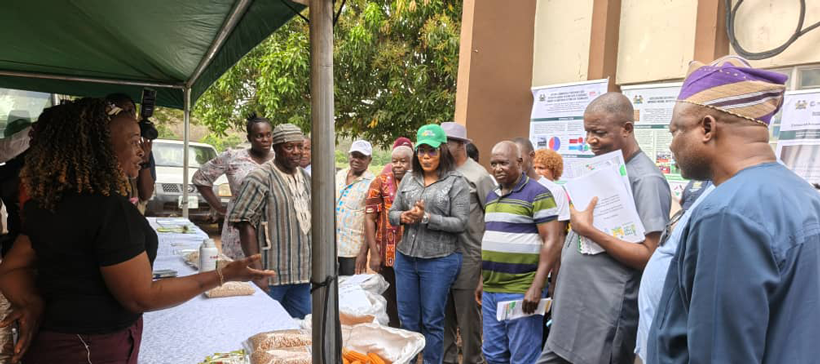
The World Bank team during a tour of the value addition exhibition with the SLARI and IITA teams.

A World Bank implementation support mission to Sierra Leone has expressed delight with the progress and results of the Food Systems Resilience Programme (FSRP)—implemented by IITACGIAR, in partnership with the Sierra Leone Agricultural Research Institute (SLARI)—describing it as a standout example of results-driven investment, leading to growing national relevance and a significant milestone in the nation’s agricultural transformation.

The World Bank team, led by Dr Tunji Oredipe, delivered the commendation on 17 January during a high-level engagement at the Njala Agricultural Research Centre (NARC) Conference Hall, following comprehensive technical presentations on the project’s three components and research updates from six SLARI scientists supported through FSRP-funded competitive grants. The meeting was part of a two-day mission to all IITA-SLARI project sites to review two years of implementation, assess on-the-ground results, and confirm alignment with national priorities.

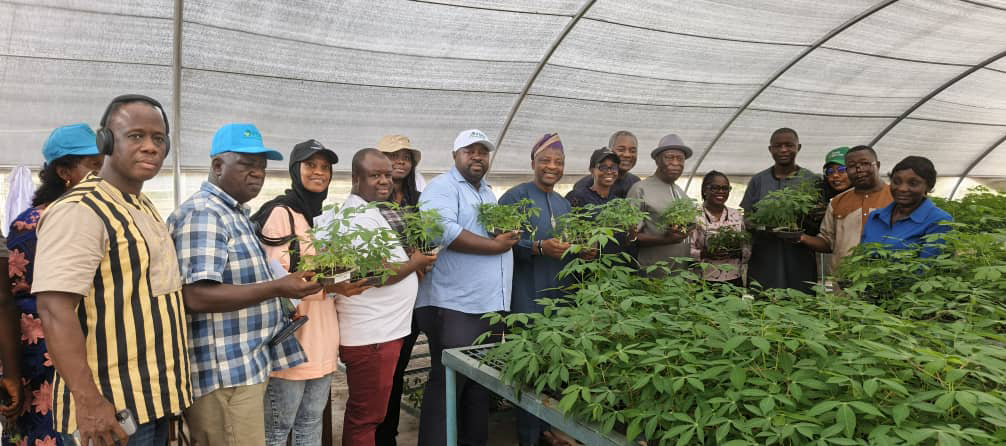
The World Bank team with the FSRP team in the SAH screen house
The World Bank team with the FSRP team in the SAH screen house.

The FSRP project directly supports Pillar 2 of the Government of Sierra Leone’s Feed Salone Strategy, which focuses on strengthening food systems, boosting productivity, and improving food security.

Speaking at the close of the technical sessions, Dr Oredipe praised the quality of implementation and encouraged the IITA/SLARI team to sustain its momentum. He emphasized the strategic importance of maximizing the facilities and infrastructure established under the project to drive long-term impact. “This project is about changing agricultural activities in Sierra Leone,” he said. I want to see the future of agriculture being driven from the facilities provided by the project in the agricultural space.”

FSRP Programme Manager Dr Keprifi Lakoh described the mission’s feedback as a clear validation of the IITA-SLARI collaboration, noting that the project is already generating tangible results and success stories that strengthen the Ministry of Agriculture and Food Security’s (MAFS) delivery of the Feed Salone strategy. Dr Lakoh reaffirmed the World Bank’s commitment to supporting the project’s successful implementation.

IITA-Sierra Leone Country Representative and SLARI Council Chairman, Dr Alfred Dixon, said the progress achieved reflects SLARI’s renewed capacity and growing relevance. He noted that strategic partnerships and targeted investments are enabling the institute to reclaim its position as a driver of high-quality agricultural research and innovation in Sierra Leone.

FSRP-IITA Co-Project Lead, Professor Lateef Sanni, commended the dedication of the implementation team, stressing that their collective efforts are delivering the level of impact expected by the donor. He stressed collaboration and teamwork as essential ingredients for sustaining institutional and individual success.

Acting Director General of SLARI, Dr Abdul Conteh, described the project as an intentional and strategic partnership, referring to it as “Phase Two of the WAAPP experience.” He highlighted the project’s inclusive implementation model, which actively involves SLARI scientists in planning, execution, and learning—strengthening ownership, capacity development, and sustainability.

The Ministry of Finance Representative, Samuel Yankuba, also expressed satisfaction with the project’s transparency, coordination, and visible impact within a relatively short period.

The mission concluded with a guided tour of all FSRP facilities and project sites, during which the World Bank team observed firsthand the innovations and infrastructure positioning the IITA–SLARI FSRP as a cornerstone of Sierra Leone’s food systems transformation.

Contributed by Moses Sahr Fayiah

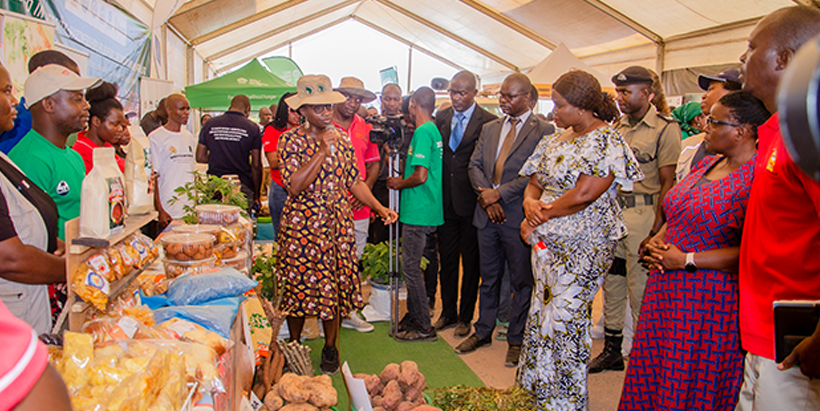
Dr Gbegbelegbe briefing the Minister of Agriculture, Irrigation, and Water Development, Honorable Rosa Fatch Mbilizi and participants about IITA's research innovations.
Dr Gbegbelegbe briefing the Minister of Agriculture, Irrigation, and Water Development, Honorable Rosa Fatch Mbilizi and participants about IITA’s research innovations.

As part of efforts to reinforce partnership and policy engagement, IITACGIAR joined the government and partners in Malawi to commemorate the joint African Day for Food and Nutrition Security and World Food Day. Exhibitions and presentations by IITA-CGIAR were tailored to promote Aflasafe to control aflatoxins – food safety and nutrition), and the consumption of alternative underutilized crops of cassava, soybean, and cowpea, to help transform lives.

Briefing the Minister of Agriculture, Irrigation, and Water Development, Hon. Rosa Fatch Mbilizi and partners at the event, IITA Country Representative, Dr Sika Gbegbelegbe, highlighted various research interventions and how IITA-CGIAR has, over the years, been a source of cross-cutting agricultural innovations and technologies, helping farmers in Malawi to overcome poverty and achieve food security.

In Malawi, IITA-CGIAR has a proven track record of research targeting crops such as cassava, soybeans, cowpeas, and bananas.

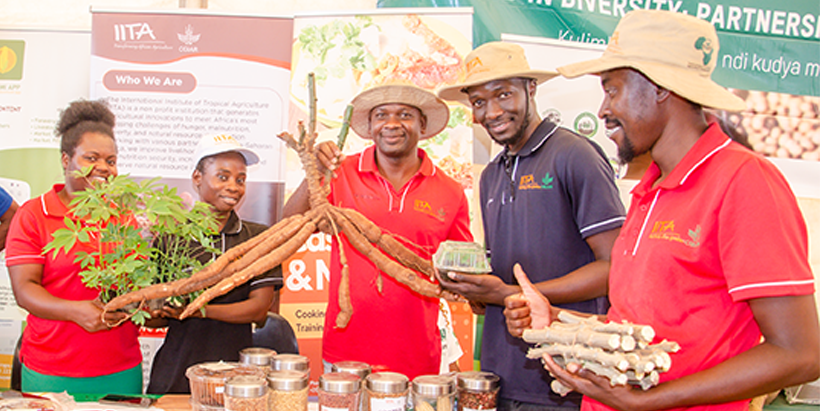
At the commemoration, IITA-CGIAR displayed cassava roots alongside various mouth-watering cassava-based snacks, including cassava zigege, donuts made with 80 percent high-quality cassava flour, chin-chin, and other snacks. The snacks were provided by Ellen’s Kitchen, a small-medium enterprise currently operating in Lilongwe.

IITA and its partners are promoting cassava as a crop and diet diversification in Malawi with support from the Embassy of Ireland under the Roots and Tuber Crops (RTC)-MARKETS project.

Soybean breeding conducted by IITA and its partners has led to the recent release of high-yielding and resilient Soybean varieties: Chitedze 4, a rust-resistant variety with a yield potential of 4,000 kg/ha; and Chitedze 6, a rust-tolerant variety with a potential yield of 3,000 kg/ha. IITA’s soybean breeding program promotes improved and adapted technologies for smallholder farmers in sub-Saharan Africa.

IITA Malawi team showcasing various technologies at the World Food Day event.

Through the Roots and Tuber Crops-Markets project, IITA is collaborating with the International Potato Center to improve the market-led development of roots and tuber crops, including cassava, sweet potato, and potato.

At the commemoration of World Food Day and African Day for Food and Nutrition Security, IITA and CIP – both CGIAR centers, mounted a united stand to showcase food products and improved varieties of cassava, potatoes, sweet potatoes, soybeans, and cowpeas. IITA showcased the newly released line of Chinangwa 3, which is high-yielding and disease-tolerant. With climate change posing an existential threat to human well-being, it has become a prerequisite for farmers to adapt and adopt proven, climate-smart practices.

At IITA’s exhibition stand, products made from cassava, soybean, and cowpea were on display to show value addition efforts. Visiting the IITA stand, the Minister of Agriculture, Irrigation, and Water Development, flanked by government officials and partners that included the World Food Programme (WFP), Food and Agriculture Organization (FAO) and International Fund for Agricultural Development (IFAD), expressed happiness to see how IITA is working with farmers and small and medium enterprises in translating research to tangible development.

“With the prevailing economic situation, we are working hand in hand with partners to promote the consumption of alternative underutilized crops of Soybean, Cassava, and cowpea. This is why we are also a leading research institute under the CGIAR in developing and promoting new technologies that are climate change adaptive and beneficial to our farmers,” said Dr Gbegbelegbe.

Dr Gbegbelegbe further emphasized the importance of collaboration with partners in genetic innovation and the development of resilient agrifood systems, which has driven the release and promotion of improved innovations, including Aflasafe. She acknowledged that legumes alone cannot achieve nutritional security, which makes it essential for IITA-CGIAR to collaborate with other stakeholders in a coordinated effort.

The commemoration was held at a remote site in Dedza, 100 kilometers from the capital city of Lilongwe, offering an opportunity for agricultural players to interact with rural farmers and showcase various technologies aimed at achieving food and nutrition security.

With the Integrated Food Security Phase Classification (IPC) estimating that approximately 4 million people in Malawi are likely to experience high levels of acute food insecurity between October 2025 and March 2026, driven by high food prices, economic decline, and below-average agricultural production.

Hon. Mbilizi, assured the participants at the event of the Ministry’s plans to strengthen food systems in the country, “No one is going to die of hunger,” she said.

Hon. Mbilizi encouraged everyone to promote sustainable and resilient programs such as climate-smart agriculture, irrigation, and conservation agriculture.

Contributed by Emmanuel Mwale

Dr Simeon Ehui speaking with the press during the media conference, Dr Mercy Diebiru-Ojo and Professor Chiedozie Egesi.

On the sidelines of the Nigerian Plant Breeders Association (NPBA) Conference held in Abuja recently, IITA-CGIAR hosted a press conference to celebrate the recent recognition of Dr Mercy Diebiru-Ojo, who won the 2025 Africa Food Prize (AFP) for her work on Semi-Autotrophic Hydroponics (SAH).

The press conference brought together journalists, researchers, and agricultural stakeholders to highlight the significance of the award and its impact on African food systems. SAH, which Dr Diebiru-Ojo has championed, offers farmers quicker and more reliable access to clean, high-quality planting materials for cassava and yam, two crops that feed millions of households across the continent.

Speaking at the event, Dr Diebiru-Ojo expressed gratitude for the recognition and emphasized its collective nature: “This award is not just for me but for the incredible IITA teams and partners who are committed to ensuring that African farmers have better access to improved planting materials. It strengthens our resolve to keep driving impact where it matters most.”

IITA Director General and CGIAR Regional Director for Continental Africa, Dr Simeon Ehui, described the award as both a proud moment for IITA, CGIAR and a milestone for African agriculture. “Dr Diebiru-Ojo’s work demonstrates the power of research-driven innovation. SAH is more than a technology; it is a pathway to building resilient food systems and empowering farmers. We are proud of this recognition and remain committed to scaling solutions that transform lives,” he said.

Also in attendance was Professor Chiedozie Egesi, Director General of the National Root Crops Research Institute (NRCRI), Umudike, who congratulated Dr Diebiru-Ojo and underscored the importance of collaboration. “This recognition highlights what can be achieved when institutions like NRCRI and IITA work together. Our shared mandate to improve root and tuber crops in Nigeria and across Africa is strengthened by innovations such as SAH, which will continue to deliver benefits to farmers and communities,” he remarked.

He stressed the critical importance of strategic partnerships to innovation scaling and delivering impact, adding that the existing partnership between IITA and NRCRI spanning decades has accelerated the development and delivery of improved root and tuber crop varieties. Together, the two institutions continue to advance technologies like SAH that hold promise for food security and farmer prosperity across Africa

The session not only celebrated Dr Diebiru-Ojo’s achievement but also highlighted the key role of research partnerships in advancing agricultural transformation. It marked a proud moment for IITA, NRCRI, and the broader plant breeding community working toward Africa’s food and nutrition security.

Contributed by ’Timilehin Osunde