Agri-food value chains (AVCs) have experienced tremendous growth and transformation in the last two decades in developing regions. This transformation has created huge markets for farmers and employment opportunities in food processing, wholesale, and logistics.
Dr Saweda Liverpool-Tasie
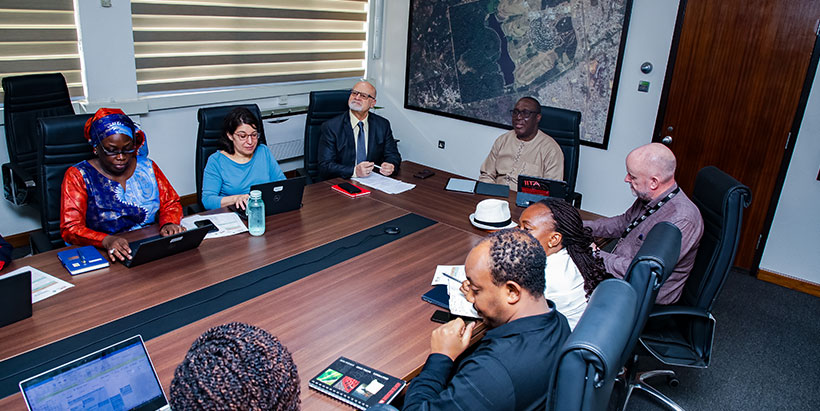
Saweda Tasie, Visiting Scientist at IITA from Michigan State University and Market Economist, delivered research findings on market links between value chain actors and small-scale soybean producers in Zambia at the IITA Knowledge Café seminar on 11 June.
The AVC transformation has been facilitated by huge investments by millions of micro, small, and medium enterprises (MSMEs), substantial foreign direct investments, and domestic investments by large enterprises. MSMEs in the midstream of food supply chains improve smallholder welfare.
In Zambia, increasing domestic and regional demand for meat and edible oil has spurred growth in the demand for soybean—an input for meat and edible oil production. Tasie and colleagues, in their study, explored whether non-contract-based purchasing activities of soybean processing firms and traders (large buyers) affect smallholders’ welfare and livelihoods. They also examined if the benefits of selling to large buyers vary by the scale of smallholders. They also identified channels through which these welfare impacts occur.
They hypothesized that non-contract-based sales are likely to have significantly different implications for smallholders’ welfare than contract-based sales since incentives like the provision of inputs and guaranteed markets by the buyer may be unavailable to smallholders’ without purchasing contracts.
Through a protocol-driven scoping review, they found that soybean sales by smallholder farmers to large buyers are associated with higher crop income for the average Zambian smallholder. They found significant positive effects of selling to large buyers in non-contract arrangements on crop incomes for smallholder farmers in Zambia. However, the effects on gross income are mostly statistically and economically significant only for medium-scale smallholders and not for small-scale smallholders.
While the crop income effects of selling to large buyers did not translate to increased gross income and poverty reduction for small-scale households, the ability to sell to large buyers enables small-scale farmers to sell more output at a higher price. They found no significant impacts on total household income for small-scale smallholders as were found for medium-scale smallholders. Hence, smallholders need additional inputs to increase their soybean yield, and policies supporting their expansion will benefit them.
They proposed actors in the midstream and downstream of input and output supply chains as important mechanisms to support smallholder behavior and welfare. They cited the adoption technologies developed by IITA, such as the GoSeed model and the IITA youth programs, as examples to follow.
Contributed by Folake Oduntan
The Minister of Agriculture and Livestock in Niger, ElHadji Mahamane Ousmane, paid an official courtesy visit to the regional headquarters of Institut National de la Recherche Agronomique du Niger (INRAN) at CERRA in Maradi as part of his plan to engage scientists on issues related to their working conditions, including food security in the country.
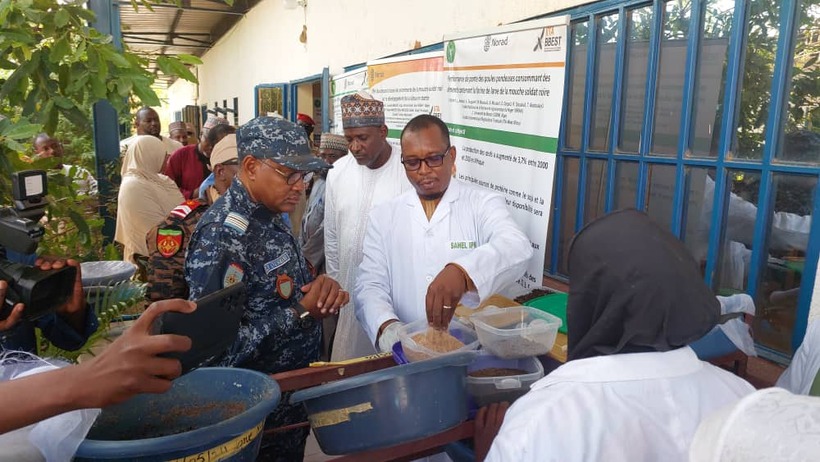
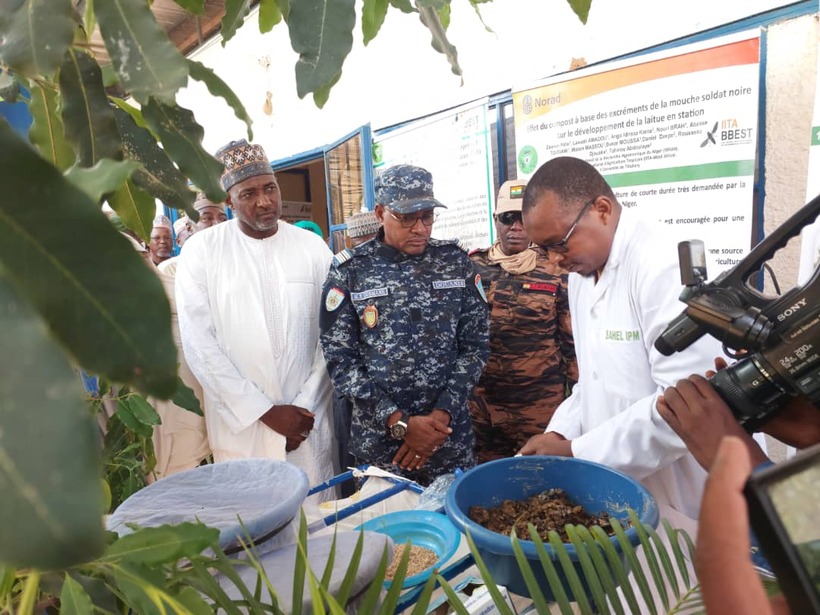
Dr Laouali, explaining the BSF technology to the Minister of Agriculture and Livestock at the BSF rearing unit at CERRA Maradi.
Meeting with the deputy secretary of the region and other dignitaries, the Minister went on a tour to discover the activities undertaken by the institute. He visited the entomologist laboratory where he explored the production of the novel black soldier fly (BSF) technology implemented by INRAN and IITA-led BSF for a Bio Circular Economy and Environmental Sustainability (BBEST) with funding from the Norwegian Agency for Development Cooperation (NORAD). This research for development (R4D) project aims to address two challenges: unsustainable biowaste management and unsustainable animal feed and fertilizer supply.
Minister Ousmane commended the scientists’ work on the BSF technology. This sustainable practice transforms organic waste into protein-rich animal feed and protein-rich organic fertilizer for vegetable production and soil restoration. This aligns with the Conseil National pour la Sauvegarde de la Patrie (CNSP) orientation for food safety and research. He also lauded the scientists for their dedication and hard work.
“I am very happy because the managers are committed and know what they must do. I am thrilled by the research undertaken by the scientists and the students.”
Elhadji Mahaman Ousmane and the deputy secretary of the province of Marady appreciate the BSF technology implemented by INRAN and IITA BBEST project in Maradi.
The team leading the BSF activities explained to the Minister and his team how the technology contributes to job creation for the youth. The team informed him of their plan to mass-produce BSF products in a facility they are establishing in Niamey and sell them to poultry, fish, and vegetable producers.
In times when humans and animals compete over sources of protein, with sustainable practices at the forefront of global discourse, BSF technology is emerging as a game-changer. This innovative approach transforms traditional methods and promotes sustainability.
The black soldier fly (hermetiaillucens), known for its remarkable ability to convert organic waste into rich protein feed for livestock, has caught the attention of scientists, environmentalists, and private investors. By adopting the BSF technology, institutions reduce the biowaste in urban cities and produce nutrient-rich fertilizers for vegetable production and soil restoration.
Contributed by Francisca Ocloo
As part of the IITA PROSSIVA initiative, a landmark event was hosted at Field CS7, uniting farmers and agricultural experts to enhance yam cultivation practices. The event showcased the benefits of traditional farmer varieties compared to IITA-developed yam varieties, with participation from two prominent farmers’ cooperatives—Ifesowapo and Eniosa.
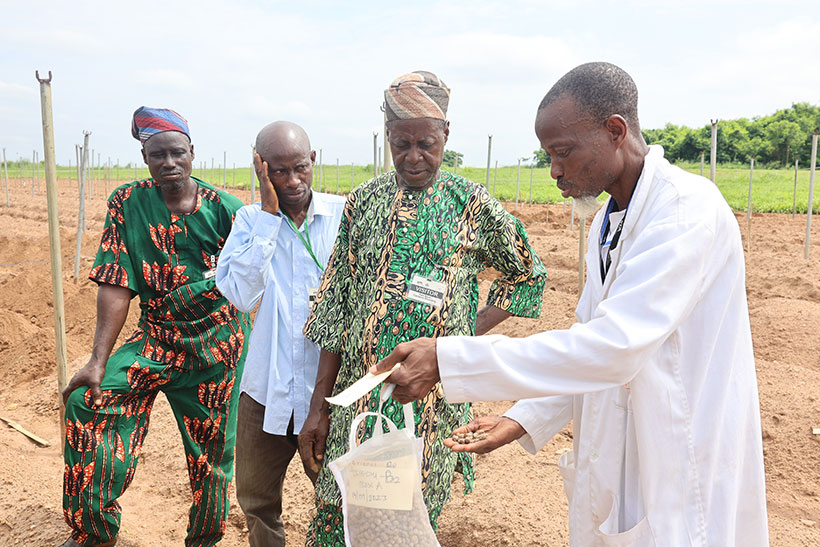
An IITA expert identifies seed yams for members of the farmers’ cooperatives.
A field supervisor from IITA, Lasisi Jimoh, highlighted the yam planting process in his opening remarks, explaining how leaf bud cuttings have been nurtured in the nursery and are now ready for mini-tuber planting. “We want to compare farmers’ varieties and IITA varieties,” he stated, emphasizing the collaborative nature of the project. Lasisi assured the farmers that they would handle their own yam plantings to ensure transparency and authenticity in the comparison. This hands-on approach allows farmers to showcase their traditional methods while learning from IITA’s innovative techniques.
One of the enthusiastic participants, Seyi Oyelade, President of the Irepodun Farmers Association, expressed his excitement about the demonstration. “I am happy to be here and to plant alongside IITA experts,” Oyelade said. He shared his optimism about the new yam varieties introduced by IITA PROSSIVA, noting that their disease resistance and high yield potential could significantly outperform traditional varieties. Oyelade’s positive outlook reflects farmers’ growing trust and expectation in IITA’s research and development efforts.
Tijani Musbau from the Ifesowapo Cooperative also shared his thoughts, underscoring the long-standing relationship between his cooperative and IITA. “We have been with IITA for many years and have learned a lot,” Musbau remarked. He acknowledged the valuable guidance provided by IITA in refining their yam planting techniques, leading to more abundant harvests. Musbau’s vision for the future is ambitious yet hopeful. “With the help of IITA, one day, our yam will be acceptable at the United Nations,” he added.
This demonstration is more than just an agricultural event; it is a testament to the power of collaboration between local farmers and scientific researchers. By blending traditional knowledge with cutting-edge agricultural practices, the IITA PROSSIVA initiative is poised to revolutionize yam farming in the region. Farmers like Oyelade and Musbau are at the forefront of this transformation, embodying the spirit of innovation and cooperation that will drive agricultural success for years.
As the yams grow side by side, both farmers and scientists will eagerly observe the results, learning and adapting together. This partnership promises to improve yam yields and quality and ensure food security and economic prosperity for farming communities. The IITA PROSSIVA planting demonstration marks a significant step towards a brighter, more sustainable future for agriculture.
Contributed by Victoria Idowu
The Great Lakes Accelerated Innovation Delivery Initiative Rapid Delivery Hub (AID-I GLR), locally known as the ‘Kugwiza Project,’ is making significant strides in enhancing and improving the agricultural value chains of key food-security crops and livestock in Burundi. Initiated in January 2023, Kugwiza brings transformative change to Burundi’s agriculture and livestock sector.
Since its inception, Kugwiza has focused on key crops such as beans, cassava, maize, orange-fleshed sweet potatoes, rice, and livestock (insemination, vaccination, poultry, and fodder). The project collaborates with local partners and national seed systems, leveraging the expertise of World Vision, l’Association de coopération et de recherche pour le développement (ACORD), Confédération des Associations des Producteurs Agricoles pour le Développement (CAPAD), Welthungerhife (WHH), Vétérinaires Sans Frontières (VSF), World Food Programme (WFP) and One Acre Fund.
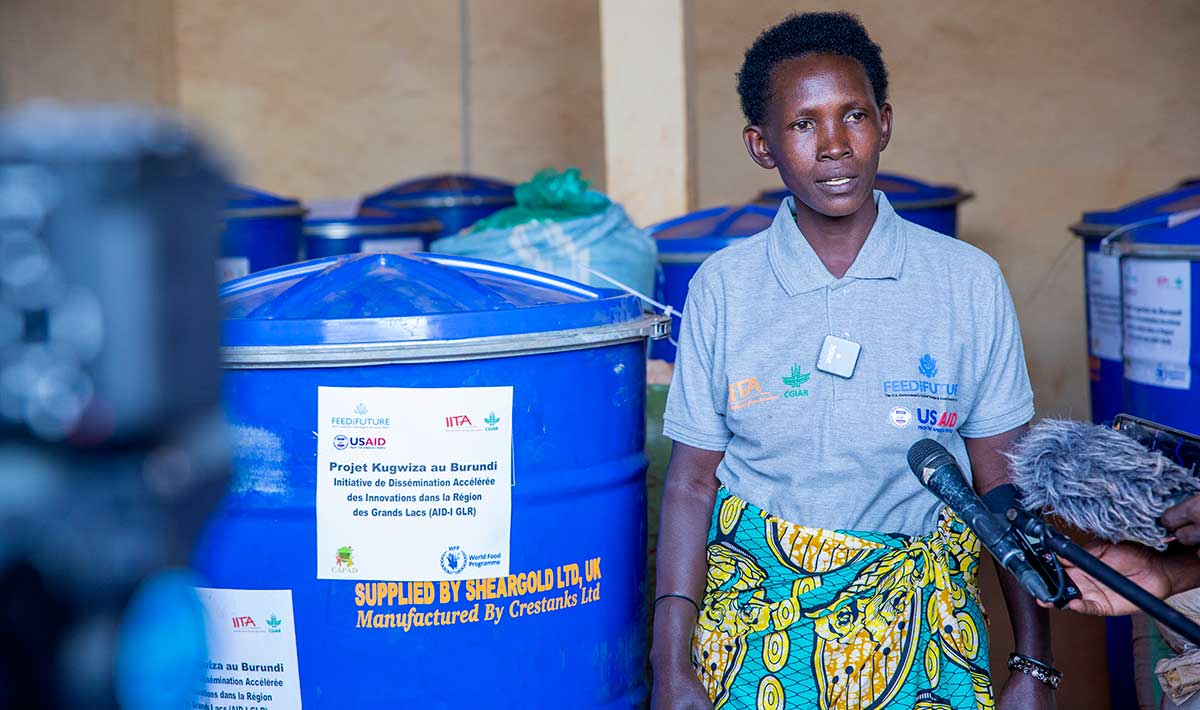
A farmer in Gitega Province testified about the role of the storage silos provided by the project, which allow for better crop storage for up to four years without damage.
These partnerships ensure the dissemination of innovations for the effective adoption of improved agricultural and livestock technologies, supported by national research centers, particularly l’Institut des Sciences Agronomiques du Burundi (ISABU), and CGIAR centers (mainly the International Potato Center (CIP), the International Livestock Research Institute (ILRI), the International Rice Research Institute (IRRI), the Alliance of Bioversity International and CIAT, and support service providers such as the Seed Systems Group (SSG) and Scientific Animations Without Borders (SAWBO)).
A core element of Kugwiza’s success is its collaboration with stakeholders in the production and marketing value chains of high-quality, high-yield seeds. In Burundi, the project works with two seed companies: CoopEden and the Haguruka Cooperative. The project promotes the use of quality seeds and the best agronomic practices by providing farmers with training to improve their skills and resources. This includes pest management, fertilizer application (mineral and organic), and postharvest management techniques, which are critical to boosting production.
Another innovative approach introduced by the project is the establishment of agricultural and livestock extension workers called ‘Village-Based Advisors’ (VBAs). These VBAs who are selected by their peers and are the innovations’ producers and leaders and have been well-trained through theoretical (workshops) and practical (demonstration plots) modules on good agronomic practices (farming, sowing, fertilizer application, disease control, postharvest management, and processing). VBAs disseminate the knowledge they have acquired to farmers in surrounding villages to enable the easy and rapid diffusion and adoption of technologies within the community. The demonstration plots managed by the VBAs and the farmers’ fields allow for practical, concrete, and hands-on learning.
The impact of these efforts is evident. As of March 2024, Kugwiza had reached more than 470,000 farmers, with 430,000 accessing improved agricultural and livestock technologies, advisory information, and small packs for initial experimentation. In collaboration with ISABU, the project has produced and supplied approximately 54 metric tons of early-generation seed to seed entrepreneurs, significantly strengthening the seed system by ensuring the availability of certified seeds through sales points established across various communes where the project is being implemented.
Kugwiza has organized a media tour from 11–13 June 2024 to highlight these achievements and share insights on implementation. The purpose is to showcase the project’s contributions to national agricultural and livestock systems, and its role in sustainable agricultural development in Burundi.
Journalists received a debriefing on the project’s objectives and approach from project officials before departing to the field.
Media tour sites
Multiplication field for animal feed (Kakamega 1 and Lablab cuttings)
The field is located on land owned by the Provincial Office of Environment, Agriculture, and Livestock in Burundi (BPEAE), Kayanza Center, Kayanza. These two varieties (Kakamega 1 and Lablab) are cultivated on 2 hectares of land. This field serves as a demonstration plot for production and a mother demo plot for supplying cuttings for widespread distribution to rural households in need.
The objective of establishing this multiplication field is to produce large quantities of Kakamega 1 and Lablab seed cuttings. Besides households, distribution to other multipliers in the various communes of the province is planned for the 2025 A season.
Demonstration plot for high-iron beans
A bio-fortified climbing bean variety has been introduced, and beneficiaries are learning soil preparation techniques, sowing, fertilizer application (mineral and organic), plant maintenance (weeding and disease control), and postharvest management. After each practical training session, farmers apply the knowledge in their various plots, using small 100-gram seed packs for personal testing in their home plots. This ‘controlled’ testing paves the way for adoption.
Production and marketing of lick-blocks for animal feed (Rugari Village, Muyinga Commune)
Kugwiza has introduced the production of lick-blocks using local products to reduce the cost of livestock inputs, which is a significant concern for cattle farmers in Burundi. Journalists will visit farmers who have been trained in the various stages of lick-block production and are now applying these skills. One of the farmers no longer imports lick-blocks from Tanzania, favoring those locally produced.
Demonstration plot for orange-fleshed sweet potatoes (OFSP)
In collaboration with the International Potato Center (CIP) and the Institute of Agronomic Sciences of Burundi (ISABU), Kugwiza has launched capacity-building initiatives to ensure the availability of clean OFSP planting material in Burundi. This includes training technicians in producing early-generation seeds and engaging private multipliers to produce high-quality certified seeds. Ten mini-screen houses managed by seed entrepreneurs have been established to support clean-seed production. Additionally, the project has introduced the production of OFSP puree in bakery products to enhance the OFSP value chain.
Demonstration plot for rice
In collaboration with the International Rice Research Institute (IRRI) and ISABU, Kugwiza has introduced new rice varieties adapted to Burundi’s different agroecological zones, particularly in high and mid-altitude regions where farmers were not accustomed to this crop. Training on rice cultivation and irrigation management has been provided. Beneficiaries, organized into cooperatives, received high-yield rice seeds to test in demonstration fields to select the best varieties. Beneficiaries trained in the demonstration fields received 100 grams of seed to test in their fields for yield validation and spur adoption.
Hybrid maize seed production
Kugwiza, in partnership with the Seeds System Group, has introduced hybrid maize seeds (Bazooka and Wannak) in Burundi. Demonstration plots showcasing proper farming practices have been established in several project intervention areas. Beneficiaries now know the seed manufacturer for future procurement. In collaboration with WFP, postharvest management silos have been introduced to reduce losses: the project aims to use these silos for cereal conservation.
Theileriosis vaccination
In collaboration with ILRI, Kugwiza has introduced a vaccine to reduce the prevalence of theileriosis in calves. Calves have been vaccinated since early 2024, and visible impacts have been reported by farmers whose calves were vaccinated.
For more information, please contact:
Patrick Mutuo, Country Coordinator, on pk.mutuo@cgiar.org
Christophe Gahungu, IITA Burundi, on c.gahungu@cgiar.org
About the AID-I GLR project
The Great Lakes Accelerated Innovation Delivery Initiative Rapid Delivery Hub (AID-I GLR) is a two-year, multi-stakeholder initiative funded by Feed the Future through the United States Agency for International Development (USAID) and led by the International Institute of Tropical Agriculture (IITA). The initiative is part of the United States’ response to address the immediate and long-term effects of the global food security crisis. The goal of AID-I GLR is to contribute to improving food and nutrition security in the region through the rapid adoption at scale of proven technologies and innovations developed mainly by CGIAR and partners. It aims to reach 1.2 million farming households across Burundi, the Democratic Republic of Congo (DRC), and Rwanda. AID-I GLR identifies options for scaling partnerships with the private sector, government agencies, and non-governmental organizations. AID-I GLR continually structures those partnerships to rapidly deliver proven technologies adapted to local needs to an extensive network of farmers alongside advisory services.
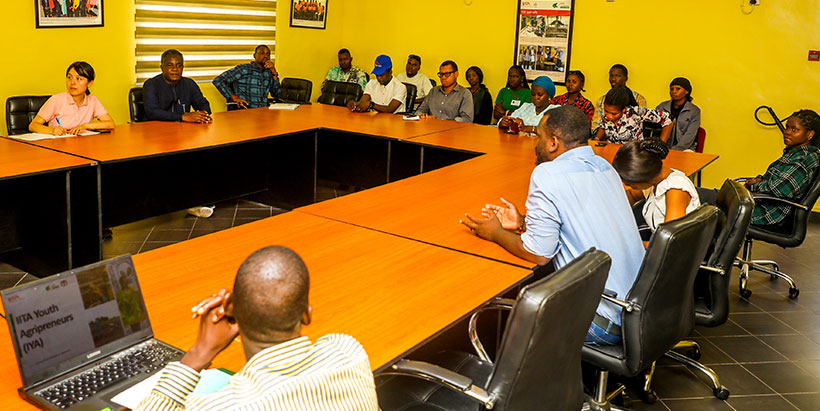
To advance existing partnership efforts in youth empowerment, capacity development, and food systems, the World Bank-funded Nigeria for Women Empowerment Program (NFWP) team met with IITA Director General and CGIAR Regional Director for Continental Africa Dr Simeon Ehui, IITA Senior Management Team (SMT), and some researchers at the institute’s headquarters recently.
IITA Director General Dr Simeon Ehui with some members of the IITA Management and researchers during discussions with the NFWP team.
Focusing on leveraging IITA’s outstanding work to enhance the impact of projects and improve lives through access to transformative technologies, discussions were marked by optimism about the potential for solid solutions and new opportunities for collaboration.
IITA Director General Dr Simeon Ehui (m), with some IITA staff and the NFWP team.
Speaking on innovation scaling under the program, Audrey Packs said one of the primary areas of collaboration would entail introducing new technologies to women farmer groups and youth using approaches like farmer field schools specifically for training women and extension officers. According to Packs, this will provide better support for program beneficiaries.
IITA Cassava Seed Systems Specialist Dr Mercy Diebiru-Ojo with the NFWP team in SAH screenhouse.
While the NFWP aims to empower women and youth with the knowledge and tools they need to increase productivity and improve their livelihoods, the World Bank-funded program will collaborate with IITA to strengthen the sustainability of women and youth in business across 28 states in Nigeria.
Highlighting key areas of collaboration with IITA, DG Ehui said both parties can develop strategies that will help beneficiaries adapt while focusing on providing advisory services and enhancing their skills.
IITA Youth in Agribusiness (IYA) Partnership and Stakeholder Engagement Manager Adetola Adenmosun, speaking on IITA’s youth program, said some of the essential elements for youth engagement like financial inclusion and literacy and capacity building are also critical, especially when focusing on women as key societal actors.
The NFWP team with members of the IITA Youth Agripreneurs.
According to Adenmosun, using sensitization and aggregation as key strategies, the IYA program is helping small businesses to collaborate, share resources, and reduce individual investment pressures while encouraging women to scale up home-grown businesses.
Speaking on behalf of the NFWP team, Packs highlighted some of the program’s focus areas, adding that it emphasizes the importance of prioritizing gender-sensitive climate action initiatives, focusing on areas where the most significant impact can be achieved. “By partnering with IITA, the project aims to extend its reach and effectiveness across 28 states in Nigeria,” she said.
IITA Head of Capacity Development Office Sougrynoma Zaïnatou Soré, giving a background to the institute’s capacity development efforts, said with results and recommendations from other programs where assessment of women collectives working across various value chains can provide the needed technical backstopping to ensure the adoption of technologies, will address the duplication of efforts between IITA and NFWP.
With these comprehensive and targeted efforts, IITA and the World Bank aim to create a lasting impact, empowering women and youth, fostering sustainable development, and strengthening the agriculture value chain across Nigeria.
Contributed by Timilehin Osunde
In a strategic effort to strengthen the collaboration between IITA–CGIAR and Sasakawa Africa Association (SAA), SAA Tokyo Program Officer Momoko Higa and SAA Country Director Dr Godwin Atser recently paid a working visit to IITA’s headquarters in Ibadan. This collaboration aims to harness the unique strengths of both organizations, driving forward projects that prioritize agricultural innovation without compromising SAA’s core competencies.
SAA team at one of IITA’s cassava field trials
Atser explained that the collaboration would explore and define the concrete steps necessary to operationalize the agreement to work together.
ThankGod Ogwuche, IITA Senior Research Supervisor, provided an in-depth explanation of the Semi-Autotropics Hydroponics (SAH) technology and its positive impact on the livelihoods of smallholder farmers.
During the facilities tour, Higa highlighted the collaborative efforts on the African Cassava Agronomy Initiative (ACAI) project and the development of AKILIMO, emphasizing the benefits of their partnership, which could serve as an advantage for SAA.
SAA team in a meeting with IITA Youth Agripreneurs.
IITA Youth in Agripreneur (IYA) Business Development Officer Idowu Osun stressed the importance of engaging policymakers to establish structures within the agricultural system. Drawing on lessons from various countries, he noted that “Leveraging existing government facilities and promoting a mindset change among government officials would enhance agricultural development in Nigeria.”
Concluding the meeting, Atser emphasized the necessity of promoting IITA’s innovations through collaboration between SAA and IYA. He urged young agripreneurs to devise models to attract other youth to agriculture, highlighting the critical role of youth engagement in sustaining agricultural advancements.
Contributed by Anita Akinyomade
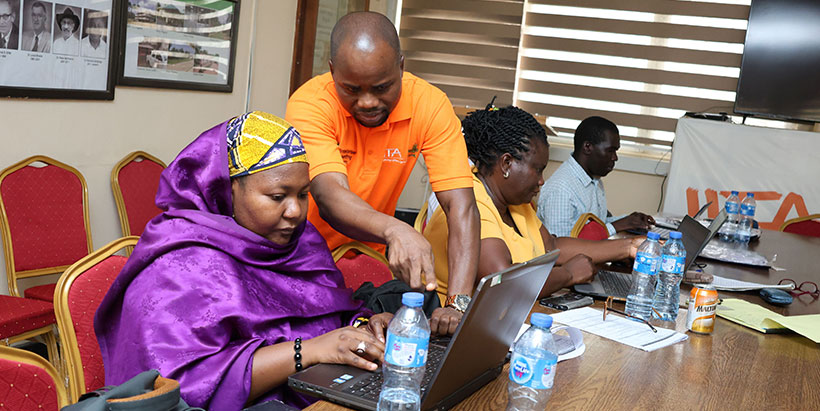
The cowpea breeding program at IITA Kano Station participated in a four-day training on the Enterprise Breeding System (EBS) from 7 to 10 May. Thirteen participants attended, including Cowpea Breeding Lead Boukar Ousmane and bioinformatics, data management, and molecular breeding experts. The training focused on introducing breeders and technicians to a new tool to support effective data management as part of the EBS adoption initiative across CGIAR and NARES breeding programs.
The training aimed to:
streamline breeding activities and eliminate manual data exchange across various applications and databases
familiarize participants with the EBS platform and its core breeding and analytics functionalities
enable participants to efficiently access EBS User Guides and correctly submit requests to the EBS Service Desk (ESD) for support
gather initial feedback from participants to improve the cowpea data and workflows in the production environment.
Participants during the EBS training.
Simon Imoro, IITA Breeding Data Manager and the program facilitator, explained that the EBS is designed to manage data effectively from end to end, covering nurseries and trials creation and management, data collection and quality checks, germplasm advancement, seed inventory management, genotyping, and analyses. He added that the system has powerful search tools for germplasm and seed records, making and sharing different list types, and supporting network breeding where CGIAR-NARES partners can easily collaborate on experiments established using the system. The training equipped participants with skills to increase accuracy and efficiency in their work.
Certificate presented to Dr Mohammed Saba after the EBS training.
Imoro and Trushar Shah, Bioinformatician and PI of the IITA Digitization project, delivered in-depth presentations and demonstrations on the concepts and applications of all the EBS Core Breeding and Breeding Analytics (Phenotypic Data Manager and the Analysis Request Manager) domains. They aimed to equip participants with the requisite EBS knowledge, from creating experiments to collecting data and analyzing the collected data through hands-on exercises.
The training followed a workflow-based approach, covering relevant tools for supported experiment types: generation nurseries, cross nurseries, and breeding trials. Important use-case scenarios were highlighted to relate EBS terminologies and processes to actual field practices. This included experimental planning and designs, seed source management, printouts, data collection, data sharing with in-program and NARES collaborators, data quality checks and analysis, and harvesting and advancement.
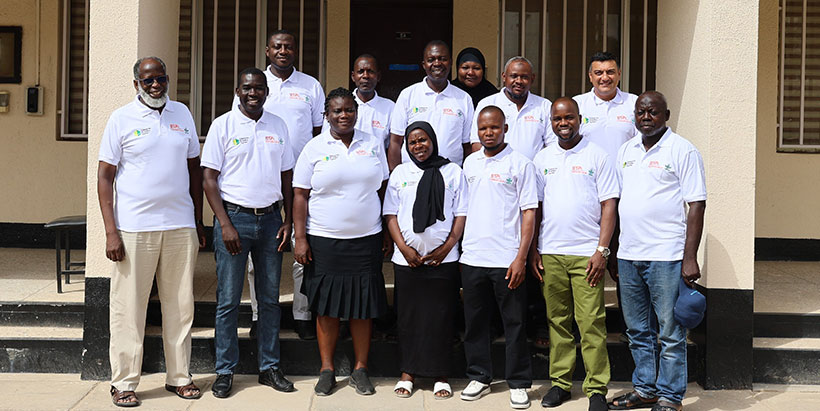
Participants after EBS training in Kano.
Participants asked questions during and at the end of each session. Hands-on exercises were administered to assess their understanding of concepts and workflows. They provided positive feedback, indicating the usefulness of the training to the breeding team. IITA Molecular Breeder Patrick Ongom emphasized the importance of the training, stating that the EBS will support the management of data from the breeding field and the laboratory. Ongom also mentioned that the training has been useful to the breeding team as they have been equipped with skills to make their work more efficient.
“Today, I am happy to be introduced to this new tool. The tool is important, particularly to the breeding program, to help us manage our data. We learned how to use the software to organize our data. This is our first time using the software, and we hope we will soon migrate completely to the EBS system.”
Trushar Shah highlighted that the training achieved its objectives, covering all breeding workflows, analytics, and peripheral data attached to the program.
Participants in the training expressed gratitude for such an opportunity to learn and be equipped with knowledge about the EBS. During the closing remarks, Boukar, on behalf of his team, expressed their readiness and confidence in using EBS, eagerly anticipating the transition to the production environment sooner. They are keen to start using the EBS for the upcoming planting season starting in June 2024.
Shah and Imoro congratulated the participants for their engagement and enthusiasm. All participants were awarded EBS certificates for completing the training and performing all the required exercises.
The trainers extended their heartfelt appreciation to the Crops to End Hunger (CtEH) through the IITA Enabling Digitization grant that made the training possible. They also acknowledged the significant contributions of IITA, CGIAR Digital Solutions, Global User Support, and the entire EBS team involved in the digitization activities, ensuring a comprehensive and impactful adoption of the Cowpea improvement program.
Contributed by Sarah Sallau
On 16 May, the CGIAR Forum Against Inequality and Racism (FAIR) Employee-led Resource Group hosted an event themed “From bystander to ally, taking action against racism.” This Gender, Diversity, and Inclusion (GDI) event aimed to empower participants to move beyond passive observation of racism to becoming active allies in the fight against it.
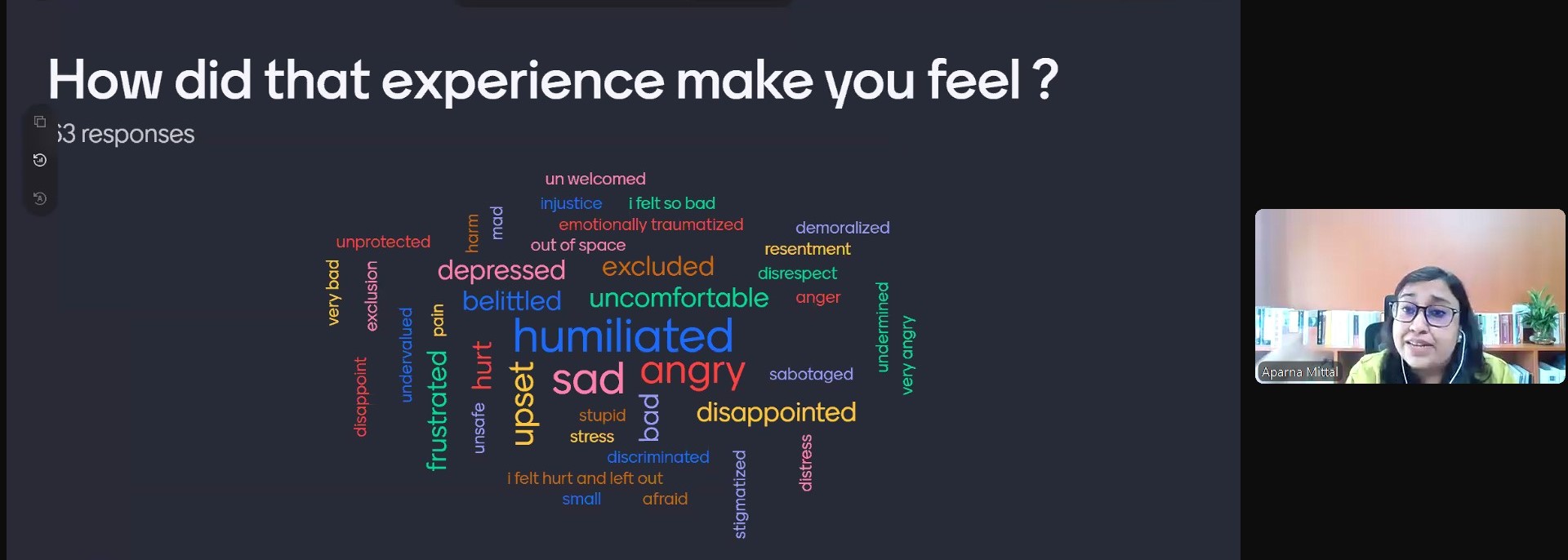
Diversity Expert and CEO, Aparna Mittal, explaining how racial discrimination manifests and how to handle it.
Armelle Coudreau, Procurement Administrator at the CGIAR Systems Organization, moderated the session. She addressed the complexities individuals face when deciding whether to respond to instances of racism. She highlighted that many people have experienced discrimination at some point and emphasized the importance of recognizing these unfair situations. Coudreau provided tools and strategies to help participants transition from mere bystanders to active allies against racism.
Aparna Mittal, Diversity Expert and CEO, led a series of interactive exercises, allowing participants to share their experiences with discrimination. Mittal shared her experiences, expressing a deep commitment to preventing others from enduring similar injustices. Through exercises based on real-life scenarios, she explained how racial discrimination manifests globally, driven by factors such as skin color, facial features, culture, and accent. She added that acts of racism can include denial of rights and benefits and the inappropriate use of power by law enforcement agents.
The event also offered practical advice on becoming a more effective ally. Participants discussed various strategies to caution against discrimination. These include:
speaking up against racism
understanding and appreciating cultural differences
respecting others
listening actively before responding
The importance of self-empowerment was underscored, encouraging individuals to create awareness, take action, and mentor others.
Procurement Administrator at the CGIAR Systems Organization, Armelle Coudreau, moderating the session.
Empowering victims of racism was another critical focus of the event. Participants were encouraged to reach out to trusted individuals, understand their rights, speak up, and prioritize self-care. It was emphasized that suffering in silence harms the individual and allows the cycle of discrimination to continue. By speaking out, victims can protect themselves and help prevent future occurrences of racism.
The event provided valuable insights and practical tools for combating racism. It reinforced the idea that collective effort and active allyship are essential in the fight against racial discrimination. Individuals can create a more inclusive and equitable society through education, awareness, and action.
CGIAR is a global research partnership for a food-secure future dedicated to transforming food, land, and water systems in a climate crisis. IITA is one of 15 research centers in the CGIAR.
Contributed by Ochuwa Favour Daramola
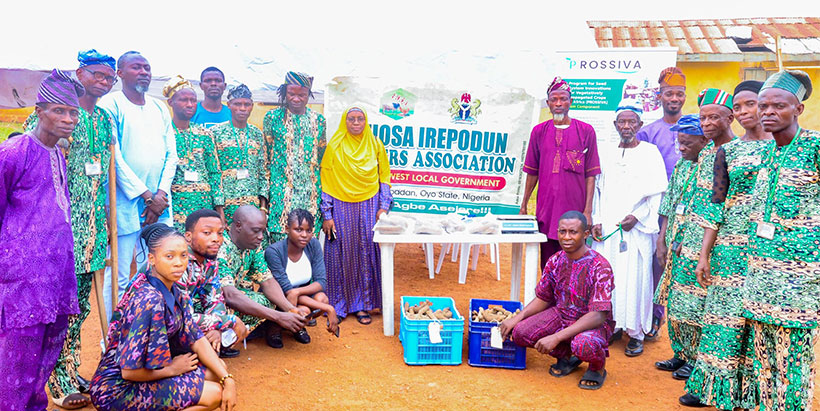
The Eniosa-Irepodun Farmers and CICS marked their fourth anniversary with a significant milestone: launching a 15 million naira building fund. The event took place recently at IDC Primary School in Eniosa, Lagelu Local Government Area of Oyo State in Nigeria, and was graced by representatives of IITA-PROSSIVA, who provided valuable insights and training on the latest yam planting techniques and benefits of new yam varieties.
Eniosa Cooperative farmers and IITA PROSSIVA representative.
The celebration highlighted the community’s commitment to agricultural development and collaboration. IITA-PROSSIVA representatives showcased the ASIEDU and KPAMYO yam varieties, emphasizing their high yield and delicious flavor. One farmer, who had previously tested these seeds, praised their superior quality and productivity.
The General Secretary of Eniosa-Irepodun Farmers and CICS, Asimiu Olosupo, thanked IITA-PROSSIVA for their continuous support and for introducing the farmers to new agricultural technologies. He proudly announced that the association had received its CAC certificate and financial contribution cards, enhancing its credibility and access to resources.
Olosupo also appealed to the government for credit and loans to boost their agricultural activities. In response, the Director of Agriculture for Lagelu West Local Government reiterated the government’s commitment to supporting farmers. He encouraged the association to join the All Farmers Association of Nigeria (AFAN) to access various loans and programs designed to aid farmers.
Morufat Balogun, the IITA-PROSSIVA yam component lead, speaking through the extension specialist, Idris Badiru, underscored the benefits of the new yam seeds, noting that they were being offered to farmers at a 50% discount per kilogram as part of the contribution of IITA-PROSSIVA’s contributions to the event. She highlighted this as a significant opportunity for the farmers to enhance their productivity.
She also urged the association to attract more women and young people to agriculture. This, she emphasized, is crucial for sustaining agricultural advancements and ensuring the future of farming in the community.
Lasisi, a field supervisor from IITA, detailed the innovative methods used to produce these yam seeds. He explained that the seeds are initially grown using hydroponics or aeroponics in the nursery for four weeks before being transferred to the field or screen house. This technique ensures robust and healthy plants, leading to better harvests.
Lasisi provided practical advice on yam seed preparation, advising farmers on the correct ridge size and cutting yam seeds into pieces. He explained that after six months, these seeds could be harvested not for consumption but for further seed production. Repeating this process three times would yield satisfactory seeds.
Other program highlights included a focus group discussion with selected association members, led by Badiru, and a question and answer session. The discussions revealed the willingness of the members of the association to partner with IITA as outgrowers in seed yam production.
The Eniosa-Irepodun Farmers and CICS’ anniversary celebration marked a significant financial milestone and showcased the power of collaboration and innovation in agriculture. The knowledge and resources shared at the event are set to propel the community toward greater agricultural success and sustainability.