In the lively markets of Niger and Nigeria, every grain of cowpea tells a story of survival and sustenance. Yet, these grains face a silent enemy: contamination from harmful chemicals used to keep insects at bay during storage. For farmers and families, the struggle to keep food safe without risking health has long been an uphill battle. But an innovative solution is changing that narrative—a simple, airtight bag.
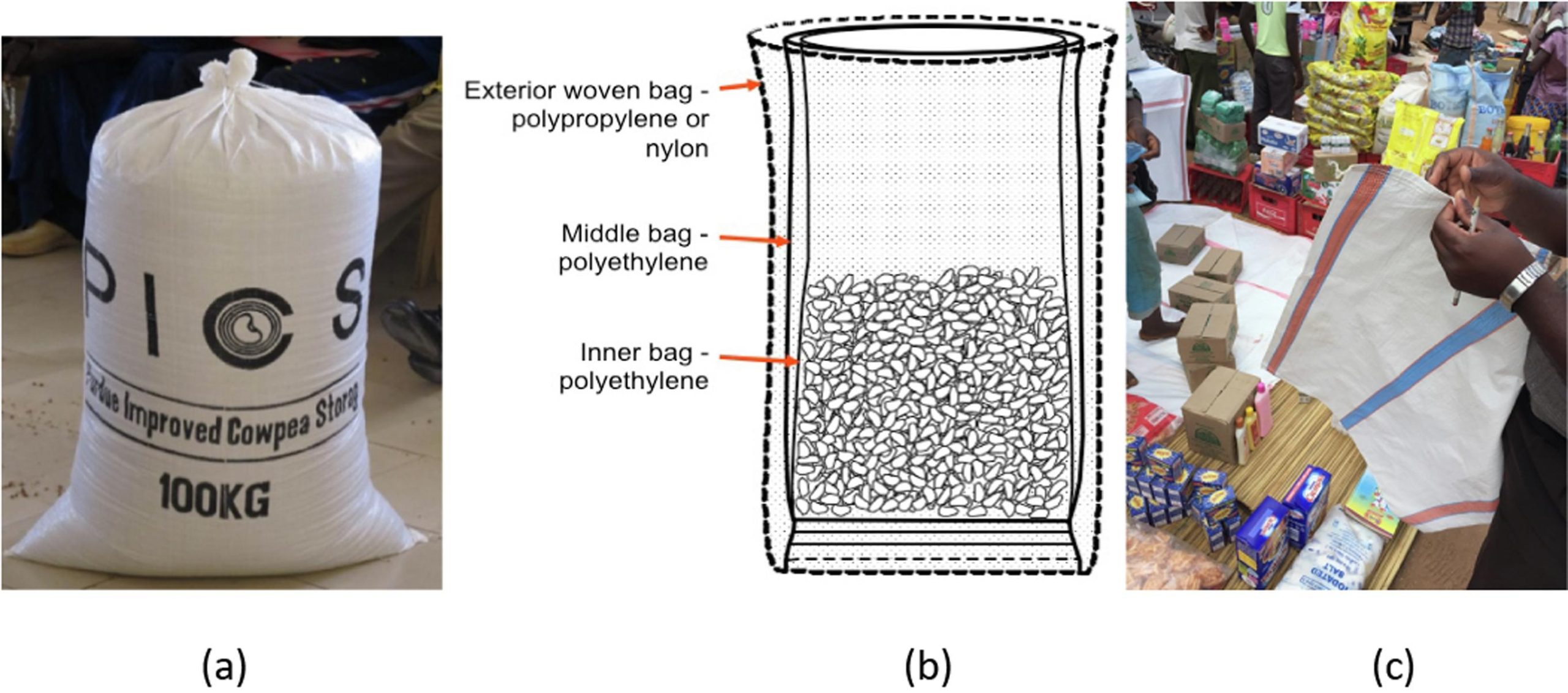
(a) Outside of PICS hermetic storage bag with the brand logo; (b) Interior design of PICS hermetic storage bag; (c) Generic, traditional woven storage bag with no branding.
These bags, known as hermetic storage bags, are revolutionizing food storage across rural Africa. By sealing out air and pests, they preserve grains without the need for toxic pesticides. This means families can store their harvests safely, eat healthier food, and earn more money by selling high-quality produce.
But here’s the real breakthrough: when researchers from the Purdue University, USA, Institut National de la Recherche Agronomique du Niger (INRAN), and IITA, Ibadan during a study aimed at estimating the extent to which rural consumers in sub-Saharan Africa value quality signals about their food, conducted an experiment with a type of hermetic storage called PICS (Purdue Improved Crop Storage) bags in markets Niger and Northern Nigeria, they found something remarkable. Indeed, consumers were not just willing to use them—they were ready to pay extra for grain stored in them.
Results from the study showed that buyers were willing to pay a premium of 13% to 20% more for grains stored in these chemical-free bags. This willingness to pay reflects growing awareness and demand for safer, healthier food in the region.
“This isn’t just about storage,” said Dr Abdoulaye Tahirou, Director, IITA Sahel Hub. “It’s about trust and quality. Farmers and consumers are starting to see that safer storage means better lives.”
The impact goes beyond individuals. By reducing the need for harmful chemicals, these bags contribute to a healthier environment and support the transition to sustainable agricultural practices. They also empower small-scale farmers to compete in larger markets where food safety standards are becoming stricter.
As this innovation gains traction, it raises an important question: could these simple, affordable bags become the norm for food storage across Africa? The early signs are promising. Markets are responding positively, and with continued awareness campaigns, more households and farmers could benefit, especially in the Sahel region where many households depend on cowpea production for food and cash. These hermetic storage bags can help these smallholder households address storage losses and spoilage.
With growing demand, there’s an opportunity to scale up the production and distribution of hermetic bags, making them more affordable and accessible. Partnerships between governments, research institutions, and private companies could ensure that this life-changing innovation reaches every corner of the continent.
For smallholder farmers and farming families in Africa, the message is clear: a safer, healthier future for food is within reach, one hermetic bag at a time.
Contributed by ‘Timilehin Osunde
by Simeon Ehui, Director General, IITA and Regional Director, Africa, CGIAR and Bernard Vanlauwe, Deputy Director General, Research for Development, IITA and Lead, Excellence in Agronomy, CGIAR
West Africa and the Sahel are grappling with a severe soil health crisis that threatens food security. Two-thirds of the region’s land is degraded, and fertilizer application rates remain far behind global averages. This has led to low crop yields and reduced agricultural productivity, particularly for smallholder farmers. Unsustainable farming practices and limited access to essential agricultural inputs have worsened this situation, putting regional food systems under severe strain.
The Africa Food Systems Forum (AFSF) 2024, held in Kigali, Rwanda, highlighted this urgency again, bringing together key stakeholders to confront the region’s soil health challenges head-on. The discussions at AFSF underscored the need for swift, decisive action in tackling soil degradation, emphasizing the imperative for establishing a transformative initiative that would elevate the region’s agricultural future.
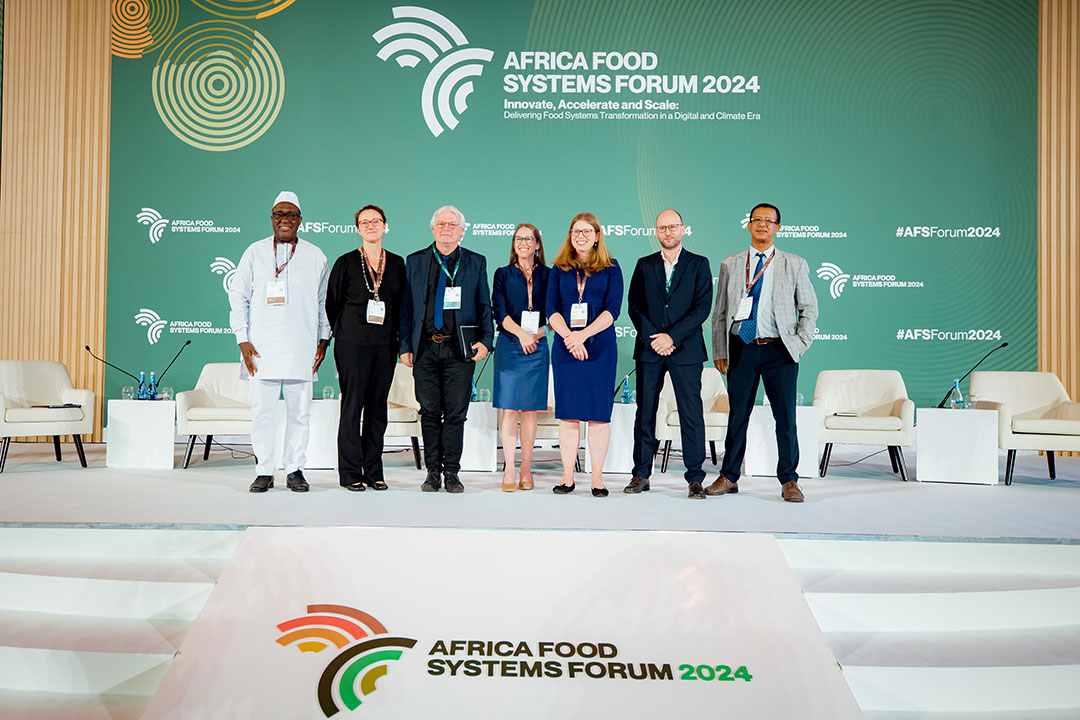
Simeon Ehui and Benard Vanlauwe with delegates who were part of the investing soil health panel at the Africa Food Systems Forum in Kigali.
A Unique Initiative for Transforming Agriculture
In response to this urgent crisis, a coalition of partners had earlier come together and set up the Regional Hub for Fertilizer and Soil Health for West Africa and the Sahel. The hub, based at the International Institute of Tropical Agriculture (IITA) in Ibadan, Nigeria, was launched in June 2024, amid high hopes and optimism. The Hub is already making significant strides toward improving soil fertility and agricultural productivity and will provide the much-needed technical assistance, focusing on developing and implementing investment plans to improve soil health and fertility through best agronomic practices and soil management strategies.
The Regional Hub was established to address the specific needs of individual countries across the region, emphasizing integrated soil fertility management to optimize resource use and build resilience against climate change. Its strategy is firmly rooted in the priorities outlined in the Fertilizer and Soil Health Roadmap 2023 and the Nairobi Declaration from the Africa Fertilizer and Soil Health Summit 2024, two important documents that emphasize the value of this regional initiative.
With significant financial backing from the World Bank and OCP Africa, the Hub is proactively revitalizing West African agriculture. By prioritizing integrated soil fertility management and soil health restoration, the Hub is working towards a more resilient and food-secure region.
IITA leads Hub implementation
IITA, the leading agricultural research partner with a proven track record in advancing crop production in Africa, was selected to host the Hub. Since 1967, IITA has pioneered innovations in soil science in Africa, making it the ideal institution to spearhead this initiative.
By hosting this Regional Hub, IITA is taking a pivotal role in transforming agriculture in West Africa. Our extensive experience and innovative approach will drive this initiative forward, providing a platform for collaboration and progress that will empower farmers and improve soil health across the region.
The impact of the Hub is magnified by the collaboration of key partners, each contributing its unique strength. OCP Africa provides tailored, sustainable fertilizer solutions to meet the specific needs of local soils and crops essential for improving soil fertility and agricultural sustainability. The African Plant Nutrition Institute (APNI) advances plant nutrition research and develops training programs, helping farmers build knowledge and implement best practices in soil health management. The International Fertilizer Development Center (IFDC) supports the Hub with its expertise in developing and disseminating effective fertilizer technologies and fostering public-private partnerships to ensure that innovative solutions reach farmers.
Accelerating the Impact of CGIAR Climate Research for Africa (AICCRA) serves as a key knowledge partner, offering soil information, knowledge management, agronomy recommendations, capacity development, policy support, and advocacy. Mohammed VI Polytechnic University (UM6P) drives scientific and technical advancements through soil mapping, remote sensing, and precision agriculture tools. The Economic Community of West African States (ECOWAS) plays a crucial role in aligning the Hub’s activities with regional policies and promoting best practices across member states.
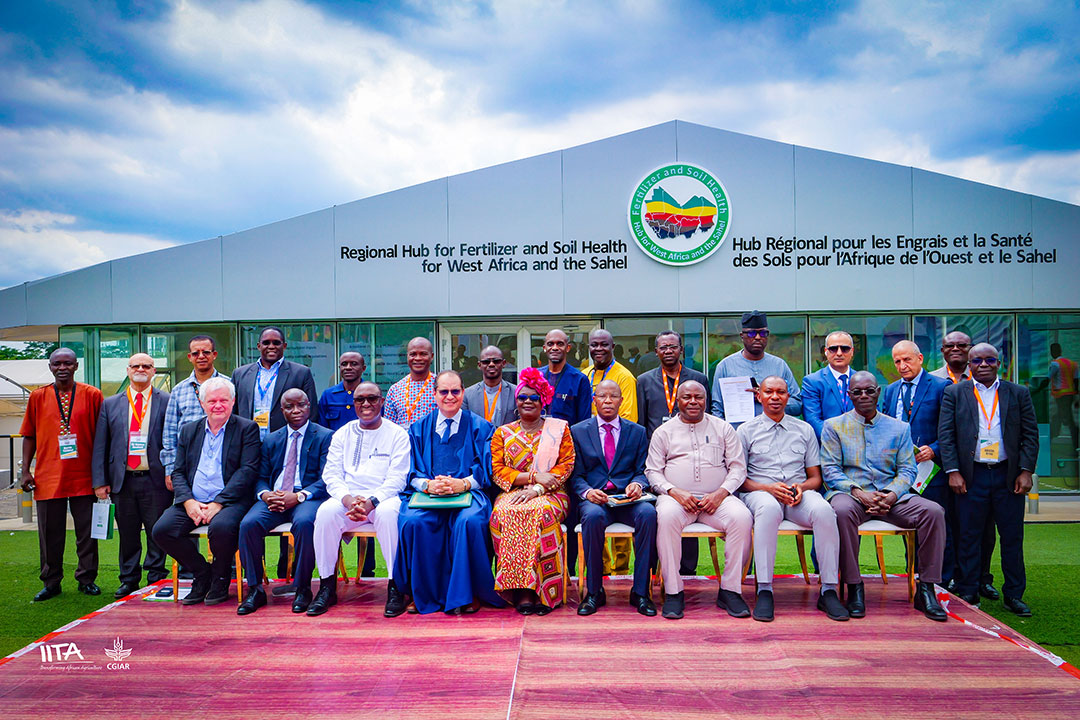
Delegates at the opening of the Regional Hub for Fertilizer and Soil Health for West Africa and the Sahel.
What’s next for the Hub?
Moving forward, our focus has shifted to implementation. Following the Hub’s launch, a Technical Launching Workshop was held in June 2024, bringing together representatives from Benin, Burkina Faso, Liberia, Mali, Niger, Nigeria, Senegal, and Togo, along with ECOWAS and key regional and international partners.
The next steps include gathering critical information and refining action plans tailored to each country’s specific needs. Bilateral meetings in each country will help define initial focus areas and actions for 2024.
The action-oriented momentum of AFSF 2024 continues to inspire the Hub’s forward-looking agenda. Stakeholders at the Forum were eager to translate the discussions into tangible interventions, emphasizing the need for urgent, on-the-ground impact. By 2033, the Hub aims to increase yields and income for three million farmers, enhance soil health across 1.5 million hectares, and help 1.5 million farmers adapt to climate change.
The Regional Hub for Fertilizer and Soil Health for West Africa and the Sahel represents a significant milestone in promoting sustainable agriculture. By addressing soil degradation and implementing scalable solutions, the Hub is set to make a lasting impact on West Africa’s agricultural landscape. The focus on improving soil health, building resilience, and enhancing food security promises a future where soil health is revitalized, crop yields are increased, and the agricultural sector is robust to withstand climate change challenges.
As the Regional Hub advances its mission, we do not just address today’s challenges but lay the groundwork for a resilient agricultural future in the region. With continued commitment, dedicated effort, and collaboration, we will achieve our vision of fertile, productive, and resilient soils in West Africa, paving the way for a brighter agricultural future.
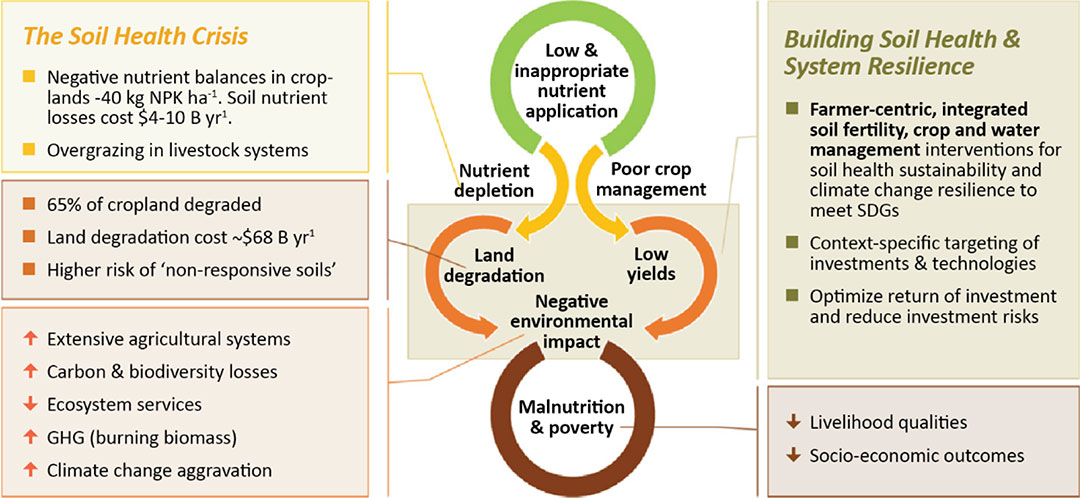
The vicious cycle of soil health decline, land degradation, poor crop yields, and ecosystem service loss underpinning the high incidence of malnutrition and poverty triggered by poor management of fertilizers and organic nutrient resources. Locally adapted integrated soil fertility and water management practices are critical for reversing the negative spiral and building soil health and resilience of crop production systems in Africa. Source: Zingore, 2022.
Conclusion: A path toward a resilient future
The establishment of the Regional Hub for Fertilizer and Soil Health for West Africa and the Sahel marks a significant milestone in addressing the region’s soil degradation crisis. By leveraging the collective strength of research institutions, governments, and private sector partners, the Hub is set to transform soil health, boost agricultural productivity, and enhance resilience to climate change.
As we look ahead, the Hub not only addresses today’s challenges but also promotes cross-learning and regional synergy by fostering knowledge sharing and collaboration through regional hubs. This reinforces the importance of a continent-wide approach to improving soil health, ensuring that best practices and innovations are shared across borders for greater impact.
AFSF 2024 highlighted the urgency and enthusiasm of stakeholders who are ready to take action. The discussions at AFSF 2024 signaled the shift in how we are addressing the soil health crisis, moving from rhetoric to concrete action. With renewed energy and commitment, we are poised to tackle soil health challenges head-on, ensuring a resilient and food-secure future for West Africa. Through collaboration, innovation, and an unwavering commitment to sustainable agriculture, we are turning the tide on soil health in the region—one field at a time.
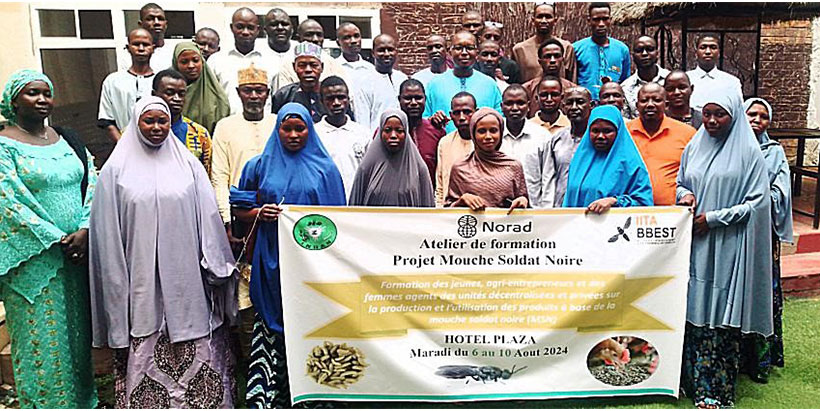
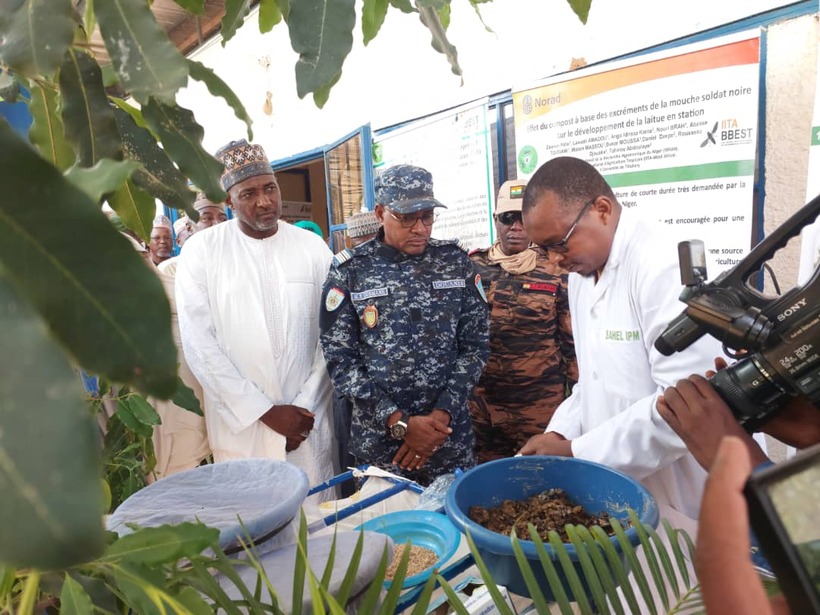
To empower agripreneurs, youth, and women to adopt a sustainable agriculture practice in Niger, the Institut National de la Recherche Agronomique au Niger (INRAN), the national partner of the BBEST Project in Niger held a training workshop on producing and using black soldier fly (BSF)-based products for the youth, women, beneficiaries of the Decentralized Unit and private BSF Units’ owners on 6 August in Maradi.
Participants and facilitators at the workshop in Maradi.
The workshop aimed to introduce young entrepreneurs, farmers, and technicians to BSF rearing techniques and using BSF larvae in animal feed and the derived organic fertilizer in vegetable production. In addition, the workshop was organized to (i) strengthen the capacity of participants on insect technology and biology and the mass production techniques of the black soldier fly, (ii) empower farmers to replace imported proteins with BSF larval meal, (iii) strengthen the capacity of the youth to produce and utilize the black soldier fly, (iv) demonstrate to producers the different stages involved in the rearing of the fly, the preparation and use of BSF based organic fertilizer and (v) introduce farmers to the management of decentralized and private BSF production units.
The workshop is led by Dr Laouali Amadou, INRAN entomologist in charge of producing the BSF component of the BBEST project. About 40 people participated in the training, including nine women from Niamey, Maradi, Tahoua, and Zinder regions, all young agro-entrepreneurs and farmers.
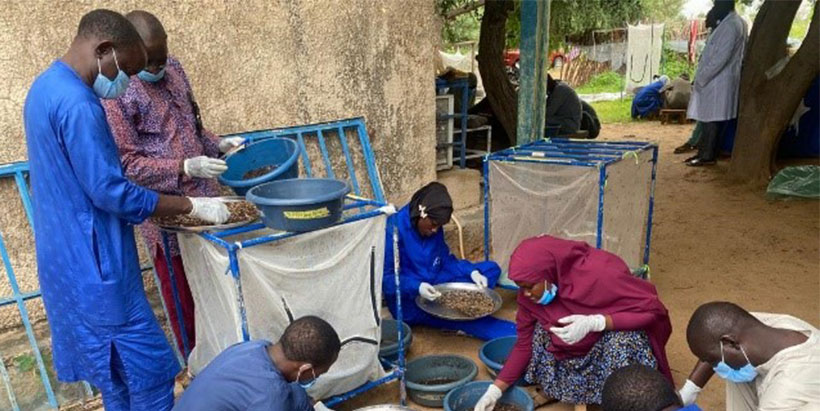
Participants engaging in practical activities.
The five-day training covered the BSF prototype and the rearing kits of the black soldier fly. Participants were trained on the biology of the fly and the nutritional performance of the BSF-based products. The facilitators also provided information on the nutrition and results of animal feed experiments based on BSF products. The training revolved around the rearing and the production of the BSF larvae and BSF genital production.
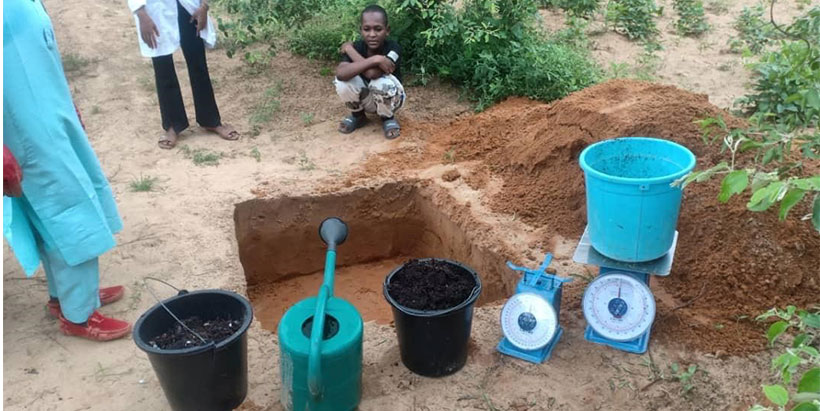
Participants, after the theoretical session, were involved in practical activities and learned how to prepare the BSF rearing kit and rearing of the adult flies and the larvae. They also practiced monitoring and maintaining the colony. They were shown the harvesting and post-harvesting of the BSF larvae and the transformation of the BSF larvae. The trainers showcased the use of the BSF products in animal feed. They were taken to the field to gain hands-on knowledge of the preparation of the BSF organic fertilizer and its use.
Preparation for the composting of BSF frass.
Idrissa Mohamed, an agro economist who took part in the training, attested to the high cost of chicken and fish feed and its constraints on farming and livestock development in the country. Through the training, he learned how to set up a BSF rearing unit for mass production and affirmed that the BSF technology could easily be learned and adopted.
Mohamed wants to set up a BSF larvae production unit and start the feed formulation later. He mentioned that he would train people interested in the black soldier fly technology. He thanked the BBEST project led by IITA, INRAN, and NORAD for giving them the opportunity to be trained on the BSF technology.
Contributed by Djibrilla Abdou and Francisca Ocloo
The Minister of Agriculture and Livestock in Niger, ElHadji Mahamane Ousmane, paid an official courtesy visit to the regional headquarters of Institut National de la Recherche Agronomique du Niger (INRAN) at CERRA in Maradi as part of his plan to engage scientists on issues related to their working conditions, including food security in the country.
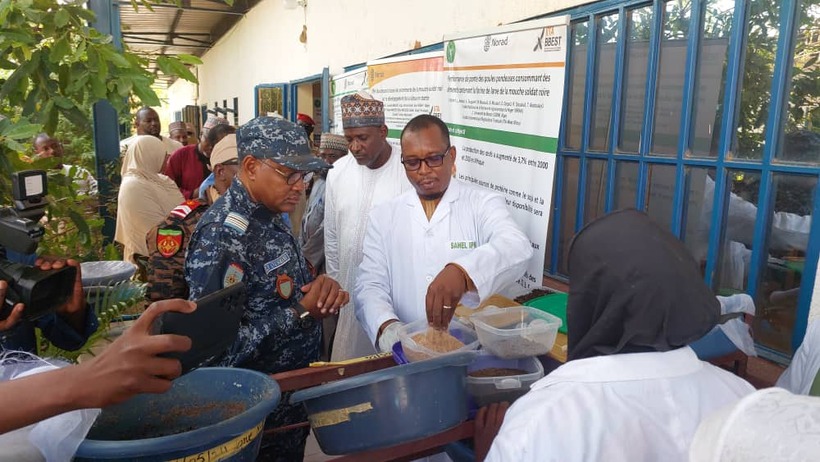
Dr Laouali, explaining the BSF technology to the Minister of Agriculture and Livestock at the BSF rearing unit at CERRA Maradi.
Meeting with the deputy secretary of the region and other dignitaries, the Minister went on a tour to discover the activities undertaken by the institute. He visited the entomologist laboratory where he explored the production of the novel black soldier fly (BSF) technology implemented by INRAN and IITA-led BSF for a Bio Circular Economy and Environmental Sustainability (BBEST) with funding from the Norwegian Agency for Development Cooperation (NORAD). This research for development (R4D) project aims to address two challenges: unsustainable biowaste management and unsustainable animal feed and fertilizer supply.
Minister Ousmane commended the scientists’ work on the BSF technology. This sustainable practice transforms organic waste into protein-rich animal feed and protein-rich organic fertilizer for vegetable production and soil restoration. This aligns with the Conseil National pour la Sauvegarde de la Patrie (CNSP) orientation for food safety and research. He also lauded the scientists for their dedication and hard work.
“I am very happy because the managers are committed and know what they must do. I am thrilled by the research undertaken by the scientists and the students.”
Elhadji Mahaman Ousmane and the deputy secretary of the province of Marady appreciate the BSF technology implemented by INRAN and IITA BBEST project in Maradi.
The team leading the BSF activities explained to the Minister and his team how the technology contributes to job creation for the youth. The team informed him of their plan to mass-produce BSF products in a facility they are establishing in Niamey and sell them to poultry, fish, and vegetable producers.
In times when humans and animals compete over sources of protein, with sustainable practices at the forefront of global discourse, BSF technology is emerging as a game-changer. This innovative approach transforms traditional methods and promotes sustainability.
The black soldier fly (hermetiaillucens), known for its remarkable ability to convert organic waste into rich protein feed for livestock, has caught the attention of scientists, environmentalists, and private investors. By adopting the BSF technology, institutions reduce the biowaste in urban cities and produce nutrient-rich fertilizers for vegetable production and soil restoration.
Contributed by Francisca Ocloo
The IITA-Climate Smart Agricultural Technologies (CSAT) project continues to advance with activities in Mali and Niger. CSAT Mali and CSAT Niger are working to scale climate-smart technologies in Sahelian regions and provide farmers with options for better adaptation to climate change. Also, the project is funding research to develop additional opportunities for better adaptation in increased resilience.
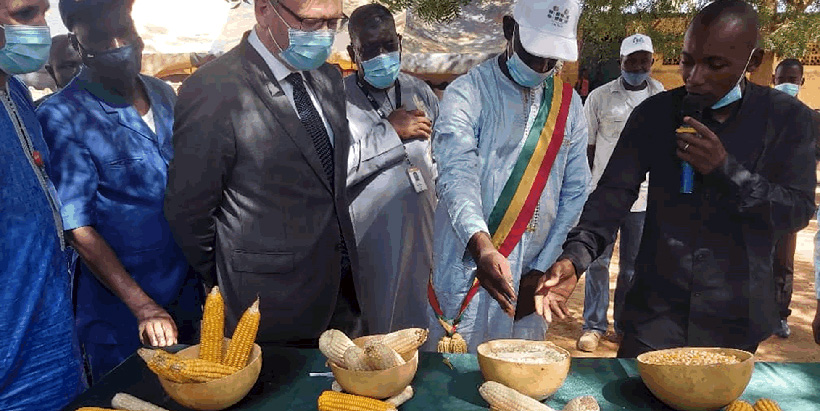
Norwegian Ambassador Vegar Brynildsen and the Mayor of Mafeya looking at different varieties produced by Farmers through the CSAT project in the region of Koulikoro.
Being executed simultaneously in both countries and funded by the Kingdom of Norway, the project will run for five years, till 2024. CSAT Mali covers 32 communes under the Kayes, Koulikoro, Sikasso, and Segou regions.
On 23 October, the Ambassador of the Kingdom of Norway to Mali, His Excellency Vegar Brynildsen, visited the IITA-CSAT project activities in the Koulikoro region. IITA-CSAT Coordinator Tahirou Abdoulaye received the Ambassador and his team from the Norwegian Embassy.
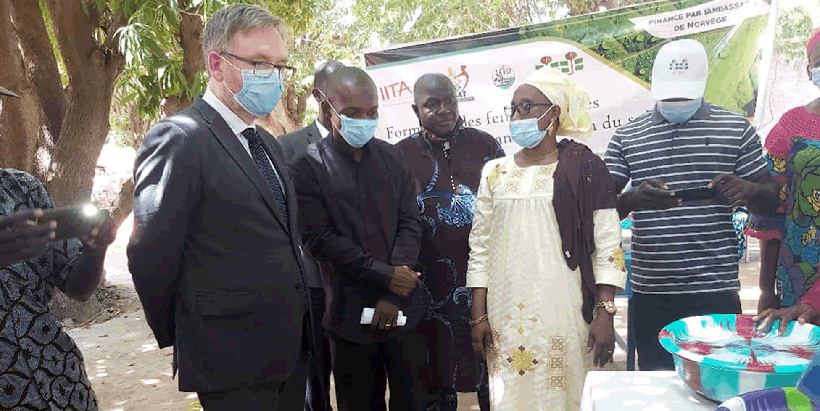
IER food technologist highlights the soybean transformation training to His Excellency Vegar Brynildsen.
The day began with a courtesy visit to the Governor of the region. Accompanied by Abdoulaye and a representative of Malimark (NGO in charge of scaling activities), the Ambassador visited Mafeya in Meguetan commune. He highly appreciated the CSAT project’s achievements, including demonstration plots of inoculated and non-inoculated soybean being introduced for crop diversification to reduce risk. The team also visited a plot of early maturing cowpea introduced for food security and incomes.
The visit continued with a meeting with a group of Koulikoro women learning how to process soybean. IER food technology laboratory, another project partner, led this activity. The women received training on the processing of soy milk and yogurt, couscous, soumbala (West African spice), and flour into food supplements for children. Soybean processing allows these women to have access to nutritious foods for their families. They can also process and sell these products, hence generating cash incomes for their households.
The IITA-CSAT team thanked His Excellency Brynildsen for dedicating his first-ever visit outside the city of Bamako to the project’s activities. They considered this a testimony to the importance the Embassy places on agriculture and climate change and confirms their confidence in the quality of the work being carried out in the field by the project team.
A team of CSAT/IITA project staff and collaborating partners from Mali and Niger Republic visited IITA, Kano Station on 15 October as part of the four-day exchange visit aimed at facilitating knowledge transfer and sharing experience on improved agricultural technologies in the development of smallholder agriculture productivity.
Mr Reuben leading the field visit. Photo by Sarah Sallau.
The Head of IITA Kano Station, Alpha Y. Kamara and some senior staff of the station received the delegation, which was led by Dr Alassan Maiga, a Malian and Mr Mani Mamman, a Nigerien.
In his opening remarks, Kamara stated that the aim of agricultural technologies when developed is to create impact and should not to be kept on the shelf. In his brief presentation titled ‘”Key Approach to Scaling up Agricultural Technology to Increase Productivity and Income”, he highlighted key elements to use in scaling out technologies for high impact. These include effective partnership, use of scalable technologies, use of decision support tools to target suitable ecologies for the technologies, awareness creation, field demonstrations, capacity building of users, and use of market linkages to create demand.
He concluded the presentation by encouraging the project team and partners to always send their financial and technical reports on time to avoid late release of funds and to adhere strictly to the agreement in the implementation of the project activities.
In his remarks, Mr Tofa Abdullahi gave a report on his field visit to Mali and Niger Republic in September 2019. He disclosed the successes and failures of the implementation of the projects in some regions of both countries with particular reference to Kaye in Mali and Dosso in Niger where the NGOs did not do their work properly. He said the team must have learned from their past mistakes and admonished them to consolidate on the achievements made so far.
The visiting team showed excitement about the dynamism in the strategy used by IITA Kano in technology dissemination that improves smallholder farmers’ agricultural productivity. On their part, they highlighted some of the challenges and difficulties they have encountered in marketing soybean in the two countries. They proffered solutions to some of the problems such as training of households in the processing and utilization of soybean to create demand for the crop.
Alpha Y. Kamara addressing the visiting team.
It could be recalled that the visit was also in part to meet with the newly recruited field coordinators and Supervisors under WS2 and WS8; to visit some of the modelling CSAT activities under WS8, and on-farm and on-station activities carried out in Nigeria to monitor the performance of agronomic technologies.
During the four-day visit, the team toured several IITA Kano on-station and out-station research fields at Bayero University Kano Research Farm, Early Generation Seed Production field, Teaching and Research farm of Audu Bako College of Agriculture Danbatta, IITA Research Farm in Shika, Zaria, and Kafin Madaki Ganjuwa LGA in Bauchi State.
During one of the visits, the visitors had a brief meeting with Prof Jibrin M. Jibrin, Director Centre for Dry Land Agriculture, BUK, where they discussed issues concerning the crop-modelling component of the project. An interactive session was also held between the IITA Agronomy team headed by Tofa and the visiting team and partners on protocols for the on-farm harvesting and data collection. The team left Nigeria with great excitement.
IITA’s Maize Improvement Program (MIP) with support from Robert Asiedu, the IITA West Africa Regional Hub Director, organized a farmers’ field day on 29 October to demonstrate maize technologies for combating Striga hermonthica prevalent on the fields of smallholder maize farmers in Mokwa, Niger State and its environs.
Happy farmers at the field day in Mokwa, Niger State.
The day also marked the official inauguration and hand-over of 200 hectares of research land donated to IITA by the Niger State College of Agriculture (NSCA). It brought together participants from IITA, NSCA, the Institute of Agricultural Research (IAR) Ahmadu Bello University, the National Cereals Research Institute (NCRI), and local authorities including the Agricultural Development Project (ADP), the Division Police Officer (DPO), community leaders, representatives of Fulani herdsmen, and local farmers from Mokwa, and the surrounding villages of Ndayako, Tunganoma, and Kwandegi.
During the inauguration of the land, Sylvia Oyinlola, Administrator, Western Africa hub representing Asiedu, thanked NSCA for giving the land to IITA to generate technologies for reducing hunger and poverty as well as malnutrition in Africa.
“IITA has been carrying out research work in Niger State for over 20 years, mainly on maize, cassava, cowpea, soybean, and yam. This donation will further enhance the collaboration among IITA, IAR, and NSCA in terms of training and offering job opportunities to the local communities in Mokwa,” Oyinlola said. She also encouraged the farmers to take the field day as an important platform for interacting with scientists on various constraints to crop productivity and production.
In his speech, the Provost of NSCA, Aliu Mohammed, announced the official handing over of the land to IITA and implored the Fulani herdsmen occupying the land to vacate it before the start of the next planting season. He appreciated IITA for the collaboration and pointed out that “giving out the land was a combined effort of NSCA and the communities in Mokwa”.
The field day session was led by Silvestro Meseka, representing Abebe Menkir, MIP leader. Meseka said that Striga (witchweed), locally called wuta-wuta (in Hausa/Nupe), has infested up to 4 million hectares of land under maize production in sub-Saharan Africa, causing yield losses of up to 80% and sometimes 100% under heavy infestation in farmers’ field, especially in areas like Mokwa where low soil fertility and frequent occurrence of drought are not uncommon. He also highlighted the breakthroughs of IITA and partners to eradicate the complex weed. Some of the improved varieties were planted in the demonstration plots adjacent to the Striga-resistant varieties for farmers to see.
“Over the years, MIP and partners (IAR, Institute of Agricultural Research & Training – IAR&T) have developed and released several maize varieties that combine resistance to Striga with high grain yields. Each year, at least one improved maize variety is released. IITA and partners have also developed and released maize varieties with enhanced levels of vitamin A to combat malnutrition among children under 5 years and mothers,” Meseka said.
Meseka also pointed out that there was a new challenge to maize production caused by the armyworm (Spodoptera frugiperda) in Nigeria and other West African states including Benin Republic and São Tomé and Príncipe, which had proved very difficult to control.
A total of 110 local farmers including eight women attended the field day. The farmers walked through different maize plots, artificially infested with Striga and non-infested as well as maize varieties with improved levels of vitamin A to demonstrate their performance in the demo plots.
The farmers thanked IITA and other partners for providing them with the opportunity to interact with scientists and learn from the knowledge transfer process. In his vote of thanks, the officer in-charge of CNRI, Mokwa station, S. Tiamiyu, thanked the participants and commended NSCA and IITA for forging a symbiotic collaboration that will benefit not only the farmers but also the agricultural institutions working in Mokwa.
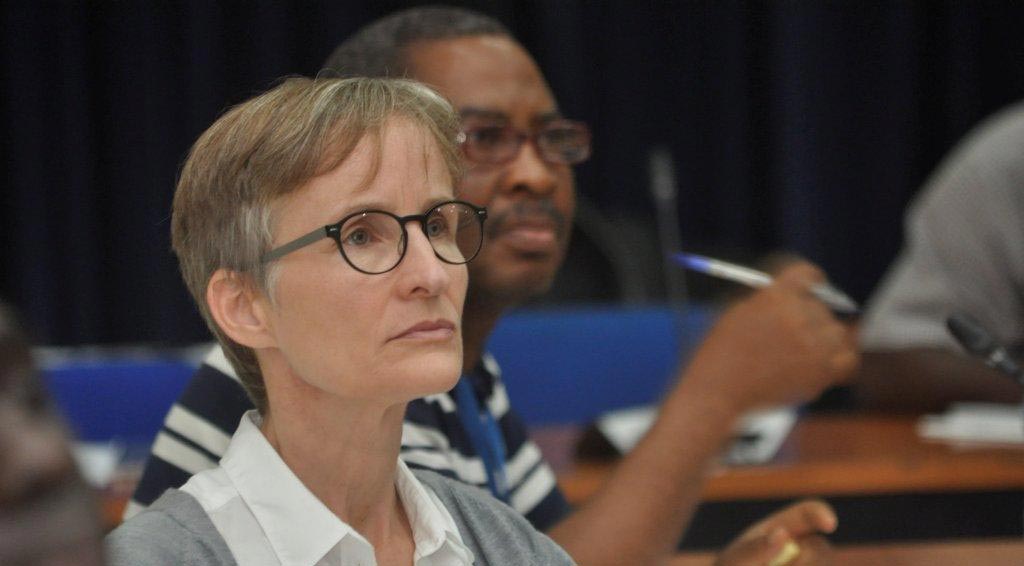
Ylva Hillbur, IITA Deputy Director General Research for Development, has enjoined scientists to comply with the directive of the CGIAR system by ensuring that all publications are properly tagged in CGSpace as this is now a criterion for allocating funds to research institutes.
DDG Research for Development Ylva Hillbur.
In an email to scientists this week, Hillbur said “The CGIAR system (including donors) is moving towards performance-based fund allocation and ‘number of publications’ is one performance criteria by which CGIAR Research Programs (CRP) are evaluated. It is thus important that publications are clearly linked to CRPs in CGSpace―the open repository for the CGIAR. To ensure that this happens is actually quite simple; when scientists forward their publications to the Knowledge Center (Bosede Ayinla) for uploading into CGSpace, they should include the CRP the publication is linked to; this ensures it gets properly tagged.”