
Angola government to restructure agricultural sector with IITA partnership
28 July 2023
Delegates from the Ministry of Agriculture, Angola—the Director General of Institute for Agrarian Development (IDA), Anita Espenerca; National Coordinator for the Cabinda Province Agricultural Value Chain Development Project (CPAVCDP), José Fernandes; and Chef of Dep of Socio-Economic Study, Agronomic Research Institute, Kiakanua Manuvanga visited IITA Ibadan from 15 to 20 July.
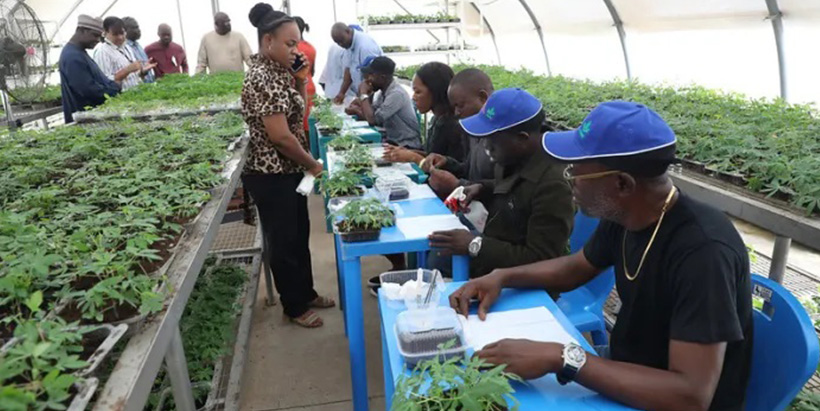
The visit aimed to develop a partnership with IITA-CGIAR in implementing the CPAVCDP to restructure Angola’s agricultural sector, focusing on smallholder farmers.
IITA Senior Management team—Deputy Director General for Corporate Services Hilde Koper, West Africa Hub Director Michael Abberton, and TAAT Program Management Unit Coordinator Chrysantus Akem welcomed and introduced the delegates to IITA’s activities, including the different categories of crops—clonal crops and seed systems.
Speaking on the Partnership for Delivery (P4D) process, Akem explained how the IITA delivers research to the end-users via the directorate. He added that delivering research outcomes has been possible through projects such as Technologies for African Agricultural Transformation (TAAT), Building an Economically Sustainable and Integrated Cassava Seed System (BASICS), and Integrated Agricultural Project.
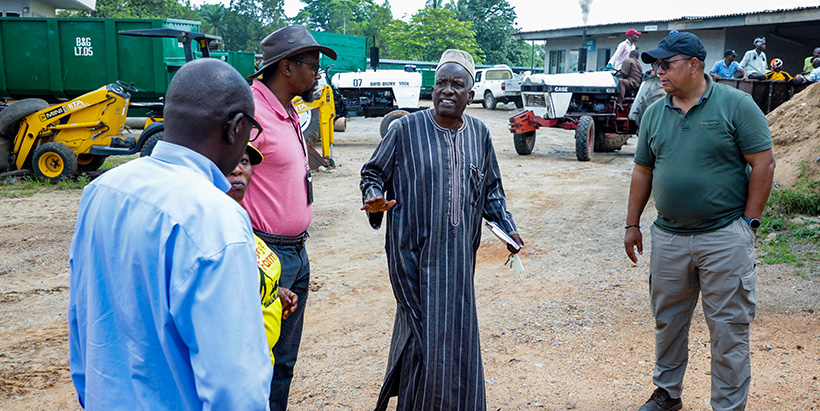
He said, “We look forward to duplicating this project in Angola through One CGIAR and TAAT program.”
The Delegates commended IITA on the impact of research outcomes in ensuring Africa is food secure through disseminating improved technologies to smallholder farmers. They highlighted areas where they would want the partnership to focus: capacity development, strengthening of extension activities, improving seed systems, agribusiness, scaling-up cassava production and its value chain, and technology intensification to combat post-harvest loss.
“Tackling these challenges would revive the agricultural sector in Angola,” Espenerca said.
Responding to the delegates’ requests, Abberton suggested that the government consider cassava agronomy to help farmers adopt the best practices and have a plant health initiative to combat the spread of diseases in Angola.
As part of the strategies to implement CPAVCDP, the visit also included training of trainers (ToT) sessions for Angolan youth on rapid cassava propagation systems using SAH technology to ensure the usage of clean planting materials in Angola.
Following the training, the delegates and Angola youths toured the Institute’s facilities for exposure to areas that would be deployed to improve the agricultural sector of Angola: Gene bank, cassava processing unit, Semi Autotrophic Hydroponics (SAH), Youth in Agribusiness and Business Incubation Platform (BIP), and Virology and Bioscience laboratories.
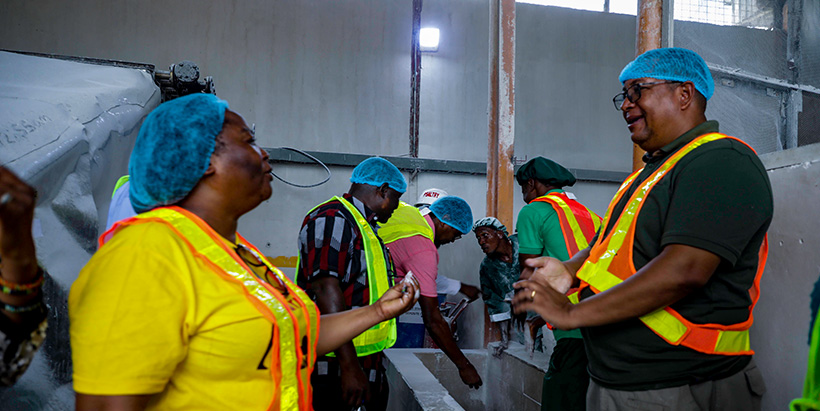
The delegates also visited Obasanjo Farms Nigeria Ltd (OFN) and Psaltry factory to experience the on-field application of SAH technology.
In a wrap-up meeting with the delegates, Akem mentioned that CPAVCDP would make way for other opportunities for collaborations between IITA and the Angola government. He said the partnership process would involve signing a Memorandum of Understanding (MoU) to show a formal agreement.
Contributed by Anita Akinyomade
